

Why Machine Washable Pet Beds Matter for Dog Health
Machine washable pet beds are the single most practical tool dog owners have for keeping parasites, bacteria, and allergens from building up in their dog’s sleeping space. The term “machine washable pet bed” refers to any dog bed designed with fabrics, construction, and hardware that withstand repeated cycles in a standard home washing machine without losing shape or function. The American Kennel Club, the CDC, and veterinary professionals all frame regular bedding hygiene as routine preventive health care, not optional housekeeping. If you want a clean home and a healthy dog, the type of bed you buy is where that commitment starts.
Why machine washable pet beds protect your dog’s health
The health case for washable dog beds is grounded in what accumulates inside an unwashed one. Dirty dog beds harbor fleas in 14% of pets’ sleeping places and carry bacteria like Salmonella and Leptospirosis that transfer directly to humans. That is not a minor inconvenience. It is a documented zoonotic disease pathway inside your home.
The list of threats that build up in pet bedding is specific and serious:
- Fleas, ticks, and mites complete breeding cycles inside the fibers of unwashed beds, making the bed itself a reinfestation source even after you treat your dog.
- Bacteria including Salmonella and Staph survive on fabric surfaces for days and spread to hands, floors, and furniture through normal contact.
- Pet dander and dust mites embed deeply in bedding fibers. Pet allergens linger for months after a pet is removed from a space, making spot cleaning completely insufficient for allergy control.
- Leptospirosis is shed through urine and can survive on wet fabric, creating real transmission risk for households with children or immunocompromised adults.
Veterinary professionals recommend pet bed hygiene as routine health maintenance to prevent dermatitis, infestations, and zoonotic diseases. A machine washable design removes the friction that causes owners to delay that maintenance. East Sacramento Veterinary Center
Regular machine washing interrupts these cycles at the source. Hot water kills flea eggs and larvae, denatures bacterial proteins, and physically removes dander that no vacuum or spray can fully extract. A bed that cannot go in the washer forces you to choose between inadequate cleaning and replacing the bed entirely.
How often should you wash a dog bed and what method works best?
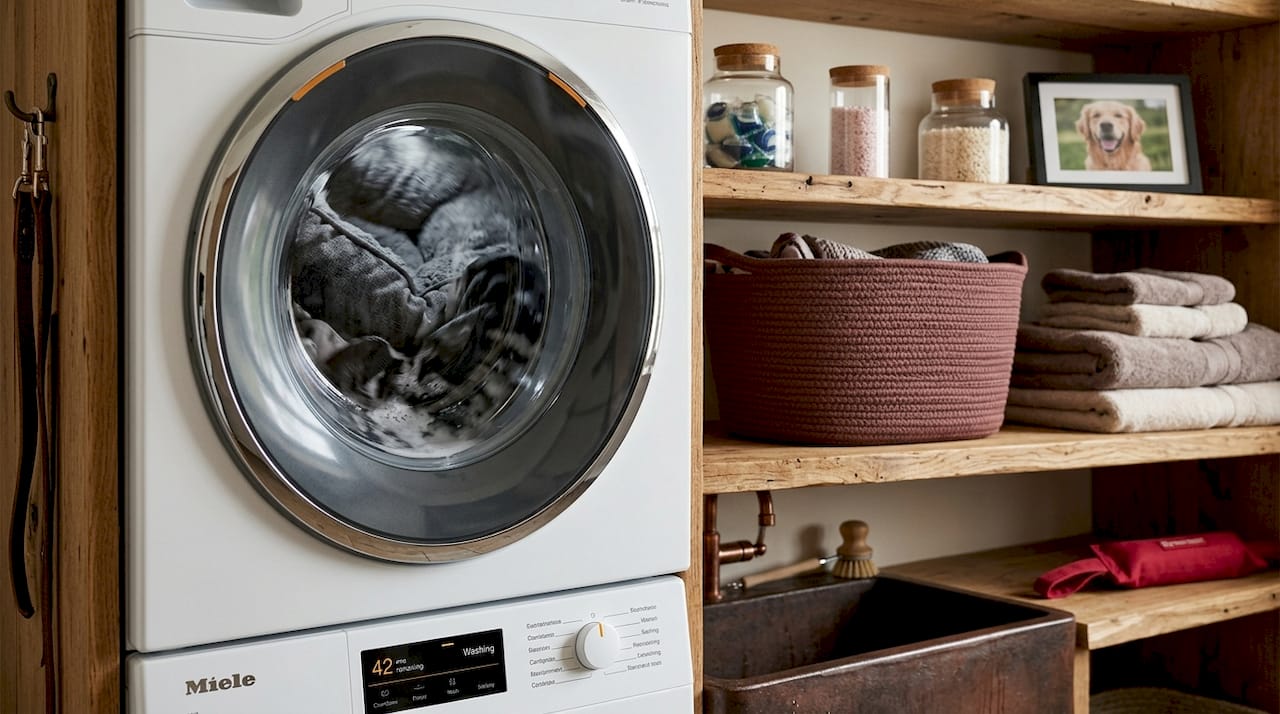
Washing frequency depends on your dog’s lifestyle, but the baseline is clear. Weekly washing is recommended by the AKC and CDC to reduce parasite and zoonotic spread, with the EPA advising a deep clean every two to three weeks at minimum. Dogs that spend time outdoors, swim, or have skin conditions warrant the weekly schedule without exception.
Follow these steps to get the most out of every wash:
- Remove loose hair first. Vacuuming the bed surface before loading it into the washer prevents hair from clogging the machine’s drain pump and improves how thoroughly the water penetrates the fabric.
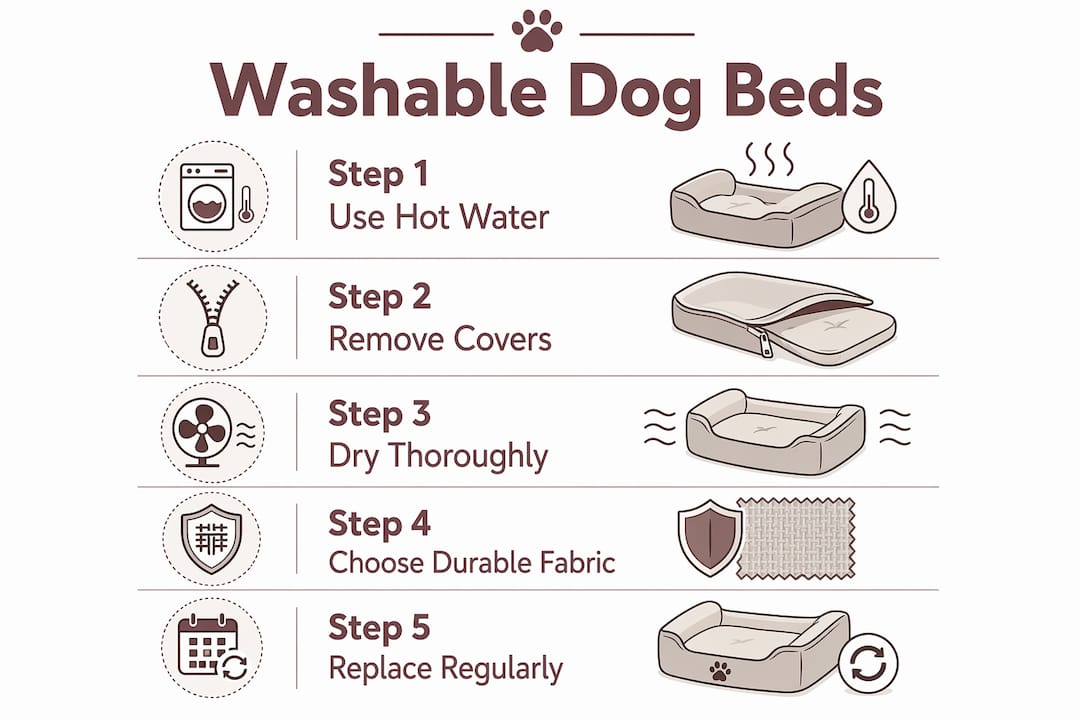
- Wash in hot water at 130°F or above. Hot water cycles combined with hypoallergenic detergents kill bacteria, fleas, and fungi without irritating your dog’s skin after the bed dries.
- Use a pet-safe, fragrance-free detergent. Scented detergents leave residue that irritates dogs’ respiratory systems and skin. Brands like Seventh Generation Free and Clear or Molly’s Suds are widely used by veterinary-conscious owners.
- Run a second rinse cycle. Detergent residue trapped in thick fill material causes skin reactions in sensitive dogs. A second rinse removes what the first cycle leaves behind.
- Dry completely before returning the bed to your dog. Incomplete drying is the primary reason pet bed odors return within days. Moisture trapped in foam or fiberfill feeds mildew growth that no amount of rewashing fully corrects.
Pro Tip: Dry the bed on high heat for at least two full dryer cycles, or place it in direct sunlight for several hours. If the center of the fill still feels cool or slightly damp, it is not done.
For owners who find weekly full-bed washing impractical, removable covers solve the problem directly. Washing the cover alone captures most of the hygiene benefit, protects the foam insert from repeated water exposure, and cuts drying time significantly.
What materials and features make a bed truly machine washable?
Not every bed labeled “washable” holds up equally. The construction and fabric choices determine whether a bed survives 50 wash cycles or falls apart after five. Understanding these differences helps you choose a bed that stays clean and lasts.
| Material | Washability | Notes |
|---|---|---|
| Cotton canvas | Excellent | Durable, handles hot water well, dries relatively fast |
| Polyester fiberfill | Good | Retains shape through repeated washing, dries faster than foam |
| Memory foam | Poor | Cannot be machine washed; requires spot cleaning only |
| Fleece | Moderate | Washes well but sheds microfibers and traps hair |
| Waterproof liner | Excellent | Prevents moisture from reaching fill; wipe-clean between washes |
Beds with removable, zippered covers over a separate foam or fiberfill insert represent the best design for most dog owners. The cover handles frequent machine washing while the insert stays protected. Fully washable beds without removable covers work well when made from cotton or polyester fiberfill, but they require longer drying times and more careful handling.
Memory foam beds deserve specific attention. Memory foam provides orthopedic support that many dogs genuinely need, but it cannot go in a washing machine without breaking down. If you choose a memory foam bed, it must have a waterproof liner and a removable, machine washable cover. Without both features, the foam becomes a permanent reservoir for bacteria and odor.
Waterproof liners and dual covers extend freshness between washes by blocking urine, saliva, and moisture from reaching the fill. This is especially valuable for puppies, senior dogs with incontinence, or any dog recovering from illness.
Pro Tip: When evaluating a bed, check the care label before you buy. If it says “spot clean only,” that bed will never be truly hygienic regardless of how often you try to clean it.
For guidance on matching bed type to your dog’s needs, the Americanbarkbliss resource on best dog bed types covers comfort, durability, and washability together.
How to maintain your dog’s bed between washes
Consistent maintenance between wash cycles keeps the bed cleaner longer and reduces how often a full wash is actually needed. These habits take less than five minutes and make a measurable difference in odor and hygiene.
- Vacuum the bed surface two to three times per week. Hair and dander accumulate fast, and removing them regularly prevents them from embedding deeper into the fabric where washing becomes less effective.
- Use a pet-safe fabric spray between washes. Products like Rocco and Roxie’s odor eliminator or Nature’s Miracle Fabric Refresher reduce surface bacteria and neutralize odor without harsh chemicals that irritate dogs.
- Rotate between two covers. Keeping a second cover in rotation means you always have a clean one ready while the other is in the wash. This removes the temptation to delay washing because the bed is in use.
- Spot clean stains immediately. Fresh stains respond to cold water and a small amount of enzyme-based cleaner. Letting a stain dry sets it into the fabric and creates a persistent odor source.
- Avoid fabric softeners entirely. Fabric softeners coat fibers with a residue that reduces absorbency, traps odors over time, and irritates many dogs’ skin. They also reduce the effectiveness of waterproof liners.
- Store spare covers in a sealed bag or container. Open storage in a closet allows dust and dander to settle on clean covers before they are even used.
Dirty beds contribute directly to respiratory and allergy symptoms for both pets and owners. These between-wash habits are what keep that risk low on the days you are not running the washer.
Key takeaways
Machine washable dog beds are the most effective way to interrupt parasite cycles, reduce allergen buildup, and prevent bacterial contamination in your dog’s sleeping space.
| Point | Details |
|---|---|
| Wash weekly at minimum | AKC and CDC recommend weekly washing to prevent flea, bacteria, and allergen accumulation. |
| Use hot water and pet-safe detergent | 130°F water with fragrance-free detergent kills pathogens without irritating your dog’s skin. |
| Dry completely every time | Incomplete drying causes mildew and odor return within days, undoing the wash entirely. |
| Choose removable cover designs | Covers wash faster, protect foam inserts, and make frequent cleaning practical. |
| Maintain between washes | Vacuuming, spot cleaning, and rotating covers extend hygiene between full wash cycles. |
What I’ve learned from years of watching owners get this wrong
I have reviewed dozens of pet bed products and talked with enough dog owners to recognize the pattern: most people buy a bed based on how it looks and how their dog reacts to it, then figure out the cleaning situation later. That approach almost always leads to a bed that is either impossible to wash properly or one that falls apart after a few cycles.
The detail most owners overlook is drying. They wash the bed correctly, use the right detergent, run a hot cycle, and then pull the bed out of the dryer after one cycle and put it back on the floor. Three days later the smell is back and they assume the washing did not work. It worked fine. The drying did not. Damp foam at the center of a thick bed is invisible from the outside and it grows mildew within 48 hours. Two full dryer cycles or direct sunlight for half a day is not excessive. It is what the job actually requires.
The second thing I see owners get wrong is detergent choice. Scented detergents smell clean to humans, but dogs have a sense of smell roughly 40 times more sensitive than ours. A bed that smells strongly of lavender or citrus is genuinely unpleasant for many dogs, which is why some dogs abandon a freshly washed bed. Fragrance-free and dye-free formulas solve this immediately.
My honest recommendation is to treat bed selection as a hygiene decision first and a comfort decision second. A bed your dog loves but cannot be properly cleaned is a liability. The washable bed benefits that matter most are not visible in a product photo. They show up in your dog’s skin health, your home’s air quality, and your own peace of mind six months after purchase.
— Christopher
Find the right washable dog bed at Americanbarkbliss

Americanbarkbliss carries machine washable dog beds built for real cleaning routines, not just the ones that look good in a product photo. The Body Glove Paintflower Pet Napper Dog Bed combines durable, washable construction with the kind of comfort dogs actually use. For owners who want a plush option with calming raised edges and easy-care fabric, the Big Paw Plush Pet Sofa Bed is a standout choice. Every product at Americanbarkbliss is selected with American-made quality standards and practical pet care in mind. Your dog deserves a clean place to sleep, and you deserve a bed that makes keeping it clean straightforward.
FAQ
Why are machine washable pet beds better for dogs with allergies?
Pet allergens embed deeply in bedding and persist for months without consistent laundering. Machine washable beds allow the hot water cycles needed to actually remove allergen reservoirs, not just mask them.
How hot should the water be when washing a dog bed?
Wash dog beds at 130°F or above. Hot water at this temperature kills fleas, bacteria, and fungi that survive cooler cycles.
Can you machine wash a memory foam dog bed?
Memory foam cannot go in a washing machine without breaking down. Choose a memory foam bed with a waterproof liner and a removable, machine washable cover, then wash the cover weekly and wipe the liner clean as needed.
How do you stop a dog bed from smelling after washing?
Incomplete drying is the cause in nearly every case. Run two full dryer cycles on high heat or dry the bed in direct sunlight until the center fill is completely dry before returning it to your dog.
How often should you replace a machine washable dog bed?
Most quality machine washable dog beds last two to four years with weekly washing. Replace the bed when the fill loses its shape, the waterproof liner cracks, or the fabric no longer holds up to hot water cycles without shrinking or tearing.
Leave a comment