

Best dog bed types for comfort, style, and durability
You spent $80 on a “chew-proof, orthopedic” dog bed, and within two weeks your Labrador had gutted it like a holiday turkey. Sound familiar? Choosing the right dog bed is genuinely complicated. You’re balancing your dog’s sleep style, health needs, chewing habits, and your own taste in home decor, all while sorting through marketing claims that don’t always hold up in the real world. This guide cuts through the noise to show you exactly how to evaluate bed types, what features actually matter, and which option fits your specific dog’s life.
Table of Contents
- How to evaluate the best dog bed for your pet
- Overview of the most popular dog bed types
- Comparing comfort, durability, and cleaning across bed types
- Which bed type fits specific dog needs and use cases?
- Why “one size fits all” fails in dog bed shopping — insider lessons
- Explore top-rated beds and essentials for your dog
- Frequently asked questions
Key Takeaways
| Point | Details |
|---|---|
| No single best bed | Every dog’s ideal bed depends on its habits, health, and behavior. |
| Match features to needs | Foam support, washable covers, and durable fabrics meet different comfort and lifestyle requirements. |
| Chew-proof isn’t absolute | Choose tough materials but expect some trial and error with determined chewers. |
| Seasonal and lifestyle flexibility | Having more than one bed or swapping with the seasons can better support your dog year-round. |
| Evaluate on more than price | Support, easy cleaning, and safety are just as important as style or cost. |
How to evaluate the best dog bed for your pet
Before you compare specific products, you need a clear framework. Not every bed that looks good in a product photo will survive your dog’s daily routine, and not every “premium” label means premium performance.
Start with support and foam quality. Orthopedic foam and memory foam are not the same thing. Memory foam conforms to body shape, which is great for pressure relief. Orthopedic foam is firmer and designed to support joints, which matters more for senior dogs or large breeds. A thin layer of memory foam over cheap filler is not a true orthopedic bed, regardless of what the tag says.
Temperature regulation is another factor most buyers overlook until summer hits. Dogs don’t sweat the way humans do, so a bed that traps heat can cause real discomfort. Look for breathable covers, cooling gel foam, or elevated designs that allow airflow underneath.
Key features to look for in any dog bed:
- Waterproofing: A waterproof liner between the cover and the foam protects the core from accidents, which is critical for puppies, seniors, and dogs with incontinence.
- Washable covers: Removable, machine-washable covers are not optional if you care about hygiene. Odors and bacteria build up fast.
- Material safety: Non-toxic dyes, no harmful chemical treatments, and certifications like CertiPUR-US for foam matter if your dog chews or licks the bed.
- Construction quality: Double-stitched seams, reinforced zippers, and heavy-duty fabric resist daily wear far better than single-layer construction.
“Durability and comfort evaluation commonly considers foam firmness and support, temperature regulation, waterproofing, and care and cleaning practicality. However, claims of being completely chew-proof are widely cautioned against.”
That last point is worth repeating. No bed is truly chew-proof. If your dog is a dedicated chewer, focus on choosing beds for chewers made with reinforced materials and elevated frames rather than trusting any marketing claim at face value.
Style and fit in your home also matter more than people admit. A bed your dog loves but that clashes with your living room will end up stuffed in a corner, which means your dog won’t use it consistently. American-made beds often offer better fabric options and color choices that actually complement real home interiors.
Pro Tip: Measure your dog in their natural sleeping position before buying. A sprawler needs far more surface area than a curler. Most brands list bed dimensions, but few buyers actually check them against their dog’s size.
Overview of the most popular dog bed types
Now that you know what matters, here’s how the main bed types compare on those points. Common dog bed types include orthopedic, memory foam, elevated, pillow, donut or bolster, cave or igloo, heated, cooling, waterproof, travel, and crate mats. Each one was designed with a specific dog behavior or use case in mind.
Here’s a quick breakdown:
- Orthopedic beds: Dense, supportive foam designed for joint health. Best for senior dogs, large breeds, and dogs recovering from surgery.
- Memory foam beds: Conforms to body shape for pressure relief. Great for dogs with arthritis or hip dysplasia.
- Elevated or raised beds: A fabric or mesh surface suspended on a frame. Excellent for hot climates, outdoor use, and dogs who run warm.
- Pillow beds: Soft, stuffed beds for comfort-loving dogs. Best for dogs that don’t chew and prefer a plush feel.
- Donut or bolster beds: Raised edges create a sense of security. Perfect for dogs that like to rest their head on a border or curl up.
- Cave or igloo beds: Fully or partially enclosed. Ideal for anxious dogs, small breeds, and dogs that burrow.
- Heated beds: Built-in or self-warming materials. Useful for senior dogs, hairless breeds, or cold climates.
- Cooling beds: Gel-infused foam or elevated mesh. Best for dogs in warm climates or those prone to overheating.
- Waterproof beds: Designed with moisture-resistant liners or surfaces. Essential for puppies, incontinent dogs, and outdoor use.
- Travel beds: Lightweight and foldable for portability. Pair well with travel and portable storage to keep your dog’s space organized on the go.
- Crate mats: Flat, fitted pads designed to fit inside a crate. Simple and easy to wash.
| Bed type | Best sleep style | Key benefit | Best use case |
|---|---|---|---|
| Orthopedic | Sprawler | Joint support | Senior or large dogs |
| Memory foam | Any | Pressure relief | Arthritis, recovery |
| Elevated | Sprawler | Airflow, durability | Outdoor, hot climates |
| Pillow | Sprawler | Soft comfort | Low-chew dogs indoors |
| Donut or bolster | Curler | Security, head support | Anxious or small dogs |
| Cave or igloo | Curler | Enclosed comfort | Anxious, burrowing dogs |
| Heated | Any | Warmth | Cold climates, seniors |
| Cooling | Sprawler | Temperature control | Hot climates, thick coats |
| Waterproof | Any | Moisture protection | Puppies, seniors |
| Travel | Any | Portability | Active, traveling dogs |
| Crate mat | Flat sleeper | Easy fit | Crate-trained dogs |
Comparing comfort, durability, and cleaning across bed types
To help you weigh your options, let’s break down how these beds rate in the real world. Consumer testing outlets recognize that ease of care, aesthetics, and durability are all part of a thorough evaluation, not just comfort ratings.
Comfort and support: Orthopedic and memory foam beds score highest for dogs with physical health needs. Donut and cave beds score highest for emotional comfort and anxiety relief. Elevated beds score well for temperature-sensitive dogs but offer minimal cushioning on their own.
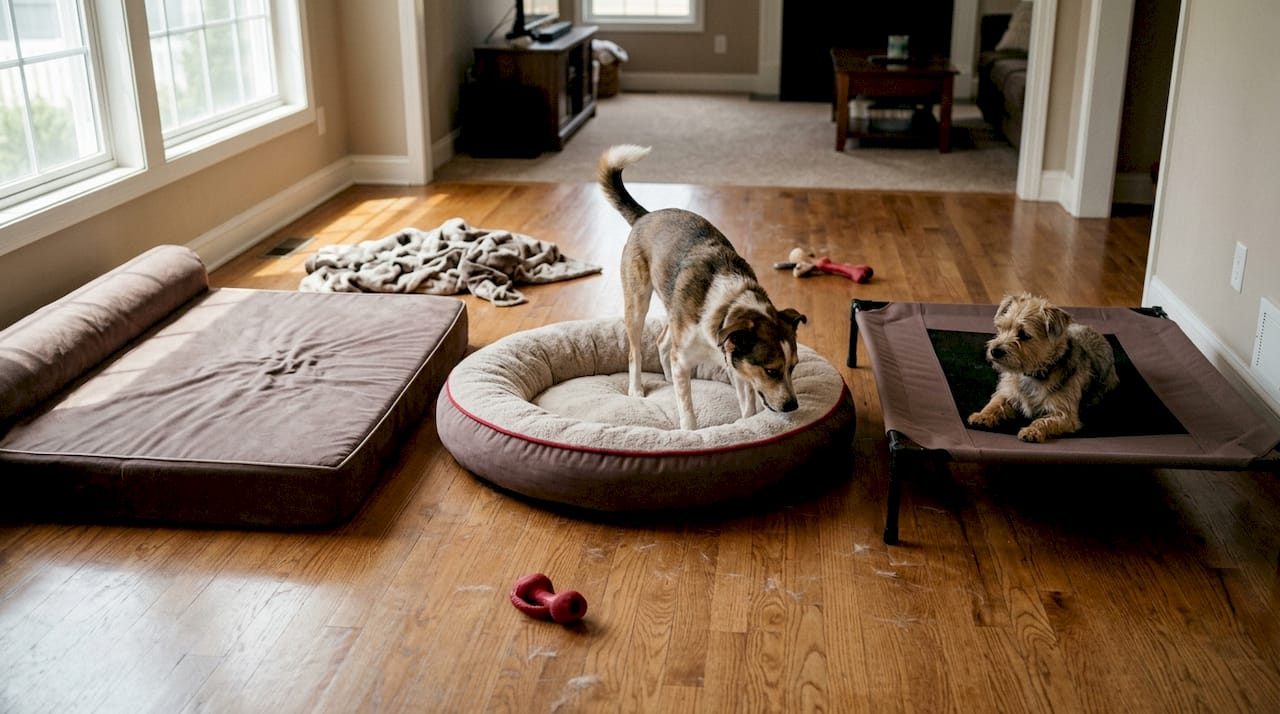
Durability and chew resistance: Elevated metal-frame beds are among the most durable options available because there’s no foam or stuffing to destroy. Heavy-duty canvas or ballistic nylon covers on pillow and orthopedic beds add resistance, but a determined chewer can still work through them. For dogs that are serious about durability for heavy chewers, pairing a tough bed with appropriate chew toys redirects destructive behavior away from the bed itself.
Ease of cleaning: Crate mats and waterproof beds are the easiest to clean because they’re designed with maintenance in mind. Pillow beds with non-removable covers are the hardest. Memory foam beds require extra care because the foam itself cannot go in a washing machine.
Common dog parent pain points and which bed types solve them:
- Frequent accidents: Waterproof beds with removable, machine-washable covers
- Destructive chewing: Elevated metal-frame beds or reinforced canvas designs
- Overheating at night: Cooling gel beds or elevated mesh beds
- Anxiety and restlessness: Donut beds, bolster beds, or cave beds
- Joint pain or stiffness: Orthopedic foam or memory foam beds
- Traveling frequently: Lightweight travel beds or foldable crate mats
- Outdoor living or play: Elevated beds with water-resistant fabric
Durability is highly individual. A bed that lasts three years for one dog may be destroyed in three days by another. Material quality matters, but so does knowing your specific dog’s habits.
Pro Tip: If your dog is a chewer, don’t spend top dollar on a plush bed right away. Start with a durable elevated or reinforced canvas bed. Once you know their habits, you can invest in a more comfortable option with confidence.
Which bed type fits specific dog needs and use cases?
After seeing the landscape of options, here’s how to zero in on the best type for your unique dog. Vets and product experts consistently emphasize that construction approach and use case should drive the final decision, not just aesthetics or price.
Here are the most common scenarios and the best-fit bed for each:
- Senior dog with joint pain: Orthopedic foam bed with a low entry point so they don’t have to step over a high bolster. Look for CertiPUR-US certified foam and a waterproof liner.
- Anxious dog that hides or burrows: Cave or igloo bed. The enclosed space mimics a den, which naturally calms stress responses in dogs.
- High-energy chewer: Elevated metal-frame bed with a replacement-friendly fabric center. These are far harder to destroy and easy to repair.
- Outdoor or backyard dog: Elevated bed with water-resistant or quick-dry fabric. Keeps the dog off cold or hot ground and resists mold and mildew.
- Puppy in crate training: Crate mat with a waterproof surface. Simple, machine washable, and fits snugly inside standard crate sizes.
- Dog that travels frequently: Lightweight travel bed that folds flat. Pairs well with a portable toy organizer to keep their space consistent across locations.
- Dog that overheats easily: Cooling gel bed or elevated mesh bed. Especially important for brachycephalic breeds like Bulldogs or Pugs.
- Small breed or toy dog: Donut or bolster bed sized appropriately. Small dogs often feel more secure with raised edges around them.
- Multi-dog household: Consider one orthopedic bed per dog to avoid competition, and add a secondary bolster or cave bed as a retreat option.
For outdoor and tough-use situations, pairing a durable bed with appropriate enrichment toys keeps dogs mentally and physically satisfied in their space.
Pro Tip: Consider keeping two beds for your dog, one for winter and one for summer. A plush, self-warming bed for cold months and a cooling elevated bed for warm months covers your dog’s comfort year-round without compromise. Multi-bed households also give dogs the option to choose based on their mood, which matters more than most owners realize.
Why “one size fits all” fails in dog bed shopping — insider lessons
Here’s the honest truth that most product guides won’t tell you: there is no universally perfect dog bed. Every recommendation, including the ones in this article, is a starting point, not a guarantee. The dog bed industry is full of marketing language designed to make you feel confident in a purchase before you’ve seen how your dog actually uses it.
The words “chew-proof” and “indestructible” are the biggest offenders. As the Sleep Foundation notes, marketing claims like “impervious to chewing” should be treated with real skepticism because durability depends on fabric, construction, and the individual dog’s behavior. A bed that survives a Beagle may not survive a Rottweiler. A bed that lasts five years for a senior dog may not survive a week with a two-year-old Pit Bull.
The same skepticism applies to “orthopedic.” That word has no regulated definition in the pet industry. Any manufacturer can put it on a label. What you’re actually looking for is foam density, measured in pounds per cubic foot, and a foam certification. Those are objective standards. “Orthopedic” on its own is not.
What we’ve learned from years of working with dog owners is that trial and error is a legitimate strategy, not a failure. Buying a mid-range bed, observing how your dog uses it for a few weeks, and then upgrading or adjusting based on real behavior is smarter than spending $200 on a premium bed that turns out to be the wrong fit.
Rotating or layering bed types is also genuinely underrated. A cave bed for nighttime anxiety relief and an elevated bed for afternoon naps in the sun covers two completely different needs. Dogs, like people, don’t always want the same thing at the same time. Giving them options respects that. For dogs that show unexpected chew resistance toward certain materials, rotating between bed types also helps you identify what construction holds up best for your specific dog.
The best dog bed is the one your dog actually sleeps in, that you can actually keep clean, and that survives your dog’s real behavior. Start there, not with the most expensive option on the shelf.
Explore top-rated beds and essentials for your dog
Once you know which features and style matter for your dog, it’s time to find products that actually deliver on those standards.

At American Bark Bliss, we curate a carefully selected range of stylish, comfort-focused dog beds made with quality materials and American craftsmanship. Whether your dog needs orthopedic support, a cozy cave for anxiety, or a tough elevated bed for outdoor use, our collection is built around real dog behavior and real owner needs. We also carry complementary accessories including storage solutions, enrichment toys, and grooming essentials that help you build out a complete, comfortable space for your pet. Browse our full selection at americanbarkbliss.com and find the right fit for your dog’s unique personality and lifestyle.
Frequently asked questions
What is the best bed type for dogs who chew a lot?
Elevated and metal-frame beds, or those made with reinforced fabrics, typically last longer for heavy chewers, but no bed is completely chew-proof regardless of what the label claims.
Which dog bed is easiest to keep clean?
Beds with removable, machine-washable covers and waterproof liners are the easiest to maintain, and Consumer Reports consistently identifies waterproofing and washable covers as top practical decision factors.
Are orthopedic beds good for all dogs?
Orthopedic beds offer the most benefit for senior dogs and those with joint issues, but any dog that needs extra support or pressure relief can benefit from the firmer foam construction.
What type of bed is best for outdoor use?
Elevated beds with durable, water-resistant materials are the best choice for outdoor use, and vets recommend considering outdoor-specific construction when selecting a bed for backyard or travel use.
Is a cave or igloo bed good for anxious dogs?
Yes. Cave and igloo beds create an enclosed, den-like environment that naturally reduces stress and gives anxious dogs a safe, predictable retreat.
Leave a comment