

What Is an Orthopedic Dog Bed? Your Full Guide
Not every dog bed labeled “orthopedic” actually delivers orthopedic support. That gap between marketing and reality matters, especially if your dog is older, arthritic, or recovering from surgery. Understanding what is an orthopedic dog bed goes beyond reading the tag on a product. It means knowing what materials, construction, and density actually reduce joint pressure and keep your dog comfortable through every nap and overnight rest. This guide breaks down exactly what separates a real orthopedic bed from one that just looks the part.
Table of Contents
- Key takeaways
- What is an orthopedic dog bed, really?
- Materials and construction that actually matter
- Who benefits most from orthopedic dog beds
- How to choose the right orthopedic dog bed
- My honest take on orthopedic dog beds
- Get your dog the support they deserve
- FAQ
Key takeaways
| Point | Details |
|---|---|
| “Orthopedic” has no strict definition | Evaluate foam density, thickness, and construction, not just the label on the packaging. |
| High-density foam is the core factor | Look for foam rated at 2.0+ lb/ft³ to get lasting support and shape retention. |
| Senior and large breeds benefit most | Dogs with arthritis, hip dysplasia, or post-surgery recovery needs gain the most from proper orthopedic support. |
| CertiPUR-US certification matters | Verify foam safety by checking the brand against the official CertiPUR-US directory, not just the claim. |
| Fit your dog’s size and sleep style | Match bed dimensions and firmness to your dog’s weight and how they prefer to rest. |
What is an orthopedic dog bed, really?
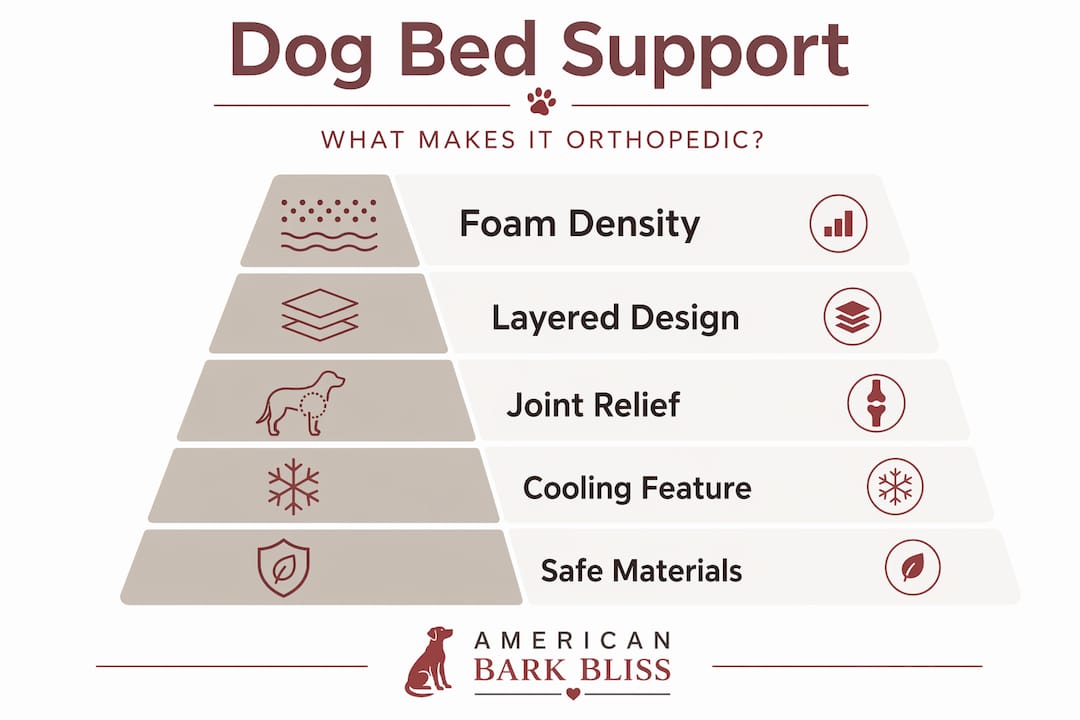
The word “orthopedic” gets thrown around a lot in pet product marketing, but no strict industry definition governs its use. Any brand can stamp it on a product. What actually makes a dog bed orthopedic comes down to engineering, not labeling.
A genuine orthopedic dog bed is designed to distribute your dog’s body weight evenly, reducing concentrated pressure on joints like the hips, shoulders, and spine. It uses a high-density foam core rather than loose polyfill, shredded foam, or low-grade batting that compresses and stays flat within weeks. The goal is stable, consistent support during extended rest, not just a soft surface to lie on.
Here is what genuinely distinguishes orthopedic dog bedding from regular options:
- High-density foam core. The foundation of any real orthopedic bed. It holds its shape under your dog’s full body weight, rest after rest.
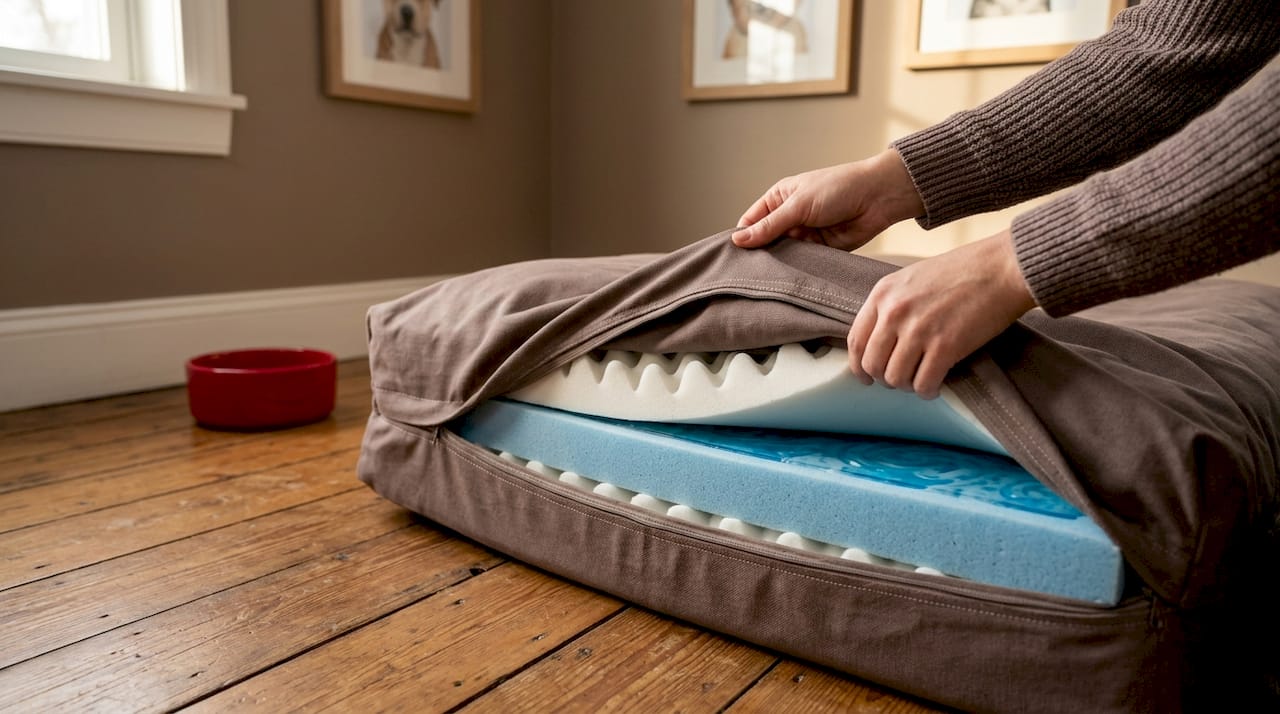
- Layered construction. A comfort layer on top (often memory foam or gel foam) sits over a firmer base foam. This combination cradles pressure points while preventing excessive sinkage.
- Meaningful thickness. Beds need enough depth to actually support the weight above them. A 2-inch pad is not orthopedic in any practical sense for a 60-pound dog.
- Durable rebound ability. The foam should slowly return to shape after pressure is removed, a sign it still has structural integrity.
- Stable, non-skid base. A bed that slides across the floor when your dog tries to climb in adds physical stress to joints, defeating the whole purpose.
- Breathable structure. Overheating during rest can interrupt sleep quality. Airflow through or around the foam layer matters, especially for older dogs.
Memory foam deserves a specific note here. It is frequently marketed as the gold standard for orthopedic support, and quality memory foam does conform well to the body. But memory foam’s effectiveness depends on density. Low-density memory foam feels soft initially and then sags, leaving your dog essentially lying on a deflated surface. The foam type is less important than the foam quality.
Materials and construction that actually matter
Once you understand the concept, the next question is what to look for physically when you evaluate a specific product.
Foam types you will encounter
Solid memory foam is the most recognized material. When it is high quality, it molds to your dog’s body contours and recovers its shape. The problem is that “memory foam” on a label tells you nothing about density.
Orthopedic foam composites combine layers of different foam densities. A softer top layer provides comfort while a firmer base provides structural support. This layered approach often outperforms single-material beds because each layer does a different job.
Egg-crate or convoluted foam is that familiar wavy foam you see in some beds. It increases surface area contact and improves airflow but tends to compress quickly under heavier dogs. It works better as a comfort topper than as a standalone orthopedic base.
Some premium beds incorporate gel memory foam or Air Fiber layers to improve airflow and cooling, which is a genuine benefit for senior dogs who spend long hours resting.
Foam density: the number that tells the truth
Density is measured in pounds per cubic foot. Higher-density foam holds up longer and provides better orthopedic performance. Here is a quick reference:
| Foam density | What it means in practice |
|---|---|
| Below 1.5 lb/ft³ | Breaks down quickly, not suitable for orthopedic use |
| 1.5 to 2.0 lb/ft³ | Acceptable for lighter dogs, short-term use |
| 2.0 to 3.0 lb/ft³ | Genuine orthopedic support for most breeds and weights |
| 3.0+ lb/ft³ | Premium support for large, heavy, or high-need dogs |
Safety certification you should verify
CertiPUR-US certification means the foam has been tested for harmful emissions, heavy metals, formaldehyde, and volatile organic compounds. This matters when your dog spends 12 to 16 hours a day resting on the material. The important step many buyers skip is actually verifying the claim. Check the official CertiPUR-US brand directory rather than trusting a logo printed on packaging. Some companies use the certification language without being registered.
Pro Tip: When you pull up a product listing, search the brand name directly on the CertiPUR-US website before purchasing. It takes 30 seconds and confirms whether the safety claim is real.
Who benefits most from orthopedic dog beds
Not every dog needs a specialty bed, but several groups benefit from orthopedic support in a significant, measurable way.
Senior dogs top the list. As dogs age, joint cartilage wears down, and inflammation becomes a regular part of daily life. A bed that reduces pressure on arthritic joints allows for deeper, more restorative sleep, which directly affects mobility, mood, and quality of life. Many owners notice their older dogs moving more freely after switching to a proper orthopedic bed simply because they are recovering better during rest.
Large and giant breeds face biomechanical challenges even when young. Dogs over 50 pounds place significant load on hips and elbows during rest. Breeds prone to hip dysplasia, like German Shepherds, Labrador Retrievers, and Great Danes, benefit from engineered foam systems that distribute that weight rather than letting pressure concentrate in specific spots.
Post-surgical dogs need stable rest surfaces. After orthopedic procedures, getting up from a too-soft surface requires muscle compensation that strains healing tissue. A firm, supportive bed with enough thickness to prevent sinkage removes that stress from the recovery process.
Active working and sporting dogs also benefit, though people often overlook this group. A dog running agility courses or doing field work every weekend accumulates micro-stress on joints just like a human athlete. Quality sleep on a supportive surface is part of their recovery.
“Think of an orthopedic bed as a recovery tool, not just a sleeping spot. The quality of rest your dog gets directly affects how they move, play, and feel the next day.”
For a deeper look at choosing a dog bed based on your specific dog’s needs and habits, the details go beyond just the foam.
How to choose the right orthopedic dog bed
Buying a genuine orthopedic bed requires ignoring most of the marketing and focusing on a short list of verifiable factors. Here is how to approach it:
-
Check foam density first. Ask the seller or look for spec sheets. Anything below 2.0 lb/ft³ will not hold up for heavier dogs or daily long-term use. This is the single most important number to find.
-
Measure your dog and add margin. Your dog should be able to stretch out fully without hanging off the edge. A curled-up sleeping dog still shifts and sprawls during the night. Size up if you are between options.
-
Match firmness to body weight and sleep style. A dog’s weight and sleeping habits should drive your firmness decision. Heavier dogs need firmer bases. Dogs who sleep sprawled flat benefit from more surface area and even firmness. Dogs who curl up do well with a bolster or raised edge for head support.
-
Look for a non-skid bottom. For older or post-surgical dogs, stability when getting in and out of the bed is not optional.
-
Prioritize a washable, removable cover. Orthopedic beds are investments. You want to protect that foam core from accidents and odors with a cover you can actually clean regularly.
-
Avoid beds that flatten in the store. Push down on the bed and observe how it rebounds. If it stays compressed for more than a few seconds, the foam density is too low to support your dog long term.
-
Verify any certifications independently. Do not trust a logo. Check the CertiPUR-US directory, and look for orthopedic dog bed reviews from owners who have used the product for at least a few months.
Pro Tip: Flip the bed over and look at the base material. A high-quality orthopedic bed will have a non-skid bottom that looks substantial, not a thin fabric layer that will wear through in weeks.
For context on what separates durable dog beds from products that wear out quickly, construction details matter across every price point.
My honest take on orthopedic dog beds
I have seen a lot of dog owners spend real money on beds marketed as orthopedic, only to find their senior dog still struggling to get comfortable two months later. The bed looks fine. It still has a shape. But when you press into it, it has already lost the firmness that made it worth buying in the first place.
The mistake I see most often is trusting the label over the specs. “Orthopedic” sounds clinical and reassuring. It implies a medical standard. But many marketed beds use low-density foam that flattens fast, and there is no regulatory body stopping any brand from using that term however they like.
What I have learned is this: the owners who get the most out of an orthopedic bed are the ones who treated the purchase like a research task. They asked about foam density. They checked certifications. They sized the bed properly for how their dog actually sleeps, not how they think their dog sleeps. Those are the details that determine whether the bed helps or just collects hair.
If your dog is older, arthritic, or recovering, do not cut corners here. This is the one piece of pet equipment where the cheap option reliably fails the animal it is supposed to help. Spend the time to verify what you are actually buying. Your dog cannot tell you the bed is not working until you notice the limping getting worse.
— Christopher
Get your dog the support they deserve
At Americanbarkbliss, the focus is on beds that hold up to daily use and actually do the job they claim to do. Whether your dog is a senior who needs pressure relief every night or a large breed who needs structural support to stay comfortable, the product lineup is built around real comfort, not just marketing copy.

The Body Glove Paintflower Pet Napper Dog Bed is a standout option for dogs who need dependable support with a design that works in any room. For dogs who love a cozy enclosed feel, the Purr Padd’r delivers specialized cushioning that holds its shape. Americanbarkbliss also carries the Arlee Sandy Ortho Lounger, which pairs orthopedic-grade foam with a washable cover and bolster edges built for dogs who need both support and security.
FAQ
What makes a dog bed truly orthopedic?
A truly orthopedic dog bed uses high-density foam (typically 2.0 lb/ft³ or higher) in a layered construction that distributes body weight and reduces joint pressure. The label alone does not determine orthopedic quality. Construction and materials do.
Are orthopedic dog beds worth it for senior dogs?
Yes. Orthopedic beds reduce pressure on arthritic joints and promote deeper, more restorative sleep, which directly supports mobility and comfort in older dogs. Vets frequently recommend them for dogs with arthritis or hip dysplasia.
How do I know if the foam in a dog bed is safe?
Look for CertiPUR-US certified foam, and verify the brand’s registration directly on the CertiPUR-US official directory. This confirms the foam meets standards for low emissions and the absence of harmful chemicals.
What is the difference between orthopedic dog bedding and memory foam?
Memory foam is one type of material used in orthopedic dog bedding, but not all memory foam beds qualify as orthopedic. True orthopedic dog bedding combines the right foam density, thickness, and layered construction to deliver lasting joint support.
How thick should an orthopedic dog bed be?
Most dogs benefit from at least 4 inches of supportive foam, and larger or heavier dogs often need 6 or more inches to prevent sinkage to the floor. Thickness directly affects how well the bed relieves pressure at the hips and shoulders.
Leave a comment