

How to Choose a Dog Bed Your Dog Will Actually Use
Roughly 40% of purchased dog beds go unused because they don’t match the dog’s sleeping style, size, or sensory needs. Most owners assume their dog is just being stubborn. The real problem is a mismatch, and it’s almost always preventable. Knowing how to choose a dog bed correctly means looking at your specific dog first: how they sleep, how big they actually are when curled up or stretched out, and what their joints need right now. This guide walks you through every decision so you stop guessing and start buying smart.
Table of Contents
- Key takeaways
- How to choose a dog bed based on sleep style
- Getting the size right
- Choosing the right filling and materials
- Bed style, placement, and everyday practicality
- My honest take after years of watching owners get this wrong
- Find the right dog bed at Americanbarkbliss
- FAQ
Key takeaways
| Point | Details |
|---|---|
| Sleep style drives bed shape | Watch how your dog naturally sleeps before buying any bed style. |
| Measure in sleeping position | Standard size charts underestimate space needs by 20 to 30%. |
| Foam quality matters more than labels | Look for CertiPUR-US certified foam and verify density, not just “orthopedic” marketing. |
| Washability is non-negotiable | Removable, machine-washable covers protect hygiene and extend bed life significantly. |
| Orthopedic beds benefit all ages | Joint support is preventative care, not just a senior dog upgrade. |
How to choose a dog bed based on sleep style
Before you look at a single product listing, spend two or three days watching your dog sleep. This one step saves more money than any buying guide ever will.
Dogs fall into four main sleeping categories, and each style requires a different bed shape:
- Curlers tuck their nose toward their tail and sleep in a tight circle. These dogs thrive in bolster beds or donut-style beds with raised edges they can lean against. The rim gives them the sense of security they instinctively seek.
- Stretchers sprawl out flat, often on their side or belly with legs extended. Flat, wide beds with no raised edges work best. Bolster beds frustrate them because the rim gets in the way.
- Leaners need something to press their back against while sleeping. A bolster bed or a bed placed against a wall satisfies this need.
- Burrowers dig and tunnel before settling. These dogs, often dachshunds, chihuahuas, and anxious dogs of any breed, do best with cave-style or hooded beds where they can get completely under the cover.
The reason matching bed shape to sleep style increases bed acceptance is simple: dogs are creatures of instinct. A bed that doesn’t support their natural sleep posture feels wrong to them, even if it looks perfectly comfortable to you.
Pro Tip: If your dog currently sleeps on the couch, pay attention to where they position themselves. Do they wedge into a corner? Sprawl across the middle cushion? That tells you exactly what bed style they prefer.
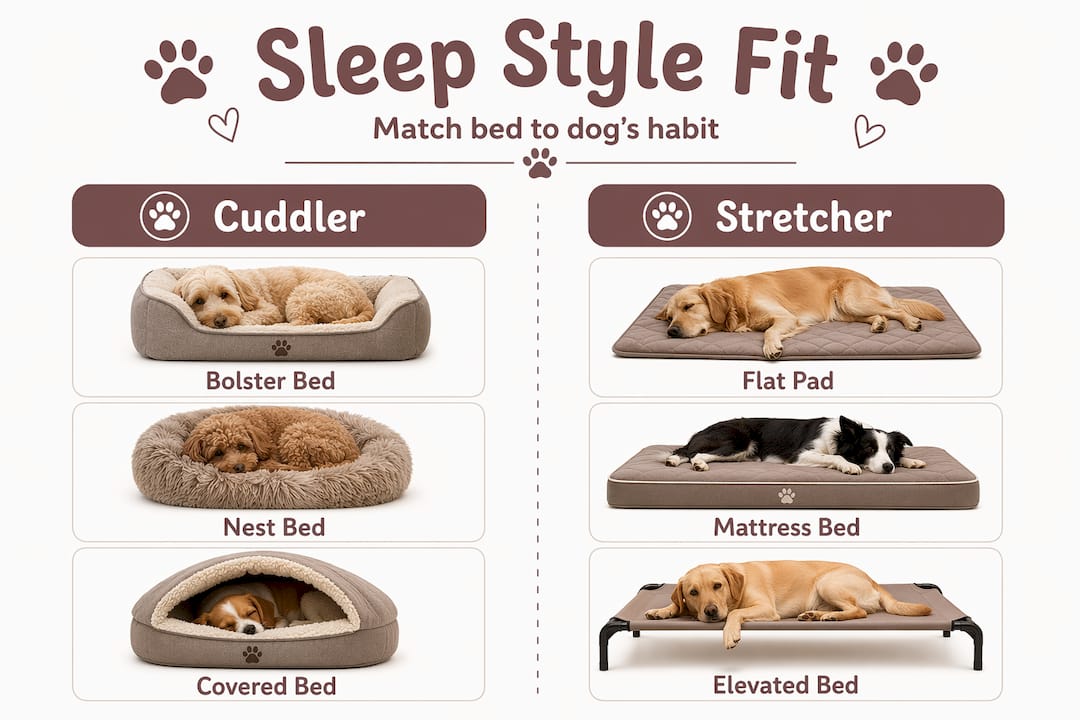
One more thing worth watching: does your dog scratch and circle before lying down? That’s a burrowing instinct, even in dogs who don’t fully burrow. A bed with slightly raised sides or a textured surface they can “dig” into will feel more natural to them.
Getting the size right
This is where most owners go wrong, and it costs them. Standard size guides underestimate a dog’s actual sleeping space by 20 to 30% because they’re based on standing measurements. Your dog doesn’t sleep standing up.
Here’s the correct way to measure:
- Let your dog fall into their natural sleeping position. Don’t wake them or adjust them.
- Measure from the tip of their nose to the base of their tail while they’re stretched or curled.
- Measure the widest point of their body in that same position.
- Add 4 to 6 inches to both measurements as a comfort buffer.
- If your dog falls between two sizes, always pick the larger bed.
| Dog sleeping length | Add buffer | Minimum bed size |
|---|---|---|
| Up to 18 inches | 4 to 6 inches | 24 inches |
| 19 to 28 inches | 4 to 6 inches | 34 inches |
| 29 to 36 inches | 4 to 6 inches | 42 inches |
| 37 inches and up | 6 inches | 48 inches or larger |
Dogs sleeping in a stretched position can add 20 to 40% to their standing length. A medium-sized dog you’d normally put in a 24-inch bed might actually need a 34-inch bed once you account for how they sleep. This is especially common with breeds like beagles, cocker spaniels, and French bulldogs, which are compact standing but sprawl dramatically when relaxed.
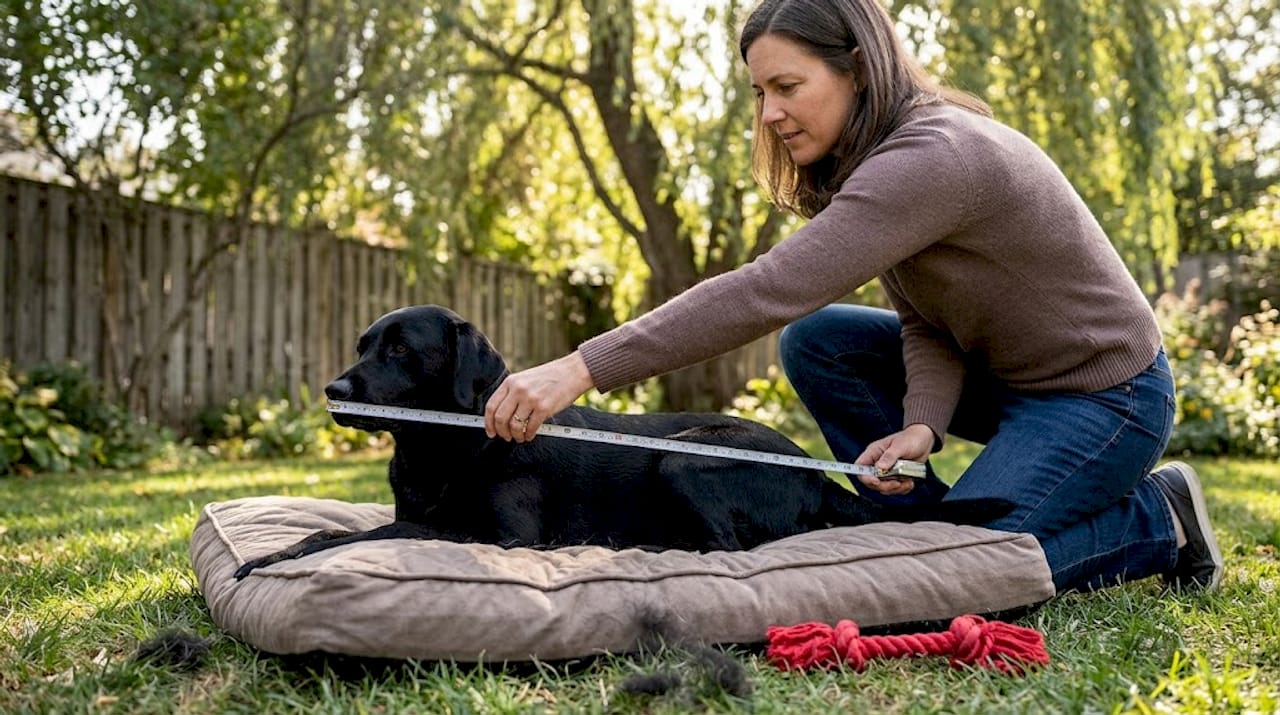
Pro Tip: Snap a photo of your dog sleeping before you go shopping. Pull it up on your phone when you’re comparing bed dimensions. It’s far more reliable than guessing from memory.
When shopping for the best dog beds for small dogs, resist the temptation to buy the smallest option that technically fits. Small dogs often sleep curled but shift positions during the night. A slightly larger bed gives them room to move without falling off the edge.
Choosing the right filling and materials
The filling inside a dog bed determines how long it lasts, how much support it provides, and whether it’s actually safe for your dog to sleep on every night. This is the part of the dog bed buying guide most people skim, and it’s the part that matters most.
Polyester fiber fill
Polyester fiber is the most common and least expensive filling. It’s soft and lightweight, but fiber-fill beds compress and lose support within 6 to 12 months. Once the fill flattens, your dog is essentially sleeping on a thin fabric mat. For puppies or healthy young dogs who just want a soft surface, fiber fill is fine short-term. For older dogs or any dog with joint concerns, it’s a poor long-term investment.
Memory foam and orthopedic foam
Memory foam distributes joint pressure evenly, which makes it genuinely useful for dogs with arthritis or hip dysplasia. Solid slab foam performs better for larger breeds because shredded memory foam can shift and create uneven support over time.
Here’s the detail most product listings won’t tell you: the “orthopedic” label is marketing, not a standard. True orthopedic support requires foam density of 3 to 5 lb per cubic foot. A bed labeled “orthopedic” with low-density foam provides almost no therapeutic benefit. Ask for the foam density spec before you buy.
Orthopedic beds benefit dogs of all ages, not just seniors. Think of it as preventative care. Pairing a quality orthopedic bed with joint support supplements is a smart approach for active dogs and large breeds especially.
What to look for in foam certification
CertiPUR-US certified foam is screened for harmful chemicals and must meet low VOC emission standards, specifically under 0.5 parts per million. Your dog sleeps with their nose inches from the foam for hours every night. Certification matters.
Pro Tip: Cooling gel foam is worth considering for brachycephalic breeds like bulldogs and pugs. These dogs overheat easily, and a gel-infused top layer helps regulate their body temperature during sleep.
- Look for removable, machine-washable covers on any bed you buy
- Waterproof inner liners protect the foam from accidents and extend the bed’s usable life
- Avoid beds with decorative elements like buttons or loose trim that a chewer can remove and swallow
Bed style, placement, and everyday practicality
Choosing the right filling and size gets you 70% of the way there. These final considerations close the gap.
Bolster vs. flat beds
Bolster beds have raised edges on three or four sides. Flat beds have no rim at all. The right choice comes back to sleep style. Curlers and leaners benefit from bolsters. Stretchers find them restrictive. If your dog regularly hangs their head over the edge of furniture, they’ll likely appreciate a bolster to rest their chin on.
Cave and covered beds
Anxious dogs, small breeds, and dedicated burrowers often prefer a covered or hooded bed. The enclosed space mimics a den and reduces environmental stimulation during sleep. If your dog hides under blankets or behind furniture to sleep, a cave bed is worth trying.
Elevated beds
Elevated beds allow air circulation underneath, which prevents heat buildup and provides mild joint relief by keeping your dog off cold or hard floors. They work well for outdoor use and for dogs that run hot. One real limitation: dogs that shift a lot during sleep can roll off the edge, so they’re not ideal for restless sleepers.
Washability and placement
A bed that can’t be washed regularly becomes a hygiene problem within weeks. Dog beds accumulate dander, saliva, and bacteria fast. Removable covers that go straight into a standard washing machine are the baseline requirement for any bed worth buying.
Placement affects whether your dog actually uses the bed. Dogs are social animals and prefer sleeping where they can see or be near their people. Putting a bed in an isolated corner often leads to rejection. Try placing it in the room where your family spends the most time, away from drafts and direct heat vents.
- Avoid placing beds near exterior doors where temperature fluctuates
- Dogs with anxiety sleep better when the bed is positioned against a wall
- Rotate the bed 180 degrees every few weeks to prevent uneven wear on the foam
My honest take after years of watching owners get this wrong
I’ve seen owners spend serious money on a beautiful, well-reviewed bed, only to find their dog sleeping on the floor next to it three days later. Every time, the reason comes back to the same thing: the owner chose the bed they liked, not the bed their dog needed.
The most common mistake I see is buying a bed based on aesthetics or price without spending even five minutes observing the dog. A $200 bed that doesn’t match your dog’s sleep style is a worse investment than a $60 bed that fits perfectly.
What I’ve learned is that the introduction period matters too. Don’t just set a new bed down and expect your dog to use it immediately. Place a worn t-shirt or familiar blanket on the bed for the first few days. Your scent makes it feel safe. Some dogs take a week to accept a new sleep surface, and that’s completely normal behavior, not rejection.
My other strong opinion: stop thinking of orthopedic beds as something you’ll “eventually” get when your dog gets older. Orthopedic support maintains spinal alignment and reduces joint pressure at every age. Buying a quality orthopedic bed for a three-year-old dog is one of the better long-term investments you’ll make for their health. I’ve seen it make a measurable difference in how comfortably dogs move as they age.
Tailor the choice to your specific dog. No guide, including this one, replaces direct observation of the animal you actually live with.
— Christopher
Find the right dog bed at Americanbarkbliss

At Americanbarkbliss, every product is selected with the same priorities this guide covers: comfort, durability, and real support for your dog’s specific needs. The catalog includes beds with washable covers, orthopedic foam options, and styles suited to every sleep personality, from dedicated curlers to full-stretch sprawlers. All products are American-made, so you’re getting quality that holds up through real daily use, not just the first few weeks. Pair a new bed with a sherpa pet blanket to make the transition easier for dogs who need a familiar scent and texture to settle in. Browse the full selection and find the fit your dog actually deserves.
FAQ
How do I know what size dog bed I need?
Measure your dog in their natural sleeping position from nose to tail base, then add 4 to 6 inches. If your dog falls between sizes, always choose the larger option.
What is the best filling for a dog bed?
Memory foam with a density of 3 to 5 lb per cubic foot provides the most durable orthopedic support. Polyester fiber fill is softer but compresses and loses support within 6 to 12 months.
Are orthopedic dog beds only for senior dogs?
No. Orthopedic beds benefit dogs of all ages by maintaining spinal alignment and reducing joint pressure. They work as preventative care for active and younger dogs, not just as a remedy for older ones.
How often should I wash my dog’s bed?
Wash the cover every one to two weeks and the inner liner monthly. Dogs with skin conditions or allergies may need more frequent washing to control dander and bacteria buildup.
Why won’t my dog use their new bed?
The most common reasons are a mismatch between the bed style and the dog’s sleep posture, an unfamiliar scent, or poor placement in the home. Place a worn item of your clothing on the bed and move it to a room where your family spends time to encourage use.
Leave a comment