

What makes a dog bed durable: an American owner's guide
Most dog owners replace a dog bed every year without realizing the problem isn’t their dog — it’s the foam. Understanding what makes a dog bed durable comes down to a handful of specific material and construction choices that most product listings never mention. Foam density, cover fabric, fill type, and seam construction all interact to determine whether a bed lasts six months or six years. This guide breaks down each factor so you can shop with confidence and invest in a bed that genuinely holds up, especially when you’re looking for American-made quality that doesn’t cut corners.
Table of Contents
- Understanding foam density and its impact on durability
- Selecting the right durable cover materials and waterproof construction
- Natural versus synthetic filling: durability and health considerations
- Key construction details that ensure long-term durability
- Outdoor dog beds: unique durability challenges and solutions
- Why many “durable” dog beds fail and how smart owners can avoid common pitfalls
- Find durable, high-quality dog beds crafted for lasting comfort
- Frequently asked questions
Key Takeaways
| Point | Details |
|---|---|
| Foam density matters | Choose dog beds with foam density of 4.0+ lb/ft³ to ensure years of support and durability. |
| Waterproofing is crucial | Look for TPU-laminated barriers and sealed seams for true waterproof dog beds, not just water-resistant fabrics. |
| Cover materials affect lifespan | Durable fabrics like 600D or 1200D ballistic nylon resist tears and claws better than common cotton or polyester. |
| Fill type influences comfort and durability | Natural wool filling offers superior resilience and breathability compared to synthetic fiberfill or cotton. |
| Construction details count | Strong seams, protected zippers, and stable bases prevent common early failure points in dog beds. |
Understanding foam density and its impact on durability
To grasp durability, we first need to understand what foam density means and why it matters so much for lasting support.
Foam density is a measurement of how much material is packed into each cubic foot of foam. It’s expressed in pounds per cubic foot (lb/ft³), and it’s the single most important number you’ll never see on a budget dog bed label. Higher density means more material, more resistance to compression, and a longer useful life.
Here’s the reality: a bed’s lifespan is directly tied to foam density, with 2.0 to 2.5 lb/ft³ foam failing within 6 to 12 months, while 4.5+ lb/ft³ foam maintains shape and support for 3 to 5 years or longer. That’s not a small gap. That’s the difference between replacing a bed twice a year and replacing it once every few years.
Dogs create unique stress on foam that humans don’t. They circle before lying down, sleep in concentrated positions, and generate significant body heat that accelerates foam breakdown. A dog’s pressure points — hips, elbows, and shoulders — concentrate weight in ways that demand higher density than even a human mattress.
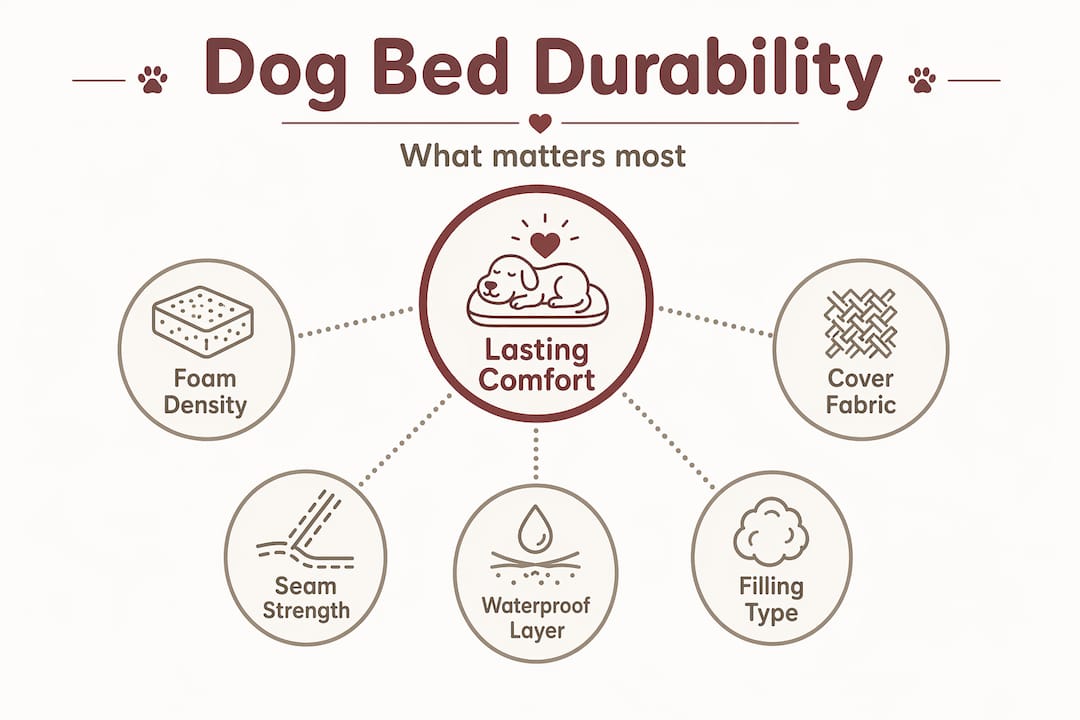
Foam density comparison at a glance:
| Foam density (lb/ft³) | Expected lifespan | Best suited for |
|---|---|---|
| 2.0 to 2.5 | 6 to 12 months | Puppies, light dogs under 20 lbs |
| 3.0 to 3.5 | 1 to 2 years | Medium dogs, occasional use |
| 4.0 to 4.5 | 2 to 4 years | Active adult dogs, daily use |
| 4.5 and above | 3 to 5+ years | Senior dogs, large breeds, heavy use |
One important warning: the word “orthopedic” on a dog bed label means nothing without a density number to back it up. Any manufacturer can call their product orthopedic. What you want is a specific foam density listed in the product description. If it’s not there, assume it’s low density.
Pro Tip: When shopping for durable dog bed material safety, contact the seller directly and ask for the foam density in lb/ft³. A quality manufacturer will answer immediately. A hesitant or vague answer tells you everything you need to know.
Selecting the right durable cover materials and waterproof construction
Having understood foam, we now explore how outer materials and waterproofing affect a bed’s overall durability.
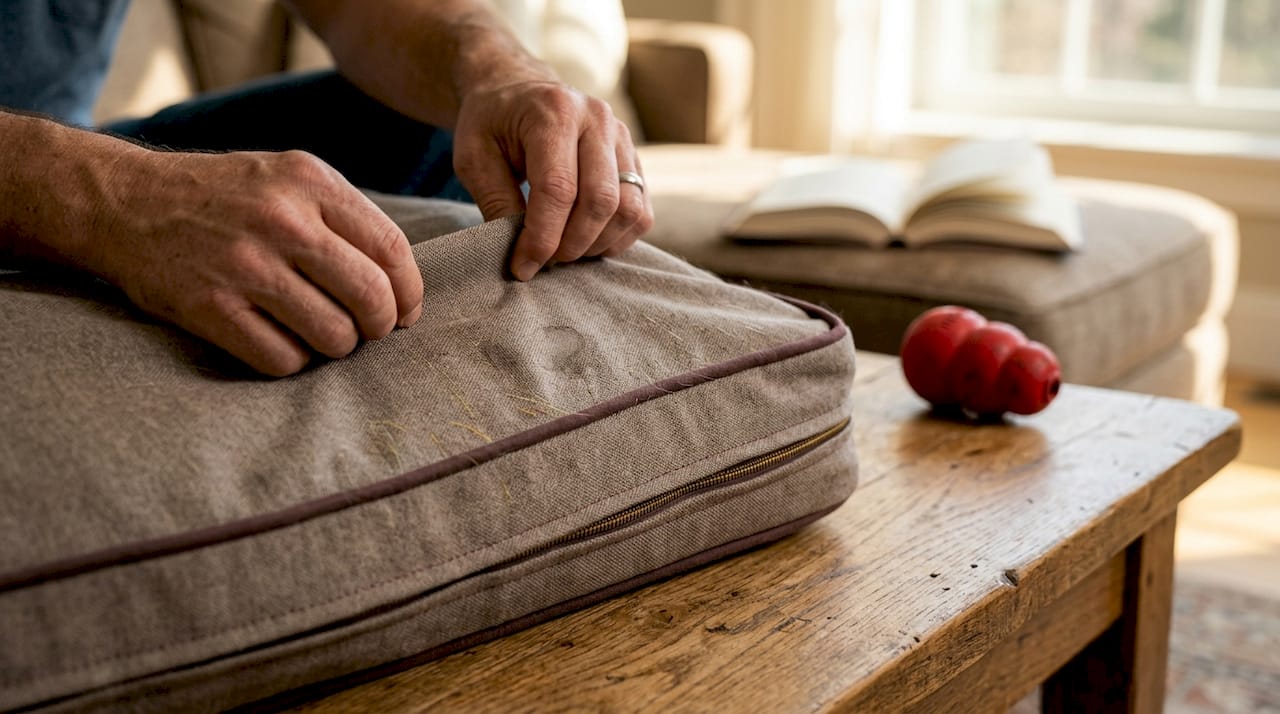
The cover is the first line of defense. It takes the daily beating of claws, saliva, dirt, and repeated washing. Most cheap covers use thin polyester fabric that pills, tears, and loses color within months. Durable covers are built differently.
The gold standard for waterproof construction requires a genuine TPU-laminated barrier and 600D to 1200D ballistic fabric. TPU stands for thermoplastic polyurethane, a flexible waterproof layer bonded directly to the fabric. It doesn’t wash off. It doesn’t peel like a coating. It stays functional through dozens of machine wash cycles.
What to look for in a durable dog bed cover:
- 600D to 1200D Oxford or ballistic nylon fabric for tear and claw resistance
- TPU-laminated inner liner for genuine waterproofing, not just water resistance
- Double-stitched or flatlock seams at all stress points
- Zipper guards that prevent dogs from catching and breaking the zipper pull
- Colorfast, pre-shrunk fabric that holds its shape after washing
The difference between water-resistant and waterproof matters more than most owners realize. Water-resistant coatings wear off after 10 to 20 washes. A TPU liner is structural, not a surface treatment. Once that coating wears through on a cheap cover, moisture reaches the foam, and foam rot begins.
Cover material comparison:
| Material | Durability | Waterproof | Claw resistance | Cleanability |
|---|---|---|---|---|
| Thin polyester | Low | No | Poor | Fair |
| Oxford fabric (600D) | Medium | With TPU liner | Good | Good |
| Ballistic nylon (1200D) | High | With TPU liner | Excellent | Excellent |
| Canvas with TPU | High | Yes | Very good | Very good |
Explore durable dog bed fabric options and durable faux leather options if you want covers that combine toughness with a polished look.
Pro Tip: Before buying, check the care label. If a cover must be hand-washed only, that’s a sign the fabric or waterproofing can’t handle machine washing. A truly durable cover should survive a regular gentle machine cycle without degrading.
Natural versus synthetic filling: durability and health considerations
Beyond foam and cover fabric, the filling choice influences not only durability but also comfort and health outcomes.
Not all dog beds use foam as their primary fill. Many use fiberfill, wool batting, or cotton blends, especially in bolster-style or pillow beds. The material inside those walls and cushions matters enormously for how long the bed holds its shape.
Wool is the clear winner for durability. High-quality wool fibers can bend over 20,000 times without breaking, compared to cotton which breaks after roughly 3,000 bends. That’s a 6 to 7 times advantage in raw resilience. In practical terms, wool bolsters stay firm and supportive far longer than cotton-stuffed ones.
Filling material comparison:
| Fill material | Durability | Breathability | Odor resistance | Allergy risk |
|---|---|---|---|---|
| High-density foam | Excellent | Low to medium | Good | Low |
| Wool batting | Excellent | High | Excellent | Low to medium |
| Cotton | Fair | High | Fair | Low |
| Polyester fiberfill | Poor to fair | Low | Poor | Very low |
Key considerations when choosing fill material:
- Wool is resilient, naturally odor-resistant, and temperature-regulating. It’s ideal for senior dogs or dogs with skin sensitivities.
- Cotton is soft and breathable but compresses quickly. It’s better as a secondary layer than a primary fill.
- Polyester fiberfill is the most common and least durable. It absorbs moisture and odors, which shortens its useful life and can affect your dog’s skin health.
- Natural fibers generally support better airflow, which matters for dogs with joint issues who sleep hot.
For owners researching durable and safe dog bed materials, wool and high-density foam combinations offer the best long-term value. You can also explore best natural filling choices for additional context on how natural materials support senior dog health.
Key construction details that ensure long-term durability
With materials covered, let’s examine the craftsmanship factors that often determine if a dog bed lasts or fails early.
You can have excellent foam and a great cover fabric and still end up with a bed that falls apart in three months if the construction is poor. The features of long-lasting dog beds come down to how everything is put together, not just what it’s made of.
Verifiable construction details like heat-welded seams, TPU-laminated waterproof barriers, and high-denier ballistic fabrics are the only reliable indicators of longevity. Exposed metal or unlined zippers are among the most frequent early failure points in otherwise decent beds.
Construction features that separate durable beds from disposable ones:
- Flatlock or overlock seams distribute stress evenly and resist tearing far better than standard straight stitching
- Zipper guards and locking zipper pulls prevent dogs from opening the bed or catching the zipper on their collar
- Non-slip rubber or grip base keeps the bed from sliding, which reduces the constant shifting that wears down seams and foam
- Reinforced corner stitching on bolster-style beds prevents the most common tear points
- Thick foam base layer rather than a single thin layer that bottoms out under a large dog’s weight
One mistake owners make is ignoring small damage. A loose thread or a small tear in a seam seems minor, but it becomes a major failure point within weeks of regular use. Inspecting the bed monthly and repairing small damage immediately extends its life significantly.
Pro Tip: Look for durable zipper and seam construction before you buy. Pull on the seams in the product photos if you can see them. Quality stitching looks tight and even. Loose, widely spaced stitching is a red flag regardless of what the product description claims.
Outdoor dog beds: unique durability challenges and solutions
Indoor durability differs from outdoor demands. Let’s explore what makes a dog bed stand up to outdoor conditions.
An outdoor dog bed faces threats that indoor beds never encounter: ground moisture, UV exposure, temperature swings, insects, and airborne debris. A bed that lasts five years indoors might fail in one season outside if it’s not built for the conditions.
Even the most expensive outdoor bed fails if it lacks drainage or airflow, because trapped moisture causes foam rot and bacterial growth. That’s the core outdoor durability problem. Waterproof fabric keeps water out from above, but ground moisture and condensation can still accumulate underneath and inside the bed.
What to look for in outdoor dog beds:
- Elevated cot-style frames that lift the bed off the ground entirely, eliminating contact with damp surfaces
- Breathable mesh panels in the base or sides that allow airflow and prevent moisture buildup
- UV-stabilized fabric that resists fading and weakening from sun exposure
- Drainage channels or perforated foam that allow any moisture that does enter to escape
- Mold-resistant fill materials like open-cell foam or quick-dry polyester specifically rated for outdoor use
Climate matters too. A dog in humid Florida needs different outdoor bed features than a dog in dry Arizona. In high-humidity climates, airflow and drainage are the top priorities. In dry, sunny climates, UV resistance and heat management matter most.
Pro Tip: Store outdoor beds inside or under cover when not in use. Even the most weather-resistant bed degrades faster with constant UV and moisture exposure. Pairing a quality bed with a outdoor dog bed accessories setup keeps your outdoor space organized and extends the life of your investment.
Why many “durable” dog beds fail and how smart owners can avoid common pitfalls
Now that we understand construction basics, here’s where many durable dog bed buyers go wrong and how you can be smarter about it.
The word “indestructible” on a dog bed label is a marketing term, not a specification. We’ve seen it applied to beds with 2.0 lb/ft³ foam and single-stitched seams. Most consumers mistakenly equate “indestructible” labels with actual durability, when real durability requires verifiable construction like TPU liners and high-denier ballistic fabric. Zippers are frequent failure points that these labels never address.
“Military-grade” is another phrase that means nothing without specifics. Military-grade fabric has actual standards behind it. Military-grade as a marketing phrase on a pet product does not. Ask for denier ratings, foam density numbers, and seam construction details. If a brand can’t provide them, the label is decoration.
The second mistake is ignoring maintenance. Even a genuinely high-quality bed degrades faster when it’s never cleaned, never rotated, and left in direct sunlight. Rotating the foam insert monthly prevents uneven compression. Washing the cover regularly prevents bacterial buildup that breaks down fabric fibers over time.
The third mistake is buying a bed that doesn’t fit the dog’s actual habits. A dog that chews will destroy any bed eventually. No cover material is truly chew-proof. If your dog chews bedding, behavior modification is the real solution. In the meantime, choosing a bed with a replaceable cover protects your foam investment even when the cover takes damage.
Finally, size matters for longevity. A large dog on a small bed concentrates all their weight on a fraction of the foam surface, accelerating compression and wear. Choosing a bed sized generously for your dog distributes weight evenly and extends the foam’s useful life. You can avoid dog bed marketing traps by knowing exactly what construction details to ask for before you buy.
Find durable, high-quality dog beds crafted for lasting comfort
You now know exactly what to look for: foam density above 4.0 lb/ft³, TPU-laminated covers, ballistic fabric, and reinforced seam construction. The next step is finding products that actually deliver on those specs, made by people who care about getting it right.
At American Bark Bliss, every product is selected with American craftsmanship and material quality as the standard. Our dog beds are built with high-density foam and covers designed to last through years of real daily use. While you’re setting up your dog’s comfort space, explore our dog toy storage organizer to keep things tidy, and our non-slip pet bowls for a complete setup that’s built to last. Quality isn’t a luxury when it comes to your dog’s daily comfort — it’s the only standard worth shopping to.
Frequently asked questions
What foam density should I look for to ensure a dog bed lasts several years?
Aim for foam density of 4.0 lb/ft³ or higher. High-density foam at 4.5+ lb/ft³ maintains its shape and support for 3 to 5 years or longer under regular use.
Are all waterproof dog beds truly waterproof?
No. Many beds are only water-resistant, which wears off with washing. Look for beds with a genuine TPU-laminated barrier and sealed seams for real, lasting waterproof protection.
Is wool filling better than synthetic for durability?
Yes, significantly. Wool fibers can bend over 20,000 times without breaking, making wool far more resilient and breathable than synthetic fiberfill or cotton over the long term.
How do I maintain my dog bed to extend its life?
Wash removable covers regularly on a gentle cycle, rotate the foam insert monthly to prevent uneven wear, and keep the bed away from direct sunlight. Proper maintenance extends foam bed life to its full 3 to 5 year potential.
What makes outdoor dog beds different in terms of durability?
Outdoor beds must manage moisture and airflow to prevent foam rot and bacterial growth. Trapped moisture is the primary failure cause, so look for elevated designs, breathable bases, and drainage-friendly construction.
Leave a comment