

Types of Dog Accessories: Style, Safety and Function
The market for types of dog accessories has never been bigger or more confusing. You can spend 20 minutes just scrolling through collar options before you’ve even thought about leashes, beds, or travel gear. The challenge isn’t finding accessories. It’s knowing which ones actually serve your dog’s needs, which ones are worth the money, and how to tell the difference between a product that looks great in photos and one that holds up in real life. This article walks you through every major category, what to look for, and how to make choices you won’t regret.
Table of Contents
- Key takeaways
- Types of dog accessories: what to evaluate before you buy
- Core accessory categories: collars, leashes, harnesses, beds, and grooming tools
- Functional and enrichment accessories: toys, cooling gear, travel, and safety equipment
- Comparison of popular accessory types
- How to choose dog accessories based on your dog’s lifestyle
- My take on balancing style and safety
- Find premium dog accessories at Americanbarkbliss
- FAQ
Key takeaways
| Point | Details |
|---|---|
| Function beats aesthetics | Evaluate accessories by safety, fit, and purpose before considering color or style. |
| Fit must be tested in motion | Check harnesses and collars while your dog walks to prevent slipping, chafing, or escape. |
| Core gear forms a safety system | A collar with ID, a leash, and a crate work together to protect your dog from day one. |
| Enrichment accessories matter | Puzzle toys, snuffle mats, and chews reduce destructive behavior and support mental health. |
| Style and safety can coexist | Many modern accessories combine good design with functional, breed-appropriate features. |
Types of dog accessories: what to evaluate before you buy
Before you pick anything based on looks, you need a framework. Most accessories fail owners not because they’re low quality on paper, but because they were chosen without thinking through the dog’s specific situation.
Here’s what to assess before purchasing any dog gear:
- Fit and escape prevention. A collar that fits at rest can still slip over a dog’s head during a sudden lunge. A harness that looks right in the store may chafe under the armpit after a half-mile walk. Fitting issues frequently cause failure in supposedly anti-pull harnesses, regardless of the brand’s marketing claims.
- Material safety. Cheap hardware on collars and leashes can snap under pressure. Avoid accessories with toxic dyes or coatings, especially for dogs that chew their gear.
- Breed and size specifics. A flat collar works fine on a Labrador but is a poor choice for a Pug or a Greyhound. Brachycephalic breeds and sighthounds have anatomical traits that make certain collar styles genuinely risky.
- Activity level. A working dog or an active hiker needs different gear than a small city dog who takes short daily walks.
- Style and owner preference. The role of style in pet products is real. You are more likely to use gear consistently when you like how it looks. Style matters. It just shouldn’t be the only thing that matters.
Pro Tip: Always test collars, harnesses, and even boots with your dog actively moving. A two-minute walk around your yard will reveal fit issues that a static try-on will miss completely.
Core accessory categories: collars, leashes, harnesses, beds, and grooming tools
The Royal Kennel Club recommends grouping accessories by function rather than aesthetics, and that framing is genuinely useful. Here are the core categories every dog owner needs to understand.
Collars and ID tags
Flat buckle collars are the most common collar style and work well for most dogs. Martingale collars are designed for dogs that back out of standard collars. Breakaway collars release under pressure and are popular for dogs that spend time in crates or off-leash areas. Whatever style you choose, pair it with an ID tag before your dog ever leaves the house.
Leashes
Standard 4 to 6 foot leashes give you the most control and are the best all-around choice for most situations. Retractable leashes are popular but have real problems: they encourage pulling behavior and are much harder to control in unexpected situations. For puppies especially, a fixed-length leash is the right call.
Harnesses
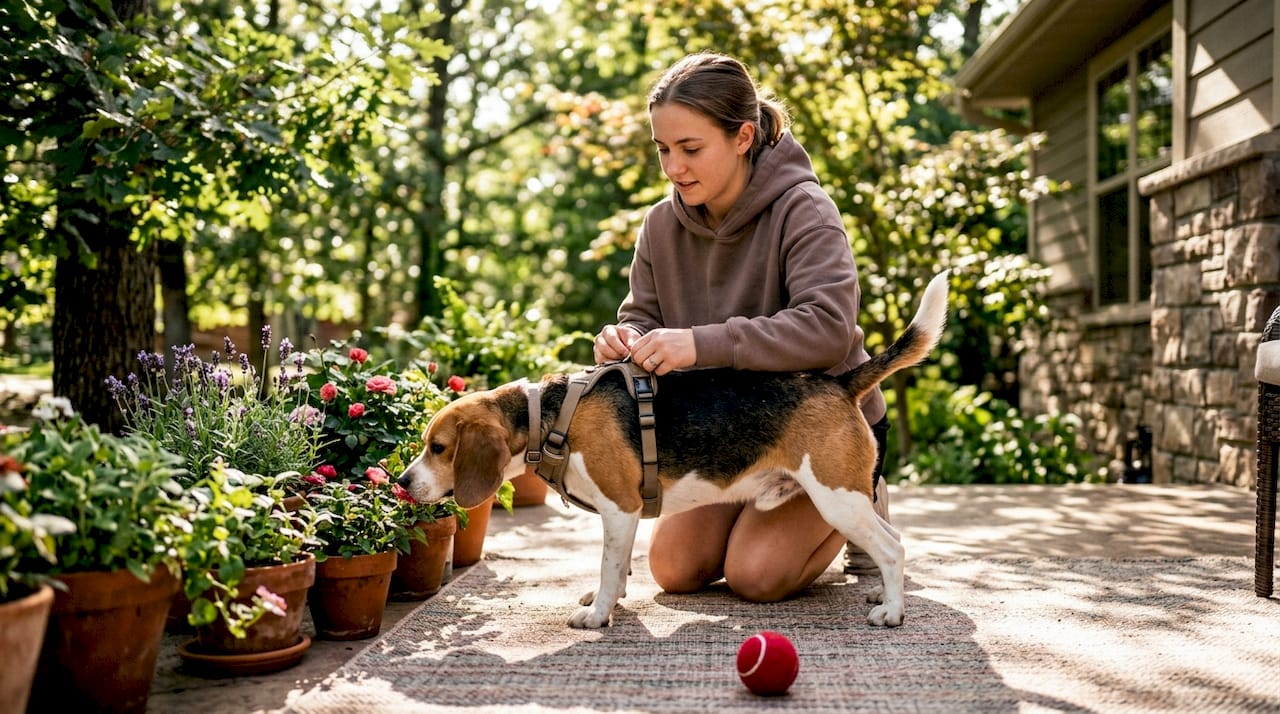
Front-clip harnesses redirect a dog toward you when they pull, making them excellent for training. Back-clip harnesses are more comfortable for calm dogs and short walks. No-pull designs typically combine both clip positions with added padding. The key detail to remember: fit must be verified in motion, not just standing still.
Beds and crates
Beds and crates serve different purposes. A bed is for comfort and rest. A crate is a containment and training tool that, when used correctly, gives dogs a sense of security. Both are worth investing in. Setting up a crate before a puppy arrives reduces stress significantly during the first weeks.
Grooming tools
Slicker brushes, deshedding tools, nail clippers, and ear cleaning supplies are the basics every dog owner needs. Your specific dog’s coat type determines which brush style is right. Short-coated breeds need less frequent brushing than double-coated breeds, but both need nail care on a regular schedule.
Functional and enrichment accessories: toys, cooling gear, travel, and safety equipment
Once you have the core gear handled, this category is where dog ownership gets genuinely interesting. These are the accessories that improve your dog’s quality of life beyond the basics.
Enrichment and mental stimulation
Puzzle toys, durable chews, and snuffle mats are proven tools for reducing boredom-related behaviors like chewing furniture or excessive barking. Rotating three to five different enrichment toys keeps dogs engaged longer than offering the same toy every day.
Cooling mats and seasonal accessories
Cooling mats use pressure-activated gel to draw heat away from your dog’s body without refrigeration. They’re particularly useful for flat-faced breeds that overheat quickly. In winter, coat insulation matters for short-haired and small breeds. Seasonal accessories are not luxury items for most dogs. They’re practical gear.
Travel accessories
Dog travel accessories cover a wide range. Car seat belts and vehicle harnesses protect your dog in a collision. Collapsible bowls and travel carriers round out the kit for road trips or flights. Travel safety is genuinely underrated by most dog owners.
Safety accessories
GPS trackers attach to collars and let you monitor your dog’s location in real time. First-aid kits designed for dogs should be in every car and hiking bag. Paw protection is one of the fastest-growing categories in dog gear: paw covers and boots protect against hot pavement, ice, and road salt, with newer styles combining breathable fabrics and adjustable fasteners.
Pro Tip: For travel, always test your dog’s carrier or vehicle harness at home before a long trip. An unfamiliar piece of gear in a stressful environment is a recipe for anxiety on both sides.
Comparison of popular accessory types
Choosing within a category can be just as hard as choosing between categories. Here’s a direct comparison of the most commonly debated options.
| Accessory type | Best use case | Price range | Durability | Maintenance |
|---|---|---|---|---|
| Standard leash (4-6 ft) | Training, walks, all breeds | $10-$40 | High | Wipe clean or machine wash |
| Retractable leash | Calm dogs in open spaces only | $15-$50 | Moderate | Clean cord, replace mechanism over time |
| Orthopedic dog bed | Senior dogs, joint issues | $50-$200 | High | Removable, washable cover |
| Elevated bed | Warm climates, outdoor use | $30-$120 | Very high | Hose down, air dry |
| Plush bed | Small breeds, indoor-only dogs | $20-$80 | Moderate | Machine wash frequently |
| Front-clip harness | Dogs in training, pullers | $25-$80 | High | Spot clean or hand wash |
| Back-clip harness | Calm, leash-trained dogs | $20-$60 | High | Spot clean or hand wash |
The biggest takeaway from this table is that “best” is always relative to your dog’s situation. A plush bed is perfect for a Chihuahua in a climate-controlled apartment. It is a poor match for a 90-pound dog who runs in the yard before coming inside.
How to choose dog accessories based on your dog’s lifestyle
Knowing the categories is only half the work. This is the practical side: matching what you know to what you buy.
- Assess your dog’s activity level honestly. A dog that walks three miles a day needs a harness built for sustained use. A dog that mostly lounges needs a durable, washable bed more than performance gear.
- Match accessories to your climate. Dogs in hot regions benefit from cooling mats, paw boots for pavement, and moisture-wicking collars. Dogs in cold climates need insulated coats and salt-resistant paw covers.
- Factor in travel frequency. If you drive with your dog regularly, a car safety harness is not optional. If you fly occasionally, invest in an airline-approved carrier that fits under the seat.
- Account for your dog’s breed traits. Greyhounds need breakaway or wide martingale collars. Flat-faced breeds need harnesses over collars for breathing safety. Herding breeds need mental enrichment toys more than most other types.
- Build a maintenance habit into your plan. Every accessory has a lifespan. Learn how to clean dog accessories properly and schedule replacements before gear becomes a safety issue.
- Budget with purpose. You do not need to spend the most on every item. Spend most on the gear that contacts your dog’s body directly (harness, collar, bed) and where failure would have serious consequences (car restraints, ID systems).
- Think about the examples of stylish dog accessories that also tick functional boxes. Reflective stitching on a collar looks sharp and improves nighttime visibility. Matching leash and collar sets that are also made from quality hardware serve both goals without compromise.
My take on balancing style and safety
I’ve seen a lot of dog owners, especially first-time buyers, make the same mistake. They buy the accessory that photographs best and figure the rest will work itself out.
What I’ve learned from watching this play out is that style and safety are not actually in conflict. The problem is the order in which people apply them. When you start with fit, material quality, and function, you end up with gear that is also genuinely good-looking because well-made products tend to have clean, intentional design. When you start with aesthetics and work backward, you often end up with something that looks great in the first week and starts failing by month two.
The common mistake I see gift givers make is buying accessories sized for an average dog without knowing the actual measurements. Collars especially. A collar that doesn’t fit is worse than no collar at all because it creates a false sense of security.
My advice to first-time buyers: start with the essentials, get those right, and then add the style layer on top. The best pet accessories for dog lovers are the ones that get used every single day. Gear that sits in a drawer because it didn’t work out is just money gone.
— Christopher
Find premium dog accessories at Americanbarkbliss
Americanbarkbliss carries a curated selection of American-made dog accessories built to the standard this article describes: functional first, stylish by design, and durable enough to last. Whether you’re outfitting a new puppy or upgrading your current setup, the catalog covers every major category covered here. The interactive chew toy with a detachable squeaker and treat fill is one of the top picks for enrichment, and it’s the kind of product that earns its place in daily rotation. Explore the full site at Americanbarkbliss for current deals on beds, harnesses, toys, and more.
FAQ
What are the main types of dog accessories?
The main types of dog accessories include collars, leashes, harnesses, beds, crates, grooming tools, enrichment toys, travel gear, and safety equipment. Most experts recommend grouping them by function, such as movement control, comfort, containment, and enrichment.
Are retractable leashes a good choice?
Retractable leashes are generally not recommended for puppies or dogs in training because they encourage pulling and reduce owner control. A standard 4 to 6 foot leash gives you much better handling in most real-world situations.
How do I know if a harness fits correctly?
Fit should be checked while your dog is actively walking, not just standing still. A properly fitted harness won’t slip, chafe, or restrict shoulder movement, and you should be able to fit two fingers under every strap.
What accessories do I need for traveling with my dog?
For road travel, a vehicle harness or crash-tested carrier is the priority. Collapsible bowls, a travel first-aid kit, and paw protection for unfamiliar terrain round out a practical travel kit for most dogs.
How often should I replace dog accessories?
Collars and leashes should be inspected monthly for fraying, cracked hardware, or stretch. Beds typically need replacing every one to two years depending on material. Any accessory showing signs of wear that could compromise safety should be replaced immediately.
Leave a comment