

How to clean dog accessories: keep gear safe and lasting
Your dog’s collar, toys, and bowls are in contact with their mouth, skin, and paws every single day. Knowing how to clean dog accessories properly is not just about appearances. Dirty gear harbors bacteria, yeast, and mold that cause skin infections, digestive illness, and odor problems. For owners who invest in high-quality, American-made pet accessories, poor cleaning habits can also degrade materials far faster than normal wear. This guide gives you the exact methods, schedules, and product choices to keep every piece of your dog’s gear genuinely clean and built to last.
Table of Contents
- What you need: essential tools and cleaning agents
- Step-by-step cleaning methods by accessory type
- Common mistakes and verification: ensuring your dog accessories are truly clean
- Maintaining hygiene long-term: cleaning frequency and expert tips
- Why most dog accessory cleaning advice misses the mark
- Keep your dog accessories clean and safe with American Bark Bliss
- Frequently asked questions
Key Takeaways
| Point | Details |
|---|---|
| Use mild cleaners | Choose fragrance-free detergents or baking soda solutions to clean dog accessories without harming your pet or materials. |
| Thorough rinsing | Rinse accessories completely until no slippery feel or chemical scent remains to ensure safety. |
| Material-specific care | Follow cleaning steps tailored for plush, rubber, rope, and collar materials to maintain quality and hygiene. |
| Regular cleaning schedule | Clean bowls daily, toys weekly, and collars monthly to prevent bacterial buildup and odors. |
| Proper drying | Air-dry toys and accessories fully, using sunlight for rope items to prevent mold and bacteria growth. |
What you need: essential tools and cleaning agents
Before you touch a single collar or chew toy, having the right supplies matters more than most people realize. The safest cleaning approach involves mild, fragrance-free detergents and specific disinfectants like bleach in diluted concentrations as recommended by the CDC. Fragranced detergents might smell fresh to you, but the synthetic compounds in them can irritate your dog’s respiratory system and skin with repeated exposure.
For disinfection, the CDC recommends soaking pet items in 1/4 cup bleach per gallon of water for 10 minutes. That ratio matters. Too concentrated and you risk leaving toxic residue. Too weak and you are not actually disinfecting anything. An enzyme cleaner for pet stains is another essential. Unlike bleach, enzyme cleaners break down organic matter at the molecular level, which makes them ideal for food residue, saliva buildup, and odor.
One underrated option: baking soda as a non-toxic cleaner has real science behind it. Baking soda in hot water reduces bacteria like E. coli by up to 10,000 times, making it one of the smartest homemade pet accessory cleaner options available. It is also completely safe if trace amounts remain on a toy your dog mouths.
Essential cleaning supplies at a glance:
- Mild, fragrance-free dish soap or laundry detergent
- Enzyme-based cleaner for organic residue and odor
- Baking soda for non-toxic scrubbing and deodorizing
- Diluted bleach solution (1/4 cup per gallon of water) for non-porous surfaces
- Soft-bristle scrub brush for crevices
- Microfiber cloths for wiping and drying
- EPA-registered disinfecting wipes for quick sanitizing between washes
What to avoid entirely:
| Cleaning agent | Why to avoid it |
|---|---|
| Fabric softener | Leaves a waxy residue dogs can ingest; degrades fabric fibers |
| Scented detergents | Synthetic fragrance irritates dogs’ airways and skin |
| Undiluted bleach | Corrodes materials and leaves toxic residue if not rinsed perfectly |
| Ammonia-based cleaners | Toxic to dogs even in small amounts; mimics urine scent |
| Antibacterial dish soap with triclosan | Disrupts hormonal systems in pets with repeated exposure |
Now that you know what supplies to gather, let’s explore step-by-step methods for cleaning different types of dog accessories effectively.
Step-by-step cleaning methods by accessory type
Not all dog accessories clean the same way. Material determines method, and using the wrong approach on the wrong material either leaves bacteria behind or destroys the accessory faster than regular use would.
Rubber, silicone, and hard plastic toys:
- Rinse off loose debris under warm running water immediately after use.
- Fill a basin with hot soapy water using a mild, fragrance-free dish soap.
- Submerge the toys and let them soak for 5 to 10 minutes.
- Scrub all surfaces with a soft-bristle brush, paying close attention to textured ridges and crevices where bacteria collect.
- Rinse under running water until the water runs completely clear and no soap film remains.
- Air dry on a clean towel or drying rack. Never stack wet toys together.
For cleaning stainless steel dog bowls, hot soapy water daily is sufficient, but run them through the dishwasher on the sanitize cycle weekly. Stainless steel is one of the most hygienic bowl materials available precisely because it does not harbor bacteria in microscopic scratches the way plastic does.
Plush and fabric toys:
Soft toys require gentle cycles with mild detergent, extra rinsing, and air drying to avoid residue and preserve fabric integrity. Machine wash on a gentle cycle, use cold or warm water, skip the fabric softener entirely, and run an extra rinse cycle. Tumble dry on low only if the toy has no squeaker or electronic component. Otherwise, air dry completely before returning it to your dog.
Collars and leashes:
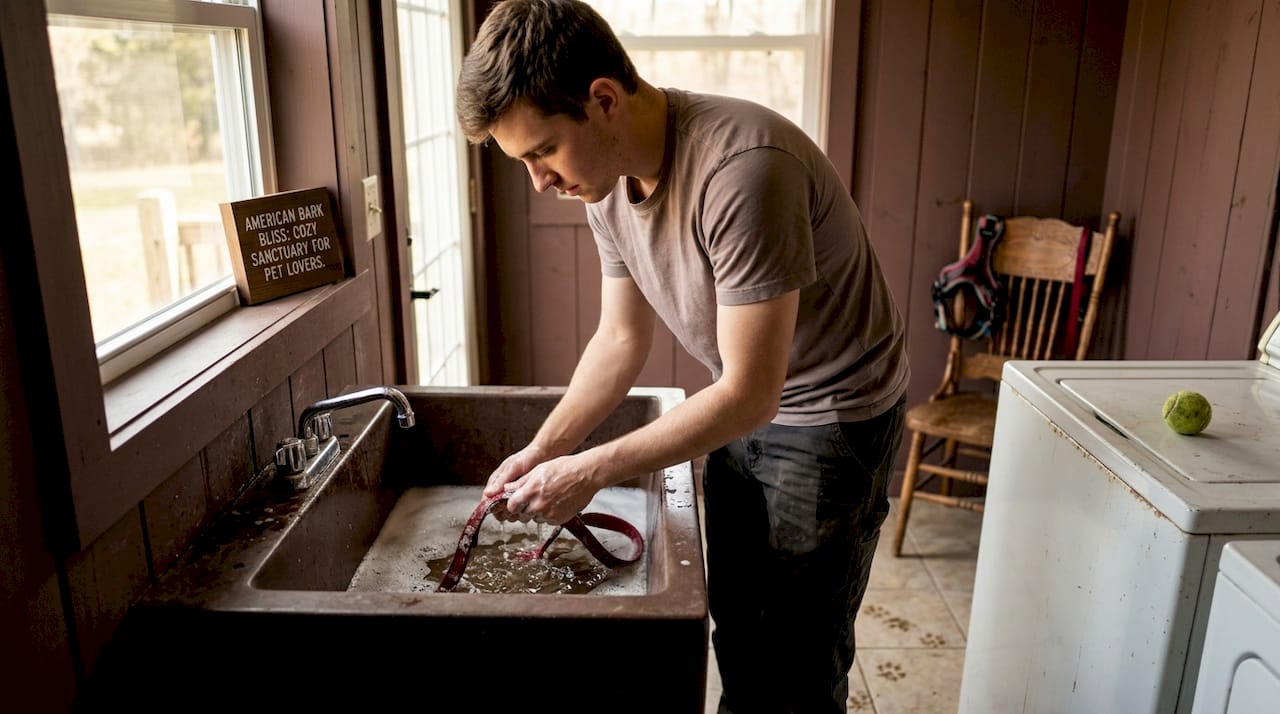
Most owners neglect collars and leashes, which need monthly or more frequent washing to prevent bacterial buildup that causes skin irritation. Remove all metal tags and hardware before washing. Nylon and fabric collars can go in a mesh laundry bag in the washing machine on a gentle cycle. Leather collars should never be submerged. Wipe leather with a damp cloth and a tiny amount of mild soap, then condition with a leather conditioner to prevent cracking.
Kong-style and treat-dispensing toys:
Toys with hollow centers must be cleaned immediately after use to remove food debris and bacteria before they harden or begin to mold. Use a long-handled bottle brush to scrub the interior. Soak in hot soapy water for 10 minutes if residue is stubborn. For a deeper clean, use an enzyme cleaner for tough stains inside the cavity, let it sit for 5 minutes, then scrub and rinse thoroughly.
Cleaning method comparison by accessory type:
| Accessory type | Recommended method | Disinfectant suitable? | Drying method |
|---|---|---|---|
| Rubber/silicone toys | Hot soapy water soak + scrub | Yes, diluted bleach | Air dry |
| Hard plastic toys | Dishwasher (top rack) or soak | Yes, diluted bleach | Air dry |
| Plush/fabric toys | Gentle machine wash | No bleach; enzyme cleaner only | Air dry or low tumble |
| Nylon collars/leashes | Machine wash, mesh bag | EPA wipes for spot sanitizing | Air dry flat |
| Leather collars | Wipe with damp cloth | No bleach; leather-safe cleaner | Air dry away from heat |
| Stainless steel bowls | Dishwasher or hot soapy water | Diluted bleach rinse monthly | Air dry or towel dry |
| Kong/treat toys | Bottle brush + enzyme soak | Yes, diluted bleach | Air dry completely |
Pro Tip: Turn plush toys inside out before machine washing. The interior seams collect the most saliva and bacteria, and washing from the inside out gives detergent direct access to the dirtiest parts.
With cleaning steps clear, let’s discuss how to avoid common mistakes and ensure your dog accessories are truly safe and fresh for your pet.
Common mistakes and verification: ensuring your dog accessories are truly clean
Cleaning dog accessories incorrectly can actually make things worse. Residue from cleaning products is often more dangerous than the original dirt.
“The sniff test and feel test reliably indicate if a dog accessory is fully clean. If it smells like chemicals or feels slippery, it has not been rinsed enough.” How to Clean Dog Toys Safely
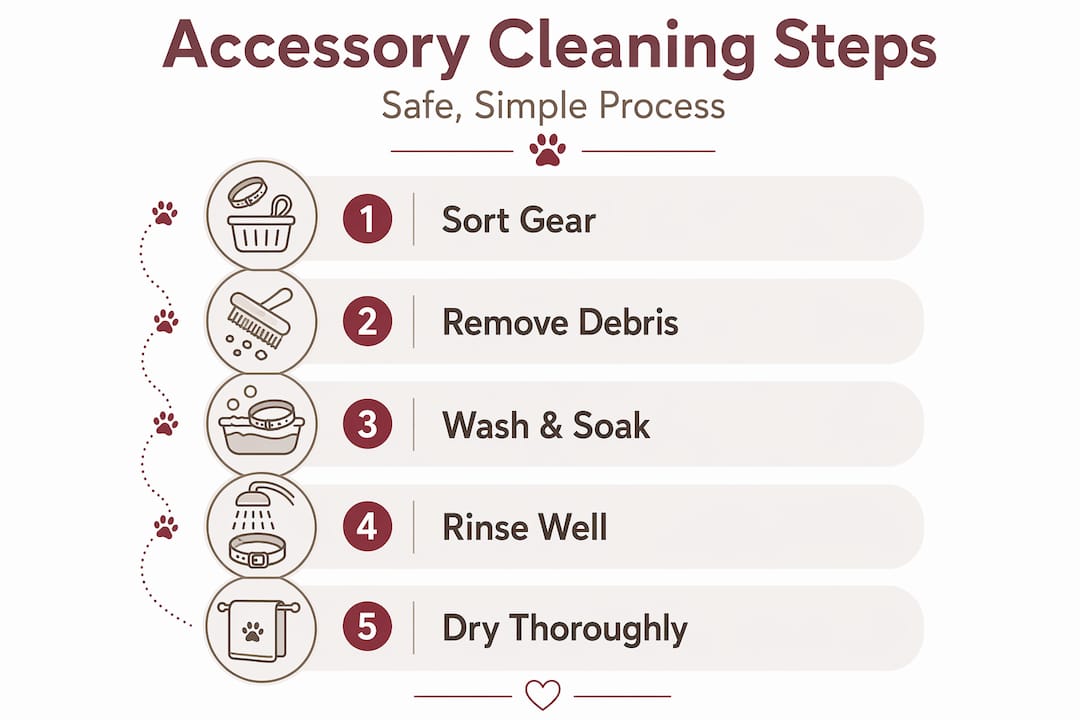
Residual cleaning agents or slipperiness indicate insufficient rinsing and can cause oral irritation in dogs. A toy that smells like soap is a toy that still has soap on it. Run it under water again. Then again. The rinse step is where most people rush, and it is the most important step of all.
The most common cleaning mistakes dog owners make:
- Using fabric softener on plush toys or dog beds, which leaves a waxy film that dogs ingest when they mouth their toys
- Soaking leather accessories in water, which causes the material to stiffen, crack, and deteriorate
- Skipping the extra rinse cycle when machine washing fabric toys or collars
- Putting accessories away while still damp, which creates the exact conditions mold and bacteria need to thrive
- Using the same sponge or brush for pet items and household dishes, which transfers bacteria both ways
Trapped moisture causes mold and bacteria; drying plush and rope toys thoroughly, ideally in sunlight, is essential. Sunlight is genuinely underrated here. UV rays from direct sun exposure kill surface bacteria and mold spores without any chemical involvement. A rope toy dried in a sunny spot for two hours is safer than one dried indoors overnight.
Pro Tip: After washing plush toys, press them firmly between two dry towels to squeeze out as much water as possible before air drying. This cuts drying time significantly and reduces the window for mold to develop.
One rule that is non-negotiable: if a toy still smells sour after a thorough cleaning and complete drying, throw it out. That smell is bacterial activity that has penetrated deep into the material. No amount of re-cleaning will fix it, and continuing to give it to your dog is a health risk.
After learning verification techniques, let’s consider expert perspectives on maintaining hygiene while protecting your pet’s favorite accessories.
Maintaining hygiene long-term: cleaning frequency and expert tips
A one-time deep clean is not a maintenance plan. Dog gear accumulates bacteria, food residue, and environmental debris continuously, so the schedule you keep matters as much as the method you use.
Water and food bowls should be washed daily; collars and leashes at least monthly, or weekly for sensitive pets. Wet food bowls need washing after every single meal. Bacteria in wet food residue can double in population within two hours at room temperature. Dry food bowls are more forgiving but still need daily washing. Non-slip pet bowls with smooth interior surfaces make daily washing faster and more thorough than bowls with textured interiors that trap debris.
Recommended cleaning frequency by accessory:
- Water bowls: Daily wash, weekly sanitize with diluted bleach solution
- Dry food bowls: Daily wash, weekly sanitize
- Wet food bowls: After every meal, weekly sanitize
- Rubber and hard toys: Weekly, or immediately after outdoor use
- Plush toys: Every one to two weeks, more often for heavy chewers
- Collars and nylon leashes: Monthly minimum, weekly for dogs with skin conditions
- Dog beds and blankets: Every one to two weeks, or immediately after accidents
- Harnesses: Monthly, or after muddy outdoor activities
Regular cleaning not only improves hygiene but also prevents odors and skin irritations caused by bacteria. When you stay on schedule, each individual cleaning session is also faster and easier because you are not fighting weeks of accumulated buildup.
Pro Tip: Keep a simple weekly cleaning rotation posted somewhere visible, like the inside of a cabinet door. Assign specific accessories to specific days of the week. This removes the mental load of remembering what was last cleaned and ensures nothing gets skipped for months at a time.
Rotating toys is another underused strategy. If your dog has a collection of toys, cycle them in and out of rotation. When a toy is “out,” it gets cleaned and stored. This keeps the active toys cleaner longer and gives you a natural cleaning checkpoint every few days.
With a clear maintenance plan, let’s now take a unique look at common misconceptions and fresh approaches to cleaning dog accessories.
Why most dog accessory cleaning advice misses the mark
Here is the uncomfortable truth most cleaning guides skip: the cleaning product itself is often the biggest risk, not the dirt it is meant to remove.
The primary danger in cleaning dog accessories is not dirt but residual cleaning agents left behind, which can irritate or poison dogs. Think about that for a moment. A muddy toy that your dog mouths is unpleasant. A toy coated in a thin film of bleach or scented detergent that your dog mouths is actively harmful. The dirt is visible and obvious. The residue is invisible.
Many owners mistakenly use bleach and fabric softeners, which degrade quality or leave toxic residues; mild detergents and thorough rinsing are consistently the better approach. We see this pattern repeatedly. Someone reads that bleach disinfects, so they use it generously and rinse quickly. The result is a “clean” toy that smells faintly chemical and leaves a slick film. That film is ingested every time the dog plays with it.
The other overlooked failure point is drying. Cleaning advice almost always ends at “rinse and dry.” But drying is not passive. A plush toy tossed into a toy bin while still slightly damp will develop mold within 24 to 48 hours in most home environments. That toy then goes back into your dog’s mouth. The cleaning was worse than useless because it created false confidence.
Our perspective, grounded in what actually works: use the mildest effective cleaner for each material, rinse until you are certain and then rinse once more, and treat drying as an active step that requires time and airflow. Baking soda and hot water, enzyme cleaners, and mild dish soap handle the vast majority of dog accessory cleaning needs without the residue risk of stronger chemicals. Save the diluted bleach solution for genuine disinfection needs on non-porous surfaces, and always follow it with a thorough rinse and complete drying in fresh air.
Keep your dog accessories clean and safe with American Bark Bliss
Understanding the right methods is one thing. Having the right products makes it all significantly easier.
At American Bark Bliss, we carry accessories designed with cleanability in mind, including stainless steel bowls that go straight into the dishwasher and materials that hold up to regular washing without degrading. Our enzymatic stain and odor remover tackles the organic residue that soap alone cannot break down, making it the most practical addition to any dog owner’s cleaning routine. And once your gear is clean, our fabric dog toy storage bin keeps toys organized and off the floor, reducing how quickly they pick up new dirt and bacteria between washes. Every product we carry is selected with your dog’s safety and your convenience in mind.
Frequently asked questions
How often should I clean my dog’s collars and leashes?
You should clean collars and leashes at least monthly, or weekly if your dog has sensitive skin or frequent outdoor exposure, to prevent bacterial buildup and odors. A monthly wash is the baseline minimum, not the ideal.
Can I use bleach to clean my dog’s toys safely?
Yes, but only in the correct dilution. The CDC’s recommended soak is 1/4 cup bleach per gallon of water for 10 minutes, followed by thorough rinsing and complete air drying before your dog uses the toy again.
Is baking soda effective for cleaning dog accessories?
Absolutely. Baking soda in hot water can reduce bacteria by up to 10,000 times, making it one of the most effective non-toxic options for routine cleaning of most pet accessories.
How do I know if my dog’s toy is fully clean?
Use the sniff and feel test: a properly cleaned toy has no chemical scent and no slippery residue on the surface. If either is present, rinse again until both are gone.
What should I do if a rope toy smells bad after cleaning?
Discard it. A sour smell after cleaning means bacteria have penetrated deep into the fibers, and no amount of re-washing will fully eliminate the problem. Continuing to give it to your dog creates an ongoing health risk.
Leave a comment