

The Role of Quality in Dog Accessories for Safety
TL;DR:
- High-quality dog accessories depend on safe, durable materials, and thorough manufacturing practices. Thoughtful design ensures comfort, functionality, and style for both dogs and owners. Investing in premium gear offers long-term safety, cost savings, and greater satisfaction.
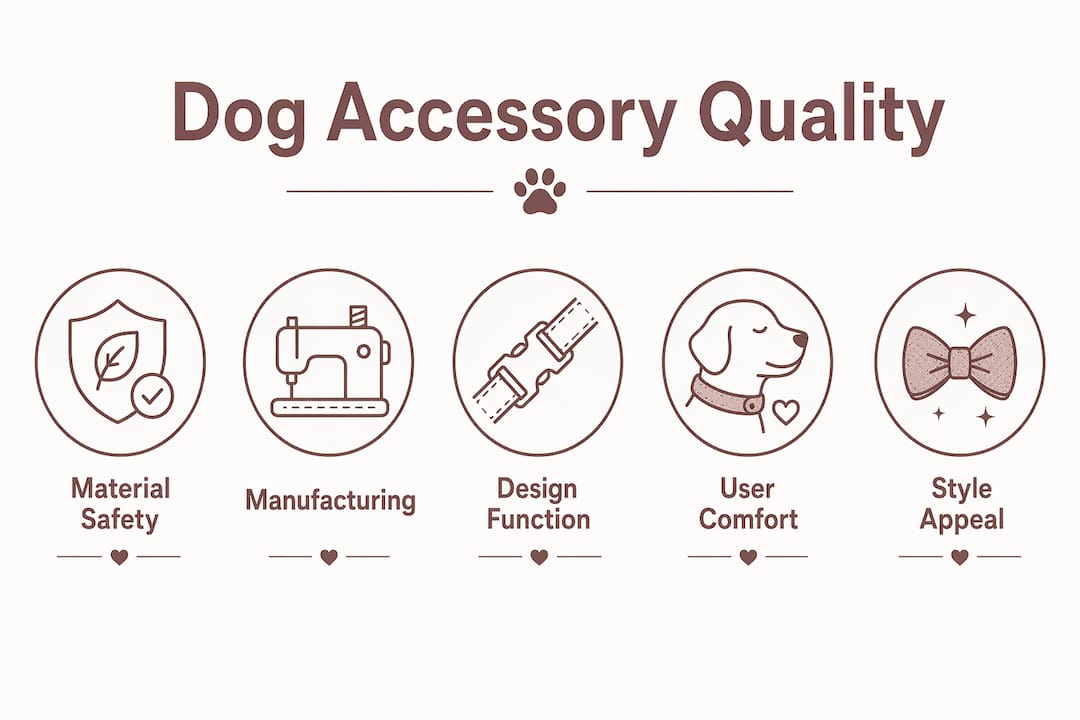
Quality in dog accessories is defined by the materials used, the manufacturing standards applied, and the design decisions made before a product ever reaches your dog. The role of quality in dog accessories goes far beyond aesthetics. A poorly made collar can snap under pressure. A low-grade chew toy can shed toxic fragments. A harness sewn with weak thread can fail mid-walk. The U.S. pet industry hit $152 billion in annual spending as of 2024, and that scale has made quality control more critical than ever. What you choose to put on or around your dog has direct consequences for their safety, comfort, and daily well-being.
How do material choices affect the quality and safety of dog accessories?
Material selection is the single most consequential decision in dog accessory manufacturing. The wrong fabric causes skin irritation. The wrong hardware corrodes and weakens. The right material, chosen with care, can outlast a dozen cheaper alternatives.
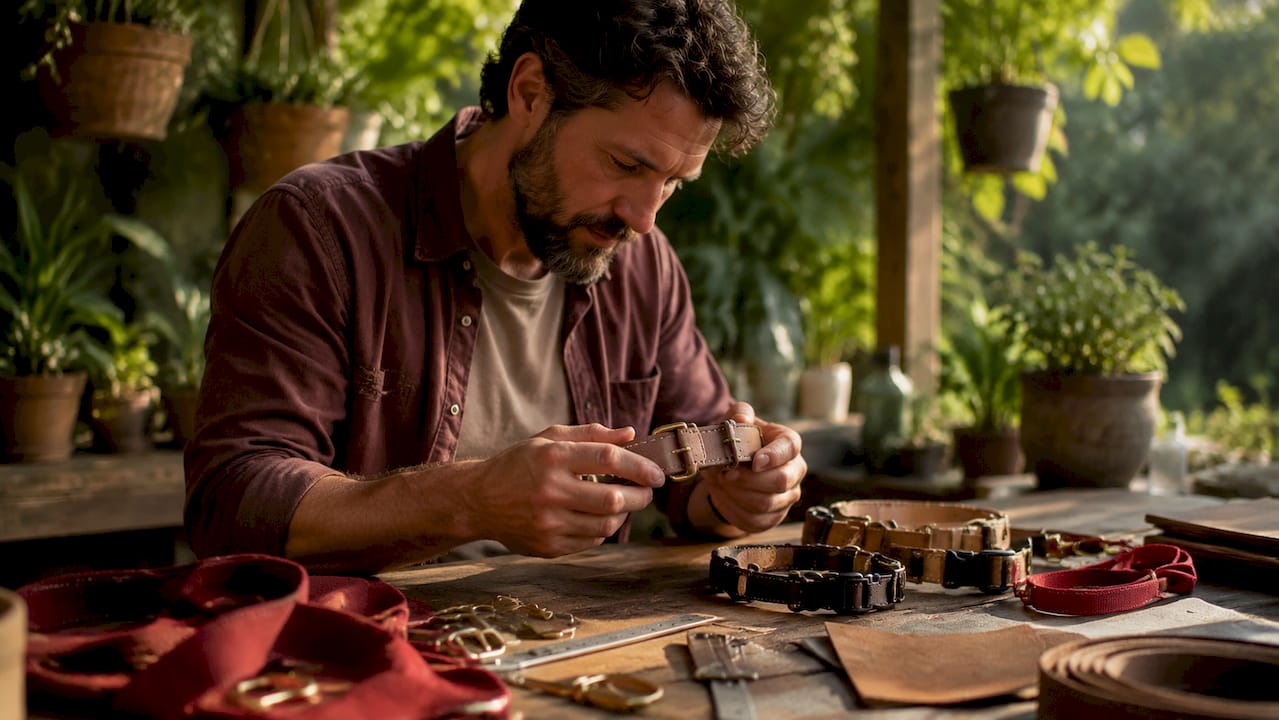
Luxury-tier accessories use materials like Italian leather, reinforced nylon, and medical-grade silicone because each offers a specific performance advantage. Italian leather molds to a dog’s neck over time, reducing pressure points. Reinforced nylon resists fraying under the repeated tension of leash pulls. Medical-grade silicone in feeding bowls and toys contains no BPA or phthalates, making it safe for dogs that chew aggressively.
Here is how the most common material categories compare in practice:
- Italian leather and full-grain leather: Extremely durable, naturally breathable, and gentle on skin. Best for collars and leashes on dogs with sensitive necks.
- Reinforced nylon and ballistic nylon: High tensile strength, water-resistant, and easy to clean. Ideal for working dogs or high-activity breeds.
- Medical-grade silicone: Non-toxic, flexible, and dishwasher-safe. The standard for feeding accessories and teething toys.
- Organic cotton and bamboo blends: Hypoallergenic and soft. Preferred for bedding, bandanas, and apparel worn close to the skin.
- Recycled polyester: Increasingly used in eco-conscious brands. Comparable durability to virgin polyester with a lower environmental footprint.
The dogs and accessory materials relationship matters because dogs interact with their gear physically and often orally. A dog that chews its leash or licks its collar is ingesting trace compounds from whatever that product is made of. Non-toxic, certified materials are not a luxury feature. They are a baseline safety requirement.
Pro Tip: Check for OEKO-TEX Standard 100 certification on fabric-based accessories. It confirms the textile has been tested for over 100 harmful substances, including formaldehyde and heavy metals.
What manufacturing standards and quality control processes ensure dog accessory reliability?
A product can be made from excellent materials and still fail if the manufacturing process is inconsistent. Quality control in pet accessories is not a single checkpoint at the end of a production run. It is a system built into every stage of production.
Multi-stage quality control includes three distinct phases that responsible manufacturers follow:
- Incoming Quality Control (IQC): Raw materials are inspected before production begins. Thread tensile strength, hardware corrosion resistance, and fabric dye stability are all tested at this stage.
- In-Process Quality Control (IPQC): Inspectors check products during assembly. Stitching density, hardware attachment, and dimensional accuracy are verified before defects can compound.
- Final Quality Control (FQC): Finished products are tested against safety and performance benchmarks before shipment. Load tests on leash clips, abrasion tests on collar edges, and colorfastness checks all happen here.
Final inspection alone misses defects that originate upstream. A collar with a weak D-ring weld will pass a visual FQC check but fail under real-world load. Only a manufacturer running IQC and IPQC catches that weld defect before it becomes a safety incident.
Durability in dog accessories comes specifically from manufacturing details like bartacking stitches at stress points, heat-sealed edges on nylon webbing, and tensile-tested metal hardware. These are not visible to the naked eye in a product photo, which is why understanding a manufacturer’s process matters as much as examining the finished product.
“Certifications like ISO 9001 and CE markings signal that a quality management system exists. They do not guarantee the product in your hand performs well. Consumer reviews consistently show that material performance outweighs certification labels in driving satisfaction.”
This distinction matters practically. When you are evaluating best quality dog collars or harnesses, ask about the manufacturer’s QC process rather than simply scanning for certification badges. A brand that can describe its IQC and IPQC procedures is a brand that takes quality seriously at the source.
How does thoughtful design balance functionality, comfort, and style in quality dog accessories?
Design is where quality becomes visible. A well-designed dog accessory solves a problem for the dog and looks good doing it. Poor design, regardless of material quality, produces accessories that fit badly, restrict movement, or clash with every room in your house.
Design thinking in pet accessories addresses two users simultaneously: the dog wearing the product and the owner choosing it. Dogs need ergonomic fit, appropriate weight, and materials that do not trap heat or moisture. Owners want products that reflect their taste, coordinate with their home, and signal care for their pet.
The role of design in pet accessories has grown significantly as pet-integrated homeware becomes a recognized market trend. Dog beds, bowls, and crates are now designed with neutral tones, natural textures, and proportions that complement modern interiors. This is not superficial. When accessories fit naturally into a home environment, owners use them consistently, which directly benefits the dog.
Here is how functional design priorities compare across key accessory categories:
| Accessory | Primary functional need | Design quality indicator |
|---|---|---|
| Collar | Secure fit without pressure | Adjustable buckle with smooth edges |
| Harness | Even weight distribution | Padded chest plate, Y-front design |
| Dog bed | Joint support and temperature regulation | Orthopedic foam, removable washable cover |
| Leash | Grip comfort and tensile strength | Padded handle, reinforced clip attachment |
| Feeding bowl | Stability and ease of cleaning | Non-slip base, wide rim, dishwasher-safe material |
The role of style in pet accessories is not vanity. Owners who find their dog’s gear visually appealing are more likely to replace worn items promptly, maintain cleanliness, and invest in proper fit. Style drives engagement with quality.
Pro Tip: When assessing harness design, look for a Y-front chest piece rather than a straight bar across the chest. The Y-shape avoids the shoulder joint and allows full range of motion, which matters most for active and working breeds.
What are the practical benefits of investing in premium dog accessories?
The importance of quality in pet gear becomes clearest when you calculate total cost of ownership rather than sticker price. A $15 nylon collar that frays and breaks within six months costs more over two years than a $60 leather collar that lasts a decade. High-quality manufacturers achieve 40 to 60 percent cost savings through optimized production, which means premium products do not always carry the price premium owners expect.
The practical benefits of durable dog products extend well beyond cost:
- Reduced injury risk: Reinforced hardware and tested stitching prevent leash snapping and collar breakage during high-stress moments like a dog lunging at traffic.
- Fewer skin and coat issues: Non-toxic, breathable materials reduce contact dermatitis, hot spots, and fur matting around collar and harness contact points.
- Better behavioral outcomes: Accessories that fit correctly and feel comfortable reduce the resistance many dogs show toward wearing gear. A dog that accepts its harness calmly is safer to walk.
- Lower veterinary exposure: Cheap toys that shed fragments or contain chemical dyes create ingestion risks. High-quality dog toys made from certified materials eliminate that category of risk entirely.
- Owner confidence and satisfaction: Knowing your dog’s gear has been tested and built to perform creates a different relationship with the product. You trust it. That trust translates into consistent use, which is the actual mechanism of safety.
The emotional dimension of choosing premium accessories is real and worth acknowledging. Owners who invest in stylish, durable gear report higher satisfaction with their pet care routines. That satisfaction is not incidental. It reinforces the habits that keep dogs safe and well-cared for every day.
Key takeaways
Quality in dog accessories is built through material selection, multi-stage manufacturing controls, and design that serves both the dog’s physiology and the owner’s practical needs.
| Point | Details |
|---|---|
| Material choice drives safety | Non-toxic, certified materials like medical-grade silicone and reinforced nylon prevent ingestion risks and skin irritation. |
| Multi-stage QC is non-negotiable | IQC, IPQC, and FQC together catch defects that final inspection alone consistently misses. |
| Certifications are a starting point | ISO 9001 and CE markings signal process quality but do not guarantee product performance in real use. |
| Design serves two users | Effective accessory design addresses the dog’s ergonomic needs and the owner’s aesthetic preferences simultaneously. |
| Premium gear costs less long-term | Durable accessories reduce replacement frequency and lower injury-related veterinary costs over time. |
Why I stopped trusting certification badges when buying dog gear
I spent years defaulting to certification labels as a shortcut for quality assessment. CE marking, ISO 9001, the presence of a recognizable brand name. It felt like due diligence. It was not. The turning point came when I examined consumer review data showing that accessory performance factors like waterproofing and fabric comfort drove satisfaction far more reliably than any badge on the packaging.
What I look for now is evidence of process. Can the brand describe how its raw materials are tested? Does the product listing mention bartacking at stress points or heat-sealed edges? Are the hardware components rated for a specific load? These questions separate manufacturers who understand quality from those who market it.
The other misconception worth addressing is that premium automatically means expensive. Optimized manufacturing processes bring costs down. A brand with 15 years of production experience and a stable supplier network can deliver genuinely superior materials at prices that compete with mid-tier alternatives. The price-quality relationship in pet accessories is far less linear than most owners assume.
My honest recommendation: buy one excellent collar instead of three adequate ones. Learn what bartacking looks like. Read the one-star reviews before the five-star ones. The complaints tell you exactly where a product’s quality actually breaks down.
— Christopher
Discover premium dog accessories at Americanbarkbliss
Americanbarkbliss carries American-made dog accessories built to the material and manufacturing standards this article describes. Every product in the catalog is selected for durability, safety, and design quality. If you are looking for a bed that combines orthopedic support with a design that fits your home, the Body Glove Paintflower Pet Napper delivers both. For water-safety needs, the neoprene pet life jacket uses premium materials tested for real-world performance. Browse the full selection at Americanbarkbliss and find gear that earns your dog’s trust and yours.
FAQ
What does quality mean in dog accessories?
Quality in dog accessories refers to the combination of safe, durable materials, consistent manufacturing processes, and ergonomic design that together protect a dog’s health and extend product lifespan. It is measured by performance in real use, not by price or certification labels alone.
Which materials are safest for dog collars and harnesses?
Full-grain leather, reinforced nylon, and hardware rated for tensile load are the safest choices for best quality dog collars and harnesses. These materials resist fraying, corrosion, and breakage under the stress of active dogs.
Does ISO 9001 certification guarantee a safe dog product?
ISO 9001 confirms a manufacturer has a documented quality management system, but it does not guarantee the finished product performs safely. Consumer review analysis shows material comfort and waterproofing reliability predict satisfaction more accurately than certification presence.
How do I assess quality when shopping for dog accessories online?
Look for product descriptions that specify material grades, stitching techniques like bartacking, and hardware load ratings. One-star reviews are the most reliable indicator of where a product’s quality actually fails under real conditions.
Are premium dog accessories worth the higher upfront cost?
Premium accessories typically cost less over time because they require fewer replacements and reduce injury-related risks. Manufacturers with optimized production can achieve significant cost efficiencies, meaning the price gap between premium and budget products is often smaller than it appears.
Leave a comment