

Why High-Quality Dog Toys Matter for Your Pet
Most dog owners spend more time reading nutrition labels than checking what their dog’s toys are made from. That oversight can be costly. Understanding why high-quality dog toys matter goes well beyond choosing something that looks fun at checkout. Cheap toys can expose your dog to toxic materials, create choking hazards, and contribute to destructive behavior rooted in frustration. This guide breaks down the real safety risks, behavioral benefits, and practical selection strategies that most toy guides skip entirely.
Table of Contents
- Key Takeaways
- Why high-quality dog toys matter: the safety case
- Mental and behavioral benefits of quality toys
- Matching toys to your dog’s needs
- Using toys strategically for training and daily management
- My honest take after years of watching dogs play
- Find the right toys for your dog at Americanbarkbliss
- FAQ
Key Takeaways
| Point | Details |
|---|---|
| Material safety is non-negotiable | Avoid toys made with PVC or vinyl, which may contain lead or phthalates linked to serious health problems. |
| Size and durability must match your dog | A toy that’s too small or too fragile for your dog’s chewing style becomes a choking hazard fast. |
| Quality toys reduce destructive behavior | Mental stimulation from well-designed toys channels natural instincts and prevents boredom-driven destruction. |
| Inspect toys weekly, not just when damaged | Routine checks catch fraying, cracks, and loose parts before they become emergencies. |
| Match toy type to life stage and chew style | Puppies, seniors, and heavy chewers have very different needs that one-size-fits-all toys cannot meet. |
Why high-quality dog toys matter: the safety case
Walk through any dollar-store pet aisle and you’ll find colorful, squeaky toys at prices that feel like a bargain. They are not. Cheap toys tear easily, exposing stuffing that can choke your dog or cause a life-threatening intestinal blockage. That $3 toy can turn into a $3,000 emergency vet bill.
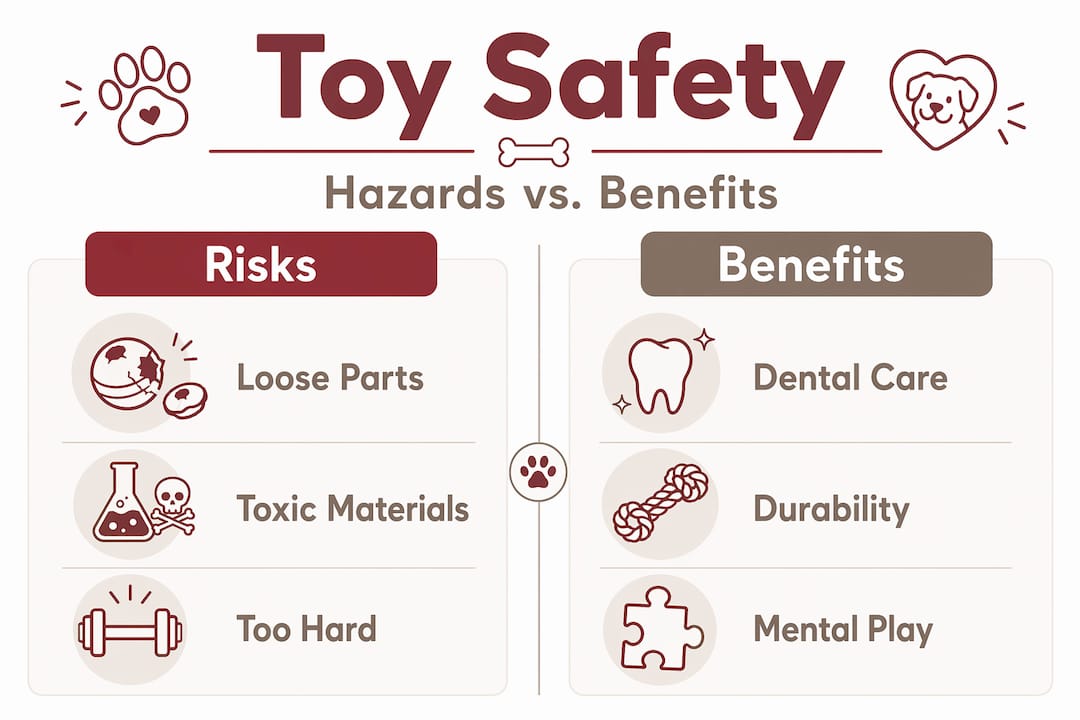
The material question goes deeper than durability. Bargain vinyl and PVC toys may contain lead or phthalates that cause endocrine disruption, organ damage, and in severe cases, death. These chemicals are not listed on packaging, and there is no federal safety testing requirement for pet toys in the United States. Your dog chews these materials for extended periods, meaning the exposure is significant.
Here is what to look for when assessing toy safety:
- Non-toxic materials: Look for toys labeled natural rubber, thermoplastic rubber (TPR), or food-grade nylon. Avoid toys with no material disclosure at all.
- Appropriate sizing: A toy should be large enough that your dog cannot fit it entirely in its mouth. If it fits past the back molars, it’s too small.
- Durability for chewing style: A soft plush toy given to a power chewer will be destroyed in minutes, and the stuffing becomes a hazard. Match material strength to your dog’s chewing intensity.
- Seam quality on plush toys: Poorly sewn seams come apart fast. Look for double-stitched or reinforced seams if your dog is a moderate chewer who loves stuffed toys.
- Supervision context: Some toys are safe only with supervision depending on your dog’s play style. A rope toy is fine for a supervised tug session but can unravel into swallowable strings when left alone.
Dental safety is another concern owners overlook. Toys that are too hard, too sharp, or that break into long chunks can cause dental injuries including cracked teeth, gum lacerations, and enamel damage. Veterinarians recommend the thumbnail test: press your thumbnail firmly into the toy. If it doesn’t indent at all, the toy is likely too hard for safe chewing.
Pro Tip: Set a weekly calendar reminder to check every toy in your dog’s rotation. Weekly toy inspections help you catch fraying edges, cracks, and loose components before they become a real hazard. Discard any toy that shows significant wear, even if it still looks mostly intact.
Mental and behavioral benefits of quality toys
Here is a fact most people treat as secondary but shouldn’t: dogs need mental exercise just as much as physical activity. A dog that doesn’t receive adequate mental stimulation becomes bored, and boredom in dogs looks a lot like anxiety. Chewed furniture, excessive barking, and destructive digging are almost always symptoms of a brain that needs more to do.
High-quality toys address this directly. Well-designed enrichment toys tap into your dog’s natural drives: foraging, problem-solving, chewing, and hunting. A puzzle feeder makes a dog work for their kibble, activating instincts that a bowl on the floor never touches. A durable chew toy with varied textures gives a dog a legitimate outlet for the chewing drive that would otherwise target your baseboards.
“Interactive and enrichment toys provide outlets for natural behaviors in a fun way that owners and dogs can share.” — Purina
The bonding dimension matters too. When you participate in play with quality toys, whether through fetch, tug, or treat-dispensing games, you become part of the activity your dog finds most rewarding. That builds trust and responsiveness in ways that sit-stay drills alone cannot replicate.
There is also a quality-and-engagement connection that cheap toys simply miss. A flimsy toy loses its appeal within minutes once your dog realizes it cannot withstand real play. A well-constructed toy with varied textures, sounds, or hidden treats holds attention significantly longer. That sustained engagement is what produces the calming, satisfying effect owners are actually after.
The benefits of quality dog toys in the behavioral space include:
- Reduced anxiety and boredom between walks and training sessions
- Lower incidence of destructive behavior in the home
- Stronger recall and focus during training when toys are used as rewards
- Better sleep and overall calmness, especially in high-energy breeds
- Improved dog safety and cognition through regular mental challenges
Matching toys to your dog’s needs
Not all dogs are the same, and pretending they are is how injuries happen. Toy selection should account for your dog’s age, size, chew style, and any health considerations like dental disease or arthritis.

Puppies vs. adult vs. senior dogs
Puppies are teething, which means they need soft, pliable toys that soothe gums without causing damage. Hard nylon or rubber toys are too aggressive for a puppy’s developing teeth. Senior dogs often have the opposite issue: worn teeth and sensitive gums that make very hard toys painful. Soft chews and plush toys with reinforced seams are typically the right call for older dogs.
Adult dogs in their prime generally have the widest range of safe toy options, but their individual chew intensity still determines what’s appropriate. A healthy adult dog’s chew toy must withstand aggressive chewing without fragmenting into harmful pieces.
Matching toy hardness to chew style
| Chew Style | Recommended Toy Type | What to Avoid |
|---|---|---|
| Power/heavy chewer | Dense rubber, TPR nylon, hard chew bones | Plush, rope, thin plastic |
| Moderate/everyday chewer | Medium-density rubber, nylon, treat-dispensing toys | Ultra-hard bones, very soft plush |
| Gentle/light chewer | Soft plush with reinforced seams, softer rubber | Extra-hard chews, abrasive rope |
| Puppy (teething) | Soft rubber, chilled gel toys, soft plush | Hard nylon, antlers, very firm rubber |
| Senior dog | Soft plush, softer rubber, low-resistance chews | Hard bones, rough-textured rope |
Toy hardness matters for dental health as much as chew intensity. The American Veterinary Dental College consistently warns against toys hard enough to resist bending, since repeated impact against rigid surfaces causes the same type of dental fracture risks that veterinary dentists see in dogs fed real bones.
Pro Tip: If you are unsure about your dog’s chew intensity, start with a medium-density toy and observe. Heavy chewers will show obvious progress in 15 to 20 minutes of play. That tells you to size up in durability for their next toy.
Using toys strategically for training and daily management
Quality toys are tools, not just entertainment. Choosing and rotating toys intentionally can actively support training goals, help your dog settle after exercise, and prevent the kind of overarousal that makes behavior unpredictable.
Here is a practical approach to purposeful toy use:
- Use toys as high-value training rewards. A favorite tug toy used as a reward for a reliable recall creates enormous motivation. Dogs that learn to work for a toy during training sessions tend to show stronger focus than dogs only rewarded with food.
- Designate chew time after exercise. A structured chew session after a walk or run helps your dog transition from arousal to calm. A durable chew toy during this window gives excess energy a directed outlet and helps your dog settle faster.
- Rotate toys on a schedule. Rotating toys regularly maintains novelty and keeps each toy feeling “new” without buying replacements constantly. A toy that disappears for a week becomes interesting again when it reappears.
- Avoid overstimulating toys before bedtime. Squeaky, high-energy toys before sleep can push arousal levels up at the exact moment you want them down. Save those for active play sessions, not wind-down time.
- Monitor which toys your dog actually engages with. Dogs communicate preferences clearly. If a toy sits untouched, it’s not meeting any real drive. Replacing it with something that targets foraging, chewing, or interaction will produce a noticeably more engaged dog.
The importance of durable dog toys becomes clearest in this context. A toy that survives real use sessions, holds its shape, and remains engaging over time delivers far more value than a handful of cheap alternatives that wear out in days. When you see toy quality through this lens, the question “are expensive dog toys worth it?” answers itself quickly.
My honest take after years of watching dogs play
I’ve seen a lot of well-meaning dog owners hand their dogs the most dangerous toys in the room without realizing it. The shiny, cheap vinyl squeaker from a discount bin. The thin plush shaped like a squirrel that lasted about four minutes before becoming a stuffing pile. I’ve watched the same owners deal with vet visits for intestinal obstructions and cracked teeth that could have been avoided entirely.
What I’ve learned is that the cost of quality is almost always lower than the cost of the alternative. A $20 durable rubber chew toy that lasts six months beats a $5 toy replaced every two weeks, both financially and in terms of risk. More than the economics, though, I’ve seen what happens to a dog’s behavior when they finally have the right toy. The anxious pacing stops. The destructive chewing redirects. The dog settles.
The mistake I see most often isn’t ignorance of safety facts. It’s the assumption that any toy is better than no toy. It isn’t. A toy that fragments, contains unknown chemicals, or provides zero mental engagement can make behavioral and health outcomes worse. Choosing with intention, checking for wear regularly, and selecting based on your specific dog’s needs is not overthinking it. It’s just good ownership.
The sustainable toy choice conversation also connects here: dogs who play with well-made, responsibly sourced toys benefit directly, and so does the broader environment. That’s a win worth considering.
— Christopher
Find the right toys for your dog at Americanbarkbliss
At Americanbarkbliss, every toy in the collection is selected with safety, durability, and real enrichment value in mind. Whether your dog is a relentless power chewer who needs something that won’t fall apart, or a gentle senior who needs soft comfort without the hazards of poorly sewn plush, you’ll find options built to last and tested for safety.
For dogs who live to chew and need a serious outlet, the TPR interactive chew toy combines mental stimulation with durable construction designed for sustained play. If your dog thrives on interactive sessions with you, the tug toys collection offers durable options purpose-built for training-friendly play. Browse the full range at Americanbarkbliss and find the right fit for your dog’s age, size, and personality.
FAQ
Why do high-quality dog toys matter for safety?
High-quality dog toys use non-toxic materials and durable construction that resist fragmentation, reducing the risk of choking, intestinal blockages, and exposure to harmful chemicals found in cheap vinyl or PVC options.
Are expensive dog toys actually worth the cost?
Yes. A durable toy that lasts months costs less over time than replacing cheap toys repeatedly, and it eliminates the vet costs that come with ingestion injuries or dental damage caused by low-quality materials.
How often should I replace my dog’s toys?
Replace toys as soon as you notice significant fraying, cracks, loose parts, or exposed stuffing. Weekly inspections help you catch wear before it becomes a hazard, regardless of how recently the toy was purchased.
What toys are safest for heavy chewers?
Dense rubber, TPR nylon, and hard nylon chew bones are generally the safest options for heavy chewers, provided they do not fragment under pressure. Avoid plush, thin plastic, and rope toys for unsupervised chewing sessions.
Can the wrong toy make my dog’s behavior worse?
Yes. Toys that provide no mental stimulation or break apart quickly leave dogs frustrated and under-stimulated, which commonly drives destructive behavior, excessive barking, and anxiety-related habits.
Leave a comment