

Why use sustainable dog toys: Safety and planet
Most dog owners assume that slapping the word “natural” on a dog toy makes it automatically safe, eco-friendly, and worth buying. That assumption costs some dogs their teeth, and costs the planet more than you’d think. Understanding why use sustainable dog toys goes deeper than picking hemp over plastic. It means knowing which materials actually flex safely, which “natural” products can fracture a molar, and why American-made construction changes the equation on both safety and environmental impact. This guide cuts through the marketing noise and gives you the real framework for choosing smarter.
Table of Contents
- Understanding sustainable dog toys and their rising popularity
- Materials that keep your dog safe and support sustainability
- Why American-made sustainable dog toys matter
- How to choose and maintain safe sustainable dog toys
- Benefits of using sustainable dog toys for your pet and planet
- The unexpected truth about sustainable dog toys and pet safety
- Find durable and stylish sustainable dog toys at American Bark Bliss
- Frequently asked questions
Key Takeaways
| Point | Details |
|---|---|
| Sustainable material matters | Choosing dog toys made from biodegradable, flexible materials protects pets and the environment. |
| Avoid too hard toys | Toys that can’t be dented by a fingernail risk fracturing your dog’s teeth. |
| Regularly monitor toy size | Check and replace toys monthly to prevent choking hazards as dogs chew them down. |
| Support American manufacturing | American-made toys often offer higher durability, sustainability, and support local businesses. |
| Sustainable toys reduce microplastics | Plastic-free and recyclable toys help lower your pet’s exposure to harmful microplastics. |
Understanding sustainable dog toys and their rising popularity
Sustainable dog toys are built from materials that minimize environmental harm across their entire life cycle. That means non-toxic, biodegradable, or recyclable inputs like hemp, organic cotton, and natural rubber, combined with manufacturing processes that reduce waste and emissions. These aren’t just feel-good choices. They reflect a measurable shift in how dog owners think about what goes into their pet’s mouth and what ends up in a landfill.
Consumer demand is driving serious market growth. The natural pet toy market is projected to grow at a 7.2% compound annual growth rate through 2032, with natural toy market share climbing from 12 to 14% in 2025 to 18 to 20% by 2032. That’s not a niche trend. That’s a category transformation.
By the numbers: Natural pet toy market share is expected to rise from roughly 13% today to nearly 20% by 2032, driven by owners demanding healthier and more earth-friendly options.
What’s fueling this? Awareness. Dog owners are connecting the dots between synthetic pet products and real health risks, from microplastic ingestion to chemical off-gassing from cheap plastics. The benefits of natural pet products extend beyond environmental impact to direct improvements in pet health and safety. You can see this shift reflected in products like sustainable dog toy examples that prioritize material integrity alongside play value.
Now that you understand the rising popularity, let’s explore the key materials and safety factors that define sustainable dog toys.
Materials that keep your dog safe and support sustainability
Here’s where the “natural equals safe” myth gets genuinely dangerous. Not all natural materials are created equal, and some of the most popular ones on the market can seriously injure your dog. Understanding the difference between materials that support dog toy sustainability and those that only sound good on a label is non-negotiable.
“Natural” is a marketing term, not a safety certification. Real bones, antlers, and hooves can cause slab fractures (where a large chunk of tooth breaks off), gut perforations from sharp splinters, and bacterial contamination. These are not rare edge cases. Veterinary dental specialists consistently flag them as leading causes of preventable dental emergencies.
Materials that genuinely support safety and sustainability:
- High-quality natural rubber: Flexes under pressure, absorbs chewing force, and reduces tooth fracture risk significantly compared to rigid chews
- Organic cotton and hemp: Biodegradable, free from synthetic dyes, and minimize microplastic shedding during play
- Recycled plastics (when certified non-toxic): Reduce landfill burden while maintaining flexibility if properly formulated
- Canvas and jute blends: Durable enough for moderate chewers, soft enough to avoid dental damage, and compostable at end of life
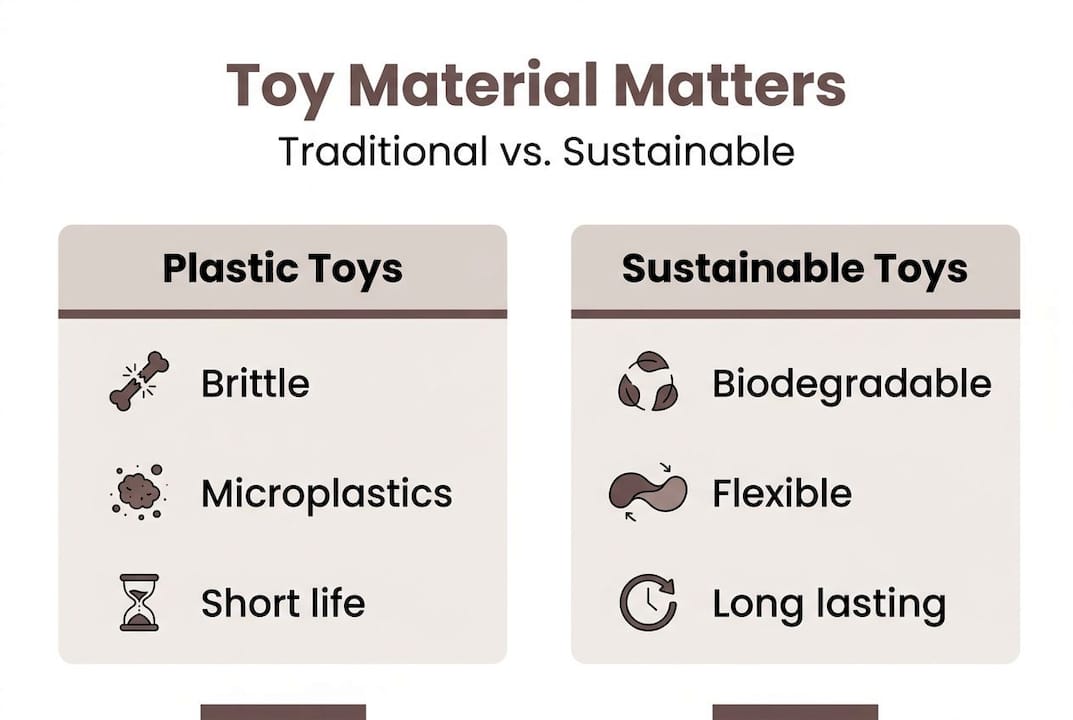
The synthetic material health concerns tied to conventional plastics go beyond surface contact. Microplastic particles shed during chewing can disrupt gut health over time. Choosing safe pet-friendly materials that flex rather than splinter addresses both risks at once.
Pro Tip: Use the “kneecap rule” before buying any chew toy. Press your fingernail firmly into the material. If you can’t leave an indentation, the toy is too hard for safe chewing and risks fracturing your dog’s teeth.

Understanding the material safety considerations leads us to explore responsible manufacturing practices that enhance sustainability and product quality.
Why American-made sustainable dog toys matter
Manufacturing location matters more than most buyers realize. When you choose American-made sustainable dog toys, you’re not just paying for a flag on the label. You’re investing in a production model with measurable environmental and safety advantages.
West Paw manufactures approximately 90% of its products in Bozeman, Montana, using zero-waste production lines that recycle manufacturing scraps into new toys made from their durable Zogoflex material. They back every product with a free replacement guarantee. That’s a complete loop: local production, zero-waste processing, and a durability commitment that keeps toys out of landfills longer.
“Sustainability on the environmental side has been a core value from Day 1.” — Spencer Williams, CEO of West Paw
Green dog toys advantages from American manufacturing include:
- Reduced transportation emissions: Shorter supply chains mean significantly lower carbon footprint per unit compared to overseas imports
- Higher safety standards: U.S. manufacturing is subject to stricter material and testing regulations than many import markets
- Support for local economies: Your purchase funds American jobs and domestic supply chains
- Zero-waste production models: Scraps become new products rather than industrial waste
- Durability that reduces replacement frequency: Fewer purchases over time means less total environmental impact
You can see this philosophy in action with durable American-made dog toys that are built to last through serious chewing sessions without breaking down into hazardous fragments.
With an understanding of materials and manufacturing, let’s examine practical safety monitoring tips to keep your dog safe while enjoying sustainable toys.
How to choose and maintain safe sustainable dog toys
Choosing the right toy is step one. Keeping it safe over time is the part most owners skip. A toy that was perfectly sized and intact at purchase can become a choking hazard within weeks if you’re not monitoring it.
Reassess toy size monthly as your dog grows and as the toy wears down. Any toy chewed to a size that could be swallowed must be replaced immediately. Inappropriate sizing is one of the leading causes of intestinal blockages in dogs.
Step-by-step guide to choosing and maintaining sustainable dog toys:
- Match toy size to your dog’s weight class. Most reputable manufacturers label toys by dog size. When in doubt, go larger.
- Apply the kneecap rule before purchase. If the material won’t dent under your fingernail, skip it.
- Supervise all chew sessions initially. Watch how your dog interacts with a new toy before leaving them alone with it.
- Inspect toys weekly for chips, cracks, or fraying. Any structural compromise is a replacement signal, not a “wait and see” situation.
- Apply the “size-up” rule monthly. Hold the toy next to your dog’s muzzle. If it could slip past the molars, it’s time for a larger replacement.
- Discard immediately when in doubt. The cost of a new toy is always less than an emergency vet visit.
Pro Tip: Set a monthly calendar reminder specifically for toy inspection. It takes two minutes and eliminates the most common source of preventable dog injuries from toys.
Check out safe sizing and replacement tips for practical examples of toys designed with appropriate size ranges built into the product specs.
Now that you know how to choose and care for sustainable dog toys, we’ll summarize the key reasons to make the switch.
Benefits of using sustainable dog toys for your pet and planet
The impact of sustainable dog toys stacks up across every dimension that matters to a responsible dog owner: your pet’s health, your household budget over time, and the broader environment your dog lives in.
The EPA designated microplastics a priority contaminant, and choosing plastic-free toys directly reduces your dog’s exposure while cutting environmental microplastic pollution. That’s not a theoretical benefit. It’s a documented health protection.
Core benefits of eco-friendly dog toys:
- Reduced microplastic ingestion during chewing and play
- Lower risk of tooth fractures compared to overly hard conventional chews
- Biodegradable or recyclable materials that don’t accumulate in landfills
- Mental stimulation from well-designed natural toys that support behavioral health
- Support for American manufacturing standards and local economies
| Feature | Traditional plastic toys | Sustainable alternatives |
|---|---|---|
| Durability | Often low; brittle under heavy chewing | High when properly matched to chew intensity |
| Safety | Risk of microplastic ingestion; chemical additives | Non-toxic, flexible materials reduce dental and ingestion risk |
| Environmental impact | Long landfill lifespan; petroleum-based production | Biodegradable or recyclable; lower production footprint |
| Cost over time | Frequent replacements add up | Durable options reduce total spend |
| Manufacturing standards | Variable, often overseas | American-made options meet stricter U.S. standards |
Storing your toys properly also extends their life. A foldable fabric storage bin keeps toys organized, clean, and easy to inspect regularly, which is a small habit that makes a real difference in toy longevity.
With these benefits in mind, let’s consider a fresh perspective on the sustainability movement in pet toys.
The unexpected truth about sustainable dog toys and pet safety
Here’s the take most sustainability guides won’t give you: the biggest threat to your dog’s safety isn’t cheap plastic. It’s the word “natural.”
Pet owners who’ve done their research often feel confident switching to natural chews, bones, and antlers. They believe they’ve made the responsible choice. But “natural” often functions as a marketing label, not a safety guarantee. Owners must assess chew hardness and size repeatedly to prevent injuries from toys that are too hard or have worn too small. The confidence that comes from buying “natural” can actually reduce the vigilance that keeps dogs safe.
The real secret to eco-conscious dog owner success isn’t just what you buy. It’s how consistently you monitor what you’ve bought. The kneecap rule and the size-up rule together form a two-minute monthly habit that prevents the majority of preventable dental emergencies and choking incidents. Most owners never learn either one.
Durability paired with recyclability is the standard worth holding manufacturers to. A toy that lasts three times as long as a competitor’s product and can be returned or recycled at end of life has a dramatically smaller environmental footprint than a “biodegradable” toy that falls apart in a week. West Paw’s zero-waste manufacturing model is the benchmark. The circular economy mindset, where production scraps become new products and durability guarantees keep toys out of landfills, is what genuine dog toy sustainability looks like in practice.
You can evaluate durability and safety considerations in any toy by applying both rules before and after purchase. The best sustainable toy is one that stays safe long enough to actually be sustainable.
Find durable and stylish sustainable dog toys at American Bark Bliss
American Bark Bliss carries a curated selection of dog toys built around the principles this article covers: flexible materials that pass the kneecap rule, appropriate sizing, and American craftsmanship you can trust.
Browse canvas jute dog chew toys that flex under pressure and won’t splinter, or explore durable faux leather dog chew toys built for dogs who chew with purpose. Every product is designed to support pet safety while keeping environmental impact low. Pair any toy with a dog toy storage bin to keep your collection organized and inspection-ready. By exploring these thoughtfully crafted products, you can take the next step toward safe, eco-friendly playtime for your dog.
Frequently asked questions
Are natural dog toys always safe for my pet?
No. “Natural” is a marketing term that doesn’t guarantee safety. Items like bones, antlers, and hooves can cause slab fractures, gut perforations, and bacterial contamination, so always choose flexible, tested materials over anything marketed purely as natural.
How can I tell if a dog toy is too hard and unsafe?
Use the kneecap rule: press your fingernail firmly into the toy’s surface. If you can’t leave an indentation, the material is too hard and poses a real risk of fracturing your dog’s teeth during normal chewing.
Why is monitoring toy size important for dog safety?
Toys wear down during chewing and can shrink to dangerous sizes over time. Replace any toy chewed down to a size that could be swallowed, since swallowed toy fragments are a leading cause of intestinal blockages requiring emergency surgery.
What environmental benefits do sustainable dog toys offer?
They reduce microplastic pollution and landfill accumulation through biodegradable or recyclable materials. The EPA designated microplastics a priority contaminant, making plastic-free toy choices a direct environmental and health benefit for your dog and the broader ecosystem.
Are American-made sustainable dog toys worth the investment?
Yes. West Paw manufactures 90% of products domestically using zero-waste production and backs them with a free replacement guarantee, demonstrating that American-made sustainable toys deliver superior durability, stricter safety standards, and a genuinely lower environmental footprint over time.
Leave a comment