

Benefits of Non-Toxic Pet Products for Dog Health
TL;DR:
- Non-toxic pet products exclude synthetic chemicals like phthalates, PFAS, and flame retardants to reduce chemical exposure in dogs. Using verified materials with third-party certifications can significantly lower health risks and support healthier skin, digestion, and respiratory function. Prioritizing high-contact items for replacement and proper cleaning enhances ongoing safety and minimizes cumulative chemical absorption over time.
Non-toxic pet products are formulations and materials that exclude synthetic chemicals, phthalates, PFAS, and flame retardants from items your dog contacts daily. The benefits of non-toxic pet products go beyond marketing claims. They reduce measurable chemical loads in your dog’s body, lower the risk of chronic illness, and support healthier skin, digestion, and respiratory function. If your dog chews toys, sleeps on a bed, or eats from a bowl every day, the materials in those items matter more than most pet owners realize.
What are the benefits of non-toxic pet products?
Non-toxic pet products reduce your dog’s daily chemical exposure through the most direct routes: skin contact, mouthing, and paw absorption. Dogs interact with their environment at ground level and put almost everything in their mouths. That behavior makes them far more vulnerable to chemical transfer than humans are.

A 2026 study published in PubMed found PFAS concentrations in dog and cat blood samples, confirming that pets accumulate persistent chemicals from household products and textiles. PFAS are synthetic compounds linked to immune disruption, thyroid problems, and certain cancers. Finding them in pet blood means exposure is real and ongoing, not theoretical.
Research published in Frontiers in Veterinary Science showed that dog saliva contains measurable chemicals including synthetic antioxidants, mirroring human chemical exposure patterns. That finding matters because it confirms dogs absorb household chemicals at rates comparable to people, despite their smaller body mass.
Switching to safe pet products cuts this exposure at the source. Fewer chemicals in the products mean fewer chemicals transferred to your dog’s body over months and years of daily contact.
How do non-toxic products reduce chemical exposure and health risks?
Contact intensity is the key variable, not product category. A toy your dog mouths for an hour carries far more exposure risk than a collar worn loosely around the neck. Products with high contact time create the largest cumulative chemical transfer risk.
The chemicals most commonly found in conventional pet products include:
- Phthalates: Used to soften plastics in toys and bowls. Linked to hormonal disruption in mammals.
- PFAS: Found in water-resistant fabrics, beds, and some food packaging. Persistent in body tissue.
- Flame retardants: Added to foam in pet beds. Associated with thyroid disruption and neurological effects.
- Formaldehyde: Present in some synthetic textiles and adhesives used in pet accessories.
- Synthetic dyes: Used in cheap toys and apparel. Can cause skin irritation and allergic reactions.
Health problems linked to these exposures include skin allergies, respiratory irritation, digestive upset, and in long-term cases, increased cancer risk. Dogs that chew heavily on plastic toys or sleep on foam beds treated with flame retardants face the highest cumulative exposure.
Pro Tip: Prioritize replacing items your dog mouths or sleeps on first. Toys and beds have the highest contact time and therefore the greatest chemical transfer risk. Start there before replacing lower-contact items like collars.
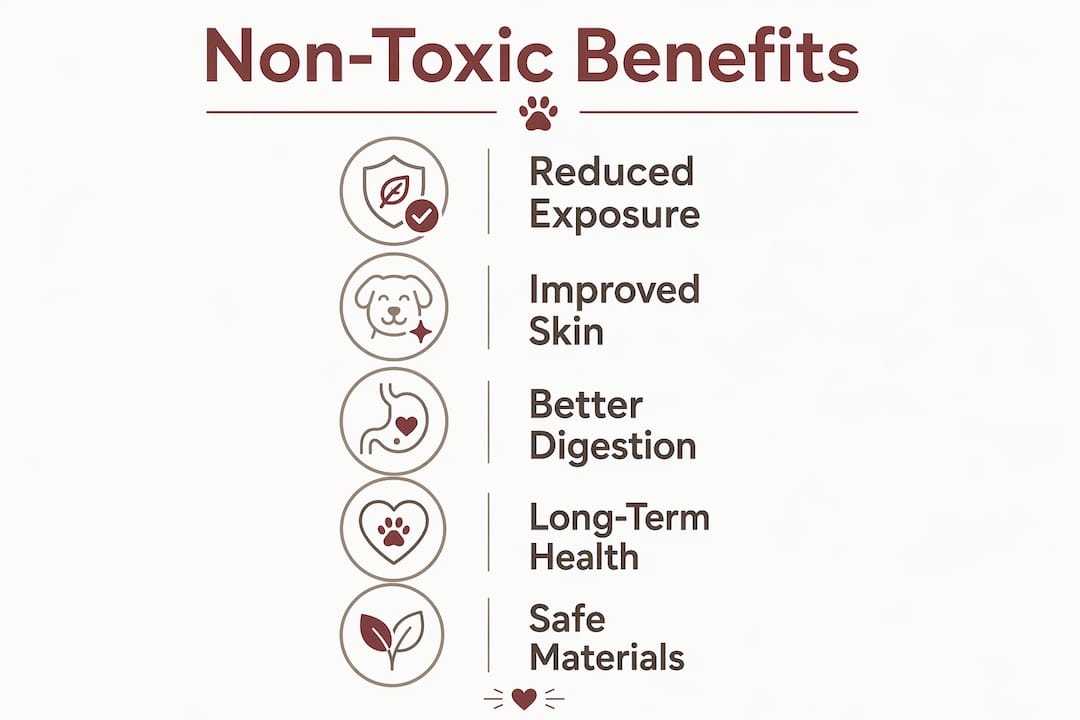
Non-toxic pet care works by removing these compounds from the products your dog uses most. Simpler materials with transparent sourcing and reduced chemical processing lower irritation and ingestion risks without requiring you to overhaul your entire routine at once.
What materials and certifications make pet products truly safe?
Not every product labeled “natural” is non-toxic. The distinction matters. A product can use plant-derived ingredients and still contain processing chemicals or synthetic preservatives. Truly safe pet products rely on verified materials and third-party certifications.
The safest materials for pet products, confirmed by certifications like GOTS and GOLS, include organic cotton, natural latex, untreated hardwood, vegetable-tanned leather, and natural rubber. Each of these materials undergoes minimal chemical processing and does not off-gas synthetic compounds during normal use.
| Material | Safety profile | Common use |
|---|---|---|
| Organic cotton (GOTS certified) | No synthetic pesticides or dyes | Beds, apparel, rope toys |
| Natural latex (GOLS certified) | Free from synthetic rubber chemicals | Chew toys, mats |
| Untreated hardwood | No adhesives or chemical finishes | Fetch sticks, frames |
| Vegetable-tanned leather | Tanned without chromium or heavy metals | Collars, leashes |
| Natural rubber | Minimal processing, no BPA | Chew toys, bowls |
| Standard PVC plastic | Contains phthalates and stabilizers | Cheap toys, bowls |
| Polyurethane foam | Often treated with flame retardants | Conventional pet beds |
GOTS stands for Global Organic Textile Standard. It certifies that textiles are made from organic fibers and processed without harmful chemicals at every production stage. GOLS stands for Global Organic Latex Standard and applies the same logic to latex products. Both certifications require third-party auditing, which makes them reliable signals of genuine safety.
Pro Tip: When reading a product label, look for the specific certification name and number, not just the word “organic.” A GOTS or GOLS certification number is verifiable. A vague “natural” claim is not.
Eco-friendly pet supplies and non-toxic pet products overlap but are not identical. Eco-friendly focuses on environmental impact, such as recycled materials or biodegradable packaging. Non-toxic focuses on chemical safety for your dog. A recycled plastic toy can be eco-friendly and still contain phthalates. Choose products that meet both standards when possible, but prioritize chemical safety for items your dog contacts directly.
How should you clean pet items to keep them safe?
Cleaning pet supplies correctly is as important as choosing non-toxic ones. The CDC distinguishes between cleaning and disinfecting. Cleaning removes dirt and debris using soap and water. Disinfecting kills germs using chemical agents. Both steps are necessary, but misusing disinfectants introduces new chemical risks.
Follow this sequence for safe cleaning:
- Remove loose debris first. Shake or rinse off solid waste before applying any cleaning agent. This prevents chemical reactions with organic matter.
- Wash with mild soap and warm water. Plain dish soap removes most surface contamination from bowls, toys, and grooming tools without leaving harmful residue.
- Rinse thoroughly. Soap residue left on bowls or toys transfers directly to your dog’s mouth. Rinse until the water runs clear.
- Disinfect only when necessary. After illness, surgery, or contact with unknown animals, disinfection is warranted. For routine cleaning, soap and water are sufficient.
- Follow label instructions exactly. The CDC warns that mixing bleach with other cleaners produces toxic gases. Never combine cleaning agents.
- Allow full drying before returning items to your dog. Wet surfaces trap bacteria and allow disinfectant residue to concentrate. Air dry completely.
Cleaning frequency depends on item type and your dog’s health. Food and water bowls need daily washing. Toys used during outdoor play need washing after each session. Beds need washing at least every two weeks, or immediately after illness. Dogs with skin conditions or compromised immune systems need more frequent cleaning across all contact items.
Safe cleaning agents for pet items include unscented dish soap, white vinegar diluted in water, and baking soda for odor control. Avoid products containing pine oil, phenols, or essential oil concentrates. These compounds are toxic to dogs even in small amounts.
For a detailed routine, the guide on cleaning dog accessories from Americanbarkbliss covers gear-specific methods that preserve both safety and product lifespan.
How do you choose and maintain non-toxic pet products?
Choosing safe pet products starts with contact time. Rank your dog’s items by how long and how directly your dog contacts them each day. Beds, chew toys, and food bowls sit at the top of that list. Leashes and apparel sit lower.
Use this checklist when evaluating any pet product:
- Does the product list all materials and their sources?
- Does it carry a recognized third-party certification such as GOTS, GOLS, or ASTM F963 for toy safety?
- Is the manufacturer based in the USA or a country with strict chemical safety regulations?
- Does the product avoid PVC, BPA, phthalates, and synthetic flame retardants?
- Is the coloring achieved with food-grade or plant-based dyes?
- Does the brand publish a safety data sheet or ingredient transparency policy?
Maintenance matters as much as initial selection. Even verified non-toxic products degrade over time. Chewed rubber toys develop cracks that harbor bacteria. Worn fabric beds accumulate chemical residue from floor cleaners and outdoor contaminants. Replace items showing visible wear, fraying, or breakdown of surface materials.
Watch for signs of chemical sensitivity in your dog: persistent scratching without a known allergen, red or inflamed skin after contact with a specific item, watery eyes after sleeping in a particular bed, or digestive upset with no dietary change. These signs warrant removing the suspect item and consulting a veterinarian.
Pets are exposed to complex mixtures of household chemicals, and reducing exposure cumulatively benefits health even when specific risks are hard to quantify. You do not need to identify the exact chemical causing a problem to justify switching to safer products.
For guidance on selecting non-toxic bedding specifically, Americanbarkbliss offers a practical resource on choosing pet bedding that covers materials, certifications, and cleaning schedules in one place. For bowls and feeding gear, the pet feeding accessories guide walks through non-toxic material options for daily use items.
Key takeaways
Non-toxic pet products reduce your dog’s cumulative chemical exposure most effectively when you prioritize high-contact items like beds, chew toys, and food bowls over lower-contact accessories.
| Point | Details |
|---|---|
| Prioritize by contact time | Replace toys, beds, and bowls first. These carry the highest chemical transfer risk. |
| Verify with certifications | Look for GOTS, GOLS, or ASTM F963 labels. Vague “natural” claims are not independently verified. |
| Clean correctly | Use soap and water for routine cleaning. Reserve disinfectants for illness situations and never mix chemicals. |
| Watch for exposure signs | Persistent scratching, skin redness, or digestive upset after contact with a product signals a problem. |
| Combine product choice with maintenance | Even certified safe products need regular cleaning and replacement when worn to stay truly non-toxic. |
The detail most pet owners miss about chemical safety
The conversation around non-toxic pet care tends to focus on what a product is made of. That matters. But the research on chemical exposure in pets points to something most buyers overlook: how your dog uses the product is as important as what the product contains.
A bed made from organic cotton but washed with a phenol-based cleaner is no longer safe. A natural rubber toy left to crack and collect bacteria defeats its own purpose. The CDC’s guidance on disinfectant use makes this explicit. Chemical safety depends on correct handling, including dilution, dwell time, and species sensitivities, not just ingredient lists.
What I find most striking from recent research is that dog saliva sampling now gives scientists a non-invasive window into chemical exposure that mirrors human exposure levels. That means dogs are living in the same chemical environment we are, absorbing the same household contaminants, but at a fraction of our body weight. The dose-per-kilogram reality for a 20-pound dog is sobering.
The practical takeaway is this: buy verified products, clean them correctly, and replace them when they show wear. That combination does more than any single product switch. Pet owners who treat non-toxic pet care as a routine rather than a one-time purchase decision see the most consistent results. The goal is reducing cumulative exposure over your dog’s lifetime, not achieving perfection in a single shopping cart.
— Christopher
Safe, USA-made products worth adding to your dog’s routine
Americanbarkbliss carries a curated selection of USA-made pet products built around the same principles covered here: verified materials, transparent sourcing, and designs that hold up to daily use.
For dogs that chew heavily, the USA-K9 Stars and Stripes rubber toy is made from durable, non-toxic rubber and built to withstand aggressive chewers without breaking down into unsafe fragments. For treat rewards, the Americana Chicken Chips use wholesome, USA-sourced ingredients with no artificial additives. For grooming, the Country Living 3-piece grooming kit gives you a complete natural grooming routine without synthetic chemical exposure. Every product ships from within the United States.
FAQ
What does “non-toxic” actually mean for pet products?
Non-toxic pet products exclude harmful synthetic chemicals such as phthalates, PFAS, BPA, and flame retardants from materials your dog contacts directly. The term covers both ingredient safety and correct product handling during cleaning and use.
Are non-toxic pet products safe for all dog breeds?
Yes. Non-toxic pet products are safe for all breeds, though dogs with existing allergies or skin conditions benefit most from switching. Always check for species-specific sensitivities when using any cleaning agent or grooming product.
How do I know if a pet product is truly non-toxic?
Look for third-party certifications such as GOTS for textiles, GOLS for latex, or ASTM F963 for toy safety. These certifications require independent auditing and are more reliable than unverified “natural” or “eco-friendly” label claims.
Can conventional pet products cause health problems in dogs?
Research confirms that dogs accumulate measurable PFAS and synthetic chemicals in their blood from household products. Long-term exposure is linked to immune disruption, skin problems, and increased cancer risk in companion animals.
How often should I replace non-toxic pet products?
Replace chew toys when cracking or surface breakdown appears. Wash beds every two weeks and replace them when fabric wears thin or foam compresses permanently. Food bowls made from stainless steel or certified-safe materials last longer than plastic alternatives and need less frequent replacement.
Leave a comment