

Pet Feeding Accessories Guide for Healthier, Happier Pets
Choosing the right feeding accessories for your pet is one of those decisions that looks simple on the surface but carries real consequences for their health. The wrong bowl can cause bloat. The wrong feeder dispenses the wrong portion. The wrong setup lets pests into your pet’s food. This pet feeding accessories guide cuts through the noise and gives you a practical, behavior-based framework for choosing exactly what your pet needs. Whether you have a speed-eating Lab, a picky senior cat, or a multi-pet household with competing dietary needs, the right tools make every mealtime safer and more manageable.
Table of Contents
- Key takeaways
- Your pet feeding accessories guide: matching tools to needs
- How to choose and set up automatic pet feeders
- Keeping feeding accessories clean and pest-free
- Feeding solutions for special needs and multi-pet homes
- My honest take on technology versus simplicity
- Find the right feeding accessories at Americanbarkbliss
- FAQ
Key takeaways
| Point | Details |
|---|---|
| Match accessories to food type | Dry kibble, wet food, and raw diets each require different feeder styles to preserve freshness and accuracy. |
| Slow feeding has real benefits | Textured bowls and puzzle feeders reduce gulping, improve digestion, and lower anxiety at mealtimes. |
| Automatic feeders need key features | Prioritize portion accuracy, battery backup, and easy cleaning before choosing any automatic feeder. |
| Hygiene prevents serious health risks | Weekly cleaning of bowls and feeders prevents mold, bacteria, and pest infestations near pet food. |
| Special needs require specialized tools | Microchip feeders, lick mats, and portion-controlled bowls address obesity, allergies, and multi-pet conflicts. |
Your pet feeding accessories guide: matching tools to needs
The pet feeding accessories market has grown well beyond the basic bowl. Today you can choose from slow-feed bowls, lick mats, puzzle feeders, raised feeders, timed compartment feeders, and app-connected automatic dispensers. The challenge is not finding options. It is knowing which option fits your pet’s specific eating habits, food type, and your daily routine.
Slow-feed bowls are the most straightforward starting point for dogs that inhale their food. Slow feeders use segmented designs to break up kibble and force the pet to work around raised ridges or maze patterns. The result is a slower eating pace, better chewing, and reduced risk of bloat. A golden retriever that finishes a full cup of kibble in 30 seconds will take four to five minutes with the right slow feeder. That difference matters a great deal for digestive health.
Lick mats work especially well for cats and small dogs. You spread wet food, peanut butter, or pureed treats across a textured silicone surface, and the pet has to lick methodically to get to the food. Beyond slowing the meal, lick mats provide a calming sensory experience that reduces feeding anxiety and boredom. They are an underused tool for pets that pace or whine around mealtimes.
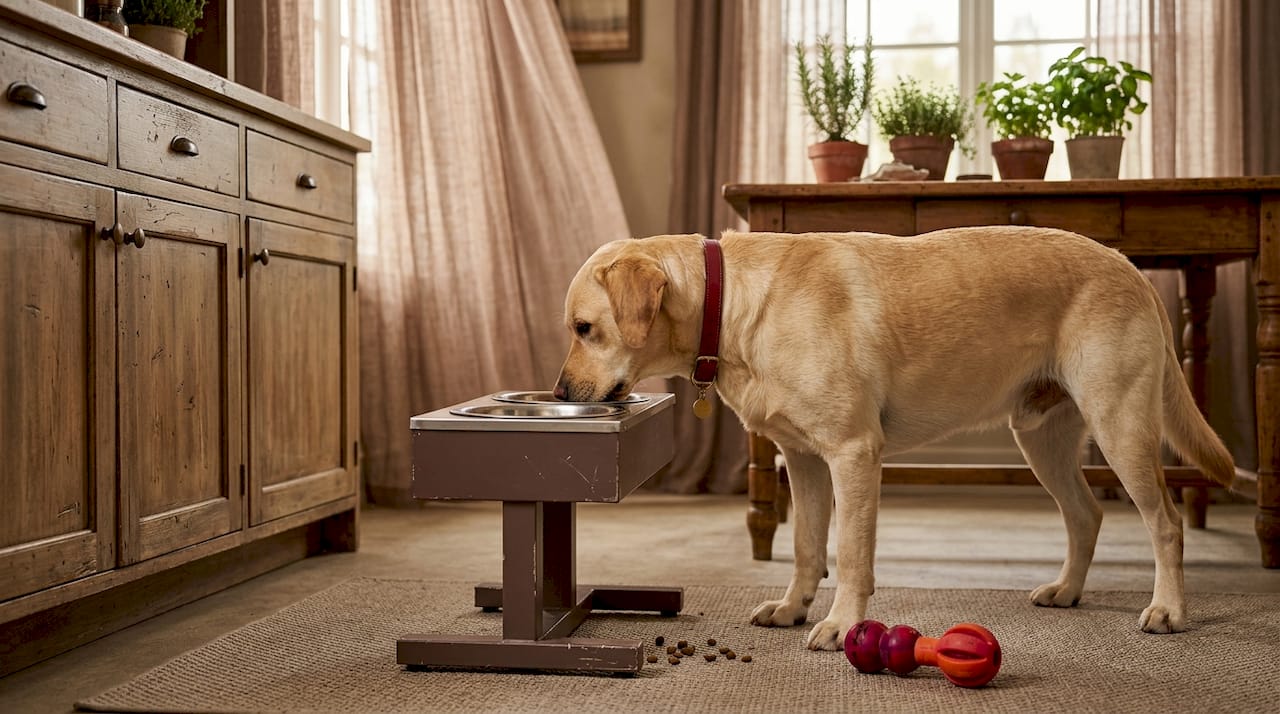
Raised feeders suit large-breed dogs and pets with arthritis or neck mobility issues. Eating from ground level creates strain across the neck and shoulders over time. A raised feeder brings the bowl to a comfortable height, reducing that stress during every meal.
Here is a quick reference for matching accessories to your situation:
| Accessory type | Best for | Food type | Primary benefit |
|---|---|---|---|
| Slow-feed bowl | Fast eaters, large breeds | Dry kibble | Slows pace, reduces bloat risk |
| Lick mat | Cats, small dogs, anxious pets | Wet food, soft treats | Calms feeding behavior |
| Puzzle feeder | Active, curious dogs | Dry kibble, treats | Mental stimulation |
| Raised feeder | Large breeds, senior pets | Any | Reduces neck strain |
| Timed compartment feeder | Wet food pets, structured schedules | Wet or raw food | Freshness, portion control |
| Automatic hopper feeder | Dry kibble households | Dry kibble only | Consistent scheduling |
How to choose and set up automatic pet feeders
Automatic feeders are genuinely useful tools when you choose the right type and set them up properly. Getting this wrong means missed meals or spoiled food. Getting it right means your pet eats on schedule even when life gets unpredictable.
Step 1: Choose the correct feeder type for your pet’s diet. Automatic dry-food feeders use hopper and auger mechanisms to dispense consistent portions on a schedule you program. They work reliably for dry kibble but should never be used for wet or raw food. For pets on wet diets, timed compartment feeders with lids keep each portion sealed until mealtime. Some newer models, like those with thermoelectric cooling technology, keep food safely below 50°F for several days.
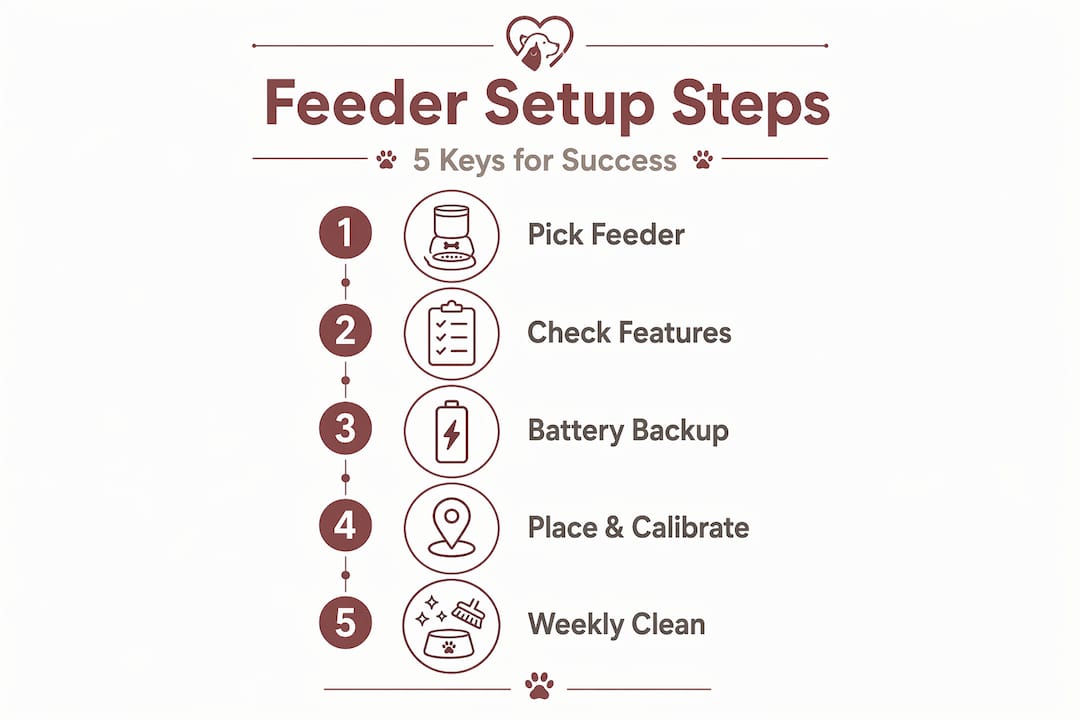
Step 2: Evaluate the features that actually matter. Portion accuracy, ease of cleaning, and odor resistance are the three factors that separate reliable feeders from frustrating ones. App connectivity and cameras are nice additions, but they should not come at the cost of these basics. Smart feeders with cameras and two-way audio do offer real value for anxious pets or households where someone works long hours, so weigh that against your actual lifestyle.
Step 3: Check for battery backup and offline scheduling. This is the feature most buyers overlook until it matters. Top feeders store schedules locally and maintain 24 to 72 hours of battery power to keep feeding on track through power outages or internet disruptions. If your feeder requires a live Wi-Fi connection to dispense food, a router reboot means a missed meal.
Step 4: Place and calibrate carefully. Set the feeder away from direct sunlight and humidity. Calibrate the portion size using an actual kitchen scale for the first week, not just the feeder’s built-in estimates. Small dispensing errors compound quickly across multiple meals per day.
Step 5: Commit to maintenance. Disassemble and clean the feeder weekly. Many hoppers develop a fine coating of kibble dust and oil that turns rancid and harbors bacteria within days.
Pro Tip: Before fully relying on any automatic feeder, run it unattended for a full week while you are still home. You will catch jamming issues, dispensing inaccuracies, and any quirks in the programming before your pet depends on it.
Keeping feeding accessories clean and pest-free
Dirty feeding accessories are one of the most overlooked causes of pet digestive issues and recurring illness. Bacteria like Salmonella and Listeria can colonize a bowl within hours of a wet food meal, especially in warm environments. A clean feeding setup is not optional. It is part of the care routine.
Here is a practical hygiene schedule to follow:
- After every meal: Rinse wet food bowls with hot water and mild dish soap. Do not let wet food sit in a bowl for more than 30 minutes at room temperature.
- Daily: Wipe down the feeder’s exterior, lid, and any dispenser opening with a damp cloth. Check for food particles stuck in crevices.
- Weekly: Fully disassemble automatic feeders and wash all removable parts. Proper cleaning includes disassembly, dishwasher-safe components, and desiccant replacement to prevent mold buildup in humid areas. Manufacturers recommend this weekly cycle as the minimum for maintaining hygiene.
- Monthly: Deep clean the hopper or storage compartment, inspect seals, and replace any worn gaskets.
Material choice affects how easy this is. Stainless steel bowls resist bacteria far better than plastic, which scratches easily and harbors microbes in those grooves. For a bowl that checks both hygiene and style, a stainless steel option eliminates the risk of plastic degradation over time.
Pest prevention is closely tied to hygiene. Store dry kibble in airtight, hard-sided containers rather than the original paper bag. Ants and pantry moths can penetrate soft packaging in under 24 hours. Keep the feeding area swept free of crumbs and residue, and never leave food in an outdoor bowl overnight.
Feeding solutions for special needs and multi-pet homes
One of the hardest feeding situations to manage is a home with multiple pets, especially when they have different diets, different speeds, and the stronger animal regularly eats the weaker one’s food. This is where specialized feeding accessories earn their price.
Microchip feeders open only for the pet with the matching chip or RFID collar tag, blocking all other animals automatically. If you have a diabetic cat on a prescription diet living alongside a healthy dog that would happily eat both meals, this technology is not a luxury. It is a necessity. The same applies to households managing food allergies, where cross-contamination can trigger a reaction.
For pets managing obesity, portion-controlled feeders and puzzle feeders work together well. The puzzle feeder extends mealtime by 10 to 20 minutes even when the calorie content stays the same, which helps the pet feel more satisfied without extra food.
Here is a comparison of specialized feeding accessories by need:
| Pet challenge | Recommended accessory | Key feature |
|---|---|---|
| Food theft in multi-pet home | Microchip feeder | Opens only for authorized pet |
| Obesity or overeating | Portion-controlled auto feeder | Programmable meal size |
| Allergies or prescription diet | Sealed compartment feeder | Prevents cross-contamination |
| Anxiety around mealtimes | Lick mat or slow feeder | Calming, extended feeding |
| Boredom or low enrichment | Puzzle feeder | Mental engagement |
Pro Tip: If you have a multi-pet home, feed pets in separate rooms at least for the first month of introducing a new accessory. Once each animal associates their own feeder with their own meals, you can gradually reintroduce shared spaces with less food competition.
Lick mats for cats and small dogs are also worth keeping in the rotation for pets that show stress signals like pacing, excessive vocalization, or destructive behavior near mealtimes. The repetitive licking motion triggers a calming response and makes mealtimes something the pet looks forward to rather than rushes through.
A feeding accessories selection guide that ignores behavioral context is only telling half the story. The physical tool matters, but matching it to what your specific pet is communicating through their eating behavior is what produces real results.
My honest take on technology versus simplicity
I have seen pet owners spend $300 on an app-connected feeder with a camera, scheduled feeding alerts, and portion logging, only to abandon it six months later because it was too complicated to clean. Then they went back to a $15 stainless bowl and a measuring cup.
That story is more common than most people admit.
My experience tells me that experts who recommend starting with behavior, then layering features are giving genuinely sound advice, but it rarely gets heard over the marketing noise around smart feeders. The truth is that no single feeder model suits every situation. The best feeding setup I have ever seen for a two-dog household was a slow-feed bowl for the Lab and a microchip feeder for the smaller dog on a prescription diet. No apps. No cameras. Just the right tool for each animal’s actual problem.
I would encourage you to spend more time watching how your pet eats before buying anything. Is the problem speed? Portion size? Anxiety? Food theft? The answer to that question should determine the accessory, not the star rating or the feature count. And whatever you buy, build the cleaning routine into your week from day one. The most thoughtfully chosen feeder becomes a health hazard when it is not maintained.
— Christopher
Find the right feeding accessories at Americanbarkbliss
Americanbarkbliss carries a curated selection of feeding accessories designed and built with the same care you put into your pet’s diet.
If you are starting with the basics, the slow feeder bowls are a great entry point for dogs that eat too fast, and the lick mats for smaller pets are consistently among the most loved products for reducing feeding anxiety. Every product on the site reflects the Americanbarkbliss commitment to quality, durability, and American craftsmanship. Browse the full feeding accessories collection at Americanbarkbliss and use the guidance from this article to match each product to your pet’s specific needs. If you have questions about which accessories fit your setup, the team is ready to help.
FAQ
What types of bowls are best for fast-eating dogs?
Slow-feed bowls with raised ridges or maze patterns are the most effective option. They break up kibble and force the dog to eat around obstacles, reducing gulping and lowering the risk of bloat.
Can automatic feeders be used for wet food?
Yes, but only with timed compartment feeders specifically designed for wet food. Hopper dispensers are built for dry kibble only. Wet food requires sealed compartments, and some models include cooling features to maintain freshness safely.
How often should I clean my pet’s feeding accessories?
Wet food bowls should be washed after every meal. Automatic feeders need a full disassembly and wash weekly, with a deeper monthly cleaning of the hopper or storage area to prevent bacteria and mold buildup.
What is a microchip feeder and who needs one?
A microchip feeder reads your pet’s implanted chip or an RFID collar tag and opens only for that specific animal. They are most useful in multi-pet homes where one animal steals another’s food or where pets have incompatible diets.
How do I know which feeding accessory my pet actually needs?
Observe your pet’s eating behavior first. Fast eaters need slow feeders. Anxious eaters benefit from lick mats. Pets in multi-pet homes with dietary conflicts need microchip or compartment feeders. Start with the behavior, then choose the tool.
Leave a comment