

Why High-Quality Dog Collars Matter for Safety
TL;DR:
- A high-quality dog collar is vital for your pet’s safety, comfort, and security, offering long-term savings.
- Choosing durable materials like leather or BioThane ensures a longer lifespan and reduces replacement frequency.
A high-quality dog collar is essential safety gear, not a fashion accessory. The collar your dog wears every day affects whether they stay safe, comfortable, and secure. Understanding why high-quality dog collars matter helps you make a choice that protects your pet and saves you money over time. Brands like Ruffwear and bestonepetgift have built their reputations on collars that combine strong hardware, durable materials, and a proper fit. The difference between a $10 collar and a well-made one shows up the moment something goes wrong.
What materials make the best dog collars?
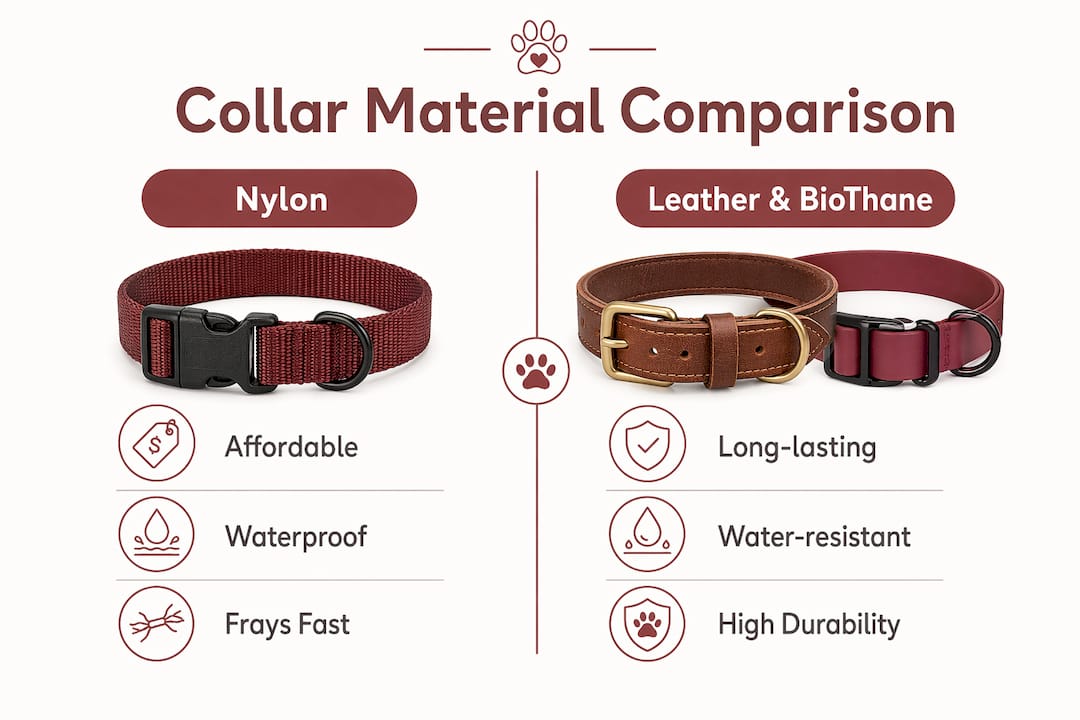
The material of a dog collar determines its durability, comfort, and how well it holds up under real conditions. Nylon dominates the market with a 35% share, while leather holds 25%, reflecting clear owner preferences for these two proven options. Each material has real trade-offs that affect your dog’s daily experience.

Nylon is waterproof, affordable, and easy to clean. The downside is that it frays over time, especially on active dogs that swim or pull hard on the leash. A nylon collar typically lasts 6–18 months before it needs replacing.
Leather is the long-game material. Leather collars mold to your dog’s neck with use, developing a patina that actually improves comfort over time. That is something nylon never does. The trade-off is maintenance. Leather requires conditioning every three months to prevent cracking and stiffness.
BioThane coated webbing is the material most dog owners have not heard of yet. It combines the waterproof quality of nylon with the durability of leather. Americanbarkbliss carries a Body Glove BioThane dog collar that reflects exactly this category of material. BioThane does not absorb odors, wipes clean in seconds, and holds its shape through years of use.
| Material | Lifespan | Maintenance | Waterproof |
|---|---|---|---|
| Nylon | 6–18 months | Low (machine washable) | Yes |
| Leather | 3+ years | High (condition every 3 months) | No |
| BioThane coated webbing | 3+ years | Very low (wipe clean) | Yes |
| Reflective fabric | 6–12 months | Low | Varies |
The table makes the value case clear. Leather and BioThane last more than twice as long as nylon, which directly affects how often you spend money replacing a collar.
How does collar quality impact your dog’s safety?
A collar is the primary connection between your dog and the outside world. Low-quality collars cause skin irritation, tracheal damage, escapes, and panic injuries. These are not rare edge cases. They happen regularly when owners prioritize price over construction.
Dr. Allona Jackson, a veterinarian, puts it directly:
“Viewing collars as fashion only leads to injuries due to tracheal pressure. The collar is a communication tool between owner and dog, and breed and behavior must factor into every selection.”
The risks of a poor collar fall into three categories:
- Escape risk. Cheap buckles snap under pressure. A dog that bolts toward traffic with a broken buckle is in immediate danger.
- Tracheal damage. Collars that sit too tight or lack proper padding put constant pressure on the windpipe. Brachycephalic breeds like French Bulldogs and Pugs face the highest risk.
- Hardware fatigue. D-rings bend and buckles lose tension months before any visible damage appears on the collar itself. This is the failure mode most owners never see coming.
The fix is straightforward. Monthly inspections for fit and hardware integrity prevent more accidents than any single product choice. Check that the buckle still snaps firmly, that the D-ring has not bent out of shape, and that the webbing shows no fraying at stress points. A safe dog collar guide walks through exactly what to look for during these checks.
Durability and lifespan: why investing in quality saves money
The upfront cost of a quality collar is higher. The total cost over three years is lower. High-quality leather and BioThane collars last 3 or more years, compared to the 6–18 months typical of nylon. That means you may replace a nylon collar three to four times before a leather collar needs replacing once.
Active dogs accelerate this math. A dog that swims daily, hikes on trails, or pulls hard on the leash will destroy a cheap nylon collar in under six months. A BioThane or quality leather collar handles that same abuse and keeps going. The importance of durable dog collars becomes especially clear when you track what you actually spend over a two-year period.
| Collar type | Average cost | Lifespan | 3-year cost estimate |
|---|---|---|---|
| Budget nylon | $10–$15 | 6–12 months | $30–$60 |
| Quality nylon | $25–$40 | 12–18 months | $50–$80 |
| Leather | $50–$80 | 3+ years | $50–$80 |
| BioThane | $40–$70 | 3+ years | $40–$70 |
The numbers show that leather and BioThane are cost-neutral or cheaper over three years compared to repeatedly buying budget nylon.
Pro Tip: Rotate between two collars weekly. This reduces constant pressure on one spot of the webbing, extends the life of both collars, and gives you a chance to inspect each one regularly.
How do you choose the right collar fit and style?
Fit is the single most important factor in collar safety. The two-finger rule is the standard: you should be able to slide exactly two fingers under the collar when it sits flat against your dog’s neck. Tighter than that risks tracheal pressure. Looser than that creates an escape risk.
Follow these steps when selecting and fitting a collar:
- Measure your dog’s neck. Use a soft tape measure and add one inch to find the right collar size. Never guess based on breed alone.
- Check the fit monthly. Puppies grow fast. Adult dogs gain and lose weight. A collar that fit perfectly in january may be dangerously tight by april.
- Consider your dog’s breed. Brachycephalic breeds like Bulldogs and Pugs should use a harness for leash walking, with a collar worn only for ID tags. The collar as a communication tool works differently for these dogs.
- Choose adjustable over fixed size. Adjustable collars give you room to correct fit as your dog’s weight changes. Fixed-size collars are only appropriate when you know your dog’s measurements are stable.
- Match style to activity. A reflective collar is worth the investment for dogs walked at dawn or dusk. A waterproof BioThane collar suits dogs that swim. A padded leather collar suits dogs that wear their collar all day.
Style does not have to compete with safety. Designer dog collars now routinely combine strong hardware, quality materials, and visual appeal. You do not have to choose between a collar that looks good and one that holds up.
Pro Tip: Remove your dog’s collar during crate time and sleep. Continuous collar wear causes hair matting and skin irritation over time, especially under the buckle and D-ring.
Key Takeaways
A high-quality dog collar built from durable materials and fitted correctly prevents injuries, reduces long-term costs, and keeps your dog safe every day.
| Point | Details |
|---|---|
| Material determines lifespan | Leather and BioThane last 3+ years; nylon lasts 6–18 months. |
| Fit prevents the most injuries | Use the two-finger rule and check fit every month. |
| Hardware fails before fabric | Inspect D-rings and buckles monthly, not just the webbing. |
| Quality costs less long-term | Budget nylon replaced repeatedly costs as much as one leather collar. |
| Collar removal matters | Remove collars during sleep and crate time to prevent skin damage. |
What I’ve learned from watching owners get this wrong
Most dog owners I talk to replace collars only when they see visible fraying. That is the wrong trigger. Hardware fatigue is the real danger. A D-ring that has bent slightly or a buckle that no longer snaps with a firm click is a collar that will fail at the worst possible moment. The webbing can look perfect while the hardware is already compromised.
The other mistake I see constantly is treating the collar as a permanent fixture. Owners put it on a puppy and never take it off. That collar gets tighter as the dog grows, and no one notices until there is a problem. Monthly fit checks take 30 seconds. They prevent injuries that take weeks to heal.
My honest opinion: the collar is the one piece of gear where spending more is always the right call. A quality collar from a brand that uses welded D-rings, solid buckles, and tested materials is not a luxury. It is the baseline. Everything else in your dog’s gear collection can be budget-friendly. The collar cannot.
— Christopher
Quality collars and accessories worth adding to your dog’s kit
Americanbarkbliss carries collars, treats, and accessories built to the same standard this article describes: American-made, durable, and worth the investment.
If you are building out your dog’s gear kit after reading this, the USA-K9 Stars and Stripes rubber dog toy pairs well with a quality collar for active dogs that need both physical and mental engagement. For a reward after a good walk, the Americana Chicken Chips are USA-made, single-ingredient treats that quality-conscious dog owners reach for first. Americanbarkbliss makes it easy to shop by category, so you can find the right collar material and matching accessories without sorting through products that do not meet the standard.
FAQ
What is the safest collar material for dogs?
BioThane coated webbing and quality leather are the safest long-term options. Both resist hardware fatigue better than budget nylon and maintain their structural integrity through years of daily use.
How often should I replace my dog’s collar?
Replace nylon collars every 6–18 months and inspect all collars monthly for hardware wear. Leather and BioThane collars can last 3 or more years with proper maintenance.
What is the two-finger rule for collar fit?
The two-finger rule means you should be able to slide exactly two fingers flat under your dog’s collar. Tighter risks tracheal pressure; looser creates an escape risk.
Should I remove my dog’s collar at night?
Yes. Removing the collar during sleep and crate time prevents hair matting, skin irritation, and pressure sores, especially under the buckle and D-ring.
Are expensive dog collars worth it?
Quality collars cost more upfront but last two to three times longer than budget options. Over a three-year period, leather and BioThane collars are cost-neutral or cheaper than repeatedly replacing budget nylon.
Leave a comment