

What Is Premium Pet Bedding: Your 2026 Guide
TL;DR:
- Premium pet bedding is made from certified supporting materials like memory foam and natural fibers to ensure durability and pet health. Proper sizing and regular maintenance extend its lifespan, making it a cost-effective choice over cheaper options. Most owners underestimate its role in joint support, which is crucial for dogs’ long-term well-being.
Premium pet bedding is defined as a durable, comfortable sleeping surface made from high-quality materials like CertiPUR-US certified memory foam and organic fabrics, engineered to support pet health over years of daily use. The industry term for this category is orthopedic or luxury pet bedding, and it covers products that go well beyond basic cushions. What separates premium from standard is a combination of certified materials, construction integrity, and design features that protect your dog’s joints, regulate temperature, and survive repeated washing. Luxury dog beds typically range from $150 to $400, but a $200 bed lasting eight years costs just $25 per year. A $40 budget bed replaced every year costs more and creates more waste. For dog owners who care about safety, comfort, and style, understanding what high-quality pet bedding actually means is the first step to making a purchase you will not regret.
What is premium pet bedding made of?
The materials inside a bed determine everything: support, safety, temperature control, and how long the bed holds up. Premium pet bedding uses a short list of proven materials, and each one earns its place.

CertiPUR-US certified memory foam is the gold standard for orthopedic support. This certification means the foam is made without ozone depleters, heavy metals, or formaldehyde, and it meets strict standards for emissions and content. High-density foam provides real support where loose polyfill collapses and creates pressure points. For large breeds and senior dogs, that difference shows up in how they move after a night’s sleep.
Natural fibers bring a different set of benefits. Sheepskin, virgin wool, and organic cotton provide flame resistance and antimicrobial protection without chemical treatments. Luxury sheepskin beds last 5–10 years or more. Wool naturally regulates temperature, keeping dogs cooler in summer and warmer in winter without synthetic additives.
The construction details matter just as much as the fill:
- YKK zippers and double-stitched seams prevent the most common failure points during washing and daily use
- Removable, machine-washable covers make hygiene practical rather than a chore
- Waterproof or heat-welded inner liners protect the foam core from accidents. A water-resistant cover alone does not protect expensive foam from moisture penetration
- Non-slip bases keep the bed in place on hardwood or tile floors, which is critical for senior pets with mobility issues
Pro Tip: Check for a fully heat-welded waterproof barrier between the cover and the foam core. “Water-resistant” fabric on its own will not stop liquid from reaching and degrading the orthopedic foam underneath.
How do memory foam, natural fiber, and designer beds compare?
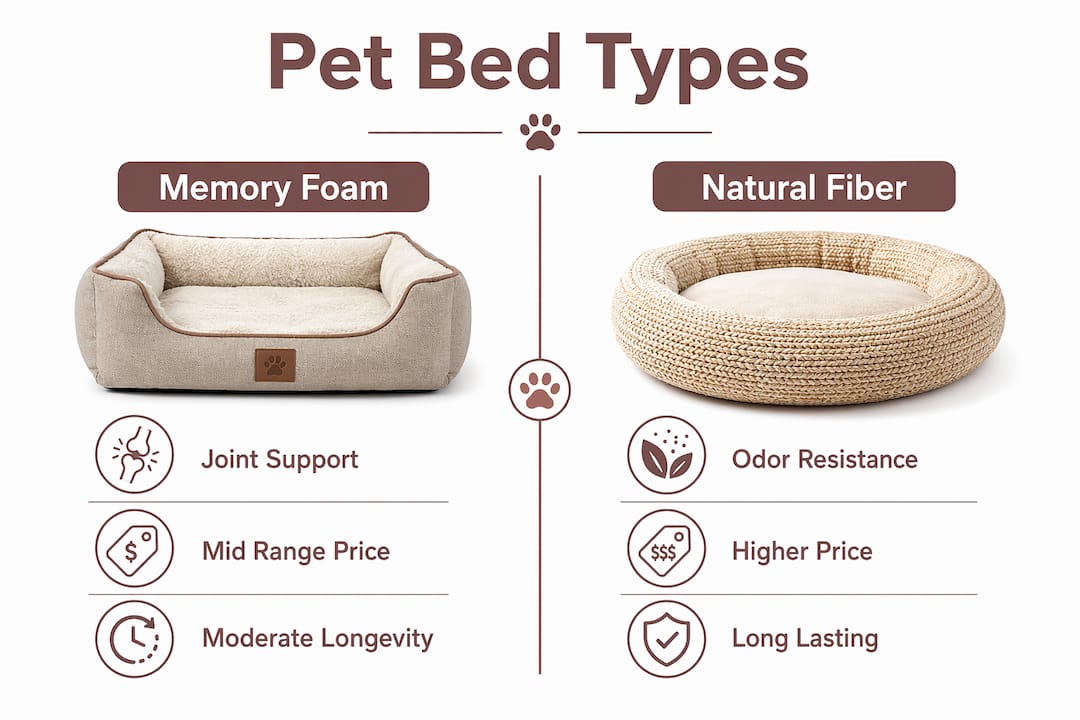
Not every premium bed suits every dog or household. The three main categories each have a clear strength, and knowing the difference saves you from buying the wrong one.
| Bed type | Best for | Typical price range | Longevity | Key advantage |
|---|---|---|---|---|
| CertiPUR-US memory foam | Large breeds, seniors, joint issues | $150–$400 | 5–8 years | Orthopedic support, certified safe materials |
| Natural fiber (wool, sheepskin) | Temperature-sensitive dogs, allergy concerns | $180–$400+ | 5–10+ years | Natural antimicrobial, no chemical treatments |
| Designer fabric (canvas, suede) | Style-focused owners, light chewers | $100–$250 | 3–6 years | Aesthetic variety, often machine washable |
| Budget polyfill | Puppies, crate liners | $20–$60 | Under 1 year | Low cost, easy to replace |
Memory foam beds, like the Big Barker 7" Orthopedic Dog Bed, deliver the most consistent joint support. They work best for dogs over 40 pounds or any dog with arthritis, hip dysplasia, or a history of joint strain. The foam does not compress flat over time the way polyfill does.
Natural fiber beds cost more upfront but outlast most foam options. Sheepskin in particular resists odor naturally, which matters if your dog spends time outdoors. The tradeoff is that natural fiber beds require more careful washing to avoid shrinkage or matting.
Designer fabric beds prioritize looks without sacrificing washability. Suede and canvas covers hold up well to moderate use and come in colors and patterns that fit modern home interiors. They are not the best choice for heavy chewers or dogs with joint problems, but for a healthy adult dog in a stylish home, they deliver real value.
Pro Tip: If your dog is a “stretcher” who sleeps on their side with legs extended, memory foam gives better full-body support than bolster or donut styles. Bolster beds suit “curlers” who tuck their nose under their tail.
How to choose the right size and style for your dog
Sizing is where most pet owners make their first mistake. A bed that is too small forces your dog to curl unnaturally, which defeats the purpose of orthopedic support.
- Measure your dog correctly. Measure from the tip of the nose to the base of the tail while your dog is lying in their natural sleep position. That is your baseline length.
- Add the right margin. Add 6–12 inches to the length and 4–6 inches to the width for comfortable movement. When in doubt, size up.
- Match the style to the sleep habit. Curlers do well with bolster or donut beds that support the spine in a curved position. Stretchers need flat or low-profile orthopedic beds with full-length foam.
- Factor in age and health. Senior dogs and large breeds need orthopedic support to prevent joint and spine strain. A thick memory foam base is not optional for a 90-pound dog with hip dysplasia. It is the minimum.
- Check crate compatibility. If the bed lives in a crate, measure the interior floor dimensions before buying. Many premium beds are not designed to fit standard wire crate sizes.
- Match style to your home. Choosing bedding that fits your dog’s sleep style and your home’s aesthetic means the bed stays in a visible spot rather than getting hidden in a corner. Dogs sleep better in consistent locations.
The concept of pet humanization drives much of the current premium market. Pet owners now prioritize health, safety, and aesthetics as part of their household’s lifestyle, not just as an afterthought. That shift explains why designer fabric options and customizable sizes have grown so quickly alongside orthopedic options.
How to maintain premium pet bedding and make it last
A $300 bed that falls apart in two years is not a good investment. Proper care is what separates a bed that lasts eight years from one that lasts two.
- Wash the cover weekly or biweekly. Removable, machine-washable covers are the single most important maintenance feature. Use cold water and a gentle cycle to protect stitching and waterproof coatings.
- Protect the foam core. Wash the inner liner separately on a gentle cycle if it is machine washable. Never put a foam core in a dryer. Air dry it flat to prevent warping.
- Inspect zippers and seams after every wash. YKK zippers and double-stitched seams are built to last, but catching a loose thread early prevents a full seam failure later.
- Use a non-slip mat under the bed on hard floors. This prevents the bed from shifting and reduces wear on the base material over time.
- Redirect chewing behavior early. A dog that chews the bed’s edges will destroy even the best stitching. Provide chew toys and address the behavior before it becomes a habit.
- Replace when support fails. Press the center of the foam with your palm. If it does not spring back within a few seconds, the foam has lost its structural integrity and the bed needs replacing. For most quality memory foam beds, that point comes after five or more years of daily use.
The modular design of premium beds, with separate covers, liners, and foam cores, means you can replace individual components rather than the entire bed. That extends the useful life significantly and reduces the total cost of ownership.
Key takeaways
Premium pet bedding delivers better long-term value than budget options because certified materials, quality construction, and proper maintenance combine to support pet health for five to ten years.
| Point | Details |
|---|---|
| Materials define quality | CertiPUR-US foam and natural fibers like wool and sheepskin outperform polyfill on support and longevity. |
| Construction details matter | YKK zippers, double stitching, and heat-welded waterproof liners prevent the most common failure points. |
| Size up when in doubt | Add 6–12 inches to your dog’s nose-to-tail length and 4–6 inches to width for proper comfort. |
| Maintenance extends lifespan | Weekly cover washing and air-drying the foam core can push a quality bed past eight years of use. |
| Cost-per-year beats sticker price | A $200 bed lasting eight years costs $25 per year, less than most budget beds replaced annually. |
Why I think most pet owners underestimate what a bed actually does
Most people treat a dog bed like a floor mat. They buy whatever is on sale, and when it flattens out in six months, they buy another one. I have seen this cycle play out dozens of times, and the cost adds up faster than owners realize.
The part that gets overlooked is the joint health angle. Orthopedic engineering matters for all large and active dogs, not just seniors. A young, healthy 70-pound dog sleeping on collapsed polyfill every night is building up joint stress that shows up at age seven or eight. By then, the vet bills dwarf what a quality bed would have cost.
The other mistake I see constantly is buying the wrong size. Owners pick a bed that looks big enough, but they never actually measure. Then the dog hangs off the edge or curls into an unnatural position to fit. Measuring takes two minutes and eliminates the most common sizing error entirely.
My honest advice: treat the bed as part of your dog’s health routine, not as furniture. Buy for support first, style second. If you can find both in one product, even better. The personalized pet solutions trend is real, and it reflects what good owners have always known. Your dog spends more time on their bed than anywhere else in your home. That surface deserves the same attention you give to your own mattress.
— Christopher
Find the right premium bed at Americanbarkbliss
Americanbarkbliss carries a curated selection of high-quality dog beds built to the standards covered in this article. Every option in the collection features washable covers, durable construction, and sizing options for dogs of all breeds.
The Big Barker 7" Orthopedic Dog Bed Sofa Edition is one of the strongest options for large breeds and senior dogs needing real joint support. For owners who want a calming, washable option with spine support, the 52-inch suede donut bed delivers comfort in an XL size. Browse the full Americanbarkbliss bed collection to find the right fit for your dog’s size, sleep style, and your home’s aesthetic.
FAQ
What is the difference between premium and standard pet bedding?
Premium pet bedding uses certified materials like CertiPUR-US memory foam and natural fibers, with construction features like YKK zippers and machine-washable covers. Standard bedding typically uses loose polyfill that collapses within months and lacks waterproof protection for the foam core.
How do I know what size bed my dog needs?
Measure your dog from nose to the base of the tail, then add 6–12 inches to the length and 4–6 inches to the width. When your dog falls between sizes, always size up.
Are premium dog beds worth the higher price?
A $200 premium bed lasting eight years costs $25 per year. A $40 budget bed replaced annually costs more over the same period and provides less joint support throughout. The cost-per-year value favors premium options for most dogs.
What materials should I look for in eco-friendly pet bedding?
Natural fibers like organic cotton, virgin wool, and sheepskin provide antimicrobial protection and temperature regulation without chemical treatments. These materials are biodegradable and last 5–10 years, making them the strongest eco-friendly choice in the premium category.
How often should I replace a premium dog bed?
Press the center of the foam with your palm. If it does not spring back within a few seconds, the foam has lost its support and the bed needs replacing. Most quality memory foam beds reach this point after five or more years of daily use, depending on the dog’s weight and activity level.
Leave a comment