

What Is Non Toxic Dog Toys: a Safe Buyer's Guide
If you’ve ever picked up a brightly colored rubber toy and wondered whether it’s actually safe for your dog, you’re asking the right question. What is non toxic dog toys really means goes far beyond the label on the packaging. Most dog toys in the US face no mandatory safety regulations, which means manufacturers can legally include BPA, phthalates, lead, and formaldehyde in products your dog chews for hours every day. This guide breaks down what non-toxic actually means, which materials to trust, how to spot red flags, and how to choose safe dog toys that protect both your dog and the planet.
Table of Contents
- Key takeaways
- What non-toxic dog toys really mean
- How to identify safe dog toys
- Comparing non-toxic dog toy materials
- Safety tips for using non-toxic toys
- Eco-friendly trends in the dog toy market
- My honest take on the non-toxic toy problem
- Safe, non-toxic toys your dog will actually love
- FAQ
Key takeaways
| Point | Details |
|---|---|
| “Non-toxic” is unregulated | The label means nothing without material disclosures or third-party testing to back it up. |
| Dogs face higher chemical risk | Dogs chew and mouth toys intensely, making them far more vulnerable to chemical absorption than humans. |
| Certifications matter most | Look for ASTM F963 compliance, FDA food-contact materials, and OEKO-TEX certified textiles when buying. |
| Material choice drives safety | Natural rubber, food-grade silicone, and organic cotton are the gold standard for non-toxic chew toys. |
| Supervision is non-negotiable | Even certified safe materials can cause injury if a dog ingests large fragments from a damaged toy. |
What non-toxic dog toys really mean
The phrase “non-toxic” sounds reassuring. The reality is far less comforting. Non-toxic labeling is largely unregulated in the pet toy industry, meaning any brand can print it on packaging without third-party verification, ingredient disclosure, or safety testing. Unlike children’s toys, which have strict legal phthalate limits under the CPSIA, pet toys exist in a regulatory gray zone.
The ECHA found in 2024 that many pet toys contain lead, phthalates, and BPA above thresholds considered safe for children’s products. Children’s toys cap phthalates at 0.1%. Pet toys have no equivalent ceiling.
Chemicals commonly found in conventional dog toys
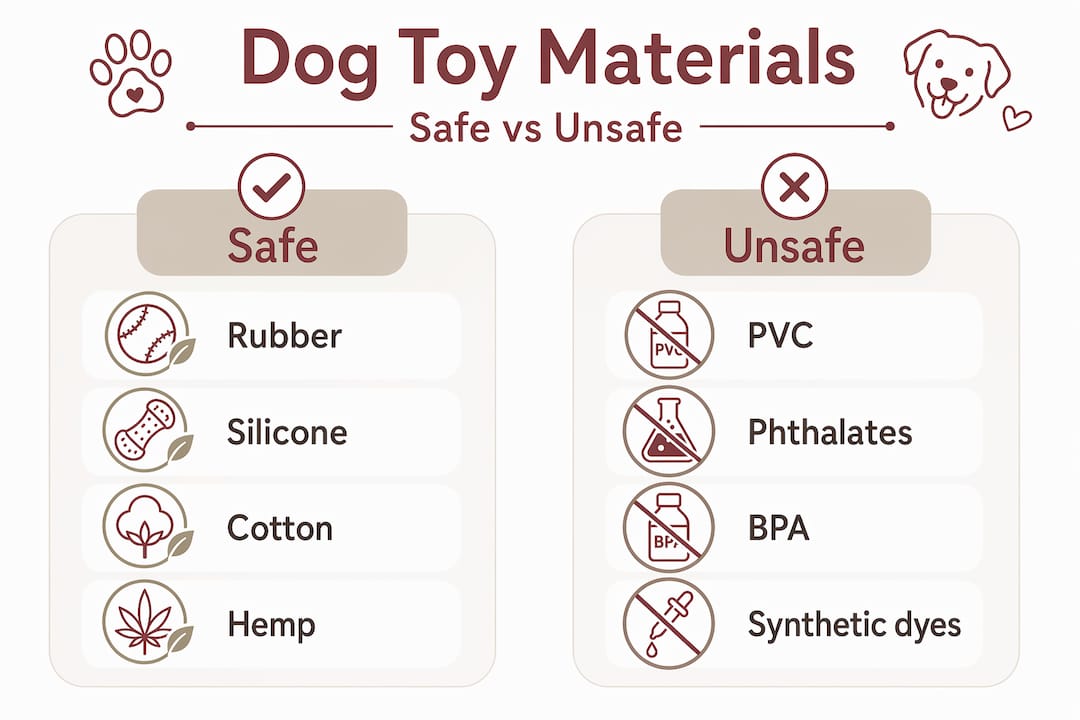
Here’s what you’re actually trying to avoid when you search for dog toys without chemicals:
- BPA (bisphenol A): Found in hard plastics; linked to hormonal disruption and organ damage with repeated exposure.
- Phthalates: Used to soften PVC plastics; associated with reproductive toxicity and liver damage in animal studies.
- Lead: Shows up in painted surfaces, decorative elements, and cheap imported toys; causes neurological damage.
- Formaldehyde: Used in some textile treatments and adhesives; a known carcinogen even at low doses.
- Synthetic dyes: Bright colors often rely on azo dyes, some of which break down into carcinogenic compounds.
- PVC (polyvinyl chloride): Cheap, flexible plastic that almost always contains plasticizers like phthalates to stay soft.
One detail most buyers miss: toxic chemicals often reside in secondary components like printed hang tags, plastic safety eyes, or decorative ribbons rather than the main toy body. Full toy safety requires testing the assembled product, not just its primary material.
Dogs are especially vulnerable because they don’t just hold toys. They chew, gnaw, lick, and mouth them for extended periods, which means chemical transfer to saliva and the digestive tract is constant. Puppies and senior dogs face even higher risk due to developing or compromised immune systems.

Materials that are genuinely safe
Trusted non-toxic pet products use materials with documented safety profiles:
- Natural rubber: Sourced from rubber trees, biodegradable, and free of synthetic additives.
- Food-grade silicone: Meets FDA standards for contact with consumables; contains no BPA or phthalates.
- Organic cotton: Grown without pesticides; ideal for rope toys and plush designs.
- Hemp: Naturally antimicrobial and durable; increasingly used in eco friendly dog toys.
How to identify safe dog toys
Knowing what makes a toy safe is one thing. Knowing how to identify one in a crowded product listing is another. Here’s a practical framework.
Certifications and standards to look for
The most reliable signal is voluntary compliance with rigorous testing standards. The ASTM F963 standard limits soluble lead in coatings to 90 ppm and substrate lead to 100 ppm. Premium brands push below 10 ppm. Since this standard was written for children’s toys, brands that voluntarily meet it are signaling a genuine commitment to safety rather than just marketing copy.
Other certifications worth checking:
- FDA food-contact compliance: Confirms the material is safe for incidental ingestion, relevant for anything a dog chews.
- OEKO-TEX Standard 100: Covers textiles and certifies that every component of a fabric toy has been tested for harmful substances.
- CPSIA compliance: Originally for children’s products, but brands that meet it voluntarily are demonstrating above-average chemical transparency.
Practical tests any owner can do
You don’t always need a lab. A strong chemical odor from a new toy is a reliable warning sign. Volatile organic compounds from plasticizers like phthalates produce a sharp, artificial smell. If a toy smells strongly chemical straight out of the package, put it back.
Look at the color. Neon or extremely bright dyes on soft rubber and fabric toys often indicate synthetic dye use. Stick with natural tones or toys that specifically state the dye type used.
Pro Tip: When evaluating a new toy, squeeze and bend the material. If it leaves a rubbery residue on your fingers or smells chemical after handling, pass on it regardless of what the label claims.
Red flags to watch for: unknown manufacturer with no address or contact info, no material disclosure on the label or product page, the toy was made as a closeout or bulk import, and the price is unusually low for its size and material.
Comparing non-toxic dog toy materials
Different materials suit different dogs. A toy that’s perfect for a senior beagle will fall apart in minutes with a young Rottweiler. Here’s how the main safe materials compare:
| Material | Safety rating | Durability | Best for | Avoid if… |
|---|---|---|---|---|
| Natural rubber | Excellent | High | Power chewers, fetch, treat fill | Dog has latex sensitivity |
| Food-grade silicone | Excellent | Medium | Puppies, seniors, sensitive dogs | Your dog is a heavy chewer |
| Organic cotton rope | Very good | Low to medium | Light chewers, dental play | Dog shreds toys and ingests fibers |
| Hemp rope | Very good | Medium | Dental play, moderate chewers | Dog destroys toys quickly |
| TPE (thermoplastic elastomer) | Good (when certified) | Medium to high | Interactive and dental toys | Certification is not disclosed |
| PVC or cheap plastic | Poor | Varies | No recommendation | Always avoid |
Natural rubber is biodegradable and handles aggressive chewing better than most alternatives. Products made from 100% natural rubber are genuinely digestible in small amounts, which matters when your dog inevitably scrapes off a small piece.
Food-grade silicone is hypoallergenic, BPA-free, and can be sterilized by boiling, which makes it easy to keep clean and germ-free. It’s a strong choice for dogs with skin sensitivities or allergies. The trade-off is that it doesn’t hold up as well against heavy chewing, so size and chew intensity matching is critical.
Organic cotton and hemp rope toys deliver real dental benefits. The fibers act like floss as the dog chews, which is good for gum health. Hemp adds the bonus of being naturally antimicrobial, reducing bacterial buildup between cleanings. The caveat: these toys require supervision because ingesting large amounts of fiber can cause intestinal obstruction.
Pro Tip: For aggressive chewers, run the “thumbnail test” in reverse. Press your thumbnail into the toy. If it leaves no mark at all, the toy is likely too hard. Veterinarians warn that toys too rigid risk fractured teeth, even when the material itself is non-toxic.
Safety tips for using non-toxic toys
Buying the right toy is only half the job. How you use, maintain, and retire toys determines whether your dog stays safe during play.
- Inspect before every session. Look for cracks, deep gouges, discoloration, or chemical smells on a toy that was previously odor-free. Any of these means the toy goes in the trash.
- Match size to your dog. A toy sized for a small breed becomes a choking hazard in a large dog’s mouth. Manufacturers publish size guides for a reason.
- Supervise new toys. Introduce any toy, even certified safe options, with you present. Some dogs find ways to break apart products designed to be indestructible.
- Rotate the toy collection. Dogs lose interest in the same toy quickly, and rotation reduces the wear on any single toy, extending its life and reducing ingestion risk.
- Clean regularly. Natural rubber and silicone toys can be washed with mild dish soap or run through the dishwasher. Rope toys can be microwaved briefly to kill bacteria. Never let mold or slime build up on any toy.
- Retire damaged toys immediately. Non-toxic materials do not protect against intestinal blockages when ingested in large pieces. A broken toy is a dangerous toy regardless of what it’s made from.
Pro Tip: Set a monthly toy audit on your calendar. Pull every toy out, check for damage, wash what can be cleaned, and replace anything that shows serious wear. It takes ten minutes and it’s the single most effective habit for toy safety.
A note on dental health: the popular “if it doesn’t give, don’t give it” rule from veterinary dentistry applies here. Toys should flex slightly when pressed. Bones, antlers, and ultra-hard nylon toys marketed as non-toxic can still fracture teeth even when chemically safe. You can find toys built for dental care that balance hardness and flexibility specifically for this reason.
Eco-friendly trends in the dog toy market
The consumer shift toward natural, sustainable pet products is real and accelerating. The global natural pet toy market was valued at $144 million in 2025 and is projected to grow at 7.2% CAGR to $232 million by 2032. That growth is being driven by dog owners who connect pet safety with environmental responsibility.
| Trend | What it means for buyers |
|---|---|
| Recycled and natural rubber | Lower carbon footprint; same safety profile as virgin natural rubber |
| Biodegradable packaging | Reduces plastic waste; good indicator of a brand’s overall values |
| Plant-based dyes | Safer color options replacing synthetic azo dyes in fabric toys |
| Third-party transparency reports | Brands publishing full ingredient and testing disclosures |
| B Corp and eco certifications | Broader sustainability accountability beyond just the product |
Consumer demand is actively pushing manufacturers toward greater safety transparency and more sustainable sourcing. Brands that publish third-party test results, disclose full material lists, and use recyclable or biodegradable packaging are leading the market in 2026. When you buy from these companies, you’re not just protecting your dog. You’re voting with your wallet for higher industry standards. If you want to understand more about why sustainable toys matter for both your pet and the environment, the argument goes deeper than most people realize.
My honest take on the non-toxic toy problem
I’ve spent years evaluating pet products, and the non-toxic toy category is one of the most frustrating spaces to navigate as a buyer. The label is almost always marketing. I’ve seen toys branded as “natural” that contain synthetic binders, cheap plastics in the internal squeaker housing, and printed tags that tested positive for lead. The main body was fine. Everything else wasn’t.
What I’ve found actually works is treating the label as a starting point, not a conclusion. I look at material disclosures first. If a brand can’t or won’t tell me exactly what their toy is made from, I stop there. Transparency is the only real signal of a brand that takes safety seriously.
The other lesson I keep coming back to is balance. The safest material in the world won’t protect your dog if the toy is the wrong size, left unsupervised, or used until it’s falling apart. I’ve watched owners buy premium organic toys and then leave them with heavy chewers for hours without checking in. The toy loses. The dog swallows pieces. The material being natural doesn’t change the outcome.
My advice: spend less time obsessing over the perfect material and more time building a simple inspection routine. Buy quality, check often, and replace without hesitation. That combination protects dogs better than any single certification ever will.
— Christopher
Safe, non-toxic toys your dog will actually love
If you’ve done the research and you’re ready to shop with confidence, Americanbarkbliss makes it straightforward. The curated collection at Americanbarkbliss focuses on BPA-free, phthalate-free toys sourced with material transparency, so you’re not left guessing about what your dog is chewing.
Whether your dog is a light chewer who loves soft textures or an aggressive chewer who destroys everything in sight, you’ll find options sized and rated for your dog’s play style. The non-toxic safe chew toys and durable tug options reflect a commitment to American-made quality, not just price-point manufacturing. Americanbarkbliss also carries eco-conscious accessories like the farm-to-pet tote for pet owners who care about the full picture of sustainable pet ownership. Your dog’s safety starts with what you put in front of them.
FAQ
What does non-toxic mean for dog toys?
Non-toxic dog toys are made from materials free of harmful chemicals like BPA, phthalates, lead, and formaldehyde. Because the label is unregulated, look for third-party certifications and full material disclosures rather than trusting the claim alone.
Are all rubber dog toys safe?
Not all rubber is the same. Toys made from 100% natural rubber are considered safe and biodegradable, while toys made from synthetic rubber or PVC may contain harmful plasticizers. Always check that the product specifies natural or food-grade rubber.
What certifications should I look for in safe dog toys?
Look for ASTM F963 compliance, FDA food-contact material certification, and OEKO-TEX Standard 100 for any textile components. Brands that publish third-party lab test results offer the highest level of safety assurance.
Can non-toxic toys still be dangerous?
Yes. Even toys made from certified safe materials can cause intestinal blockages if a dog ingests large pieces from a damaged toy. Regular inspection and removing worn toys immediately are just as important as material choice.
What are the safest materials for non-toxic chew toys?
Natural rubber, food-grade silicone, organic cotton, and hemp are the most widely trusted materials for non-toxic chew toys. Each suits different chewing styles and dog sizes, so match the material to your dog’s specific chewing habits.
Leave a comment