

Types of Dog-Friendly Enrichment Toys: 2026 Guide
TL;DR:
- Dog enrichment toys stimulate natural behaviors like problem-solving and chewing, supporting mental sharpness and reducing destructive habits. Rotating and choosing safe, appropriately-sized toys enhances dogs’ engagement and wellbeing, especially when filled with daily food portions. Combining different toy types and following safety guidelines creates a balanced, effective enrichment routine.
Dog-friendly enrichment toys are items designed to stimulate natural canine behaviors like problem-solving, chewing, and scent tracking. The industry term for this category is canine enrichment, and it covers everything from interactive puzzle feeders to foraging mats. The right types of dog-friendly enrichment toys reduce destructive behavior, slow cognitive decline, and keep dogs mentally sharp. Brands like KONG, Nina Ottosson, West Paw, and LickiMat have built entire product lines around these needs. This guide breaks down each toy category, explains what it does for your dog, and tells you how to choose and rotate toys for the best results.
1. What are interactive puzzle toys and how do they benefit dogs?
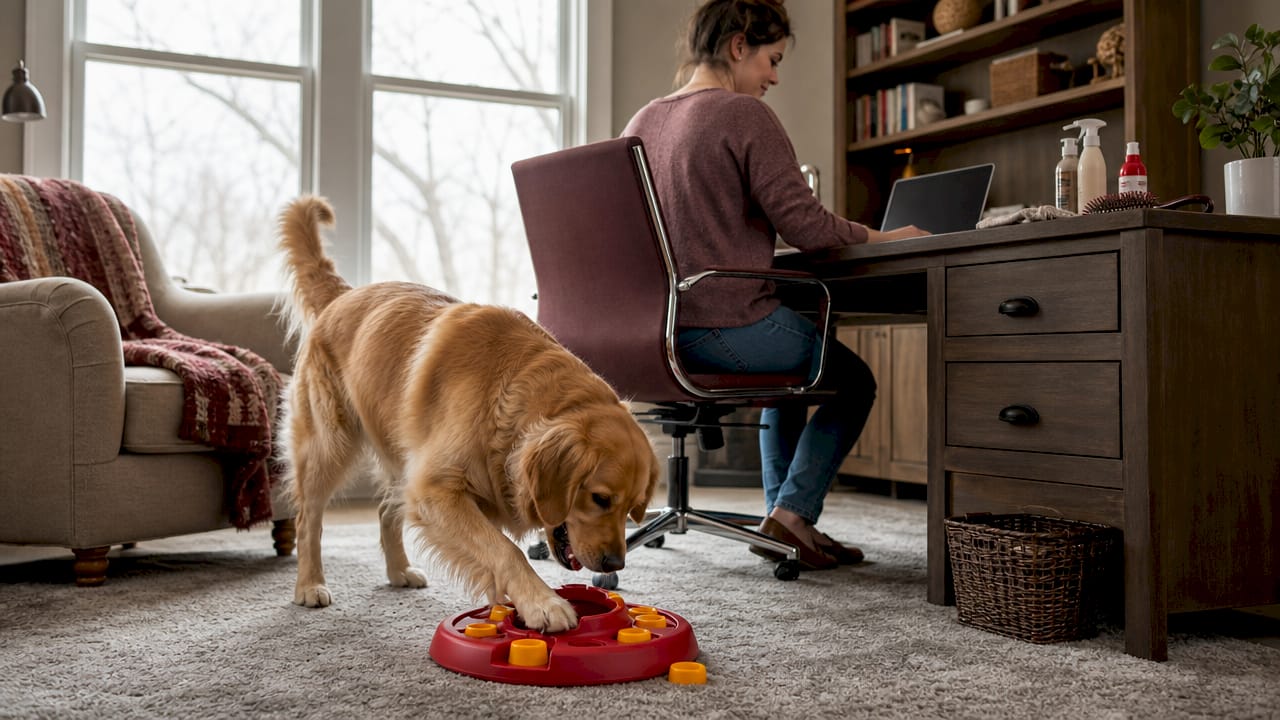
Interactive puzzle toys require dogs to solve a task before accessing a treat or kibble. That problem-solving process builds cognitive skills and reduces boredom, which directly lowers the chance of destructive behavior at home. The mental effort involved tires a dog out just as effectively as physical exercise.
Popular options include Nina Ottosson puzzle boards, the KONG Wobbler, and the West Paw Toppl. Nina Ottosson makes puzzles in four difficulty levels, so you can match the challenge to your dog’s experience. The KONG Wobbler dispenses kibble as the dog nudges it, while the Toppl can be stuffed and frozen for extended sessions.
- Level 1 puzzles: Sliding covers or simple lift-and-reveal compartments. Best for beginners.
- Level 2 puzzles: Multiple steps like spinning and lifting. Good for dogs who have mastered basics.
- Level 3 and 4 puzzles: Complex sequences requiring memory and persistence. For experienced dogs only.
- Treat-dispensing balls: Roll-and-reward designs that combine light physical activity with mental work.
Puzzle toys that are too difficult initially frustrate dogs and kill their interest fast. Start at the easiest level and only move up once your dog solves the current puzzle with confidence.
Pro Tip: Fill a West Paw Toppl with your dog’s regular kibble mixed with a little peanut butter, then freeze it overnight. The frozen version takes three to four times longer to finish, which extends the enrichment session without adding extra calories.
2. How do chew and chew-and-carry toys support canine enrichment?
Chewing is one of the most deeply wired natural behaviors in dogs. Chew toys satisfy this instinct while also supporting dental health by scraping plaque from teeth during use. Without an appropriate outlet, dogs redirect chewing to furniture, shoes, and baseboards.
The main chew toy categories are:
- Natural rubber toys: KONG Classic is the benchmark. It handles aggressive chewing and can be stuffed with food for added enrichment.
- Nylon chew toys: Long-lasting and available in flavored varieties. Good for moderate to heavy chewers.
- Rope toys: Provide texture and light dental benefit, but require close monitoring because frayed strands become a swallowing hazard.
- Bully sticks: Natural, single-ingredient chews that most dogs find highly motivating. Digestible and long-lasting.
- Chew-and-carry toys: Designed to be picked up, carried, and chewed. They satisfy both the carrying instinct common in retrievers and the chewing drive.
Size matters more than most dog owners realize. A toy that fits entirely in a dog’s mouth is a choking risk. Always choose a size that forces the dog to chew rather than swallow. Inspect every chew toy weekly and discard it the moment pieces start breaking off.
For dogs who need heavy-duty options, the durable dog toys guide at Americanbarkbliss covers the toughest materials available.
3. What are foraging and scent-based enrichment toys?
A dog’s nose contains roughly 300 million olfactory receptors compared to about 6 million in humans. Scent-based enrichment taps directly into that biological strength, making it one of the most satisfying forms of mental stimulation available. Foraging toys mimic natural searching behaviors that dogs would use in the wild to locate food.
The most effective foraging and scent-based options include:
- Snuffle mats: Fabric mats with layered strips that hide kibble or small treats. Dogs use their nose to root through the layers and find food. A single meal served on a snuffle mat can take 10–20 minutes to finish.
- Scatter feeding: Tossing kibble across grass or a textured surface so the dog has to sniff out each piece. No equipment needed and highly effective.
- Hide and seek with treats: Hiding treats in different rooms or behind furniture and releasing the dog to find them. This adds movement to the scent work.
- LickiMats: Flat mats with textured surfaces designed for spreading soft foods like peanut butter, yogurt, or wet food. Flat-faced breeds benefit most from LickiMats because the flat design suits their muzzle shape.
- Nose work boxes: A set of cardboard boxes or containers where one hides a scented item. The dog searches until it identifies the correct box.
Pro Tip: Rotate the hiding locations for scatter feeding and hide-and-seek games every session. Dogs learn patterns quickly, and a new location reactivates full scent engagement instead of relying on memory.
4. How to select safe and dog-friendly enrichment toys: key factors
Choosing the wrong toy creates hazards instead of enrichment. Toy safety depends on size, material quality, and regular inspection. A toy that passes all three checks is a toy worth buying.
| Factor | What to look for | What to avoid |
|---|---|---|
| Size | Larger than the dog’s open mouth | Anything the dog can swallow whole |
| Material | Natural rubber, durable nylon, non-toxic fabric | Cheap vinyl, thin plastic, painted surfaces |
| Durability | Rated for the dog’s chew strength | Flimsy toys that shred in one session |
| Filling/stuffing | Food-grade, non-toxic materials | Polystyrene beads, wire reinforcements |
| Inspection | Weekly checks for cracks and loose pieces | Waiting until a toy visibly fails |
The American Animal Hospital Association (AAHA) recommends using part or all of a dog’s daily food portion inside stuffed toys rather than adding extra treats. That approach keeps calorie intake controlled while still making the toy highly motivating. Veterinarians consistently advise supervising all chew sessions, especially with new toys, until you know how your dog interacts with them.
For a deeper look at material safety, the non-toxic dog toys guide at Americanbarkbliss covers what certifications and materials to look for before buying.
5. Why rotating and combining enrichment toys enhances dog wellbeing
Dogs habituate to toys fast. A toy that triggers intense interest on day one often gets ignored by day five. Rotating enrichment toys prevents this habituation and keeps each toy feeling new when it reappears after a break.
AAHA advises mixing three toy types in any enrichment routine: stuffed food toys, puzzle feeders, and interactive play items. That combination covers cognitive, physical, and emotional needs at the same time. Combining physical, cognitive, and social enrichment creates the most balanced outcome for long-term dog wellbeing.
A practical rotation schedule looks like this:
- Monday, Wednesday, Friday: Puzzle feeder with kibble. Rotate between two different puzzle designs.
- Tuesday, Thursday: Snuffle mat or scatter feeding session. Change the location each time.
- Saturday: Frozen stuffed KONG or Toppl. Prep the night before and freeze overnight.
- Sunday: Free choice from a basket of chew toys the dog has not seen that week.
The key is keeping at least three to four toys out of rotation at any given time. When those toys return, the dog treats them as new. This approach costs nothing extra and dramatically extends the useful life of every toy you own.
6. Delivery toys and food-dispensing options
Delivery toys are a specific category within canine enrichment. Different enrichment toy types target specific natural behaviors rather than serving as a single broad solution. Delivery toys focus on the feeding drive, turning mealtime into a mental workout.
The KONG Classic is the most recognized delivery toy on the market. You stuff it with food, seal the opening with peanut butter or cream cheese, and freeze it. The dog works to extract every piece. Freezing stuffed toys slows consumption and extends the enrichment session significantly compared to an unfrozen version.
Other delivery toy formats worth knowing:
- Wobble feeders: The dog nudges a weighted base and kibble falls out unpredictably. Combines light physical movement with food reward.
- Slow feeder bowls: Raised ridges inside the bowl force the dog to eat around obstacles. Simple but effective for fast eaters.
- Treat-dispensing balls: Roll across the floor and release kibble through a small opening. Good for high-energy dogs who need movement paired with mental work.
A TPR interactive chew toy with a treat-fill chamber combines the chew and delivery functions in one design, which works well for dogs who need both outlets at once.
Key takeaways
The most effective enrichment routine combines puzzle toys, chew toys, and scent-based foraging to address a dog’s cognitive, physical, and emotional needs simultaneously.
| Point | Details |
|---|---|
| Match toys to natural behaviors | Choose puzzle, chew, or foraging toys based on what your dog is driven to do naturally. |
| Start puzzles at the easiest level | Dogs frustrated by difficulty lose interest; build confidence before increasing challenge. |
| Rotate toys on a weekly schedule | Keeping toys out of sight and reintroducing them prevents habituation and sustains engagement. |
| Prioritize size and material safety | Every toy must be larger than the dog’s open mouth and made from non-toxic, durable materials. |
| Use daily food portions in stuffed toys | Filling delivery toys with regular kibble controls calories while keeping motivation high. |
What I’ve learned from watching dogs actually use these toys
The gap between what looks good on a product page and what a dog actually engages with is wider than most people expect. I’ve watched dogs ignore a $40 puzzle feeder and spend 20 minutes obsessed with kibble scattered across a patch of grass. The lesson is that novelty and scent almost always beat complexity.
The biggest mistake I see is owners buying the hardest puzzle available because they want to challenge their dog. That usually backfires. A dog that can’t figure out a toy in the first two minutes walks away and never goes back. Starting simple and building up slowly produces dogs that are genuinely motivated to engage with enrichment toys long term.
Supervision matters more than most guides admit. A rope toy that is perfectly safe for a gentle chewer becomes a hazard in 10 minutes with an aggressive one. Knowing your dog’s chew style is the single most important factor in toy selection, more than brand, price, or design. Safety resources like the safe pet toys guide at Americanbarkbliss are worth reading before you buy anything new.
The rotation strategy is the one thing that changes everything. Dogs I’ve seen with access to the same three toys every day are bored within a week. Dogs on a rotation schedule stay curious and engaged for months with the exact same toy set.
— Christopher
Premium enrichment toys and treats worth trying
Americanbarkbliss carries a focused selection of enrichment-ready products made in the USA, built for dogs that need real durability and real motivation.
The USA-K9 Stars and Stripes rubber toy handles chewing, tugging, and retrieving in one design, which makes it one of the most versatile enrichment tools available. For stuffing and rewarding during enrichment sessions, Americana Chicken Chips are a single-ingredient, USA-made treat that fits perfectly inside delivery toys or works as a high-value reward during puzzle sessions. Both products are built to last and sourced domestically, which aligns with what Americanbarkbliss stands for: quality you can trust for the dog you love.
FAQ
What is dog enrichment?
Dog enrichment is the practice of providing activities and toys that stimulate natural canine behaviors like chewing, foraging, and problem-solving. It reduces boredom, lowers destructive behavior, and supports long-term mental and emotional health.
Why do dogs need enrichment toys?
Enrichment toys give dogs an outlet for instinctive behaviors they would otherwise redirect to destructive activities. Enrichment reduces destructive behavior and slows age-related cognitive decline.
How often should I rotate my dog’s enrichment toys?
Rotating toys on a weekly schedule prevents habituation and keeps each toy feeling new. AAHA recommends mixing puzzle, stuffed, and interactive toys across the week for the best results.
What makes a dog toy safe for enrichment use?
A safe enrichment toy is correctly sized for the dog, made from non-toxic and durable materials, and inspected weekly for wear. Discard any toy that shows cracks, loose pieces, or fraying.
Can I use my dog’s regular food in enrichment toys?
Yes. AAHA specifically recommends using part or all of a dog’s daily food portion inside stuffed and delivery toys. This approach keeps calorie intake controlled while making the toy highly rewarding.
Leave a comment