

The Role of Comfort in Pet Beds for Dog Health
Comfort in pet beds is defined by two core functions: physical support that protects joints and muscles, and emotional security that helps dogs feel safe enough to rest deeply. The American Kennel Club confirms that comfortable beds improve sleep and provide pain relief for both senior dogs and puppies. DVM Aimee Warner adds that orthopedic support specifically prevents the stiffness and achiness that come from sleeping on inadequate surfaces. Understanding the role of comfort in pet beds means recognizing that the right bed is not a luxury. It is a direct investment in your dog’s long-term health and quality of life.
How does comfort in pet beds support joint health and mobility?
Joint health is where bed comfort delivers its most measurable benefit. Dogs with arthritis, hip dysplasia, or general aging-related stiffness spend hours each day on their sleeping surface. A bed that fails to distribute weight properly forces pressure onto specific points, particularly the hips, elbows, and shoulders, causing pain that compounds over time.
DVM Aimee Warner explains that orthopedic beds prevent stiffness in senior dogs by distributing body weight evenly across the sleeping surface. This prevents the concentrated pressure that causes dogs to wake up sore and reluctant to move. The practical result is a dog that rises from rest more comfortably and stays active longer into old age.
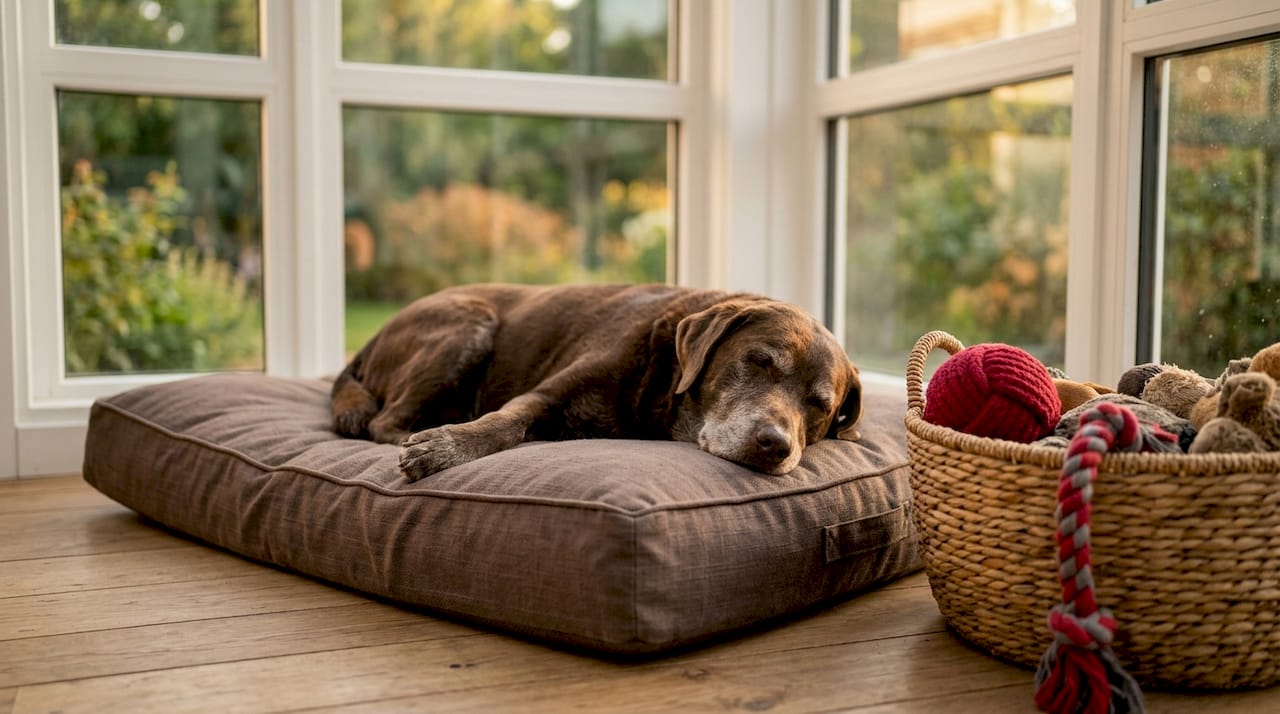
The AKC highlights that beds with interlocking fill materials provide soft yet supportive comfort that keeps arthritic dogs’ pain to a minimum. This type of fill conforms to the dog’s body shape without collapsing entirely, maintaining a cushioning layer between the dog and the floor throughout the night.
Behavioral signs of poor joint support are worth knowing. Watch for these indicators that your dog’s current bed is not doing its job:
- Circling repeatedly before lying down, trying to find a tolerable position
- Rising slowly or with visible stiffness after napping
- Choosing the floor or couch over the designated bed
- Whimpering or groaning when getting up
- Avoiding the bed entirely after a few uses
Pro Tip: Press your fist firmly into your dog’s bed and hold for ten seconds. If you feel the floor beneath, the bed has bottomed out and no longer provides real support. A bed that bottoms out forces your dog to readjust constantly, which disrupts rest and defeats the purpose of the bed entirely.
Puppies benefit from supportive beds too, not just senior dogs. Growing joints need consistent cushioning to develop without unnecessary stress. Treating bed comfort as a health tool from puppyhood builds better habits and potentially reduces joint problems later in life.
What materials and design features make a pet bed truly comfortable?
The materials inside and outside a pet bed determine whether it delivers real comfort or just the appearance of it. Foam thickness, foam type, cover fabric, and bed shape each play a distinct role. Understanding these features helps you make a purchase based on function rather than marketing language.
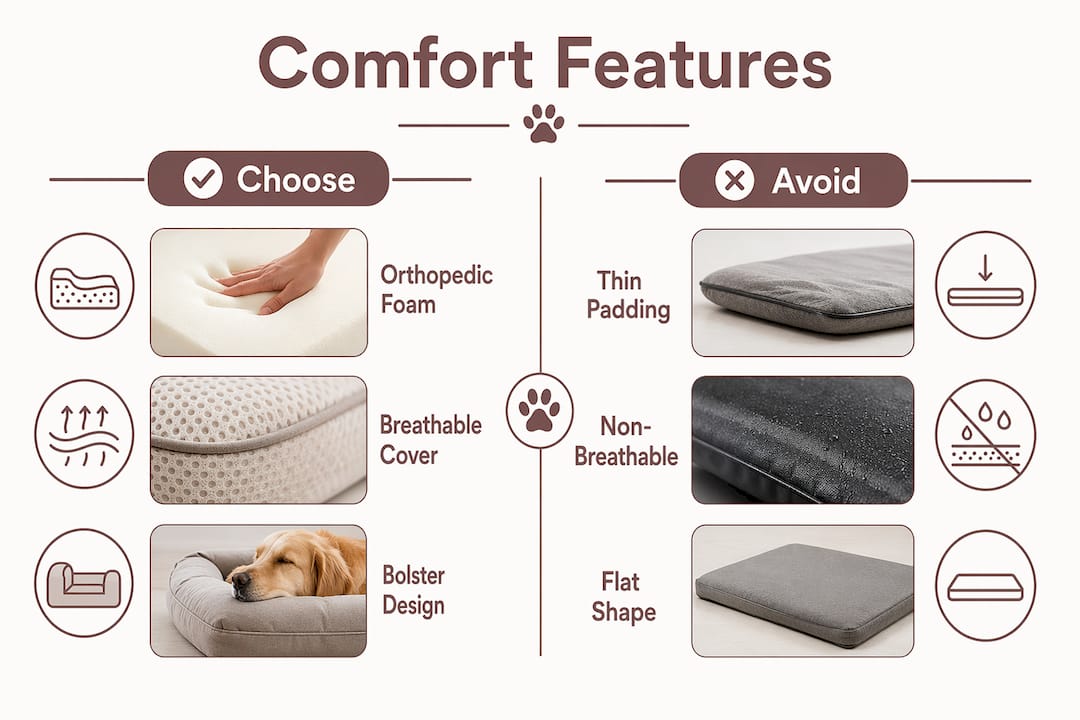
| Feature | What to look for | What to avoid |
|---|---|---|
| Foam thickness | At least 3-4 inches for medium to large dogs | Thin foam that compresses fully under weight |
| Foam type | Open-cell or memory foam with pressure relief | Cheap polyester fill that clumps and flattens |
| Cover fabric | Breathable, moisture-wicking, machine washable | Non-breathable synthetic covers that trap heat |
| Bed shape | Bolster, donut, or flat orthopedic based on sleep style | One-size-fits-all designs that ignore body shape |
| Fill structure | Interlocking or layered fill for even support | Single-layer fill that creates pressure points |
Thermal comfort is a separate but equally important factor. Research from UW Foam explains that cooling beds require breathable covers combined with open-cell foam to actually work. A cooling foam core is ineffective if the cover fabric traps heat against your dog’s skin. The cover is the contact layer, and it determines what your dog actually feels.
Bed shape affects comfort based on how your dog sleeps. Dogs that curl into a ball benefit from donut or bolster designs that support the back and neck while curling. Dogs that sprawl flat need a wide orthopedic mat with consistent support across the entire surface. The Greendog Checkered Wave Bolster Bed is a strong example of a design that addresses both curling and pressure distribution through its raised bolster edges.
Body size also changes where pressure concentrates. A 2026 Scientific Reports study using pressure mapping found that pressure concentrates on the chest and abdomen in broader dog body types. Beds designed for larger dogs need extra support in those zones, not just more surface area.
Pro Tip: Softness is not the same as support. A bed that feels plush to your hand may create high localized pressure under your dog’s weight. Always check foam density and thickness, not just surface feel, before buying.
How does bed comfort influence dogs’ emotional well-being and sleep quality?
Physical support is only half the story. Dogs are den animals by instinct, and the right bed taps directly into that behavioral wiring. A bed that feels enclosed, warm, and personal gives your dog a sense of ownership and safety that reduces anxiety and promotes deeper rest.
Dog Friendly Co. notes that dogs seek den-like spaces as a natural extension of their instinct for shelter and security. A bed that provides that enclosed feeling, whether through bolster walls, a donut shape, or a cave-style design, becomes a genuine sanctuary rather than just a sleeping spot. Dogs that have a consistent, comfortable resting place show calmer behavior throughout the day.
The emotional benefits of comfort extend to sleep quality in measurable ways. A study published in MDPI using the WHO well-being index found that co-sleeping with dogs is associated with higher emotional comfort scores in adults. While the study focused on human well-being, the underlying mechanism is mutual. Dogs that feel secure in their sleeping environment rest more deeply and wake less frequently.
Here is what improved emotional comfort through a good bed looks like in practice:
- Reduced nighttime pacing or restlessness
- Willingness to settle quickly when placed in the bed
- Visible relaxation signals like sighing, muscle loosening, and slow breathing
- Less separation anxiety when the dog has a consistent, comforting space to return to
- Improved mood and energy during waking hours due to better rest
The role of comfort in pet accessories broadly, including beds, is to create an environment where your dog’s nervous system can downregulate. A dog that cannot fully relax during sleep carries that tension into its waking behavior. Investing in a bed that addresses both physical and emotional comfort closes that loop.
How to choose and maintain a comfortable pet bed for your dog
Choosing the right bed starts with your dog’s specific profile: size, age, health status, and sleep style. A young, healthy Labrador Retriever has different needs than a ten-year-old Dachshund with a history of back problems. Matching the bed to the dog, rather than picking based on aesthetics alone, is the single most important decision you will make.
Follow these steps to select and maintain a bed that delivers lasting comfort:
- Measure your dog. Measure your dog from nose to tail while sleeping in their natural position. Add six inches to that measurement to find the minimum bed length. Dogs that cannot fully stretch out on their bed will not sleep as deeply.
- Assess health needs. Senior dogs and breeds prone to joint issues, such as German Shepherds, Golden Retrievers, and Basset Hounds, need orthopedic foam with a minimum thickness of four inches. Puppies need firm but cushioned surfaces that support developing joints without excessive sinkage.
- Check foam quality before buying. Experts at Parade Pets caution that memory foam claims without thickness data are unreliable. Ask for foam density ratings or press-test the bed in person. A bed that bottoms out under your dog’s weight provides no real benefit.
- Prioritize washable covers. Comfort degrades when a bed becomes dirty, matted, or odor-saturated. Machine-washable covers preserve both hygiene and the structural integrity of the fill. Wash covers every two weeks as a baseline.
- Inspect the bed monthly. Look for flattened foam, lumpy fill, or torn seams. A bed that has lost its structure is no longer providing the support your dog needs. Replace it before behavioral signs of discomfort appear.
- Observe your dog after naps. Parade Pets experts note that behavioral signals after napping reveal whether a bed is working. A dog that rises stiffly, avoids the bed, or sleeps elsewhere is telling you the current surface is not meeting their needs.
Pro Tip: Place the new bed in a location your dog already gravitates toward. A perfect bed in the wrong spot will go unused. Dogs associate comfort with familiar territory, so location matters as much as materials.
You can also explore how to choose a dog bed your dog will actually use for a deeper breakdown of matching bed type to sleeping behavior.
Key takeaways
Comfort in pet beds directly determines your dog’s joint health, sleep quality, and emotional well-being. A bed that distributes weight evenly, uses breathable materials, and matches your dog’s sleep style is a health tool, not a decorative purchase.
| Point | Details |
|---|---|
| Comfort supports joint health | Orthopedic beds distribute weight evenly, preventing stiffness and pain in senior and arthritic dogs. |
| Materials determine real comfort | Foam thickness, density, and breathable covers matter more than surface softness alone. |
| Emotional security improves sleep | Den-like bed designs reduce anxiety and help dogs settle into deeper, more restorative rest. |
| Behavior reveals comfort quality | Watch for stiffness after naps, bed avoidance, or restlessness as signs the current bed is failing. |
| Maintenance preserves function | Washing covers regularly and replacing flattened foam keeps the bed performing as intended. |
Why I stopped judging dog beds by how they look
Most dog owners, myself included at one point, pick a bed based on how it looks in the room. Color, shape, whether it matches the couch. That instinct costs dogs real comfort and sometimes real pain. The most important lesson I have taken from years of working with pet health content and speaking with veterinarians is this: a dog cannot tell you the bed is wrong. It shows you through behavior, and most owners miss the signals entirely.
The mistake I see most often is buying a bed that is visually plush but structurally hollow. Thick, fluffy-looking beds made from cheap polyester fill flatten within weeks. The dog ends up sleeping on a thin layer of compressed fiber over a hard floor. That is worse than no bed at all because the owner believes the problem is solved.
The second mistake is ignoring thermal comfort. A dog that overheats during sleep will not rest deeply, and owners rarely connect the restlessness to the bed. Breathable covers and open-cell foam are not marketing features. They are functional requirements, especially for double-coated breeds like Huskies or Bernese Mountain Dogs sleeping in warmer climates.
My honest recommendation: treat the bed purchase the way you would treat a mattress purchase for yourself. Press it, check the materials, read the foam specs, and observe your dog’s behavior for the first two weeks. The benefits of premium dog beds become visible quickly when you know what to look for. A dog that sleeps well, rises easily, and returns to its bed voluntarily is a dog whose comfort needs are being met.
— Christopher
Find the right dog bed at Americanbarkbliss
Americanbarkbliss carries dog beds built around the comfort principles covered in this article: orthopedic support, breathable materials, and designs that match how dogs actually sleep.

The Body Glove Paintflower Pet Napper Dog Bed combines plush, supportive fill with a durable, washable cover, making it a practical choice for dogs that need consistent cushioning and owners who want easy maintenance. For a second option, the Purr Padd-r Dog Bed delivers a soft yet structured surface that holds its shape through regular use. Both beds are available in multiple sizes to match your dog’s measurements and sleep style. Every product at Americanbarkbliss is selected for quality, durability, and the kind of comfort that shows up in your dog’s behavior.
FAQ
What is the role of comfort in pet beds?
Comfort in pet beds provides physical support that protects joints and muscles, and emotional security that helps dogs relax and sleep deeply. The AKC confirms that comfortable beds improve sleep quality and relieve pain in both senior dogs and puppies.
How does an orthopedic bed help dogs with joint pain?
Orthopedic beds distribute body weight evenly across the sleeping surface, preventing pressure from concentrating on hips, elbows, and shoulders. DVM Aimee Warner notes this prevents the stiffness and achiness that inadequate sleep surfaces cause in aging dogs.
What materials are best for a comfortable dog bed?
Open-cell or memory foam with a minimum thickness of four inches, combined with a breathable, machine-washable cover, delivers the best combination of support and thermal comfort. Avoid cheap polyester fill that flattens quickly and non-breathable covers that trap heat.
How do I know if my dog’s bed is uncomfortable?
Watch for stiffness when rising after a nap, repeated circling before lying down, or your dog choosing the floor over the bed. Parade Pets experts confirm these behavioral signals after napping are reliable indicators that the sleeping surface is not meeting your dog’s needs.
How often should I replace my dog’s bed?
Inspect the bed monthly for flattened foam, lumpy fill, or torn seams. Most quality foam beds maintain their support for one to two years with regular washing, but a bed that bottoms out under your dog’s weight should be replaced immediately regardless of age.
Leave a comment