

Safety in Dog Accessories: What Every Owner Must Know
TL;DR:
- Safety in dog accessories emphasizes proper fit, non-toxic materials, and supervised use to prevent injuries and discomfort. Collars and harnesses must be correctly fitted, with harnesses providing better force distribution and reducing tracheal risks, especially for active dogs. Regularly inspect and choose quality products to ensure your dog’s safety during grooming, apparel use, and daily walks.
The role of safety in dog accessories is to prevent injuries, reduce discomfort, and give owners reliable control over their dogs in every situation. This is not a secondary concern. It is the primary standard every collar, harness, piece of clothing, and grooming tool should meet before anything else. Organizations like the AKC, MSPCA-Angell, and the American Veterinary Society of Animal Behavior have each published specific guidance on canine safety products, and their recommendations point to the same core principles: correct fit, non-toxic materials, and supervised use. Get those three things right, and you dramatically reduce your dog’s risk of injury.
What is the role of safety in dog accessories?
Safety in dog accessories is defined by three measurable factors: fit, material quality, and functional design. Each factor applies differently depending on the accessory category, but all three must be present for a product to qualify as genuinely safe.
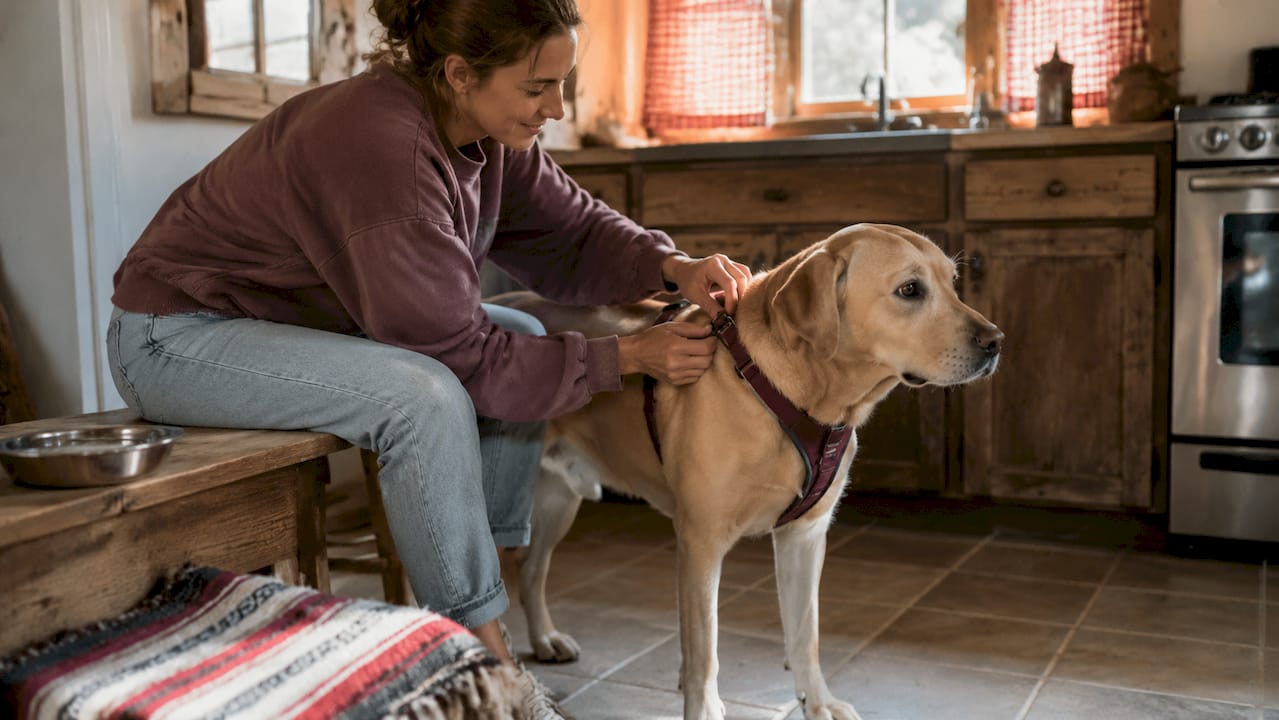
Fit is the most critical variable. An accessory that is too tight restricts circulation and movement. One that is too loose creates escape risks and snagging hazards. Fit and secure attachment in collars, harnesses, and apparel matter as much as material quality to avoid choking, injury, or escape. That means a collar that passes the two-finger rule and a harness that does not shift during movement are both non-negotiable starting points.
Material quality determines whether an accessory causes harm over time. Non-toxic, skin-safe materials prevent irritation, allergic reactions, and chemical exposure. Cheap plastics, dyes, and synthetic fabrics can cause chronic skin problems that owners often misattribute to diet or environment.
Functional design covers how an accessory behaves during real use. A harness that looks correct at rest may restrict shoulder movement during a walk. A leash that works fine in a park may become dangerous in an emergency. Evaluating design means testing accessories during actual activity, not just checking them on a shelf.
How do fit and material quality affect collar and harness safety?
Collars and harnesses are the two most used dog safety gear categories, and they carry the highest injury risk when chosen poorly. Understanding the difference between them is the first step toward making a safer choice.
Collar safety: the two-finger rule and tracheal risk
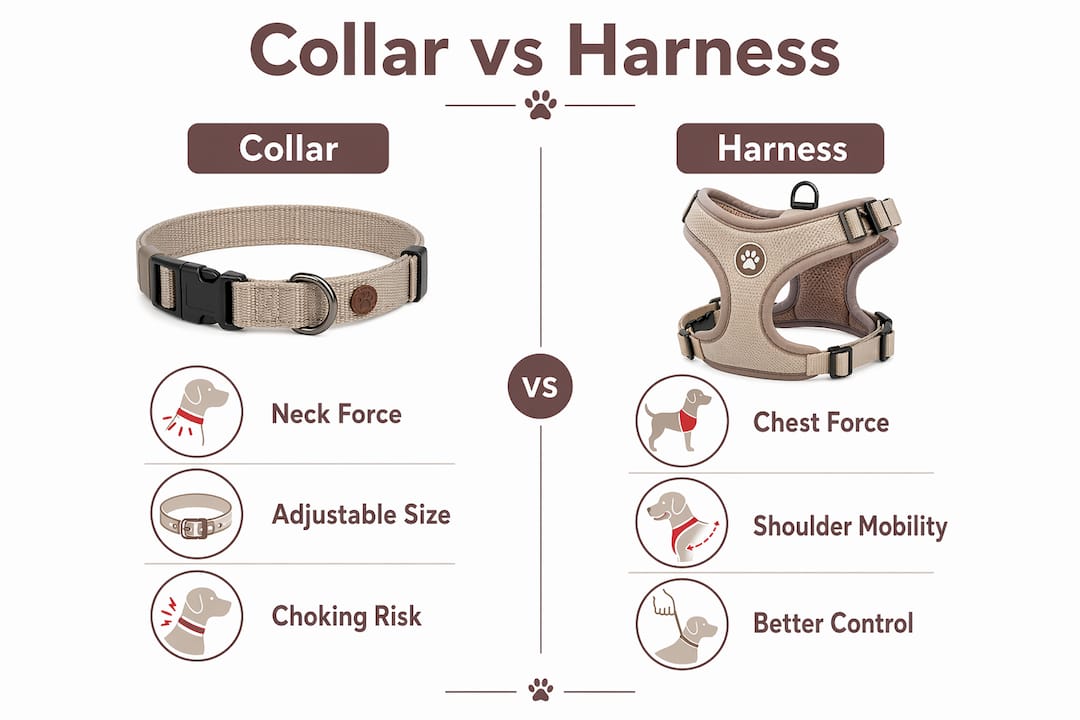
A properly fitted collar allows two fingers to slide underneath it without forcing. Anything tighter risks choking. Anything looser allows a dog to back out and escape, which is especially dangerous near traffic. Beyond fit, collar-only walking damages the trachea over time in dogs that pull. The American Veterinary Society of Animal Behavior supports harness-based walking over collar-only correction for both safety and training outcomes. Collars remain useful for ID tags, but they should not be the primary walking attachment for dogs that pull.
For owners researching best safety dog collars, the key features to look for are adjustable sizing, breakaway or quick-release buckles, and reflective stitching for low-light visibility.
Harness safety: shoulder mobility and clip placement
Harnesses distribute force across the chest and back rather than concentrating it on the neck. That distribution makes them safer for daily walking. However, not all harnesses are equal. Some harness designs impair shoulder mobility, while others centered on the chest allow freer movement and longer comfortable use. Harnesses that cross the front shoulders can limit a dog’s stride over time. Center-chest clip designs avoid this problem and are the preferred option for active dogs.
Pro Tip: Evaluate your dog’s harness during a full walk, not just while standing still. Watch for any shortening of stride or resistance to movement, which signals the harness is restricting shoulder function.
Collar vs. harness: a direct comparison
| Feature | Collar | Harness |
|---|---|---|
| Force distribution | Concentrated on neck | Spread across chest and back |
| Tracheal risk | High for dogs that pull | Low with proper fit |
| Escape risk | Moderate if loose | Low with snug chest fit |
| Best use case | ID tags and light control | Daily walks and active dogs |
| Mobility impact | Minimal at rest | Varies by design; check shoulder clearance |
Does dog apparel actually improve safety?
The role of dog apparel in safety is real, but it depends entirely on how the clothing fits and how it is used. Sweaters, raincoats, and boots each offer protective benefits. Sweaters retain body heat for short-coated breeds in cold weather. Raincoats keep dogs dry and reduce the risk of hypothermia during wet walks. Boots protect paws from hot pavement, ice, and road salt.
The AKC is direct on this point. Dog clothes should not be too tight or too loose. Tight clothing restricts movement and can cause pressure sores. Loose clothing creates tripping hazards and snagging risks that can lead to choking. Both extremes are dangerous, and neither is acceptable.
Supervised use is non-negotiable. The AKC recommends removing clothing when a dog is left unattended or placed in a crate. Fabric can bunch, twist, or catch on crate wires in ways that create strangulation risks within minutes.
How to fit dog apparel correctly
Follow this sequence every time you introduce a new piece of clothing:
- Stand still fit check. Put the garment on your dog while they stand. Check that you can slide two fingers under any strap or band. Confirm the neck opening does not press against the throat.
- Movement fit check. Walk your dog and watch for any restriction in stride, shoulder movement, or head position. Have them sit and stand several times.
- Snag assessment. Run your fingers along every seam, button, and fastener. Confirm nothing catches on fur or skin. Check that decorative elements like buttons or bows are firmly attached and cannot be chewed off.
- Duration test. Keep the first wearing session short, around 10–15 minutes, and observe your dog’s comfort level throughout.
Pro Tip: A practical safety workflow includes checking fit both while standing and moving, then stress-testing for snag hazards before each use. This takes two minutes and prevents the most common apparel injuries.
What safety features matter in grooming supplies?
Grooming tools are canine safety products that owners often overlook in safety discussions. The focus tends to land on collars and harnesses, but grooming supplies cause real harm when they are made from low-quality materials or used incorrectly.
Non-toxic grooming tools with ergonomic designs protect dogs from skin irritation and physical injury during grooming sessions. Brushes with sharp or poorly finished bristles scratch skin. Shampoos with harsh chemicals strip natural oils and cause dryness or allergic reactions. Grooming gloves with a five-finger design distribute pressure evenly and reduce the risk of accidentally pulling skin.
Key safety features to look for in grooming supplies:
- Non-toxic materials. Confirm that shampoos, conditioners, and sprays are free of parabens, sulfates, and artificial fragrances that irritate canine skin.
- Smooth, finished edges. Brushes and combs should have no sharp points or burrs that can scratch during use.
- Ergonomic grip. Tools that are easy to hold reduce the chance of slipping and accidentally injuring your dog.
- Durability. Grooming tools that break during use create sharp edges and choking hazards. Inspect tools regularly and replace any that show cracks or loose parts.
Beyond standard grooming, specialized accessories like life jackets and paw booties protect dogs in specific environments. A properly fitted life jacket keeps a dog buoyant without restricting swimming movement. Booties protect paws from extreme temperatures and rough terrain. Both require the same fit standards that apply to harnesses and apparel.
What are the most common safety mistakes with dog accessories?
Most accessory-related injuries come from a small set of repeated mistakes. Recognizing them is the fastest way to protect your dog.
- Using retractable leashes. The MSPCA-Angell behavior team advises against retractable leashes due to control difficulties and cord snapping risks. Thin cords can injure handlers, snap without warning, and tangle during dog-to-dog encounters. In an emergency, quick leash shortening is critical, and retractable mechanisms make that nearly impossible. A traditional fixed-length leash gives you immediate control in every situation.
- Ignoring sizing changes. Dogs gain and lose weight. Puppies grow fast. An accessory that fit correctly three months ago may now be too tight or too loose. Check fit monthly and after any significant weight change.
- Leaving apparel on unsupervised dogs. This is the single most preventable cause of clothing-related injuries. Fabric can catch on furniture, crate wires, or other dogs within seconds. Remove all clothing before leaving your dog alone.
- Choosing price over quality. Cheap accessories often use substandard materials that fail under stress. A collar clasp that breaks during a walk near traffic is a life-threatening failure. Invest in products with clear material disclosures and tested construction.
- Skipping the motion test for harnesses. Owners frequently fit harnesses while their dog stands still. Harness fit decisions must consider dog activity, not just static posture. A harness that looks perfect at rest can restrict movement during a run or climb.
Key takeaways
Safe dog accessories require correct fit, non-toxic materials, and supervised use across every product category, from collars and harnesses to apparel and grooming tools.
| Point | Details |
|---|---|
| Fit is the top priority | Check fit while standing and moving; use the two-finger rule for collars and harnesses. |
| Harnesses outperform collars | Chest-clip harnesses distribute force better and reduce tracheal damage in dogs that pull. |
| Apparel requires supervision | Never leave a dog unattended or crated while wearing clothing; snag and choke risks are real. |
| Grooming tools carry hidden risks | Use non-toxic, smooth-edged tools and inspect them regularly for cracks or loose parts. |
| Avoid retractable leashes | Fixed-length traditional leashes provide faster emergency control and eliminate cord snap risks. |
Why i think most owners underestimate accessory safety
I have reviewed hundreds of dog accessory products over the years, and the pattern I keep seeing is the same. Owners spend real time researching dog food ingredients but grab the first collar or harness that looks good without checking a single safety specification. That gap between food scrutiny and gear scrutiny is where most preventable injuries happen.
The harness issue is the one that surprises people most. I have watched owners walk dogs in harnesses that visibly shortened the dog’s stride with every step. The owners had no idea. They thought the harness fit because it did not fall off. DVM360’s guidance on shoulder mobility changed how I evaluate harnesses entirely. Now I watch the dog move for at least a full minute before I consider a harness acceptable.
The retractable leash situation is even more frustrating because the risks are well documented and the fix is simple. A standard six-foot leash costs less than most retractable models and gives you full control in every scenario. The MSPCA-Angell has been clear about this for years, and yet retractable leashes remain one of the most popular products in pet retail.
My honest recommendation is to treat accessory safety the same way you treat nutrition. Read the materials list. Test the fit during movement. Buy from brands that publish their construction standards. The importance of quality in dog accessories is not a marketing claim. It is the difference between a product that protects your dog and one that quietly causes harm.
— Christopher
Safe, american-made dog accessories from Americanbarkbliss
Americanbarkbliss carries a curated selection of dog accessories built to the safety standards this article covers. Every product on the platform is sourced from American makers who prioritize material quality, correct sizing, and durable construction.

For grooming, the Country Living 3-Piece Grooming Kit uses non-toxic materials and ergonomic tools designed to protect skin during every session. For dogs that need apparel, the Pet Dog Jumpsuit is sized for a secure, movement-friendly fit. For play, the USA-K9 Stars and Stripes Rubber Toy is built to withstand heavy chewing without breaking into hazardous pieces. Browse the full catalog at Americanbarkbliss to find gear that meets the safety standards your dog deserves.
FAQ
What is the most important safety feature in dog accessories?
Correct fit is the single most important safety feature. An accessory that is too tight restricts movement and circulation, while one that is too loose creates escape and snagging hazards.
Are harnesses safer than collars for daily walks?
Harnesses are safer for dogs that pull because they distribute force across the chest rather than concentrating it on the neck, which reduces tracheal damage over time.
Can dog clothing be dangerous?
Yes. The AKC warns that clothing that is too loose can cause tripping and snagging, creating choking risks. Always remove clothing when your dog is unsupervised or crated.
Why should i avoid retractable leashes?
MSPCA-Angell advises against retractable leashes because thin cords can snap, tangle, and make emergency shortening nearly impossible. A fixed-length traditional leash gives you faster, more reliable control.
How often should i check my dog’s accessory fit?
Check fit monthly and after any noticeable weight change. Puppies should be checked every two to four weeks as they grow.
Leave a comment