

How to Clean Dog Beds: Step-by-Step Guide
If you’ve ever caught a whiff of your dog’s bed and immediately regretted it, you already know how fast these things can go from cozy to gross. Knowing how to clean dog beds properly is one of the most overlooked parts of pet care, yet it directly affects your dog’s skin, coat, and respiratory health. Unwashed dog beds become reservoirs for allergens, bacteria, and even parasites, creating real health risks for both your pet and your household. This guide walks you through everything: preparation, washing methods by bed type, odor removal, and smart maintenance habits.
Table of Contents
- Key takeaways
- How to clean dog beds: what you need first
- Step by step washing dog bedding by type
- Removing urine stains and odors from dog beds
- Keeping beds fresh between full washes
- What I’ve learned from years of dog bed cleaning routines
- Keep your dog’s bed clean with the right products
- FAQ
Key takeaways
| Point | Details |
|---|---|
| Wash every 1–2 weeks | Most dogs need their beds washed weekly or biweekly to prevent bacteria and allergen buildup. |
| Match method to bed type | Machine washing, hand washing, and spot cleaning each apply to different bed materials. |
| Never heat-set urine stains | Always remove odors fully before putting a urine-stained bed in the dryer. |
| Enzymatic cleaners work best | Pet-safe enzyme cleaners break down organic stains more effectively than standard detergents. |
| Maintenance reduces wash frequency | Regular vacuuming and grooming keep beds fresher between full wash cycles. |
How to clean dog beds: what you need first
Before you run anything through the wash, a little preparation makes the whole process more effective and protects your washing machine from a fur-clogged nightmare.
Supplies to gather
- Pet-safe laundry detergent (fragrance-free and hypoallergenic)
- White vinegar
- Baking soda
- An enzyme-based stain and odor remover
- A stiff-bristled brush or scrubbing pad
- A lint roller or pet hair removal brush
- Rubber gloves
- A vacuum with a HEPA filter attachment
Pro Tip: Experts recommend fragrance-free, hypoallergenic detergents specifically for dogs with sensitive skin. Scented detergents can cause itching and irritation even after rinsing.
Check the care tag first
This sounds obvious, but most people skip it. The care tag tells you the maximum wash temperature, whether the cover is removable, and if the bed is machine-safe. If the tag is missing, treat the bed as delicate and hand wash it. You can also check the bed type and washing instructions before buying to avoid surprises later.
Pre-treat before washing
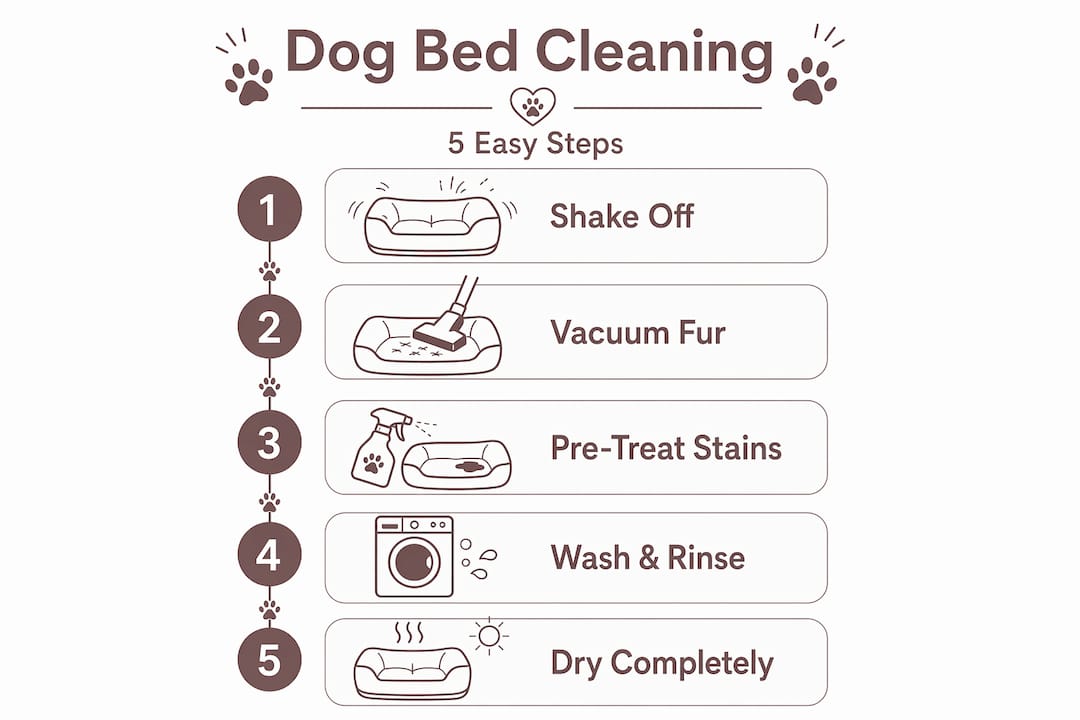
Start by taking the bed outside and shaking it hard to dislodge loose fur and debris. Then vacuum the surface thoroughly using a HEPA filter vacuum. This step removes fur, dust mites, and dried dirt that would otherwise clog your machine or just redistribute during washing. After vacuuming, inspect for visible stains and apply your enzyme cleaner or a paste of baking soda and water directly to those spots. Let it sit for 10 to 15 minutes before washing.
Step by step washing dog bedding by type
Not all dog beds wash the same way. Here is how to handle the three most common types.
Machine-washable beds with removable covers
This is the easiest scenario. Remove the cover from the insert, zip it closed to protect the zipper, and load it into the machine alone. Dog fur can wrap around other laundry and create a mess.
- Set the water temperature between 140°F and 194°F if the care label allows. High heat kills bacteria and parasites.
- Use a full dose of pet-safe, fragrance-free detergent.
- Add ½ cup of white vinegar to the rinse cycle to neutralize odors and disinfect without harsh chemicals.
- Run an extra rinse cycle to remove all detergent residue, which can irritate your dog’s skin.
- Tumble dry on low heat or air dry in direct sunlight. Sunlight is a natural disinfectant and helps eliminate lingering smells.
Pro Tip: Washing a dog bed follows the same standard as human bed sheets. If you wouldn’t sleep on sheets that hadn’t been washed in a month, your dog shouldn’t have to either.
Hand washing foam and whole-bed styles
Some beds are too bulky for a standard machine or have foam inserts that require gentler handling. Fill a bathtub with warm water and a small amount of pet-safe detergent. Submerge the bed and work the soapy water through it by pressing and squeezing, not twisting or wringing.
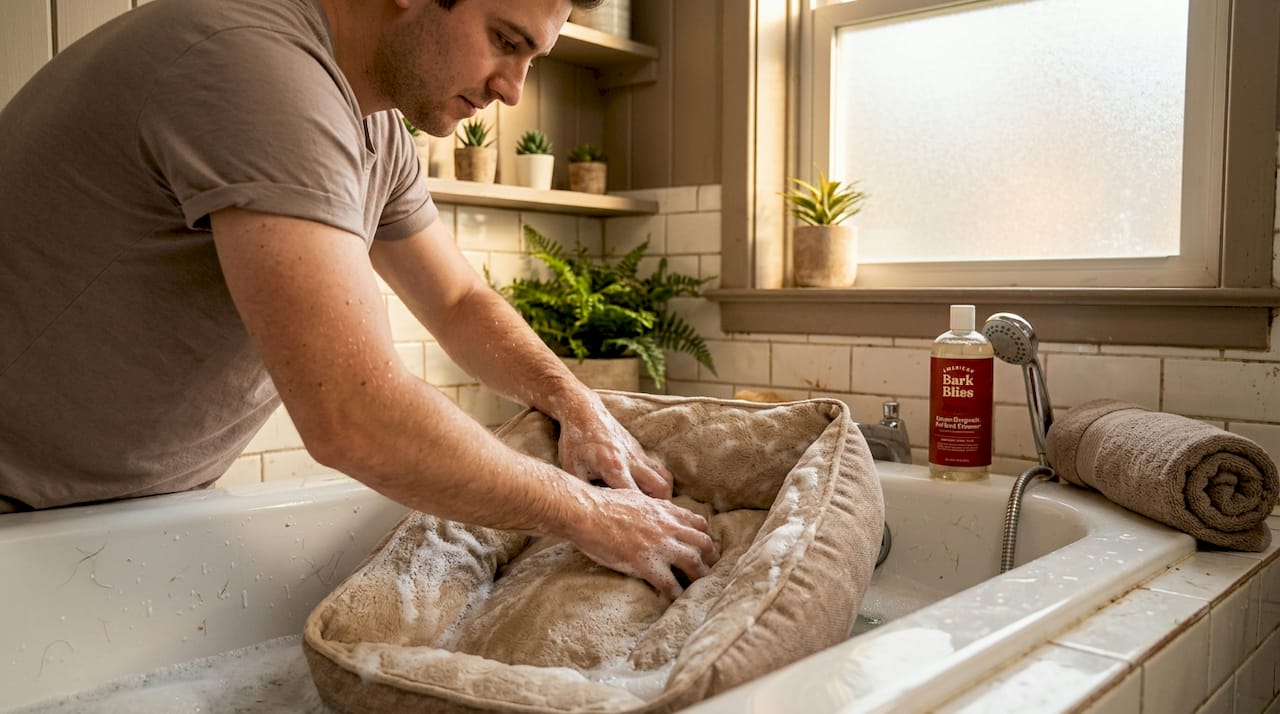
The most common mistake here is with memory foam. Memory foam must never be wrung or twisted because it tears permanently. Press towels firmly against the foam to absorb moisture instead. Rinse thoroughly by pressing clean water through the material repeatedly until the water runs clear.
Drying methods that actually work
| Method | Best for | Notes |
|---|---|---|
| Tumble dry, low heat | Removable fabric covers | Add dryer balls to speed drying and fluff filling |
| Air dry in sunlight | Foam inserts, bulky beds | UV light kills bacteria; takes 4–8 hours |
| Fan-assisted indoor drying | Memory foam, orthopedic beds | Never use high heat on foam; it degrades the material |
Never put a foam insert in a hot dryer. The heat breaks down the foam structure over time, shortening the life of an otherwise expensive bed.
Removing urine stains and odors from dog beds
This is where most dog owners struggle. Standard detergent does not fully break down uric acid, which is why that smell keeps coming back even after washing.
The right process, in order
- Blot fresh urine immediately with paper towels or an absorbent cloth. Press down firmly. Do not rub.
- Rinse the area with cold water, not hot. Hot water starts to set the odor into the fibers.
- Apply a pet-safe enzymatic cleaner generously over the stained area. Enzymatic cleaners break down the uric acid molecules that cause the smell, rather than just masking them.
- Let the cleaner sit for the full time listed on the label, usually 10 to 20 minutes.
- Rinse thoroughly, then wash the bed using the method appropriate for its type.
- Air dry completely before checking for residual odor. If the smell remains, repeat the enzyme treatment before drying with heat.
The critical rule: avoid drying with heat until the urine odor is fully gone. Heat permanently sets uric acid into fabric fibers, and no amount of washing will fix it after that point.
Natural remedies that actually help
- Baking soda: Sprinkle generously over the dry bed, let sit for several hours or overnight, then vacuum off. It absorbs odors without chemicals.
- White vinegar solution: Mix equal parts water and white vinegar in a spray bottle. Spray onto the affected area, let sit for 5 minutes, then blot dry. Vinegar neutralizes alkaline urine odors effectively.
- Waterproof liners: If accidents are frequent, a waterproof liner placed between the outer cover and the foam insert protects the padding from moisture. This dramatically cuts down how often you need to wash the entire bed.
If your dog is having frequent accidents on the bed, talk to your vet. Incontinence or urinary tract issues are common in older dogs and are treatable. Cleaning the bed is a short-term fix; addressing the root cause protects your dog’s health long-term.
Keeping beds fresh between full washes
Washing every week is the gold standard, but you can extend the time between full washes with a few consistent habits.
- Vacuum twice a week. A quick pass with a HEPA filter vacuum removes fur, dander, and dust before they build up. This also reduces the allergen load in the room.
- Brush your dog before they use the bed. Regular grooming removes loose fur and dirt from your dog’s coat before it transfers to the bed. A good grooming session two to three times a week makes a noticeable difference.
- Rotate between two covers. If your bed has a removable cover, keep a second cover on hand. When one goes in the wash, the other goes on immediately. Your dog never has to sleep on a bare insert, and you have time to wash and dry properly without rushing.
- Sprinkle baking soda weekly. A light dusting of baking soda left on the bed for 30 minutes, then vacuumed off, keeps odors controlled between wash days.
- Clean your washing machine monthly. Pet hair and detergent residue accumulate inside machines over time and can transfer back onto the next load. Run a self-clean cycle with a pet-safe washing machine cleaner once a month.
Pro Tip: Sunlight is underrated as a maintenance tool. On dry days, put the bed outside for two to three hours. UV exposure kills surface bacteria and refreshes the fabric without any effort on your part.
What I’ve learned from years of dog bed cleaning routines
I’ve talked with a lot of dog owners who treat bed cleaning as a once-in-a-while task, something they do when the smell gets bad enough to notice across the room. In my experience, that reactive approach is exactly why the smell gets that bad in the first place. By the time you can smell it, bacteria and allergens have been accumulating for weeks.
The shift that actually changes things is treating the dog bed like you treat your own sheets. Dog beds need the same consistent routine as human bedding. That mental reframe alone gets most people washing more often.
The other mistake I see constantly is using the wrong detergent. People grab whatever is under the sink. Scented detergents and fabric softeners leave residues that irritate dog skin, and some contain compounds that are genuinely harmful to pets. A fragrance-free, pet-safe detergent costs the same as a regular one. There is no reason not to use it.
What I’ve found actually works is combining a weekly vacuum with a biweekly wash and keeping a spare cover ready to swap in. That system takes about 10 minutes of active effort per week and completely eliminates the “when did this get so bad” moment. Your dog sleeps better, sheds less on the furniture, and you stop dreading the smell when you walk into the room.
— Christopher
Keep your dog’s bed clean with the right products
Cleaning a dog bed well depends partly on having the right tools on hand. At Americanbarkbliss, you’ll find products built specifically for dog owners who want to stay ahead of the mess rather than react to it.

The Ubavet Stain and Odor Remover is a powerful enzyme cleaner that tackles urine, feces, and organic odors at the molecular level, exactly what standard detergents cannot do. Pair it with the Country Living Grooming Kit to reduce the fur and dander your dog deposits on the bed in the first place. Less debris means less frequent washing and a fresher bed between cycles. Both are made with pet safety as the priority.
FAQ
How often should you wash a dog bed?
Dog beds should be washed at least every one to two weeks. Dogs that spend time outdoors, have allergies, or shed heavily benefit from weekly washing.
Can you machine wash dog beds?
Yes, most dog beds with removable covers are machine washable. Check the care label for temperature limits, use a pet-safe detergent, and run an extra rinse cycle to remove all soap residue.
What is the best way to remove urine odor from a dog bed?
Apply a pet-safe enzymatic cleaner to the stained area before washing. Never dry the bed with heat until the odor is fully gone, as heat permanently sets uric acid into fabric.
How do you clean a memory foam dog bed?
Hand wash memory foam in a bathtub using warm water and pet-safe detergent. Press the foam gently rather than wringing it. Memory foam tears permanently if twisted, so air dry it flat in a well-ventilated area.
What detergent is safe for washing dog beds?
Use a fragrance-free, hypoallergenic detergent formulated for sensitive skin. Avoid fabric softeners and scented products, as these leave residues that can irritate your dog’s skin and coat.
Leave a comment