

Why Source Domestic Pet Products for Your Dog
TL;DR:
- Buying domestically made pet products ensures higher safety standards and ingredient transparency. It also reduces environmental impact and supports local economies through job creation and community investment.
Sourcing domestic pet products is defined as purchasing pet supplies manufactured within the United States, subject to American regulatory oversight and quality standards. 78% of Americans believe U.S.-made products are higher quality than imports. That belief is not just patriotism. It reflects real differences in ingredient transparency, safety testing, and supply chain accountability that directly affect your dog’s health. Pet owners who understand why source domestic pet products matters make better purchasing decisions for their animals and their communities.
Why source domestic pet products: quality and safety advantages
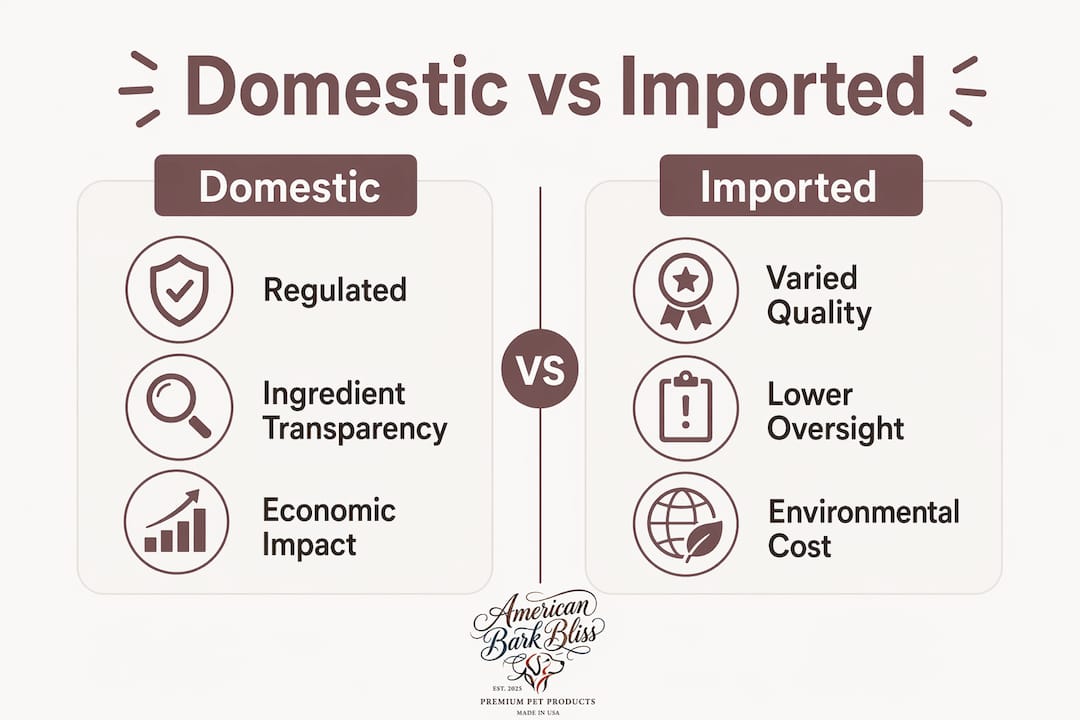
Domestic pet product manufacturing operates under U.S. regulatory frameworks that imported goods often bypass entirely. The FDA enforces post-market oversight on domestic facilities, holding manufacturers to higher accountability standards than most import inspection processes allow. That accountability means faster recalls, traceable ingredients, and documented production records.

Imported pet toys present a specific risk that many pet owners overlook. Imported toys may use materials that do not meet U.S. safety standards, raising the risk of harmful chemical exposure or choking hazards. Domestic toys comply with stricter safety norms by default. That difference matters most for dogs who chew aggressively or play unsupervised.
The Food Safety Modernization Act (FSMA) requires domestic pet food manufacturers to maintain hazard analysis plans and preventive controls. Imported products face no equivalent requirement at the point of manufacture. This gap in oversight is the core reason quality in dog accessories correlates so strongly with country of origin.
Ingredient transparency adds another layer. A product manufactured in the U.S. still may use imported ingredients, but domestic facilities must document sourcing and maintain traceability records. That paper trail gives you something to verify. With fully imported products, that trail often ends at the port of entry.
| Feature | Domestic products | Imported products |
|---|---|---|
| Regulatory oversight | FDA, FSMA, FTC standards | Varies by country of origin |
| Ingredient traceability | Required documentation | Often unavailable |
| Safety testing | Mandatory pre-market controls | Inconsistent enforcement |
| Recall response | Faster, traceable | Slower, harder to trace |
| Material safety standards | U.S. compliance required | May not meet U.S. norms |
Pro Tip: When reading a pet product label, look for both “manufactured in the USA” and “made with U.S. ingredients.” The first phrase alone does not guarantee domestic ingredient sourcing.
How does sourcing local pet products benefit environmental sustainability?
Domestic sourcing cuts the environmental cost of getting a product to your door. Shorter supply chains reduce carbon emissions and packaging waste compared to international shipping routes. A dog treat made in Ohio and shipped to a customer in Michigan travels a fraction of the distance of one manufactured overseas. That difference adds up across millions of purchases.
Sustainability advocates identify buying local as one of the most direct ways to reduce your pet’s environmental footprint. Less distance means less fuel, fewer shipping containers, and less corrugated packaging. Domestic manufacturers also face stricter environmental regulations than many overseas producers, which reduces pollution at the source.
The benefits of local pet products from an environmental standpoint include:
- Reduced greenhouse gas emissions from shorter freight distances
- Less single-use plastic and excess packaging from streamlined domestic logistics
- Lower energy consumption per unit shipped
- Compliance with U.S. environmental manufacturing standards
- Support for manufacturers who use sustainable materials and ethical labor practices
Choosing sustainable dog toys made domestically compounds these benefits. You get a safer product for your dog and a lower environmental cost for the planet. Those two outcomes rarely conflict when the supply chain stays local.
What economic and community advantages come from choosing domestic pet products?
Every dollar spent on locally made pet supplies does more work than a dollar spent on imports. Local spending creates an economic multiplier effect that drives job creation and reinvests money into regional communities. A domestic pet product manufacturer employs local workers, pays local taxes, and buys from local suppliers. That cycle repeats with each transaction.
Small domestic pet businesses depend on consumer choices to survive against large-scale import operations. Supporting local pet businesses strengthens community resilience and keeps specialized knowledge and craftsmanship alive. A small-batch treat maker in Tennessee or a family-run collar manufacturer in Vermont cannot compete on price with overseas mass production. They compete on quality, customization, and accountability.
Local retailers also provide a level of service that large online platforms cannot replicate. Knowledgeable local staff offer tailored nutritional advice and product recommendations based on your specific dog’s needs. That personalized guidance has real value, especially for owners managing health conditions, allergies, or behavioral challenges in their pets.
| Economic benefit | How it works |
|---|---|
| Job creation | Domestic manufacturing employs local workers at every production stage |
| Tax revenue | Local businesses pay state and municipal taxes that fund community services |
| Supplier networks | Domestic brands buy from other U.S. businesses, multiplying local impact |
| Small business growth | Consumer preference for domestic goods sustains independent retailers |
| Community investment | Profitable local businesses reinvest in neighborhoods and regional programs |
58% of pet owners actively look for “Made in the USA” labels on pet food and treats. That preference, when acted on consistently, shapes what manufacturers produce and where they invest.
How to identify genuinely domestic pet products and avoid misleading claims
The FTC’s “Made in USA” standard requires that all or virtually all of a product be made domestically. That standard applies to the final product, not necessarily every ingredient. Pet food can carry a “manufactured in the USA” label while containing imported proteins, grains, or supplements. The label is technically accurate but incomplete.
This distinction matters most for treats and food. A chicken jerky treat manufactured in a U.S. facility using chicken sourced from overseas meets the manufacturing standard but not the full domestic sourcing standard. Pet owners who want complete transparency need to look beyond the flag graphic on the packaging.
The U.S. pet product industry also operates hybrid manufacturing models for complex items like plush toys. Infrastructure and labor limitations make reshoring large-scale plush toy production difficult. Some products are assembled in the U.S. using components made abroad. That is not fraud, but it is worth understanding before you assume full domestic origin.
To verify a product’s domestic credentials:
- Look for explicit “U.S. ingredients” language alongside “manufactured in the USA”
- Check the brand’s website for sourcing transparency pages or FAQ sections
- Contact the manufacturer directly to ask about ingredient origin
- Look for third-party certifications from organizations that audit domestic claims
- Treat vague phrases like “crafted in America” or “American-inspired” as marketing, not sourcing claims
Pro Tip: Brands that are genuinely committed to domestic sourcing usually make it easy to find. If a company buries its sourcing information or uses vague language, that tells you something.
Key takeaways
Domestic pet products deliver measurable advantages in safety, transparency, and community impact that imported alternatives cannot match.
| Point | Details |
|---|---|
| Safety and regulation | U.S. regulatory frameworks like the FDA and FSMA hold domestic manufacturers to stricter standards than most imports face. |
| Ingredient transparency | Domestic products require documented sourcing, giving pet owners a traceable record that imports rarely provide. |
| Environmental impact | Shorter supply chains reduce carbon emissions and packaging waste compared to international shipping. |
| Economic multiplier | Local spending on pet supplies creates jobs, supports small businesses, and reinvests in regional communities. |
| Label verification | “Manufactured in the USA” does not guarantee domestic ingredients. Look for explicit U.S. ingredient sourcing language. |
The part of domestic sourcing most pet owners miss
Most articles on this topic focus on safety regulations and carbon footprints. Those matter. But the advantage I find most underrated is accountability after the sale.
When something goes wrong with a domestic product, you have a real path to resolution. The manufacturer is subject to U.S. law, reachable by phone or email, and motivated to protect their reputation in a market they depend on. I have seen pet owners try to get answers from overseas suppliers about ingredient changes or quality issues and hit a wall every time. The supply chain is too long, the communication too slow, and the legal recourse too limited.
Domestic sourcing also changes how brands behave before a problem occurs. A U.S. manufacturer who knows their customers can call their state’s attorney general or file an FTC complaint has a strong incentive to get things right the first time. That incentive does not exist in the same way for overseas producers selling into the American market through intermediaries.
The realistic expectation is that domestic products cost more. That is true. But the price difference buys you accountability, traceability, and a direct relationship with the people who made what your dog eats or plays with. For most pet owners I talk to, that trade-off becomes obvious once they think it through. The advantages of buying domestic pet goods are not abstract. They show up in the quality of the product, the clarity of the label, and the response you get when you have a question.
The challenge is staying consistent. It is easy to default to the cheapest option when budgets are tight. My suggestion is to start with the products your dog consumes, specifically treats and food, and work outward from there. Those are the categories where ingredient origin has the most direct impact on health.
— Christopher
American-made pet products worth knowing about
Pet owners who want to put domestic sourcing into practice have concrete options that deliver on the quality and safety standards covered here.
Americanbarkbliss carries a selection of USA-made products built around the principles of ingredient transparency and material safety. The Americana Chicken Chips for Dogs are made in the U.S. with clearly labeled sourcing, making them a straightforward choice for pet owners who want treats they can verify. For play, the USA-K9 Stars and Stripes Rubber Dog Toy is built to U.S. safety standards with durable materials designed for heavy chewers. Both products reflect what domestic sourcing looks like in practice: clear origin, accountable manufacturing, and quality you can confirm before your dog ever touches them.
FAQ
What does “Made in the USA” actually mean for pet products?
The FTC requires that all or virtually all of a product be made domestically to carry a “Made in the USA” claim. For pet food, this applies to the manufacturing process but does not always guarantee that every ingredient was sourced domestically.
Are domestic pet products safer than imported ones?
Domestic pet products are subject to FDA oversight and FSMA preventive controls that most imported products do not face at the point of manufacture. This makes contamination risks lower and recall responses faster for U.S.-made goods.
Why do domestic pet products cost more?
Higher labor standards, stricter regulatory compliance, and shorter but more expensive supply chains all contribute to higher production costs for domestic manufacturers. That cost reflects real differences in accountability and quality control.
How can I verify that a pet product is genuinely made in the USA?
Look for explicit “U.S. ingredients” language alongside the manufacturing claim, check the brand’s sourcing transparency page, and contact the manufacturer directly if the label is unclear. Vague phrases like “American-inspired” are not sourcing claims.
Does buying local pet supplies really help the economy?
Local spending on pet supplies creates an economic multiplier effect, supporting jobs, local tax revenue, and supplier networks that keep money circulating within regional communities rather than flowing overseas.
Leave a comment