

What makes a safe dog harness: fit and durability
Most dog owners pick a harness based on looks or price, then clip it on and assume their dog is safe. That assumption is what makes a safe dog harness so easy to get wrong. A harness that fits poorly can rotate on a dog’s body, rub raw patches under the armpits, restrict breathing, or let a determined dog slip free mid-walk. The good news is that safety is not complicated once you know what to look for. This guide breaks down fit, design, materials, and maintenance so you can make a confident, informed choice for your dog.
Table of Contents
- Understanding the role of harness fit for your dog’s safety
- Key design features that make a dog harness safe and escape-proof
- Why a properly fitted harness is safer than a collar for your dog’s health
- Materials, adjustability, and durability: what to look for in a safe harness
- How to properly fit and maintain your dog’s harness for ongoing safety
- The overlooked truths about dog harness safety every owner should know
- Discover high-quality, USA-made dog harnesses and gear for your pet’s safety and comfort
- Frequently asked questions
Key Takeaways
| Point | Details |
|---|---|
| Two-finger fit rule | Ensure you can snugly slide two fingers between harness straps and your dog’s body for safety and comfort. |
| Three-strap system | Escape-proof harnesses use a three-strap design including a rear ribcage strap to prevent slipping out during movement. |
| Pressure distribution | Harnesses protect your dog’s neck by distributing pressure over the chest and shoulders, reducing injury risk. |
| Durability matters | Choose harnesses with metal buckles, reinforced stitching, and quality materials to ensure long-lasting safety. |
| Regular fit checks | Check and adjust your dog’s harness fit regularly, especially after grooming or weight changes, to maintain security. |
Understanding the role of harness fit for your dog’s safety
Fit is the single most important factor in harness safety. A harness can have every premium feature in the world, but if it does not sit correctly on your dog’s body, it creates more problems than it solves.
The standard starting point is the two-finger rule: you should be able to slide two fingers snugly between the strap and your dog’s skin. Too loose and the harness rotates, rides up, or allows escape. Too tight and it restricts breathing, digs into muscle, and causes long-term discomfort.
Strap placement matters just as much as tightness. The chest strap should sit across the breastbone, not the throat. The belly strap should rest behind the front legs, not cutting into the armpits. Armpit chafing is one of the most common harness injuries, and it is almost entirely preventable with correct strap positioning.
Here is what to check when fitting a harness:
- The neck opening should not press against the throat or sit too far back on the shoulders
- Both front legs should move freely without the harness pulling back with each stride
- The harness should not shift more than an inch in any direction when your dog shakes or turns
- No strap should create a visible indentation in the skin after 10 minutes of wear
“The ‘two-finger rule’ remains the standard for verifying harness fit: you should be able to slide two fingers snugly between the strap and the dog’s skin.” — Puppy Simply
Static fit checks are a starting point, not the finish line. Walk your dog, have them sit and stand, and watch whether the harness stays centered. A harness that passes the two-finger test while your dog stands still but rotates sideways during a brisk walk is still a poorly fitted harness. Think of selecting and fitting the right harness as a process, not a one-time task.
Pro Tip: After fitting a new harness, take a short 5-minute test walk before committing to a longer outing. Watch for any limping, hesitation, or attempts to scratch at the harness, which are early signs of discomfort.
With the basics of fit outlined, we can now explore the key design features that enhance a harness’s safety and prevent your dog from escaping.
Key design features that make a dog harness safe and escape-proof
Not all harnesses are built the same. The design architecture of a harness determines how well it holds up under real-world pressure, especially for dogs that pull hard, move unpredictably, or actively try to back out.
Escape-proof harnesses typically rely on a combination of structural features that work together:
- Three-strap system: A chest strap, a belly strap, and a rear ribcage strap working together. The rear strap is the critical piece most basic harnesses skip. It prevents a dog from backing out by anchoring the harness behind the widest part of the ribcage.
- Double-clip leash attachment: One clip on the back and one on the chest. The chest clip redirects pulling dogs toward you rather than letting them drag forward, while the back clip works for calmer walks.
- Non-stretch webbing: Elastic panels look comfortable but allow a determined dog to compress the harness and wriggle free. Firm, non-stretch nylon or polyester webbing holds its shape under pressure.
- Metal buckles: Plastic buckles crack under stress, especially in cold weather. Metal side-release buckles or snap buckles hold their integrity far longer and do not fail suddenly.
- Anti-slip lining: A rubberized or textured interior panel on the chest piece prevents the harness from rotating sideways during movement.
“Experts recommend escape-proof harnesses feature a three-strap design, double-clip leash points, and non-stretch webbing to prevent shifting during movement.”
Here is a quick comparison of key design features and what they protect against:
| Feature | Problem it solves |
|---|---|
| Rear ribcage strap | Prevents backing out |
| Double-clip attachment | Reduces pulling strain and improves control |
| Non-stretch webbing | Stops compression and escape |
| Metal buckles | Prevents sudden failure under stress |
| Anti-slip chest lining | Reduces rotation during movement |
| Reinforced stitching | Extends lifespan under daily use |
Pro Tip: If your dog is an escape artist, test the harness at home in a safe, enclosed space before taking them near traffic or off-leash areas. Let them move freely for 10 minutes and check for any shifting or loosening.
Design features go hand in hand with fit. Next, we explore how harnesses protect dogs differently than collars, highlighting crucial health benefits.
Why a properly fitted harness is safer than a collar for your dog’s health
The question of whether a harness is safer than a collar has a clear answer for most dogs. It is. The core reason comes down to physics and anatomy.
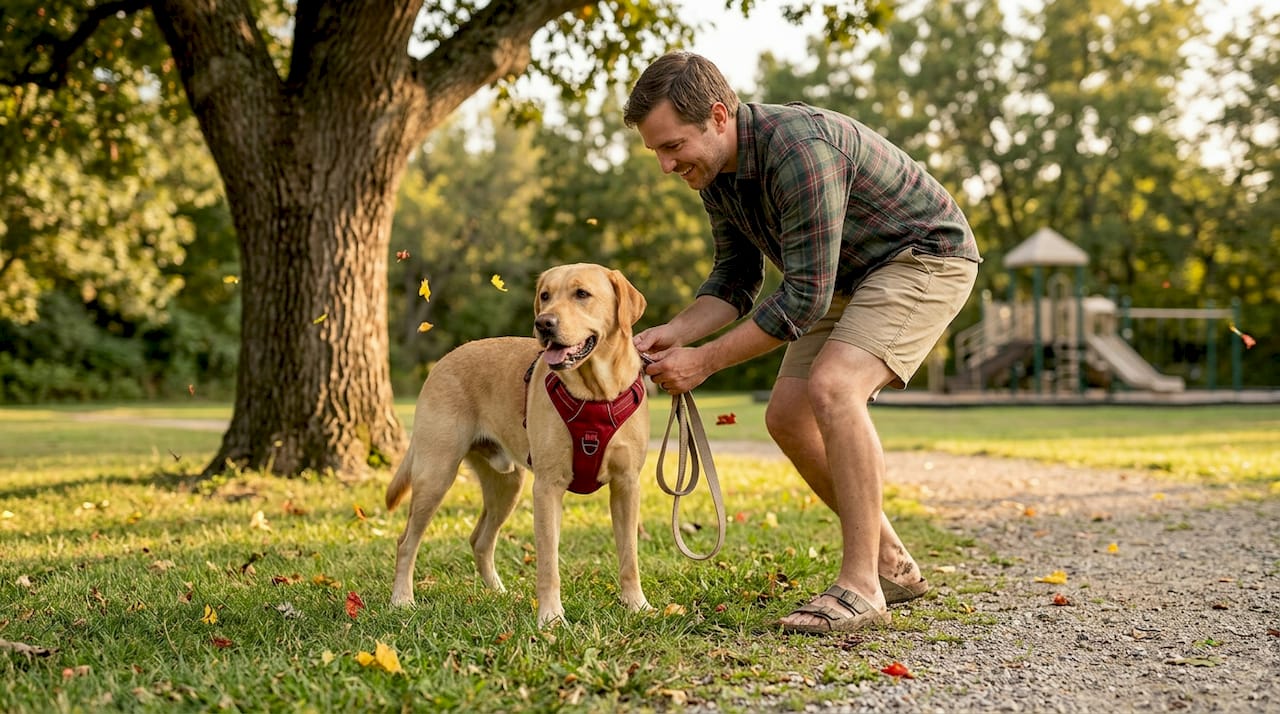
When a dog pulls on a collar, all of that force concentrates on a narrow band around the neck. The trachea (windpipe), thyroid gland, and cervical vertebrae all sit in that same compressed zone. Repeated pulling on a collar can cause coughing, tracheal damage, and even eye pressure issues in small breeds. A harness distributes pressure across the chest and shoulders, spreading the load across a much larger and more durable area of the body.
The health case for harnesses is especially strong for certain dogs:
- Brachycephalic breeds like French Bulldogs, Pugs, and Boston Terriers already have compromised airways. Any collar pressure makes breathing harder.
- Dogs that pull constantly put sustained force on their necks with every walk. A harness removes that risk entirely.
- Senior dogs or those with arthritis benefit from the reduced neck strain and the more stable body contact a harness provides.
- Dogs recovering from neck or spine injuries should never wear a collar during walks, full stop.
“The primary safety advantage of a harness over a collar is the distribution of pressure across the chest and shoulders, protecting the trachea and neck from strain.” — American Kennel Club
This does not mean collars are useless. They are still the right place for ID tags and are fine for calm dogs on loose-leash walks. But for active, pulling, or health-compromised dogs, the case for harnesses versus collars for neck protection is not even close.
After understanding the health benefits, let’s examine how to select the right combination of materials and adjustability features to ensure long-lasting safety and comfort.
Materials, adjustability, and durability: what to look for in a safe harness
A harness that fits perfectly on day one but stretches, frays, or loses its buckle tension after three months is not a safe harness. Material quality and adjustability are what separate a harness that lasts from one that becomes a liability.
When evaluating materials, focus on these factors:
- Padded chest panels: Neoprene or memory foam padding on the chest piece prevents pressure points during longer walks or hikes.
- Breathable mesh lining: Especially important for warmer climates or high-energy dogs. Trapped heat causes discomfort and skin irritation.
- Rust-resistant metal hardware: Reinforced stitching and rust-resistant hardware are non-negotiable for harnesses used in rain, mud, or near water.
- Multiple adjustment sliders: A good harness adjusts at the neck, chest, and belly independently. This matters more than most people realize because dogs are not uniform in shape. A deep-chested Labrador and a narrow-waisted Whippet might share the same weight but need completely different strap geometry.
Here is a breakdown of common harness materials and their trade-offs:
| Material | Durability | Comfort | Best for |
|---|---|---|---|
| Nylon webbing | High | Moderate | Everyday use, active dogs |
| Neoprene padding | Moderate | High | Long walks, sensitive skin |
| Polyester mesh | Moderate | High | Warm weather, light activity |
| Leather | Very high | High (when broken in) | Calm dogs, style-focused owners |
Pro Tip: Run your fingers along every stitched seam before buying. Double-stitched seams with bar tacks at stress points (where straps meet hardware) are a reliable sign of quality construction. Single-stitched seams at connection points are where harnesses fail first.
Understanding materials and adjustability prepares you to correctly fit and regularly check your dog’s harness to prevent escapes and discomfort.
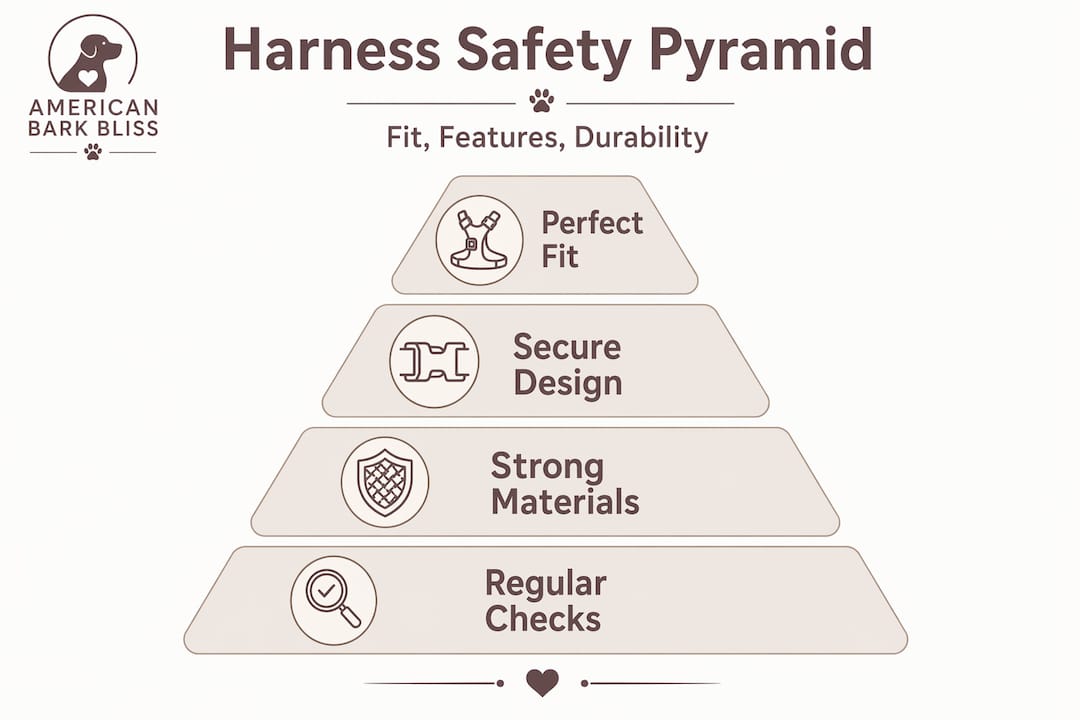
How to properly fit and maintain your dog’s harness for ongoing safety
Knowing how to measure for a dog harness correctly is the foundation of everything else. Guessing based on your dog’s weight is one of the most common mistakes owners make, because body shape varies enormously within the same weight class.
How to measure your dog:
- Measure the neck circumference at the base of the neck, where the collar normally sits, using a flexible tape measure held snug but not tight.
- Measure the girth (chest circumference) at the widest point behind the front legs.
- Compare both measurements to the manufacturer’s size chart, not just the weight range.
- When between sizes, size up and use the adjustment sliders to dial in the fit.
Daily and weekly maintenance habits:
- Check the two-finger rule under every strap before each walk
- Look for fraying at buckle attachment points and stress seams
- Inspect metal hardware for rust, cracking, or bending
- Clean the harness regularly with mild soap and water, especially after muddy walks
- Regular fit checks after grooming, weight changes, or growth spurts are the most effective way to prevent escapes
The importance of regular harness adjustments is often underestimated. A harness that fit perfectly in winter may need re-adjustment after a summer of increased activity and muscle development.
Pro Tip: Take a photo of your dog wearing the correctly fitted harness from the front and side. Use it as a visual reference when re-fitting after washing or seasonal weight changes.
Now that you know how to fit and maintain your dog’s harness, let’s share a fresh perspective on some myths and overlooked practices in harness safety.
The overlooked truths about dog harness safety every owner should know
Here is something the harness marketing world does not want you to focus on: the harness itself is not what keeps your dog safe. Your consistency is.
No harness is 100% escape-proof if it is not fitted correctly. We have seen owners spend serious money on premium harnesses with every safety feature imaginable, then skip the fit check because they are in a hurry. That is where escapes happen. Not because the harness failed, but because the owner assumed it was still adjusted correctly from last week.
Movement-based fit testing is the most underused safety practice in dog ownership. Most people check fit while their dog stands still. But a harness that passes a static check can still rotate 45 degrees when a dog lunges at a squirrel. The only way to know is to watch your dog move, turn, sit, and shake while wearing the harness before you trust it near traffic.
The car safety harness space deserves particular skepticism. Many products are marketed as crash-tested and safe for vehicle travel, but independent crash-test data is rarely behind those claims. Real dynamic collision testing is expensive and uncommon. If a product does not cite an independent testing organization by name with verifiable results, treat the safety claim as marketing language, not engineering fact.
The practical takeaway is this: invest in quality, learn the fit, check it consistently, and test it in motion. An escape-proof magnetic dog harness with a thoughtful design gives you a strong foundation. But that foundation only holds when you do your part as the owner.
Discover high-quality, USA-made dog harnesses and gear for your pet’s safety and comfort
At American Bark Bliss, we believe safe gear should also be gear you are proud to put on your dog. Every product we carry is made in the USA, built to the standards this article describes, and designed to hold up through real daily use.
Start with our magnetic dog harness, engineered with escape-proof design principles and multiple adjustment points for a secure, comfortable fit on any breed. Pair it with our durable padded grip dog leash for complete walking control that feels good in your hand and stays secure on your dog. Browse the full collection at American Bark Bliss and find gear built to the quality standards your dog deserves.
Frequently asked questions
How tight should a dog harness be to ensure safety without discomfort?
A harness should allow you to slide two snug fingers between the strap and your dog’s body, ensuring security without restricting breathing or movement. The two-finger rule is the standard benchmark for correct harness fit.
What features make a harness escape-proof for active dogs?
Escape-proof harnesses usually have a three-strap design including a rear ribcage strap, double-clip leash attachment points, and non-stretch webbing to prevent shifting and slipping during movement. A three-strap design with double-clip points is the expert-recommended standard for active or escape-prone dogs.
Are dog harnesses safer than collars for dogs with breathing or neck issues?
Yes, harnesses distribute pressure evenly across the chest and shoulders, protecting the trachea and neck from strain, which is especially important for brachycephalic breeds and dogs prone to pulling. The AKC recommends harnesses for dogs where collar pressure poses a health risk.
How often should I check the fit of my dog’s harness?
Check your dog’s harness fit before every walk as a habit, and do a thorough re-fit after grooming, weight changes, or noticeable growth. Regular fit checks are the most effective escape-prevention strategy available to any dog owner.
Can I trust marketing claims on dog car safety harnesses?
Consumers should be cautious of car safety claims unless supported by independent, dynamic crash-test data, as many popular products fail under real collision forces. Always look for a named independent testing organization before trusting any car safety harness claim.
Leave a comment