

What Is Wholesale Pet Supply? A 2026 Buyer's Guide
TL;DR:
- Wholesale pet supply involves bulk purchasing at discounts for businesses, with the U.S. market reaching $22.1 billion in 2025. Buyers include retailers, groomers, vets, shelters, and e-commerce sellers, each with different needs and support requirements. Success depends on logistics, product quality, transparent pricing, U.S. warehousing, and proper compliance documentation.
Wholesale pet supply is defined as the bulk purchase of pet products at discounted rates, sold primarily to businesses and qualified buyers rather than individual retail customers. The U.S. pet food and supplies wholesaling industry reached approximately $22.1 billion in market size in 2025. That scale reflects how central bulk pet supply has become to the entire pet care economy. Whether you run a grooming salon, a retail shop, or simply own multiple dogs, understanding how wholesale pet goods work gives you a real purchasing advantage.
What is wholesale pet supply and what products does it cover?
Wholesale pet supply is the trade channel where manufacturers or distributors sell pet products in volume to businesses at prices below standard retail. The industry term for this channel is “business-to-business” or B2B distribution. Buyers access lower per-unit costs in exchange for purchasing larger quantities, meeting credential requirements, or both.
Wholesale suppliers carry a broad product range that lets pet businesses consolidate most of their sourcing through one or a few partners. The core categories include:
- Pet food and treats: dry kibble, wet food, raw diets, freeze-dried treats, and specialty nutrition lines
- Toys and enrichment: chew toys, tug toys, puzzle feeders, and interactive play items
- Grooming supplies: brushes, shampoos, grooming gloves, nail tools, and full grooming kits
- Healthcare items: flea and tick prevention, dental care, vitamins, and first-aid products
- Bedding and furniture: orthopedic beds, crates, mats, and carriers
- Collars, leashes, and apparel: standard and specialty collars, harnesses, leashes, and pet clothing
The pet humanization trend drives growing demand for specialty and health-focused products within these categories. Pet owners now treat their animals more like family members, which pushes wholesale buyers to stock premium, functional, and even fashionable items alongside basic supplies.
| Product Category | Common Examples | Buyer Type |
|---|---|---|
| Food and treats | Kibble, freeze-dried, jerky treats | Retailers, shelters, bulk owners |
| Grooming | Brushes, shampoo, grooming kits | Groomers, retailers |
| Toys and enrichment | Chew toys, tug toys, puzzle feeders | Retailers, trainers |
| Apparel and accessories | Collars, leashes, pet jackets | Boutiques, e-commerce sellers |
| Healthcare | Flea prevention, dental, vitamins | Vets, retailers |
Who typically buys wholesale pet supplies?
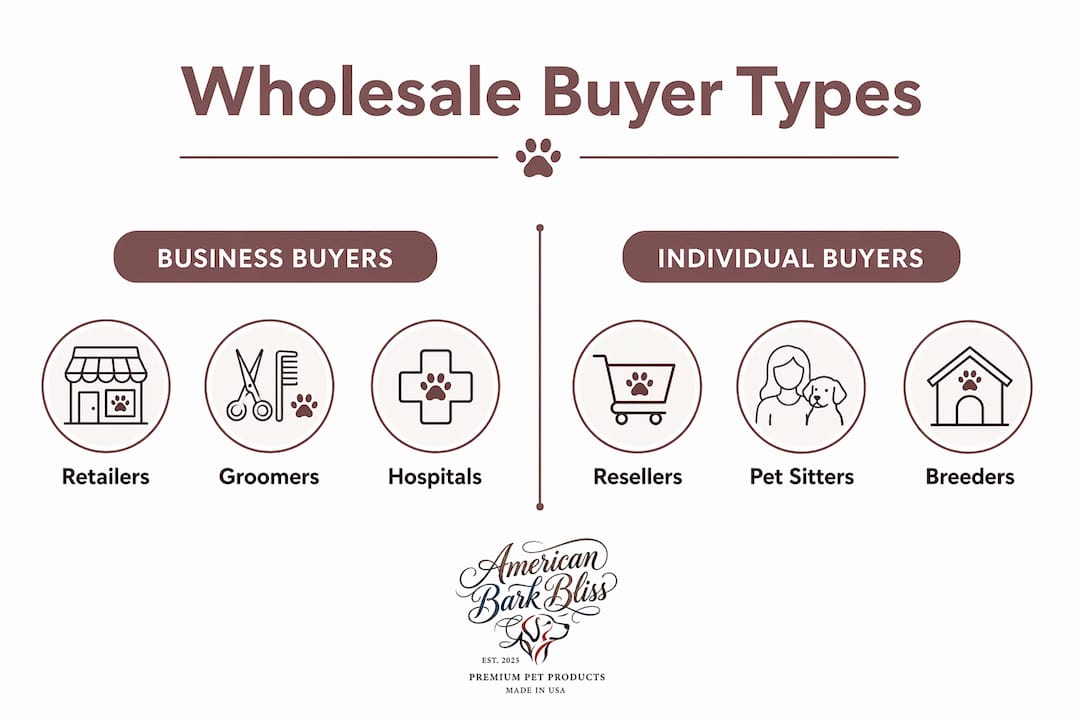
Wholesale pet products serve a wide range of buyers, each with different volume needs and product priorities. Knowing where you fit shapes how you approach supplier selection and order quantities.
The most common wholesale buyers fall into these groups:
- Independent pet retailers stock shelves with food, toys, and accessories. They need consistent inventory, reliable restock cycles, and access to national brands their customers already trust.
- Grooming salons buy shampoos, conditioners, grooming tools, and accessories in bulk. Their purchases are frequent and predictable, making them ideal candidates for standing wholesale accounts.
- Veterinary clinics source healthcare products, prescription diets, and dental care items through wholesale channels to offer in-clinic retail or direct patient care.
- Pet trainers and boarding facilities purchase treats, toys, and enrichment products at volume. Trainers especially benefit from low per-unit treat costs when rewarding dogs dozens of times per session.
- Animal shelters and rescues rely on bulk pet supply purchasing to manage tight budgets. Wholesale pricing on food and bedding directly affects how many animals they can support.
- E-commerce sellers source wholesale pet goods to resell on online marketplaces. This group has specific compliance needs, including documentation that verifies product authenticity.
- Serious multi-pet owners sometimes qualify for wholesale accounts or buy through bulk purchasing programs to reduce the cost of feeding and caring for several animals.
The key difference between these buyer types is not just volume. It is also the type of support they need from a supplier. A grooming salon needs fast restocking on consumables. An e-commerce seller needs chain-of-custody documents to meet marketplace standards. A shelter needs the lowest possible unit cost on staples like food and bedding.
How does the wholesale pet supply purchasing process work?
Buying wholesale pet supplies follows a clear process, but the requirements vary by supplier. Most legitimate wholesale channels require buyers to prove they are operating a real business before granting access to discounted pricing.
- Obtain your business credentials. Most wholesale suppliers require a Tax ID (EIN), a business license, and a resale certificate. These documents confirm you are a legitimate business buyer, not a retail consumer. Wholesale accounts typically require these credentials before granting access to pricing or placing orders.
- Identify the right type of supplier. Your options include direct manufacturers, regional distributors, and B2B wholesale marketplaces. Distributors carry multiple brands and offer broader SKU variety. Manufacturers offer deeper pricing but often require higher minimum orders.
- Understand Minimum Order Quantities (MOQs). MOQs define the smallest order a supplier will accept. Traditional wholesale required large multi-case purchases. The modern wholesale model has shifted toward low MOQs, with many platforms now accepting single-carton minimums. That shift makes wholesale accessible to small businesses and solo operators.
- Request an account and review pricing. Most wholesale suppliers require you to apply for an account. Once approved, you gain access to wholesale pricing, product catalogs, and ordering systems. Review pricing sheets carefully and check for freight minimums or handling fees before committing.
- Place your first order and evaluate fulfillment. Start with a small order to test delivery speed, packaging quality, and product accuracy. Suppliers with U.S. warehouses ship faster and more reliably than those dependent on overseas inventory.
- Build a reorder schedule. Consistent wholesale buying works best when you track sell-through rates and reorder before stock runs out. Most suppliers offer volume incentives for regular buyers.
Pro Tip: Many wholesale platforms offer first-order incentives, such as $25 off orders over $250 or free shipping thresholds. Use your first order to test a new product category at minimal risk before committing to larger quantities.
What should you look for in a wholesale pet supply partner?
Price is the obvious factor, but it is rarely the deciding one for buyers who stay profitable long-term. The best wholesale pet supply partners deliver on several criteria beyond the unit cost.
- Product quality and brand consistency. Your customers expect the same product every time. A supplier who substitutes brands or ships inconsistent formulations damages your reputation, not theirs. Prioritize partners with documented sourcing and stable brand relationships. Americanbarkbliss, for example, focuses exclusively on USA-made pet products, which reduces quality variability significantly.
- Transparent pricing with no hidden costs. Transparent pricing models help small businesses avoid margin erosion and build realistic retail price structures. Ask suppliers for a full landed cost breakdown, including freight, handling, and any account fees, before you compare unit prices.
- Logistics reliability and warehouse location. Overseas shipping delays cause restocking gaps that cost you sales and customer trust. Suppliers with domestic warehouse networks ship faster and handle returns more efficiently. Dual-warehouse structures that cover both coasts reduce transit times across U.S. regions.
- Compliance documentation for online sellers. If you sell on major online marketplaces, your supplier must provide invoices and Letters of Authorization that meet platform standards. Missing documentation can result in listing suspensions or account penalties.
- Market insight and trend support. The best wholesale partners do more than ship boxes. Reliable suppliers provide market insights that help you anticipate what pet owners will want next season. That intelligence is especially valuable as the pet humanization trend continues reshaping product demand.
Pro Tip: Before signing any wholesale agreement, ask the supplier for references from buyers in your same business category. A groomer’s experience with a supplier differs from a retailer’s. Relevant references reveal fulfillment patterns that matter to your specific operation.
The role of quality in wholesale partner selection goes beyond product specs. It includes how a supplier handles backorders, communicates delays, and supports your business when something goes wrong.
Key Takeaways
Wholesale pet supply gives businesses and bulk buyers access to discounted pricing, broader product selection, and inventory control that retail purchasing cannot match.
| Point | Details |
|---|---|
| Definition and scale | Wholesale pet supply is B2B bulk purchasing; the U.S. market reached $22.1 billion in 2025. |
| Product range | Suppliers cover food, treats, toys, grooming, healthcare, bedding, and apparel in one catalog. |
| Buyer qualifications | A Tax ID, business license, and resale certificate are standard requirements for wholesale access. |
| Low MOQ advantage | Modern platforms accept single-carton minimums, making wholesale viable for small businesses. |
| Partner selection | Prioritize transparent pricing, U.S. warehouse locations, and compliance documentation over unit cost alone. |
Why I think most buyers underestimate the logistics side
Most buyers enter wholesale focused entirely on price. That is the wrong starting point. After years of watching businesses source pet supplies, the pattern is consistent: the buyers who struggle are the ones who found the cheapest unit cost and ignored everything else.
Logistics is where wholesale relationships succeed or fail. A supplier priced 15% lower than the competition means nothing if their inventory runs out every other month or their freight costs eat the savings. I have seen small pet retailers lose their best-selling product lines mid-season because their overseas supplier had port delays. Those same retailers would have paid a slightly higher unit cost for a domestic supplier without hesitation if they had experienced that disruption first.
The shift to low MOQ wholesale models is genuinely good news for small businesses. One-carton minimums let you test a new treat line or grooming product before committing shelf space and cash to a full case. That flexibility did not exist five years ago. Use it.
The pet humanization trend is not slowing down. Buyers who stock only basic commodity products will find their margins compressed as customers move toward specialty, health-focused, and American-made goods. Sourcing domestic pet products now positions you ahead of that demand curve, not behind it.
— Christopher
Quality wholesale pet supplies from Americanbarkbliss
Americanbarkbliss carries premium, USA-made pet products built for buyers who care about what goes into their inventory. Every item is sourced from American manufacturers, which means consistent quality, faster restocking, and no overseas shipping surprises.
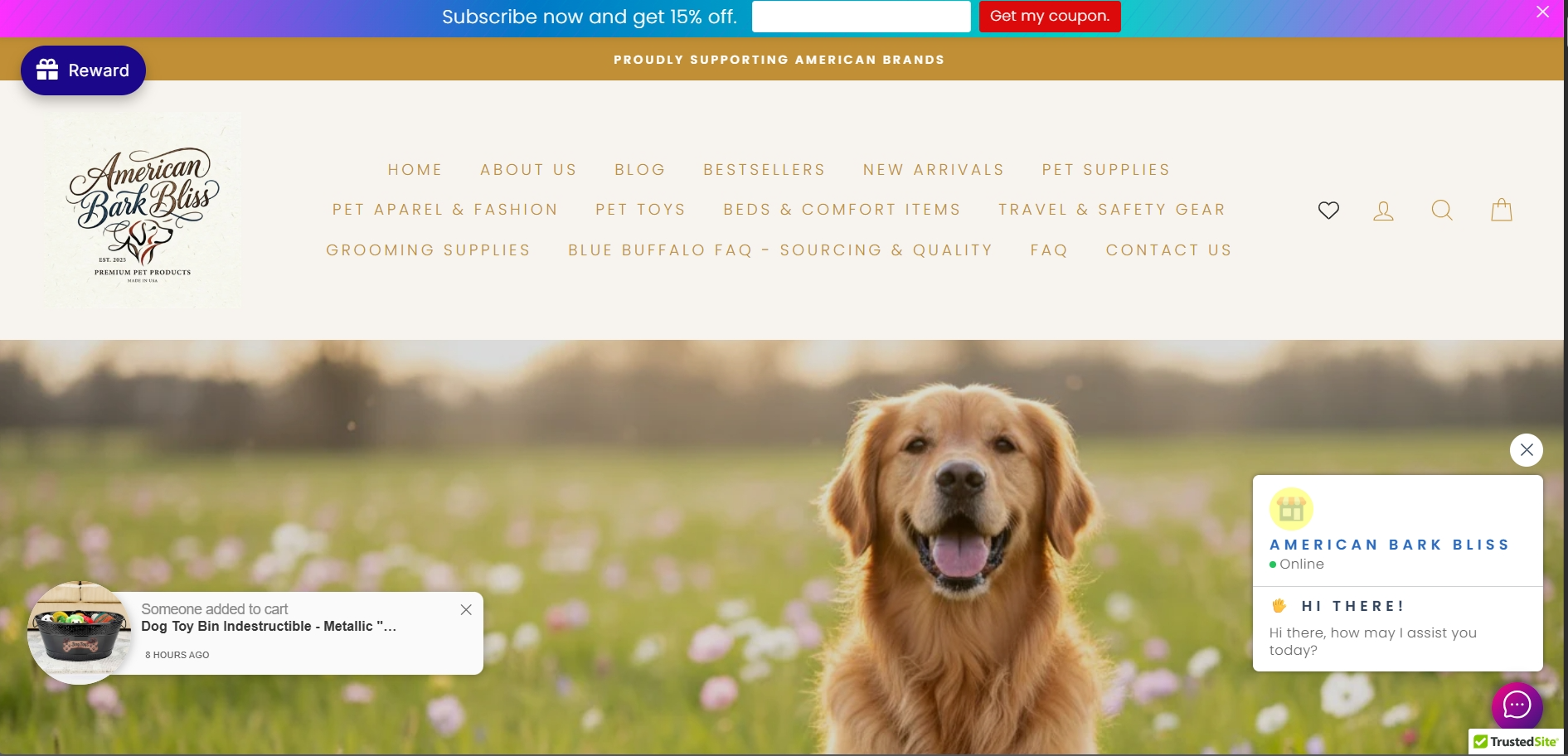
The catalog covers treats like Americana Chicken Chips for Dogs and Chicken Jerky Dog Treats (5 LB), grooming tools like the Country Living 3-Piece Grooming Kit, and durable toys like the USA-K9 Stars and Stripes Rubber Toy. Whether you are stocking a retail shelf or buying in bulk for your own dogs, Americanbarkbliss gives you access to quality products with the sourcing transparency your customers expect.
FAQ
What is the difference between wholesale and retail pet supply?
Wholesale pet supply sells products in bulk at discounted rates to businesses or qualified buyers, while retail sells individual units to end consumers at full price. Wholesale buyers typically need a Tax ID or resale certificate to access wholesale pricing.
Do I need a business license to buy wholesale pet supplies?
Most wholesale suppliers require a business license, Tax ID, and resale certificate before opening an account. These credentials confirm you are a legitimate business buyer rather than a retail consumer.
What is a Minimum Order Quantity in wholesale pet supply?
A Minimum Order Quantity (MOQ) is the smallest order a supplier will accept. Many modern wholesale platforms have shifted to low MOQs, including single-carton minimums, making bulk pet supply accessible to small businesses and independent operators.
Why should I prioritize suppliers with U.S. warehouses?
Suppliers with domestic warehouses ship faster and avoid the restocking delays common with overseas inventory. U.S.-based warehouse networks provide more consistent inventory and reduce the risk of mid-season stockouts.
What compliance documents do online sellers need from wholesale suppliers?
E-commerce sellers need invoices and Letters of Authorization from their wholesale suppliers to meet online marketplace standards. Missing chain-of-custody documents can result in listing suspensions or account penalties on major platforms.
Leave a comment