

Responsible Pet Product Manufacturing: A U.S. Dog Owner's Guide
TL;DR:
- Responsible pet product manufacturing involves traceable ingredients, independent testing, and fair labor practices. Verification includes U.S. regulatory compliance, third-party certifications, and clear country-of-origin labeling. Brands that publish test results and hold verifiable certificates demonstrate genuine accountability and quality.
Responsible pet product manufacturing means making pet goods with traceable ingredients or materials, verified supplier controls, third-party testing, and fair labor practices at every stage of production. In the U.S., that framework is anchored by FDA oversight for pet food safety, AAFCO nutritional standards, and the FTC’s “Made in USA” labeling rules. Americanbarkbliss curates products that meet these standards so you don’t have to vet every supplier yourself.
TL;DR:
- Ask sellers for a Certificate of Analysis (CoA) or batch test results before buying food, treats, or chews.
- Check the country of origin label and verify it against the manufacturer’s stated production location.
- Look for third-party certifications (GMP, ISO 9001, AAFCO statement) as independent proof of quality controls.
Table of Contents
- What responsible pet product manufacturing actually means
- U.S. standards and certifications worth knowing
- How responsible manufacturers actually run production
- Why sustainability is an operational strategy, not a marketing line
- Your shopping checklist for American-made, responsibly made dog products
- Key Takeaways
- The case for demanding more from pet product makers
- American-made dog products that meet the standard
- Useful sources
- FAQ
What responsible pet product manufacturing actually means
The phrase covers six core practices that separate genuinely accountable makers from brands that just use the right words on packaging.
Safety-first raw materials. Responsible manufacturers define exact specifications for every incoming ingredient or material, then require suppliers to provide CoAs confirming those specs are met. Finished products go through routine microbial testing and, for food, nutritional verification before they ship. Supplier approval programs and defined raw-material specs are the baseline, not a bonus.
Supplier vetting and codes of conduct. Approved supplier lists, periodic re-audits, and written codes of conduct covering environmental and labor expectations are standard tools. Certifications such as MSC, ASC, and Global Animal Partnership give buyers independent confirmation that sourcing claims hold up.
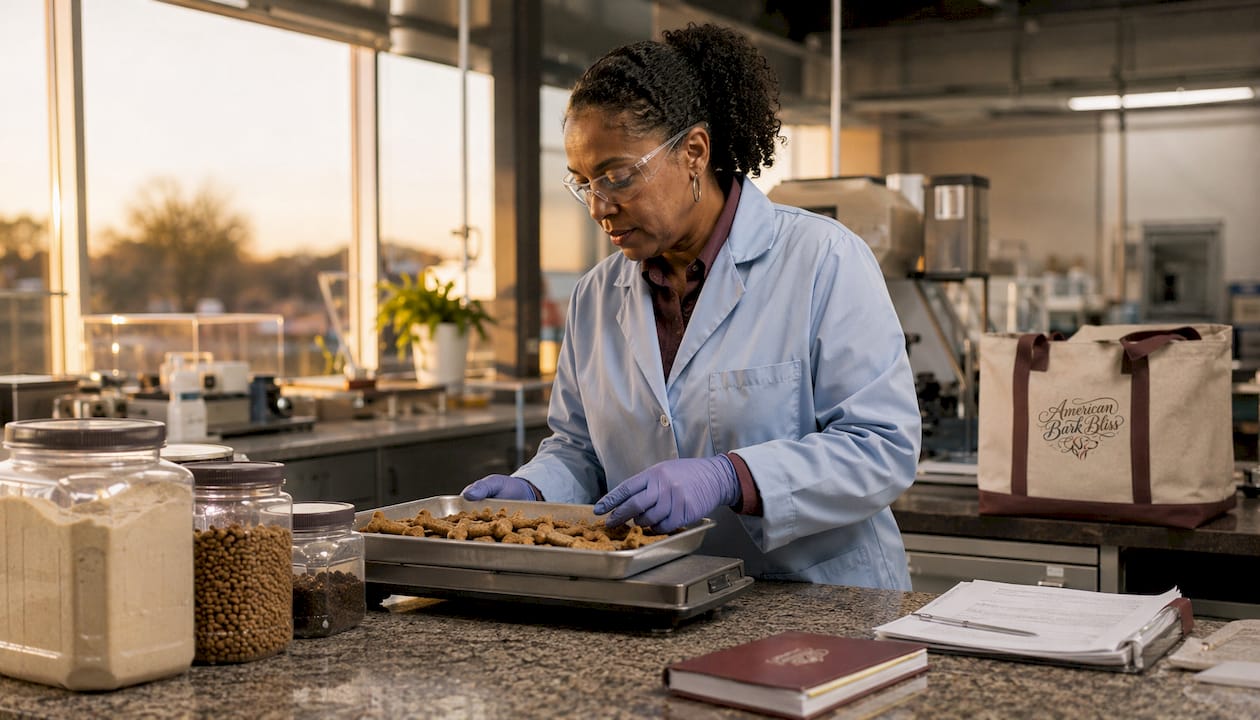
Transparency and traceability. Country-of-origin labeling, published batch records, and accessible test summaries let you trace a product back to its source. If a manufacturer can’t tell you where an ingredient came from, that’s a gap in the chain.
Animal welfare and ethical sourcing. For treat and food manufacturers, responsible sourcing extends to how animals are raised. Partnerships with NGOs and verified supplier networks are increasingly common ways to validate welfare claims rather than just assert them.
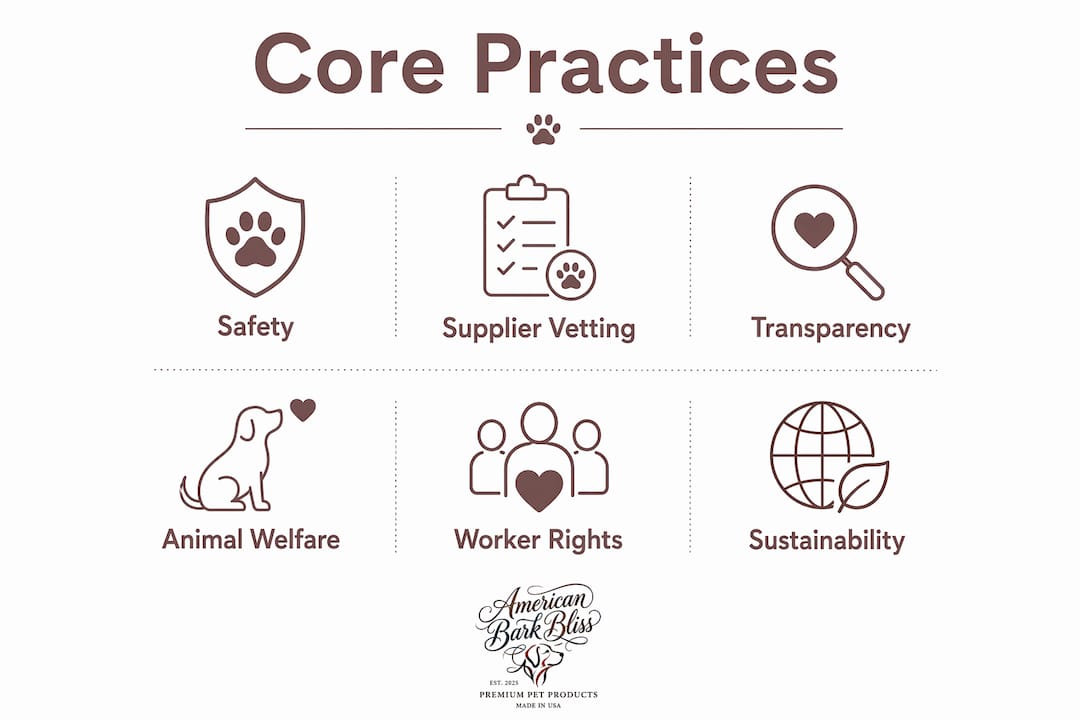
Worker welfare. Fair wages, safe conditions, and social audits are part of the picture. A product made cheaply through labor exploitation isn’t responsible, regardless of what the packaging says.
Durability and circular design. Choosing materials that can be recycled, upcycled, or composted reduces waste across a product’s life. For dog beds, toys, and grooming tools, build quality directly affects how long a product stays out of a landfill.
Pro Tip: Ask a seller whether their manufacturer holds a current ISO 9001 or GMP certificate. A legitimate operation will have a document number and an issuing body — not just a logo on a webpage.
U.S. standards and certifications worth knowing
The regulatory picture for dog products in the U.S. involves several overlapping bodies, and knowing which one covers what saves you from being misled by vague claims.
| Standard / Body | What it covers | How to verify |
|---|---|---|
| FDA (animal foods) | Safety framework for pet food and treats | Check FDA’s pet food guidance page for recalls and compliance info |
| AAFCO | Nutritional profiles and feeding-trial protocols for complete pet foods | Look for the AAFCO statement on the product label |
| FTC “Made in USA” | Requires all or virtually all content to be domestic | Check that the label says “Made in USA” and that the manufacturer lists a U.S. production address |
| ISO 9001 | Quality management systems | Request the certificate number; verify with the issuing registrar |
| GMP (Good Manufacturing Practice) | Production hygiene and process controls | Ask for a GMP compliance statement or audit summary |
| BSCI / social audits | Labor and social standards in the supply chain | Some manufacturers publish audit summaries on their sites |
Pet food production controls vary by format — wet food, dry kibble, and treats each carry different processing requirements, so a single blanket claim about “safety testing” isn’t enough. Format-specific documentation matters.
“Responsible sourcing is interconnected: improving animal welfare, soil health, and social conditions creates cascading benefits across the supply chain.” — Pet Food Processing, Responsible Revolution
CoAs and batch test reports are the most practical trust signals for everyday buyers. A CoA issued by an independent lab carries more weight than one produced in-house. If a manufacturer publishes audit summaries or third-party test results on their site, that’s a meaningful signal of accountability.
How responsible manufacturers actually run production
The day-to-day reality of ethical pet product manufacturing comes down to documented processes, not intentions. Here’s what a responsible production flow looks like:
- Supplier qualification. Every new supplier completes an approval process: submitting certifications, undergoing an audit, and signing a code of conduct before any material is accepted.
- Incoming inspection. Raw materials arrive with CoAs. The manufacturer’s QA team checks those documents and may run independent confirmation tests before materials enter production.
- Batch records. Every production run generates a batch record linking the finished product to specific raw-material lots. This is what makes a targeted recall possible instead of a blanket one.
- In-process testing. For food and treats, microbial and nutritional checks happen during production, not just at the end. For accessories, dimensional and material checks confirm specs are met.
- Finished-product QA. Final products are tested or inspected before release. For treats, this includes pathogen screening. For toys and grooming tools, it includes material safety and durability checks.
- Lot-code traceability. Every unit carries a lot code that traces back through the batch record to the original supplier. If something goes wrong, the manufacturer can identify exactly which units are affected.
Some manufacturers openly list their factory certifications and quality controls on their websites as proof for retail partners and buyers. That kind of disclosure is worth looking for. Your vet can also help you evaluate whether a product’s safety documentation is adequate for your dog’s specific health needs — a resource like City Animal Veterinary Center is a good starting point for those conversations.
Why sustainability is an operational strategy, not a marketing line
Manufacturers that invest in sustainable sourcing and energy-efficient production report real operational benefits: supply-chain resilience, lower long-term input costs, and stronger employee retention. Sustainability isn’t just good optics. It’s a hedge against supply disruptions and rising raw-material costs.
On the sourcing side, certified ingredients, regenerative agriculture partnerships, and lower-emission ingredient choices reduce exposure to volatile commodity markets. On the production side, energy efficiency and waste reduction lower operating costs over time. A circular-design approach for accessories and toys — selecting materials that can be recycled, upcycled, or composted — reduces product waste and aligns with extended producer responsibility principles.
For dog owners, this translates directly: a manufacturer with a genuine sustainability program is more likely to still be sourcing the same quality ingredients or materials in five years. Brands that cut corners on sustainability often cut corners elsewhere too. Explore eco-friendly pet supplies to see what responsible material choices look like in practice.
Your shopping checklist for American-made, responsibly made dog products
Use this list before you buy, whether you’re shopping for treats, toys, grooming tools, or accessories.
- Country of origin: The label should say “Made in USA.” Cross-check by looking for a U.S. manufacturing address on the brand’s website. “Assembled in USA” with foreign components doesn’t meet the FTC standard.
- CoA and batch test results: Ask the seller for a Certificate of Analysis from an independent lab. For treats and food, this should include microbial and nutritional data. For toys and accessories, look for material safety test results.
- AAFCO statement (for food and treats): The label should state that the product meets AAFCO nutritional profiles or has passed a feeding trial. No AAFCO statement on a complete food is a red flag.
- Certifications: ISO 9001 or GMP for the manufacturer; eco-certifications (recycled content, compostable packaging) for accessories. Ask for the certificate number, not just the logo.
- Durability indicators: For toys, look for reinforced stitching, non-toxic TPR or natural rubber, and a stated chew-strength rating. For grooming tools, check that materials are listed explicitly. Safe toy materials are worth understanding before you buy.
- Red flags: “Natural” with no ingredient list. “Eco-friendly” with no certification. “Tested” with no lab name or report. “Made in USA” on packaging but a foreign address on the website.
- Questions to ask sellers: “Can you share the CoA for this batch?” “Where is this product manufactured?” “Does the manufacturer hold a current GMP or ISO certificate?” A seller who can’t answer these isn’t close enough to their supply chain.
For a deeper look at domestic sourcing benefits, the case for American-made goods goes beyond patriotism — it’s about shorter supply chains, stricter regulatory oversight, and faster recall response times.
Key Takeaways
Responsible pet product manufacturing requires traceable sourcing, independent testing, and documented supplier controls — not just good intentions on a label.
| Point | Details |
|---|---|
| Demand documentation | Always request a CoA or batch test result before buying treats, food, or chews. |
| Verify “Made in USA” claims | Cross-check the label against a U.S. manufacturing address on the brand’s site. |
| Certifications carry weight | ISO 9001, GMP, and AAFCO statements are independently verifiable — logos alone are not. |
| Sustainability signals quality | Manufacturers investing in sustainable sourcing tend to maintain tighter supply-chain controls overall. |
| Americanbarkbliss curates vetted options | The store focuses on American-made pet products across treats, toys, and grooming tools that reflect responsible manufacturing standards. |
The case for demanding more from pet product makers
The conventional wisdom says to check the label and trust the brand. That’s not enough anymore. The pet product market has grown fast, and “natural,” “eco,” and “American-made” have become marketing terms as often as they are factual claims. The gap between what a label says and what a manufacturer can actually document is where dogs get hurt.
What most articles miss is that responsible manufacturing is a systems question, not a product question. A single “safe” toy from a factory with no supplier approval program, no batch records, and no third-party audit is still a gamble. The documentation behind the product matters as much as the product itself. When a manufacturer publishes their CoAs, lists their certifications with verifiable numbers, and names their sourcing partners, they’re telling you something real about how they operate.
American-made goods have a structural advantage here. Domestic manufacturers operate under FDA oversight, face FTC scrutiny on origin claims, and are subject to U.S. labor law. That’s not a guarantee of quality, but it’s a floor that many imported goods don’t have. The American-made vs. imported comparison is worth reading if you want the full picture.
The price premium on responsibly made, U.S.-manufactured pet goods is real. It reflects actual costs: higher-quality raw materials, independent lab testing, fair wages, and domestic production overhead. A $4 chew toy from an unverified overseas source and a $14 one from a documented U.S. maker are not the same product. The difference shows up in your dog’s safety record, not just the receipt.
American-made dog products that meet the standard
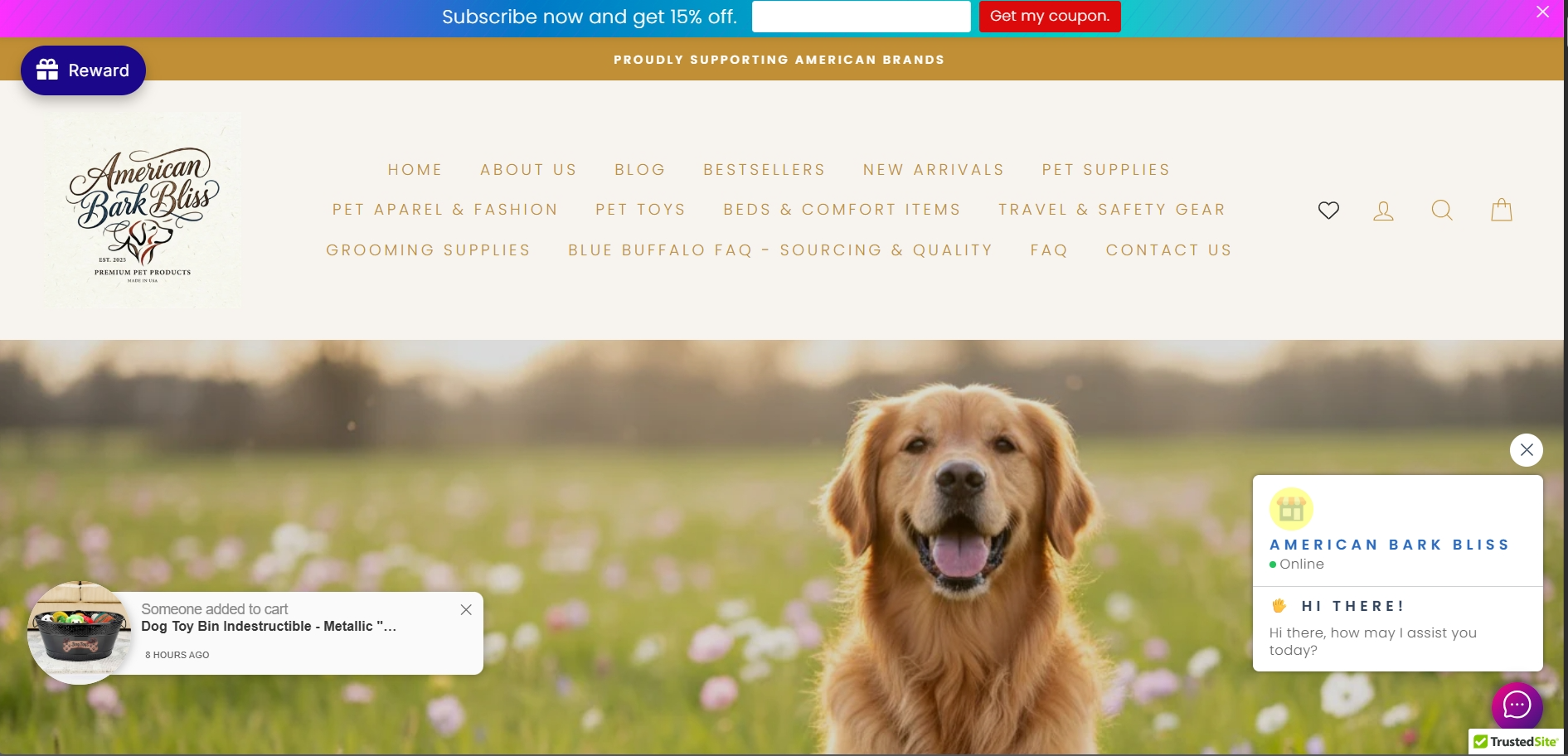
Americanbarkbliss takes the checklist above seriously. Every product in the store is sourced with domestic manufacturing and quality documentation in mind. The Country Living All-in-One 3-Piece Dog Grooming Kit and the Pet Grooming Gloves with Five Finger Design are built for durability and safe skin contact. For chew time, the BREKX Leather Dog Toy 3-Piece Set and the TPR Boomerang Chew Toy use materials rated for aggressive chewers. On the treat side, the Americana Chicken Chips and 5 LB Chicken Jerky are made in the USA with single-source protein. Browse the full collection at Americanbarkbliss and shop products you can actually verify.
Useful sources
- FDA Pet Food Guidance — The primary U.S. regulatory resource for pet food safety, recalls, and compliance requirements.
- GAPFA Quality & Safety — Global Alliance of Pet Food Associations overview of production controls and format-specific safety standards.
- FEDIAF Pet Food Safety — Detailed guidance on supplier approval programs, batch records, and CoA requirements.
- PetfoodIndustry: Sustainability Strategy — Industry reporting on why sustainability is an operational priority, not just a marketing one.
- Pet Food Processing: Responsible Revolution — In-depth look at responsible sourcing certifications, supplier codes of conduct, and animal welfare practices.
- Sierra Club: Circular Economy for Pets — Practical guidance on circular-design choices for pet accessories and toys.
FAQ
What is responsible pet product manufacturing in plain terms?
It means making pet goods with traceable sourcing, documented supplier controls, independent lab testing, and fair labor practices — then being transparent about all of it through CoAs, certifications, and published audit results.
How do I verify a “Made in USA” claim on dog products?
The FTC requires that all or virtually all of a product’s content be domestic. Check that the packaging says “Made in USA” and that the manufacturer lists a U.S. production address on their website, not just a U.S. mailing address.
What certifications should I look for when buying American-made dog treats?
Look for an AAFCO nutritional statement on the label, a GMP compliance statement from the manufacturer, and a CoA from an independent lab. Those three together cover nutrition, production hygiene, and ingredient safety.
Are responsibly made pet products more expensive?
Generally, yes. U.S. manufacturing, independent testing, and certified sourcing all add cost. The price premium typically reflects real differences in safety standards and material quality, not just branding.
What are the biggest red flags in pet product marketing?
“Natural” with no ingredient definition, “eco-friendly” with no certification, “tested” with no lab name, and “Made in USA” on the label paired with a foreign manufacturing address on the company’s website.
Leave a comment