

Reflective Dog Gear: Visibility and Safety Guide
TL;DR:
- Reflective dog gear enhances low-light visibility by using retroreflective materials, fluorescent colors, or LEDs. It extends detection distance, improves shape recognition, and remains effective in wet weather or hunting seasons. Proper fit, coverage, and regular replacement ensure maximum safety during dusk, night, fog, or roadside walks.
Reflective dog gear covers any collar, harness, leash, vest, coat, or clip-on accessory built to make your dog visible in low light using retroreflective materials, fluorescent colors, or built-in LEDs. The bottom line: it increases the distance at which drivers and cyclists can detect your dog, giving them more time to react and reducing collision risk. Three things to do right now:
- Put your dog in a vest or harness with wide retroreflective panels for any walk after sunset.
- Switch to a double-sided reflective leash so visibility holds even when the leash twists.
- Pair reflective gear with a clip-on LED light in high-traffic or fast-moving-vehicle areas.
Table of Contents
- What counts as reflective dog gear?
- How retroreflective technology actually works
- Concrete safety benefits of reflective dog gear
- When reflective gear is most useful
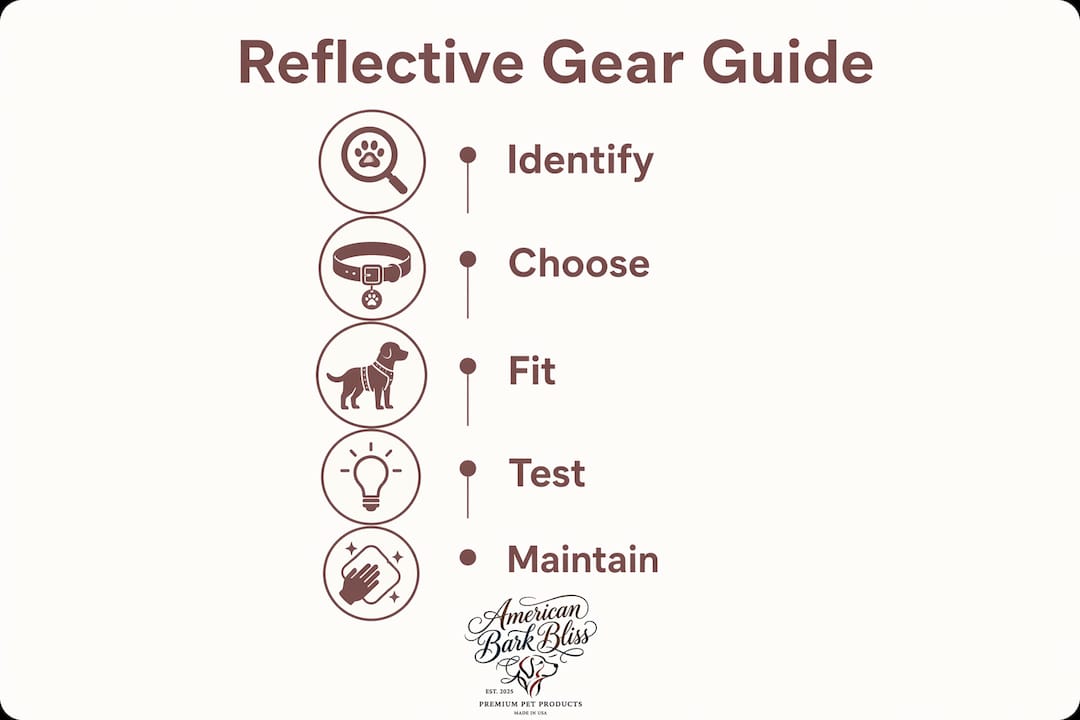
- How to choose the right reflective gear
- How to fit reflective gear for maximum visibility
- How to clean and when to replace reflective gear
- Common mistakes to avoid
- Recommended reflective gear from Americanbarkbliss
- Key Takeaways
- The part most buyers skip
- Safety gear for your dog, ready to shop
- FAQ
What counts as reflective dog gear?
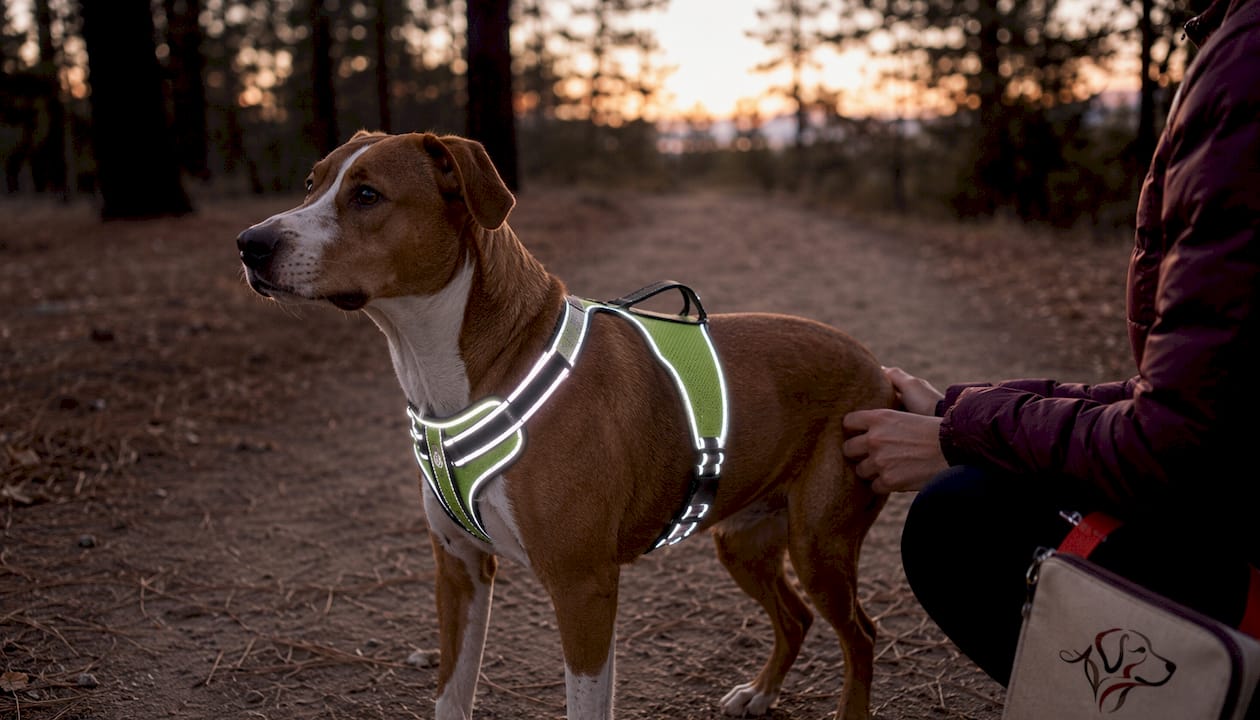
Reflective dog gear falls into six main categories. Reflective collars are the most common entry point, with retroreflective strips sewn or bonded onto nylon or leather. Reflective harnesses distribute that visibility across the chest and back, which is a much larger surface area than a collar alone. High-vis vests and coats add fluorescent color plus retroreflective panels, covering the dog’s full torso. Reflective leashes carry retroreflective webbing along their length; the best ones have it on both sides. Clip-on reflectors and ID tags attach to existing gear for a quick upgrade. LED and light-up accessories glow actively rather than passively reflecting.
Many products combine categories. A reflective dog harness might include blaze-orange fabric plus 3M Scotchlite strips. A raincoat might layer waterproofing over retroreflective panels. The combination is almost always better than any single element alone.
How retroreflective technology actually works
Retroreflective materials return light directly to its source. When a car’s headlights hit a retroreflective panel on your dog’s vest, the light bounces straight back toward the driver’s eyes rather than scattering in all directions. That’s the critical difference between genuine safety gear and something that just looks shiny.
Two technologies do this job. Glass-bead retroreflection uses tiny transparent spheres embedded in a film; light enters the bead, reflects off a silvered backing, and exits back toward the source. Micro-prism retroreflection presses thousands of tiny prisms into a plastic substrate, each acting like a precise mirror. Micro-prism films tend to produce a brighter, more directional return and hold performance across a wider range of angles, which matters when your dog is moving.
Glossy nylon, metallic thread, and sparkle fabric are not retroreflective. They can look impressive under a flashlight held at close range, but they fail the real test: a driver approaching at 40 mph with headlights on. Retroreflective materials extend detection distance meaningfully compared with untreated fabric.
Pro Tip: Look for the word “retroreflective” on the product page, not just “reflective.” Better still, look for a named material standard like 3M Scotchlite — that’s a reliable shorthand for durable, high-performance light return.
Concrete safety benefits of reflective dog gear
Retroreflective gear does several things at once. It increases the distance at which a driver can spot your dog, giving them more time to brake or steer. It also makes your dog’s shape and movement readable, not just a vague bright spot, which helps cyclists and pedestrians react correctly.
Key benefits worth knowing:
- Greater detection distance. Retroreflective strips extend how far away a driver can see your dog under headlights.
- Shape recognition. Wide panels across the chest and back outline your dog’s silhouette, not just a single point of light.
- Wet-weather reliability. Good retroreflective materials still reflect well when wet, while many LED options can fail from water exposure or dead batteries.
- Hunting-season identification. Blaze orange or neon yellow vests prevent misidentification in wooded areas during hunting season.
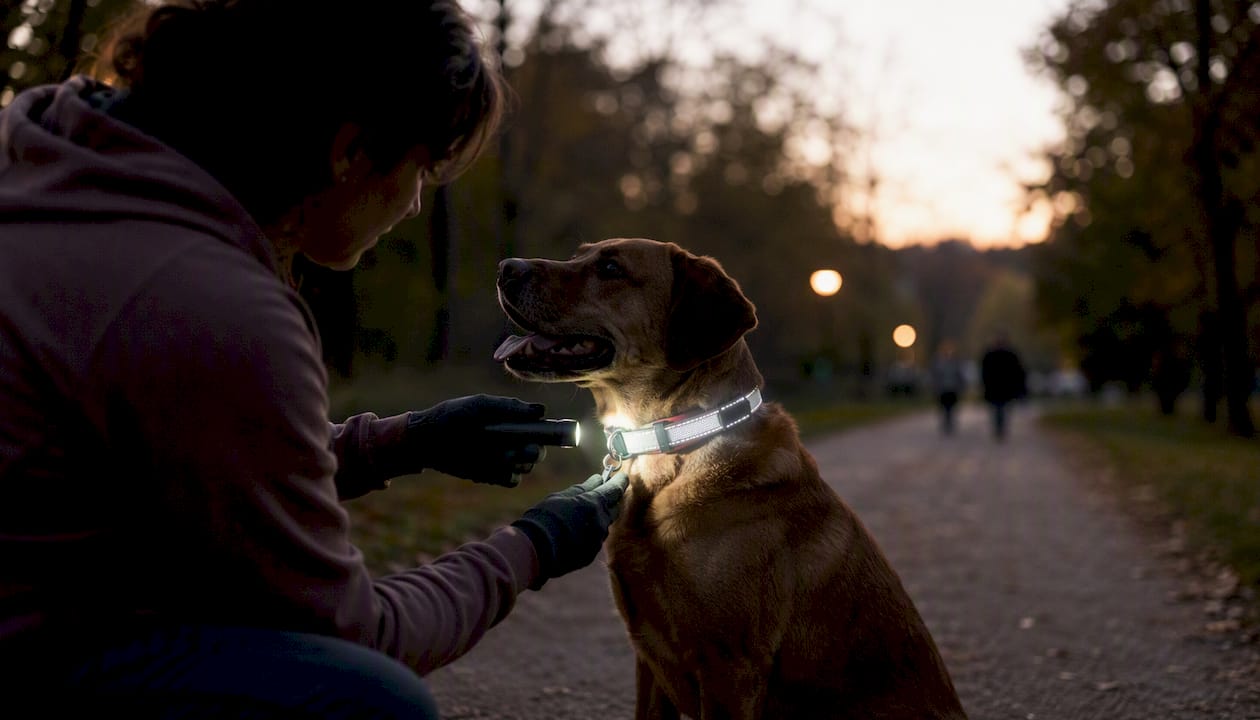
- Off-leash tracking. Retroreflective panels catch your flashlight beam from a distance, making it easier to locate a dog that’s ranged ahead on a dark trail.
One honest caveat: reflective gear improves visibility but doesn’t guarantee safety. Supervision, leash discipline, and traffic-aware behavior still matter. Check the dog walking safety guide for the full picture.
When reflective gear is most useful
Use it any time visibility is compromised. That’s the short answer. The longer one:
- Dawn and dusk walks. Light is low, drivers’ eyes are adjusting, and your dog blends into shadows.
- Night walks. The most obvious use case, and the one where retroreflection outperforms LED glow because headlights can wash out an LED’s effect.
- Fog and rain. Reduced visibility in all directions; retroreflective material still returns headlight energy even through light rain.
- Roadside rest stops on road trips. A quick leash break near a highway shoulder is higher risk than it looks.
- Wooded trails near roads. Trees break sight lines; a vest with blaze color plus retroreflective strips helps both drivers and hunters identify your dog.
- Hunting season. Blaze orange is the standard signal; pair it with retroreflective panels for dawn and dusk hunts.
- Early-morning runs. Runners often start before sunrise; your dog’s dark coat disappears against pavement without reflective gear.
Where reflectivity alone isn’t enough: fast-moving traffic, long straight roads where drivers travel at highway speed, or any situation with obstructed sight lines. In those cases, add a clip-on LED and consider dog walking accessories that combine both.
How to choose the right reflective gear
Prioritize the amount and quality of retroreflective material first, then coverage area, fit, and durability. A vest with wide panels beats a collar with thin piping every time. Whole Dog Journal recommends choosing items with larger strips or panels over thin reflective thread.
| Category | Visibility/Coverage | Best Use | Battery-Free | Durability |
|---|---|---|---|---|
| Reflective collar | Low (neck only) | Everyday baseline | Yes | High |
| Reflective harness | Medium-high (chest + back) | Daily walks, runs | Yes | High |
| High-vis vest/coat | High (full torso) | Night, hunting season, bad weather | Yes | Medium |
| Reflective leash | Medium (length of leash) | All walks | Yes | High |
| Clip-on LED | Point source only | Supplement to panels | No | Medium |
Sizing: measure your dog’s neck, chest girth, and back length before ordering. For harnesses and vests, the chest measurement is the most critical. You want a snug fit that doesn’t allow the gear to rotate or bunch, which would hide the reflective panels.
Construction checklist: retroreflective tape or panels (not just stitched thread), 3M Scotchlite or equivalent named material, double-sided leash reflection, sealed seams for weather resistance, and hardware that won’t corrode.
Pro Tip: If a product page only says “reflective” without naming the material or technology, treat it as decorative. Real safety gear names the retroreflective standard.
How to fit reflective gear for maximum visibility
Correct fit keeps reflective panels facing outward toward likely sight lines, not folded under straps or buried in fur. Here’s how to check it:
- Measure first. Use a soft tape measure for neck, chest, and back length. Never guess by breed size alone.
- Adjust for snug comfort. You should fit two fingers under any strap. Tighter hides panels; looser lets gear rotate.
- Check panel orientation. Retroreflective strips should face outward on the sides and back, not pressed against the dog’s body.
- Test range of motion. Walk your dog a few steps. If the vest bunches at the shoulders or the harness slides to one side, readjust before heading out.
- Do a flashlight test. Stand 30 feet away, shine a flashlight at your dog, and look for a bright return. If you see only a faint glow, the panels may be obscured or the material is low quality.
For leashes, double-sided reflective material is the practical choice because leashes twist constantly during real walks. Single-sided reflection faces away from traffic roughly half the time.
Pro Tip: Do the flashlight test from your car with the headlights on. That’s the actual driver’s perspective, and it’s a much harder test than a handheld flashlight at close range.
How to clean and when to replace reflective gear
Routine cleaning preserves retroreflective performance. Dirt and detergent residue both degrade the micro-prism or glass-bead surface over time.
Care steps: hand-wash or use a gentle machine cycle in a mesh laundry bag. Skip bleach and abrasive detergents. Air-dry away from direct heat; tumble drying can warp adhesive-backed reflective tape. After washing, do the flashlight test again to confirm the panels still return light cleanly.
Replace the gear when you see: cracked or flaking reflective tape, panels that look faded or thin, a flashlight test that returns only a dim glow instead of a bright reflection, or broken buckles and D-rings. For LED accessories, check batteries monthly and confirm the housing is still waterproof. A durable collar or harness built with quality hardware lasts longer, but even the best retroreflective film eventually wears.
Common mistakes to avoid
A few pitfalls come up repeatedly:
- Trusting thin stitched piping. A few threads of reflective yarn along a collar edge provide almost no real-world benefit. Coverage area matters.
- Buying single-sided reflective leashes. The leash twists; single-sided reflection faces away from traffic half the time.
- Assuming LED alone is enough. A car’s headlights can wash out an LED’s glow. Retroreflective material produces a stronger signal under headlights than most clip-on lights.
- Ignoring fit. A vest that rotates or bunches hides the panels you paid for.
- Relying on color without retroreflection. Fluorescent colors help in daylight but provide no benefit after dark without retroreflective strips.
Cheap gear often advertises “reflective” with a few millimeters of metallic thread. That’s decoration, not safety. Reflective gear greatly improves visibility, but it doesn’t replace careful supervision and traffic-aware behavior on every walk.
Recommended reflective gear from Americanbarkbliss
Three products worth knowing:
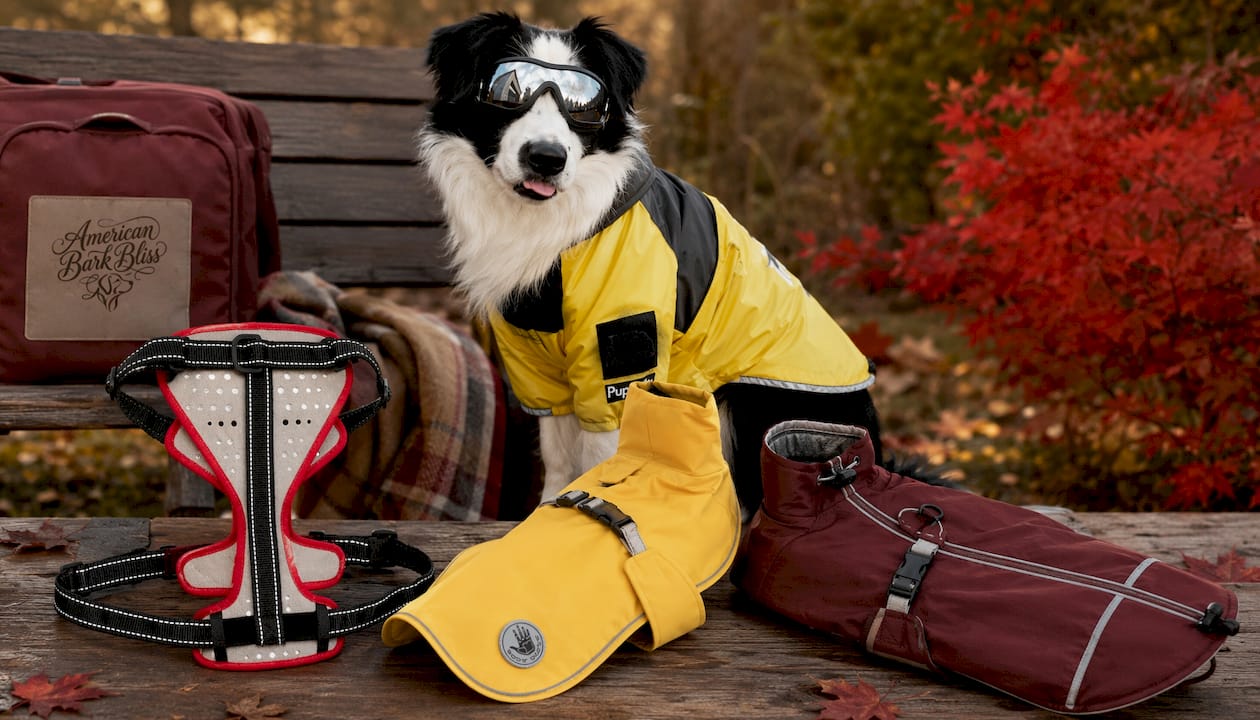
The Nathan reflective dog harness is built for active dogs and evening runs. Wide retroreflective panels cover the chest and back, and the harness fits snugly without restricting stride. Best for: daily walks and jogging with medium to large dogs.
The Dog Face windproof waterproof jacket layers weather protection over retroreflective detailing. It’s the right call for rainy-season walks where you need both visibility and a dry dog. The windproof shell holds up in conditions where a standard vest would soak through.
The Body Glove dog raincoat covers the torso fully with reflective accents and a water-resistant finish. It’s a lighter option than the Dog Face jacket, suited for drizzly evenings rather than heavy rain. Check the sizing guide on the product page before ordering.
All three meet the core checklist: retroreflective material, meaningful coverage area, and weather resistance. See the everyday walking essentials page for sizing help and additional options.
Key Takeaways
Retroreflective panels, correct fit, and double-sided leash reflection are the three factors that most determine whether reflective dog gear actually keeps your dog visible to drivers at night.
| Point | Details |
|---|---|
| Retroreflection beats shiny fabric | Micro-prism or glass-bead materials return light to drivers; glossy finishes scatter it. |
| Coverage area matters most | Wide panels on a harness or vest outperform thin collar piping for real-world detection. |
| Double-sided leash reflection | Leashes twist during walks; single-sided reflection faces away from traffic roughly half the time. |
| Pair reflectivity with light | In high-traffic areas, add a clip-on LED because retroreflection and active light together cover more scenarios. |
| Americanbarkbliss gear options | The Nathan harness, Dog Face jacket, and Body Glove raincoat all meet the retroreflective panel and coverage checklist. |
The part most buyers skip
Most dog owners buy reflective gear once and consider the job done. The real gap is fit verification and replacement timing. A vest that’s rotated 45 degrees on your dog’s back, or a harness with panels pressed flat against the fur, provides almost no benefit. The flashlight test from 30 feet takes 30 seconds and tells you immediately whether your gear is working. Do it after every wash.
There’s also a tendency to over-rely on LED collars because they look impressive in the dark. They are useful, but a car’s headlights can overpower that glow. Retroreflective panels bounce headlight energy back to the driver with far more intensity than most LEDs produce on their own. The combination is better than either alone, but if you’re choosing one, choose retroreflection.
Safety gear for your dog, ready to shop
Americanbarkbliss carries the reflective gear your dog actually needs for low-light walks, not just decorative accessories with a few reflective threads. The Nathan reflective harness gives you wide retroreflective panels and a secure fit for active dogs. The Dog Face waterproof jacket handles rain and wind while keeping your dog visible. The Body Glove raincoat is the lighter option for drizzly evenings.
All three ship with sizing details on the product page. If you need help picking the right size or matching gear to your dog’s activity level, the Americanbarkbliss team is available through the site’s contact page. Browse the full safe walking accessories collection and get your dog outfitted before the next evening walk.
FAQ
What is reflective dog gear, exactly?
Reflective dog gear is any collar, harness, leash, vest, or accessory that uses retroreflective materials, fluorescent colors, or LEDs to make a dog visible in low-light conditions. Retroreflective versions return light directly to its source, making the dog visible to drivers at a greater distance.
How does retroreflective material differ from shiny fabric?
Retroreflective materials use micro-prisms or glass beads to bounce light back toward the driver’s eyes. Shiny or glossy fabrics scatter light in all directions and produce little useful return under headlights.
Are reflective harnesses better than reflective collars?
Harnesses cover a larger surface area across the chest and back, which produces a more visible silhouette than a collar alone. For harness selection guidance, a buyer’s guide comparing reflective and non-reflective options can help narrow the choice.
How often should reflective gear be replaced?
Replace it when the reflective tape cracks or flakes, panels look faded, or a flashlight test from 30 feet returns only a dim glow instead of a bright reflection. Hardware failure (broken buckles, corroded D-rings) is also a replacement trigger regardless of reflective condition.
Do LED collars replace retroreflective gear?
No. A car’s headlights can wash out an LED’s glow, while retroreflective strips bounce that same headlight energy back to the driver with greater intensity. The two work best in combination, but retroreflection is the more reliable safety layer.
Leave a comment