

What Is Ergonomic Pet Feeding? A 2026 Guide
TL;DR:
- Ergonomic pet feeding using properly positioned bowls improves pets’ posture, digestion, and comfort during meals.
- Adjusting feeding height, bowl shape, and placement based on each pet’s breed and size prevents strain, whisker fatigue, and digestive issues.
Ergonomic pet feeding is defined as the use of elevated or specially shaped bowls and feeding stations that align a pet’s head, neck, and spine during meals. This approach reduces joint strain, supports better digestion, and lowers mealtime stress caused by poor posture or the wrong bowl design. Pet owners researching what is ergonomic pet feeding will find it applies to dogs and cats of all ages, though senior pets, animals with arthritis, and brachycephalic breeds benefit most. The core principle comes from veterinary ergonomics: eating posture directly affects swallowing, joint health, and relaxation. Getting this right is one of the simplest upgrades you can make for your pet’s long-term comfort.
How does ergonomic pet feeding improve pet health and comfort?
Ergonomic pet feeding improves health by correcting the posture your pet holds while eating. When a bowl sits flat on the floor, a dog or cat must bend its neck sharply downward to reach food. That repeated bending puts pressure on the cervical spine, shoulders, and front joints with every single meal.
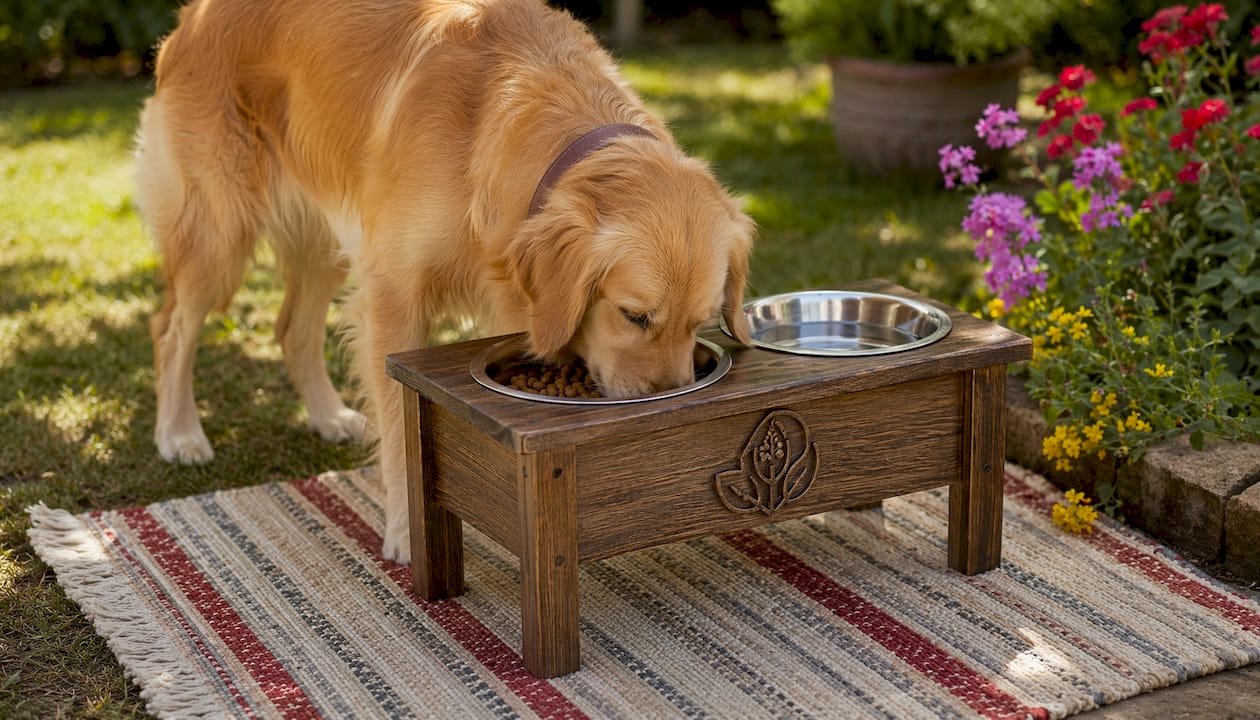
Elevated feeders reduce neck and joint strain, which is especially important for senior pets and those with arthritis, hip dysplasia, or mobility issues. The improvement is not cosmetic. Eating posture directly affects swallowing mechanics, joint stress levels, and how relaxed a pet feels during meals.
Digestion also improves with proper elevation. Elevated feeding positions food at a natural height, using gravity to move food down the esophagus more efficiently. This reduces acid reflux, regurgitation, and the amount of air a pet swallows while eating. For pets diagnosed with megaesophagus, elevated feeding is considered medically necessary, not optional.
Key benefits of ergonomic feeding include:
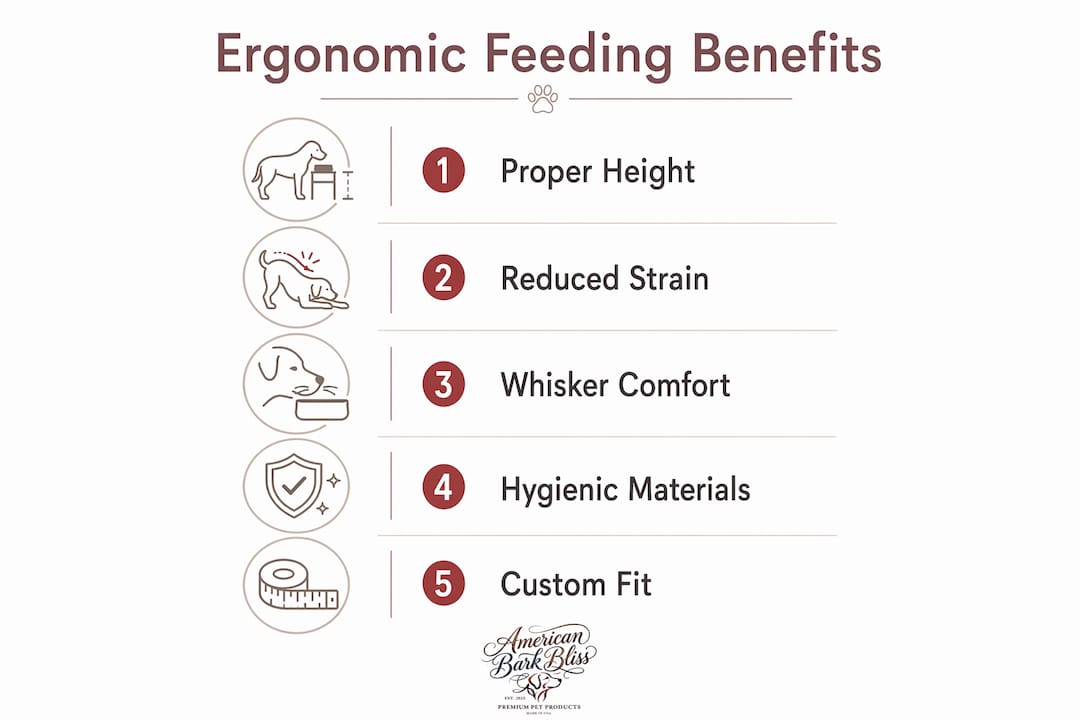
- Reduced joint and neck strain during and after meals
- Improved swallowing and lower risk of regurgitation
- Less air gulping, which reduces bloating and gas
- Lower mealtime anxiety from a stable, consistent setup
- Better hygiene through elevated, easy-to-clean bowl designs
Pro Tip: If your dog finishes meals and then stretches its neck or shakes its head repeatedly, that is a sign the bowl is too low. Raise it by 2–3 inches and observe the change over one week.
Material choice matters too. Stainless steel and ceramic bowls promote hygiene and durability, and they resist the bacterial buildup that plastic bowls develop over time. A non-slip base prevents the bowl from sliding during meals, which reduces mess and keeps your pet from chasing the bowl across the floor.
What factors determine the right feeding height and bowl shape?
Feeding height and bowl shape are the two most important variables in pet feeding ergonomics. Getting either one wrong undermines the health benefits, even if the feeder looks well-designed.
Height guidelines by species and size
The bowl rim should sit at roughly mid-chest level for dogs, and about 2–3 inches off the floor for cats. These measurements keep the neck in a neutral position during eating, which is the same principle applied in human ergonomic workstation design. For cats, even a modest lift makes a measurable difference in neck angle.
| Pet Type | Recommended Bowl Height | Key Reason |
|---|---|---|
| Small dogs | 2–6 inches off the floor | Prevents neck overextension |
| Medium dogs | 7–12 inches off the floor | Aligns spine at mid-chest level |
| Large/giant dogs | 12–18 inches off the floor | Reduces shoulder and joint strain |
| Cats | 2–3 inches off the floor | Supports natural neck angle |
Adjustable stands are the best choice for growing puppies or multi-pet households. They let you change the height as your pet grows without replacing the entire feeder.
Bowl shape and whisker fatigue in cats
Bowl shape is critical, especially for cats. Cats experience whisker fatigue when deep, narrow bowls force their whiskers to press against the sides repeatedly during a meal. This causes sensory overload and stress, and many cats respond by eating less or pawing food out of the bowl. Veterinarians now recommend wide, shallow bowls to prevent this issue entirely.
For dogs, wide bowls with a slight taper work well for most breeds. Brachycephalic dogs, such as Bulldogs and Pugs, benefit from shallow, tilted bowls that account for their flat facial structure. A bowl that is too deep forces these breeds to push their face into the food, which increases breathing difficulty during meals.
Pro Tip: For a multi-dog household with size differences, use an adjustable stand set to the height of your largest dog, and place a small platform under the bowl for your smaller dog. This avoids buying two separate feeders.
You can find detailed guidance on choosing a dog feeding station that matches your pet’s size and breed needs.
How to set up an ergonomic feeding station at home
A well-designed feeding station takes less than 30 minutes to set up and pays off at every single meal. Follow these steps to get it right the first time.
-
Choose a quiet, low-traffic location. Pets eat better when they feel safe. A corner of the kitchen away from foot traffic reduces resource guarding and anxiety. Avoid placing the station near the back door or in a hallway where people constantly pass.
-
Set the correct bowl height. Use the mid-chest guideline for dogs and the 2–3 inch guideline for cats. If you are unsure, start lower and raise the feeder incrementally over a few days while watching your pet’s posture.
-
Use a non-slip mat or weighted base. A stable, non-slip base prevents sliding, reduces mess, and keeps your pet from developing the habit of chasing the bowl. Rubber-backed mats work well under standalone bowls.
-
Select the right bowl material. Stainless steel is the top choice for durability and hygiene. Ceramic works well for cats who prefer a heavier, stable bowl. Avoid plastic, which scratches easily and harbors bacteria in those scratches.
-
Add a slow feeder if your pet gulps food. Slow feeders extend meal duration, which reduces air swallowing and the digestive discomfort that follows. The Garden Design eTray shallow slow feeder from Americanbarkbliss combines ergonomic shallowness with enrichment ridges that naturally pace eating.
-
Keep fresh water nearby. Place a water bowl at the same height as the food bowl. Separate water from food by at least 12 inches to prevent food contamination of the water supply.
-
Clean bowls daily. Stainless steel and ceramic bowls go in the dishwasher. Wash the mat weekly. A clean station reduces bacterial exposure and keeps your pet returning to the same spot with confidence.
A complete pet feeding accessories guide covers additional setup details for both dogs and cats.
Common misconceptions about ergonomic pet feeding
Ergonomic feeders are not a universal solution. The most common mistake pet owners make is assuming that elevated bowls benefit every dog equally. That assumption can cause real harm in specific cases.
The most important precaution involves bloat risk in large and giant breeds. Large or giant breed dogs may face increased bloat risk when fed from elevated bowls, according to veterinary guidance. Bloat, or gastric dilatation-volvulus, is a life-threatening condition. If you own a Great Dane, Saint Bernard, or similar breed, consult your veterinarian before switching to an elevated feeder.
Other common misconceptions to address:
- “Higher is always better.” Incorrect. A bowl set too high forces a pet to crane its neck upward, which creates a different form of strain. The mid-chest guideline exists for a reason.
- “Any bowl works as long as it is elevated.” Bowl shape matters as much as height. A deep, narrow bowl at the right height still causes whisker fatigue in cats.
- “Ergonomic feeders are only for sick or old pets.” Healthy young pets benefit from correct posture too. Starting early prevents the cumulative joint wear that shows up in middle age.
- “One feeder fits all pets in the household.” Different species and sizes need different heights and bowl shapes. A setup that works for your Labrador will not work for your cat.
Veterinary guidance stresses choosing feeder height and design based on individual pet health, not aesthetics or trends. If your pet has a diagnosed condition such as arthritis, megaesophagus, or hip dysplasia, get a specific recommendation before purchasing. You can also review the raised bowl vs. floor bowl comparison to understand when elevation helps and when it does not.
Key Takeaways
Ergonomic pet feeding works best when height, bowl shape, and station placement are matched to each individual pet’s size, breed, and health status.
| Point | Details |
|---|---|
| Height is species-specific | Dogs need mid-chest level; cats need 2–3 inches off the floor for neutral neck alignment. |
| Bowl shape prevents whisker fatigue | Wide, shallow bowls reduce sensory stress in cats and improve comfort for flat-faced dog breeds. |
| Slow feeders support digestion | Combining ergonomic height with slow feeder ridges reduces air gulping and digestive discomfort. |
| Large breeds need vet guidance | Giant breeds may face bloat risk with elevated feeders; always consult a vet before switching. |
| Stability and hygiene matter | Non-slip bases and stainless steel or ceramic bowls reduce mess and bacterial buildup at every meal. |
What I have learned from watching pets eat
Most pet owners focus on what goes into the bowl. Very few think about how the bowl is positioned. After watching hundreds of dogs and cats eat over the years, the posture difference between a floor-level bowl and a properly elevated one is striking. A dog eating from the floor hunches its entire front end. A dog eating at mid-chest height stands relaxed, chews more slowly, and finishes without the neck-shaking that signals discomfort.
The insight that surprised me most involves cats. Whisker fatigue sounds like a minor issue, but I have seen cats completely stop eating from a bowl they previously loved, simply because the bowl was too deep. Switching to a wide, shallow dish resolved the problem within two days. No medication, no vet visit. Just the right bowl shape.
My honest advice: do not wait for a health problem to prompt this upgrade. Senior pets with arthritis get the most obvious relief from ergonomic feeders, but the joint wear that causes arthritis builds up over years of poor eating posture. Starting a younger pet on a properly sized, elevated setup is one of the lowest-cost, highest-impact things you can do for their long-term health.
The one mistake I see most often is buying a feeder based on looks. A beautiful wooden stand at the wrong height does nothing for your pet. Measure first, buy second. And if you have a large breed dog, talk to your vet before you raise that bowl.
— Christopher
Americanbarkbliss ergonomic feeding bowls for your pet
Americanbarkbliss carries a focused line of USA-made feeding bowls designed around the ergonomic principles covered here. Each product prioritizes pet comfort, not just aesthetics.
The Baja Design eTray shallow slow feeder is built wide and shallow, which addresses whisker fatigue and encourages slower eating in one design. For dogs that need deeper enrichment, the Honeycomb eBowl deep slow feeder adds textured ridges that extend meal time and reduce gulping. Both are made in the USA and built to last through daily dishwasher cleaning. If you want to support your pet’s joint health alongside better feeding posture, the dog joint supplements guide pairs well with any ergonomic feeding upgrade.
FAQ
What is ergonomic pet feeding in simple terms?
Ergonomic pet feeding means using bowls or feeders positioned at the right height and shape to support your pet’s natural posture during meals. The goal is to reduce neck strain, improve digestion, and lower mealtime stress.
What height should a dog’s food bowl be?
The bowl rim should sit at roughly mid-chest level for dogs. This keeps the neck in a neutral position and reduces strain on the spine and front joints during eating.
Do cats need elevated feeders too?
Yes. Cats benefit from bowls raised 2–3 inches off the floor, combined with wide, shallow dishes that prevent whisker fatigue. Even a small lift improves neck angle and reduces digestive strain.
Are elevated feeders safe for all dog breeds?
Not for all breeds. Large and giant breed dogs may face an increased bloat risk with elevated feeders. Veterinary consultation is recommended before switching any large breed dog to an elevated setup.
What bowl material is best for ergonomic feeding?
Stainless steel is the top choice for most dogs because it resists bacteria, lasts for years, and cleans easily. Ceramic works well for cats who prefer a heavier, stable bowl that does not slide.
Leave a comment