

What Is an Ergonomic Dog Brush? A Dog Owner's Guide
An ergonomic dog brush is a grooming tool designed to fit the human hand and move with a dog’s body, reducing wrist strain and cutting brushing time. The design difference comes down to three things: a shaped, non-slip handle that keeps your wrist in a neutral position, a head that flexes to follow body contours, and a weight balance that lets the brush do the work instead of your forearm.
Three reasons dog owners notice the difference quickly:
- Less hand and wrist fatigue — especially across long coats or multi-dog households, where a standard straight handle forces repeated awkward wrist angles
- More even pressure per stroke — a well-balanced brush glides rather than digs, which means less tugging and less risk of skin irritation
- Shorter sessions for anxious dogs — fewer passes to achieve the same result keeps sensitive or fidgety dogs calmer
The specific features to look for: a contoured or angled handle, grip material with texture (TPE or silicone rather than smooth plastic), a flexible brush head, and protective rubber tips on metal bristles.
Key Takeaways
An ergonomic dog brush reduces owner fatigue, applies more even pressure per stroke, and shortens sessions for anxious dogs by combining a wrist-neutral handle angle, non-slip grip material, and a flexible head.
| Point | Details |
|---|---|
| Definition | An ergonomic dog brush fits the hand and flexes with the dog’s body to reduce strain and brushing time. |
| Top features to prioritize | Angled handle, TPE or silicone grip, flexible cushioned pad, and protective rubber tips on metal pins. |
| Safety note | Always check for rubber-tipped bristles before using on sensitive areas like the belly or behind the ears. |
| Top maintenance step | Rinse the brush head weekly with warm water and air-dry bristle-side down to preserve pad integrity. |
| Americanbarkbliss pick | The Country Living Dual-Sided Natural Wood Dog Brush meets the ergonomic checklist with balanced wood construction and dual grooming surfaces. |
Table of Contents
- What is an ergonomic dog brush, and which types benefit most?
- Which ergonomic features actually change how a brush performs?
- How ergonomic design improves grooming for you and your dog
- How to choose and maintain an ergonomic dog brush
- Groomer tips that change how you use any ergonomic brush
- Why ergonomic brushes matter more than most owners realize
- The Country Living Dual-Sided brush from Americanbarkbliss
- Sources
- FAQ
What is an ergonomic dog brush, and which types benefit most?
Not every brush type gains equally from ergonomic design. Understanding the six main families helps you decide where the investment matters.
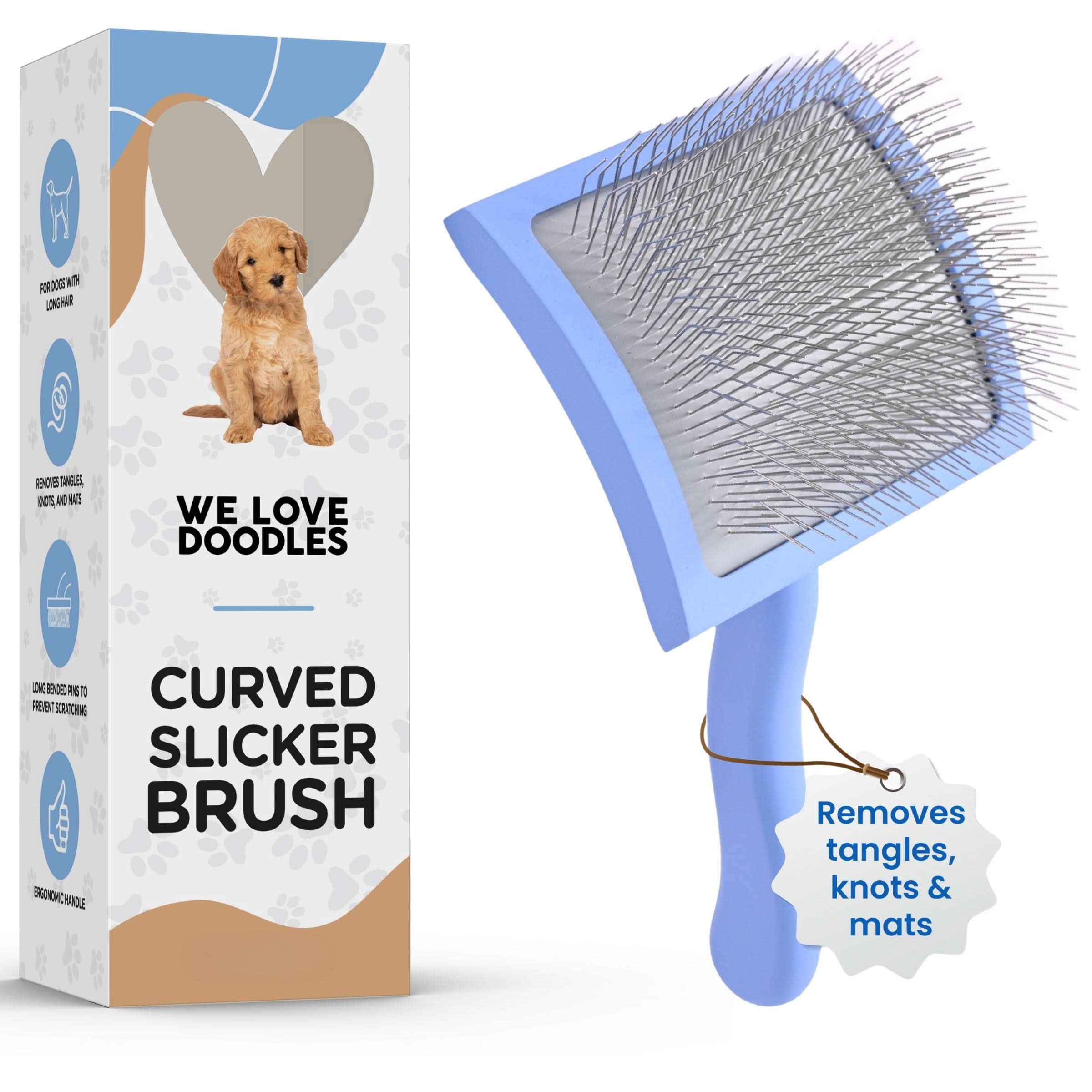
Slicker brushes have fine, angled wire pins set in a flat or curved pad. They work on most coat types and are the most common all-purpose brush. Curved slicker brushes add a bent head that follows the dog’s body, which is where ergonomics starts to matter: a curved slicker brush with a flexible pad reaches the ribcage and hindquarters without forcing your wrist into an awkward angle.
Bristle brushes use natural or synthetic bristles and suit short, smooth coats. They’re lightweight and low-resistance, so ergonomics is less critical here than with heavier tools.
Pin brushes have rounded metal or plastic pins on a cushioned pad. According to Chris Christensen’s professional brush guide, ergonomic handle shapes and pad flexibility in pin brushes increase hair pickup per pass and reduce total brushing time by conforming to the dog’s body rather than skimming over it.
Undercoat rakes and deshedding tools are the heaviest brush category. A metal rake dragged through a double coat puts real torque on the wrist, so ergonomic handle design matters most here. Balance point and handle angle are the two features to prioritize.
Rubber/curry brushes are used wet or dry on short coats and during baths. A bath brush like THE BATH BRUSH benefits from a non-slip grip since wet hands lose control of smooth surfaces fast.
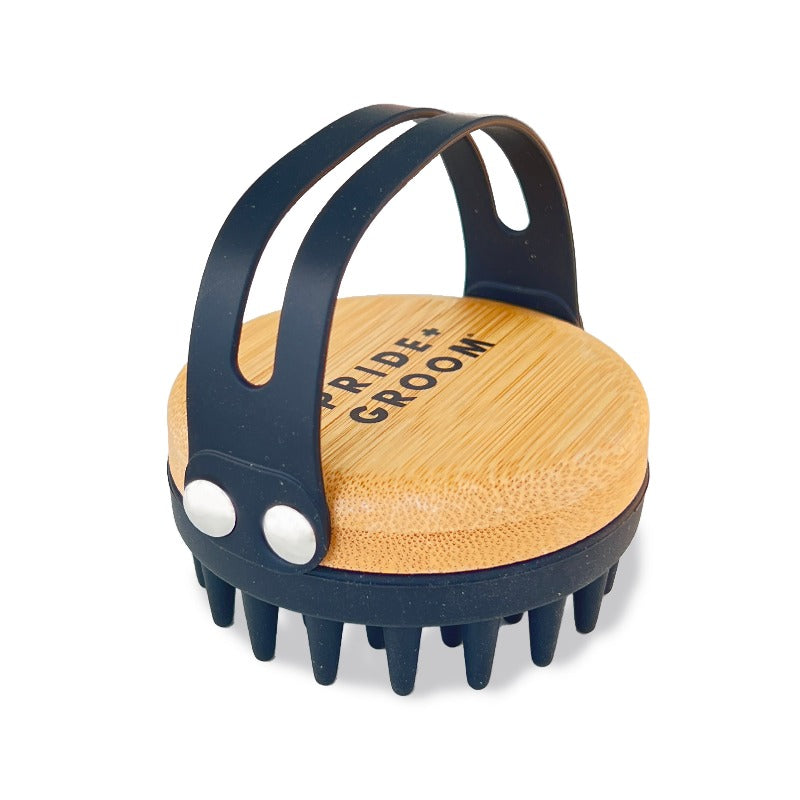
Deshedding tools combine a fine-toothed edge with a handle built for sustained pressure. Weight distribution is the critical ergonomic variable.
| Coat type | Recommended brush family | Key ergonomic consideration |
|---|---|---|
| Short, smooth | Bristle or rubber/curry | Non-slip grip for wet use |
| Medium, wavy | Slicker or pin brush | Flexible head, balanced weight |
| Long, thick | Slicker + pin brush combo | Angled handle, cushioned pad |
| Double coat | Undercoat rake + slicker | Handle balance, wrist-neutral angle |
| Curly or dense | Slicker with curved head | Head flexibility, protective tips |
Which ergonomic features actually change how a brush performs?
Handle profile and grip material
The grip is where ergonomics starts. TPE (thermoplastic elastomer) and silicone outperform smooth plastic because micro-texture keeps the brush from rotating in a sweaty or wet hand. The AKC recommends ergonomic grips specifically to reduce hand and wrist fatigue during long sessions, noting the difference is most noticeable with long-coated breeds or when grooming more than one dog.
Handle angle and wrist neutrality
A straight handle forces the wrist into ulnar deviation on the downstroke. An angled handle corrects this. An offset handle commonly angled to keep the wrist in a neutral position helps keep the wrist neutral and measurably reduces fatigue during heavy grooming tasks. You feel this most on the 10th or 15th minute of a session, not the first.
Balance point and weight distribution
The optimal balance point sits near the handle-head junction so the brush’s own weight assists the stroke. When the head is too heavy relative to the handle, your wrist compensates with torque on every pass. A well-balanced brush feels like it wants to move in the right direction.
Flexible vs. rigid heads
A rigid head loses contact whenever the coat curves away from a flat plane. A flexible pad maintains contact across the ribcage, shoulder blade, and hindquarters, which means more hair removed per stroke and fewer repeated passes. The Spruce Pets testing found that ergonomic handles paired with curved or angled heads move through tangles faster and with less repeated stroking.
Protective rubber tips
Metal pins without rubber tips can scratch skin, especially on sensitive areas like the belly or behind the ears. Product testing confirms that protective rubber tips on bristles reduce the chance of skin scratching and make brushes easier to maneuver through coats without digging in.
Pro Tip: Before buying, hold the brush at the angle you’d actually use it and mimic a brushing stroke for 30 seconds. If your wrist bends noticeably or the handle rotates, the grip or angle isn’t right for your hand.
How ergonomic design improves grooming for you and your dog
Even pressure is the outcome that matters most. When a brush fits the hand properly, you apply consistent force across each stroke rather than pressing harder to compensate for a slipping grip or awkward angle. That consistency means more hair lifted per pass, fewer total strokes to clear a section, and less friction against the skin.
Dogs that resist brushing often aren’t being difficult. A tool that tugs, digs, or requires heavy pressure creates a negative association fast. Switching to a brush with a flexible head and protective tips reduces that sensation, and many owners find their dog’s resistance drops across sessions once the discomfort is removed.
Cleaning ease and durability are secondary benefits worth noting. Brushes with well-designed pads tend to release collected fur more cleanly, and quality grip materials hold up to repeated washing without degrading. A brush that’s easy to clean gets cleaned more often, which keeps bristles safe and effective.
How to choose and maintain an ergonomic dog brush
Buying checklist
- Match the brush family to your dog’s coat type using the table above.
- Test the handle shape and angle in your hand before buying. Hold it at a brushing angle, not straight up.
- Check the balance point. The brush should feel front-heavy only slightly; if the head pulls the wrist down, it’s too heavy.
- Look for a flexible head or cushioned pad if your dog has a curved body shape or a dense undercoat.
- Confirm non-slip grip material. Squeeze and twist slightly. TPE or silicone should resist rotation.
- Check for protective rubber tips on any metal pin or wire bristle brush, especially if your dog has sensitive skin.
For a broader selection checklist, the pet grooming supplies guide at Americanbarkbliss covers sizing and tool pairing in more detail.
Cleaning and maintenance
Remove collected fur after every session by pulling it from the pad with a comb or your fingers. Once a week, rinse the brush head with warm water and a drop of dish soap, then let it air-dry bristle-side down so water doesn’t pool in the pad and loosen the glue. Store it away from direct heat, which degrades rubber tips and grip coatings over time.
Red flags to avoid
- Sharp, uncapped metal pins with no rubber tips
- Smooth plastic handles with no texture
- Heads that feel rigid and don’t flex when pressed lightly
- Heavy heads on short handles (forces wrist torque on every stroke)
- Brushes that feel unbalanced when held at a grooming angle
Groomer tips that change how you use any ergonomic brush
Start each stroke with the coat’s natural grain, not against it. Going with the grain on the first pass loosens surface tangles without pulling, so the second pass (if needed) moves through a cleaner layer.
Use the brush’s weight to guide the stroke rather than pressing down with your wrist. This is the single technique shift that most owners miss: an ergonomic brush is balanced so gravity and forward motion do the work. Pressing harder doesn’t remove more hair; it just increases skin friction.
Near sensitive areas like the belly, inner thighs, and behind the ears, shorten your stroke length to two or three inches. A flexible head matters most here because it maintains contact on curved or loose skin without the edge catching.
Pro Tip: For undercoats on double-coated breeds, work in small sections and use a follow-through stroke that lifts at the end rather than stopping mid-coat. The lift releases the collected undercoat from the pad and prevents matting buildup on the brush.
Pad flexibility also reduces how many times you need to reposition the dog. A rigid brush loses contact on curves, so you compensate by shifting the dog’s position. A flexible head stays in contact, which keeps the session shorter and the dog calmer.
Why ergonomic brushes matter more than most owners realize
Most grooming advice focuses on brush type and coat match, which is correct as far as it goes. What gets skipped is the human side of the equation. A brush that strains your hand changes how you groom: sessions get shorter, pressure gets inconsistent, and you start avoiding the areas that require awkward angles. The dog ends up with a partially groomed coat not because you lack time but because the tool made certain spots uncomfortable to reach.
The ergonomic features covered here aren’t luxury additions. Handle angle, balance, and pad flexibility are the variables that determine whether a 20-minute session stays comfortable from start to finish. Owners who switch from a standard straight-handled brush to an angled, balanced one often describe the difference as immediate, and their dogs’ tolerance for grooming tends to improve alongside it.
When buying, test the handle feel before anything else. A brush that looks right in a product photo but sits awkwardly in your hand will underperform regardless of bristle quality. Small ergonomic details compound across every session.
The Country Living Dual-Sided brush from Americanbarkbliss
The Country Living Dual-Sided Natural Wood Dog Brush from Americanbarkbliss maps directly to the ergonomic checklist above. The natural wood handle provides a balanced weight distribution that keeps the brush’s center of gravity near the handle-head junction, reducing the wrist torque that heavier plastic-headed brushes create. Two working surfaces mean you handle detangling and finishing in a single tool without swapping mid-session.
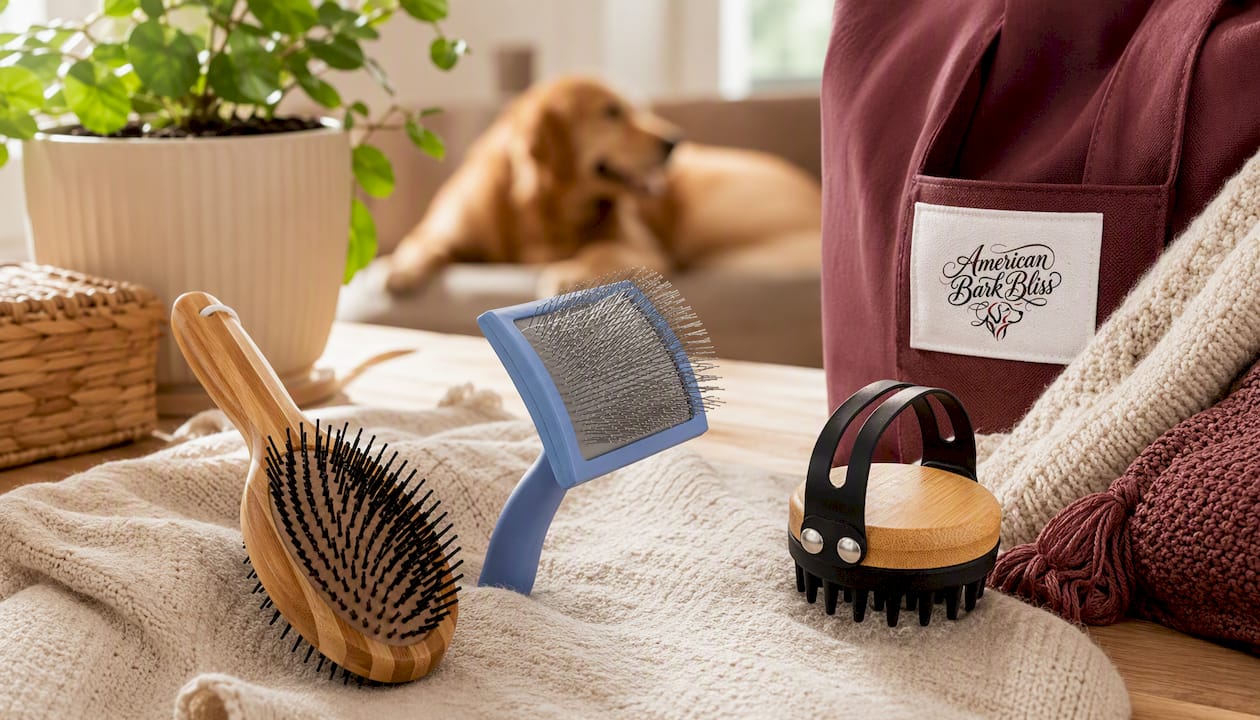
The dual-sided design cuts session time for dogs that need both coat types addressed, and the wood construction holds up to repeated cleaning without grip degradation. For dog owners who want a brush that meets the ergonomic criteria explained in this article and is built in the USA, this is the place to start. Check the product page for current availability and full specifications.
Sources
- Dog Brushes: How to Choose the Right Dog Brush for Your Pet
- Best dog brushes
- Best dog brushes
- Brush Guide: Pin Brushes — Chris Christensen
- Is your wrist hurting after grooming?
FAQ
What is the least painful dog brush?
A slicker brush or pin brush with protective rubber tips and a flexible cushioned pad causes the least discomfort. Product testing confirms that rubber-tipped bristles reduce skin scratching, especially on sensitive areas.
What makes a dog brush ergonomic?
An ergonomic dog brush has an angled or contoured handle, a non-slip grip material like TPE or silicone, and a flexible head that follows the dog’s body contours, all of which reduce wrist strain and improve pressure consistency.
Is an ergonomic dog brush worth it for home grooming?
Yes, particularly for long-coated breeds or multi-dog households. The AKC notes that ergonomic grips noticeably reduce hand and wrist fatigue during extended sessions, which keeps grooming consistent and sessions shorter.
How do groomers dry dogs so fast?
Professional groomers use high-velocity forced-air dryers that blast water from the coat rather than evaporating it with heat. The airflow also straightens the coat, which speeds up the brushing step that follows.
How much do you tip a $70 dog groomer?
Tipping varies depending on the groom and session difficulty, with more given for challenging coats or especially patient dogs.
Leave a comment