

What Is a Chew Proof Dog Toy? Your 2026 Guide
If you’ve ever watched your dog reduce a “durable” toy to scraps in under ten minutes, you already know the frustration. The term chew proof dog toy gets thrown around constantly by manufacturers, but few products actually live up to the label. Understanding what that term really means, which materials hold up, and how to match a toy to your dog’s actual chewing strength can save you money, protect your dog’s teeth, and end the cycle of toy disappointment for good.
Table of Contents
- Key takeaways
- What a chew proof dog toy actually is
- Choosing the right type based on chewing behavior
- Safety considerations every owner should know
- How to select and maintain chew proof toys
- Popular chew proof toys worth knowing
- My honest take on chew proof toys
- Find the right chew toy at Americanbarkbliss
- FAQ
Key takeaways
| Point | Details |
|---|---|
| “Chew proof” means high resistance | No toy is truly indestructible, but quality options withstand heavy, sustained chewing far longer than standard toys. |
| Material matters most | Flexible natural rubber and reinforced nylon composites are the safest, most durable choices for aggressive chewers. |
| Safety indicators exist | Multi-layer toys with color-change inner cores tell you exactly when a toy needs to be retired before it becomes a hazard. |
| Size and chewing style guide selection | Matching a toy to your dog’s jaw strength and chewing behavior is more important than brand name or price alone. |
| Non-toxic materials are non-negotiable | Always confirm toys are BPA-free, phthalate-free, and made from non-toxic compounds before giving them to your dog. |
What a chew proof dog toy actually is
The phrase gets overused, but here is the straight definition. A chew proof dog toy is one engineered specifically to resist destruction under sustained, forceful chewing. The goal is not to create something physically impossible to damage. It is to create something that outlasts normal chewing sessions without breaking into swallowable pieces or exposing sharp edges.
Most standard toys are designed for play, not survival. A chew proof toy is designed with both in mind. The materials used are the biggest differentiator.
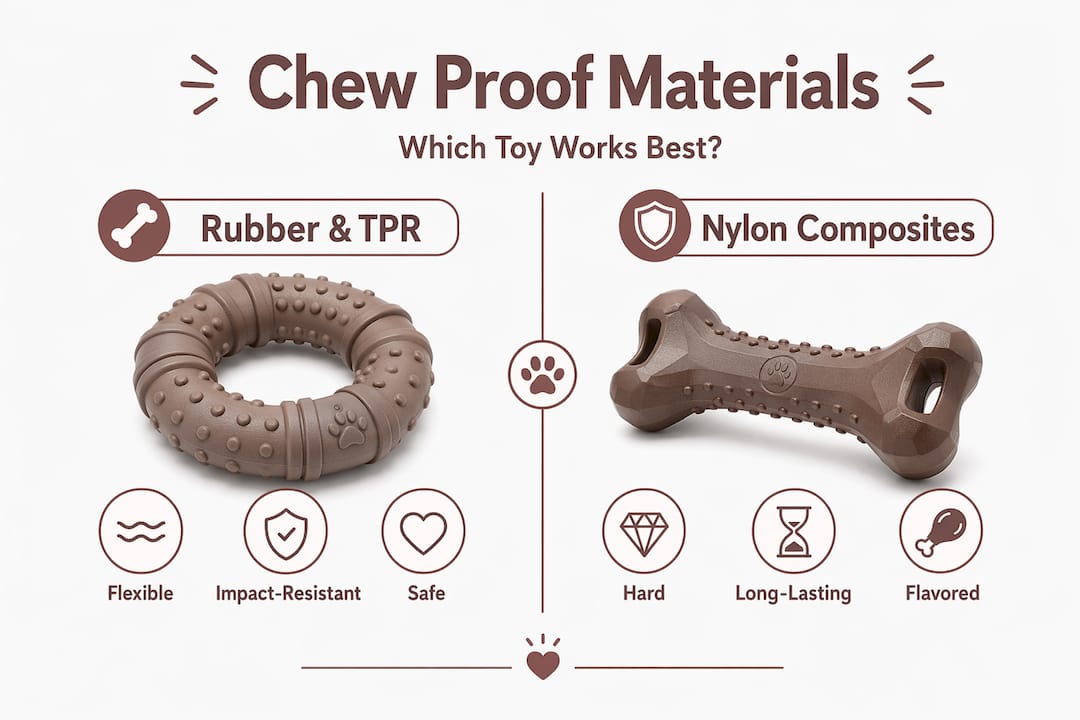
Rubber is the most common material in quality durable dog toys for chewers. Natural rubber flexes rather than fractures. When a dog bites down hard on natural rubber, the toy deforms and springs back instead of cracking. This flexibility also puts less stress on your dog’s teeth. A flexible rubber bone works with the chewing motion rather than against it.
Nylon composites are the second major material category. These are denser and harder than rubber, which gives them remarkable durability against persistent chewing. The trade-off is that very hard nylon can stress weaker teeth, which we cover more in the safety section.
TPR (thermoplastic rubber) is a newer hybrid material that combines the flexibility of rubber with the toughness of synthetic compounds. It sits in a sweet spot between softness and durability, which makes it popular for toys designed to work across different chewing intensities.
No matter the material, the best options also include non-toxic, BPA-free compounds across every layer, since prolonged chewing means your dog is constantly mouthing the surface.
Pro Tip: Press your thumbnail firmly into the toy before buying. If you can’t leave a noticeable indentation, it is too hard for most dogs’ teeth. If it collapses too easily, it won’t last.
Choosing the right type based on chewing behavior
Not all chewing is the same. A Labrador Retriever that gnaws methodically for an hour needs a completely different toy than a German Shepherd that attacks a toy in bursts of intense biting. Matching toy type to chewing style is how you get the most life out of your purchase and protect your dog’s dental health.
| Chewing style | Recommended toy type | Key feature to prioritize |
|---|---|---|
| Aggressive/power chewer | Dense rubber or reinforced nylon | Solid core, no stuffing or squeaker to access |
| Moderate chewer | TPR or standard rubber | Texture for gum stimulation, some flexibility |
| Gentle/light chewer | Rubber or softer nylon | Interactive features, treat dispensing |
| Boredom chewer | Treat-dispensing toys | Mental engagement, extended use time |
Tough rubber toys like the KONG Extreme range are recommended worldwide by vets for aggressive chewers specifically because of their puncture-resistant rubber and their versatility. You can bounce them, stuff them with treats, or simply let your dog work on them solo.
Nylon chew bones work well for dogs that prefer to gnaw rather than thrash. A flavored nylon chew bone keeps heavy chewers engaged because the flavor draws them back repeatedly. The downside is that nylon sheds small fibers over time, so regular inspection matters.
Interactive treat-dispensing toys are worth your attention if your dog chews out of boredom rather than instinct. These toys keep dogs engaged for 20 to 40 minutes per session and reduce destructive chewing by giving the dog a task. That mental engagement is something a plain rubber ball simply cannot provide.
Pro Tip: If your dog destroys toys within 15 minutes repeatedly, step up one material level. Go from standard rubber to reinforced rubber, or from soft nylon to dense nylon. Don’t just buy the same type again.
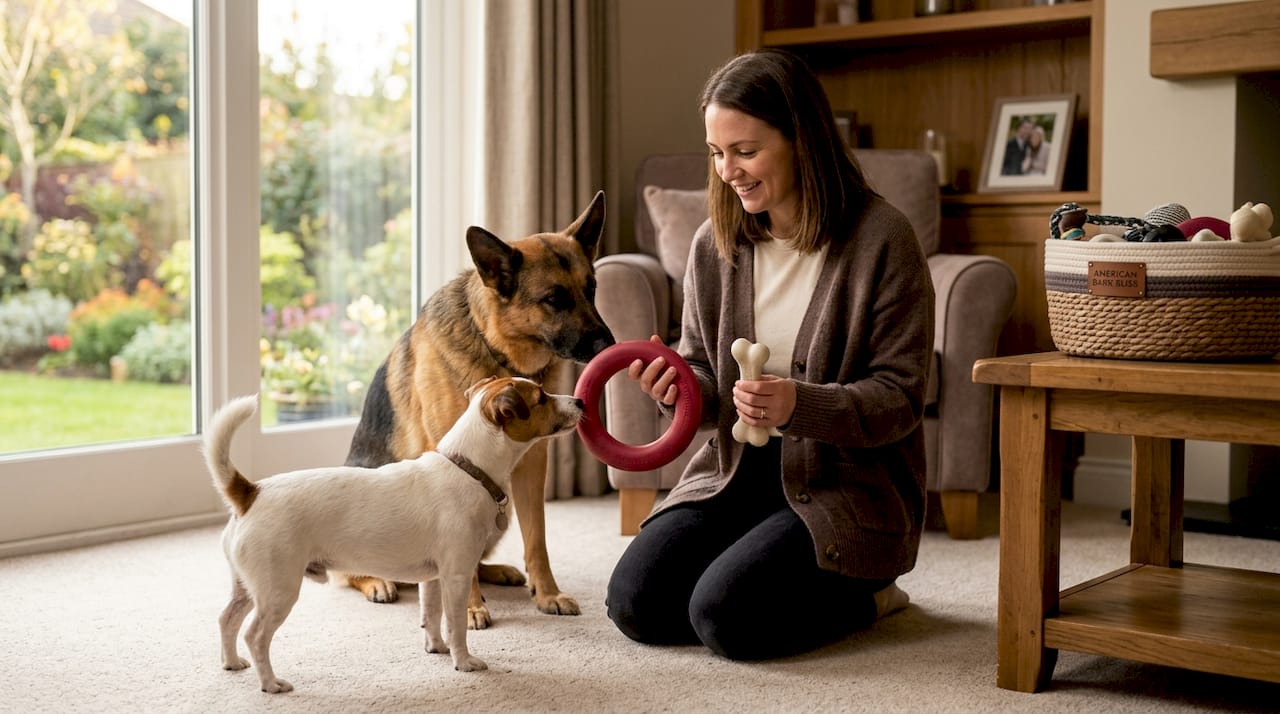
Consider your dog’s size alongside jaw strength. A small but tenacious Jack Russell Terrier may need a denser toy than a large but gentle Golden Retriever. Toy longevity and safety improve when size and chewing strength both factor into your selection.
Safety considerations every owner should know
Durability without safety is useless. A toy that survives forever but damages your dog’s teeth or leaches chemicals is worse than no toy at all. This is where the “harder is better” myth causes real harm.
Vet experts specifically warn that extremely hard nylon toys can fracture teeth in dogs with weaker enamel or senior dogs. The rule of thumb from veterinary professionals is simple: if you’d hesitate to knock the toy against your knee, it is too hard for your dog’s teeth.
Tennis balls are another common danger people don’t expect. The nylon fiber coating on a tennis ball acts like sandpaper against tooth enamel. Tennis balls cause irreversible dental damage through repeated abrasive contact, and the damage compounds over time. Dr. Chris Brown has urged dog owners to avoid them entirely in favor of rubber-based alternatives.
“The best chew proof toys balance durability and safety rather than focusing on being indestructible, which is a misleading claim.” — Ridgewood Animal Hospital
Key safety features to look for:
- Color-changing inner layers. Some premium toys have a multi-layer safety indicator design where chewing through the outer layer exposes a brightly colored core. That visual change is your clear signal to retire the toy immediately.
- Non-toxic materials throughout. Verify that every layer is BPA-free and phthalate-free, not just the outer surface. Dogs chew through toys, so the interior matters as much as the shell.
- No sharp fragments. Avoid toys that chip or splinter rather than abrading gradually. Chips become choking hazards fast.
- Appropriate sizing. A toy that fits entirely in a dog’s mouth is a swallowing risk. Choose toys that extend beyond the jaws during chewing.
How to select and maintain chew proof toys
Knowing the theory is one thing. Here is how to actually put it into practice when you are standing in a store or scrolling through products.
-
Assess your dog’s chewing behavior honestly. Watch how your dog engages with current toys. Does the dog bite and hold, bite and shake, or gnaw persistently? Each pattern requires a different toy shape and density.
-
Match the size precisely. The toy should be too large to fit fully in the mouth but small enough for your dog to grip and manipulate comfortably. When in doubt, go larger.
-
Prioritize texture for dental health. Ridged or nubbed surfaces help clean teeth during chewing. A textured chew toy does double duty as both entertainment and passive dental care.
-
Establish a cleaning schedule. Rubber and nylon toys collect bacteria in their grooves. Wash toys every week with hot water and mild dish soap. Avoid bleach or harsh chemicals since residue stays in the material.
-
Inspect every session. Before each use, check for chunks missing, exposed sharp edges, visible inner layers, or pieces that could detach. Thirty seconds of inspection can prevent an emergency vet visit.
-
Replace at the right time. Do not wait until a toy is obviously dangerous. If the color-change indicator shows, if pieces are coming off, or if the toy has shrunk to a size that fits fully in the mouth, replace it that day.
Pro Tip: Keep two or three toys in rotation and alternate them. Dogs that always have the same toy lose interest and chew harder out of frustration. Rotating options maintains novelty and actually extends the life of each toy.
Popular chew proof toys worth knowing
When you understand what makes a toy genuinely durable and safe, certain products stand out as solid examples of those principles in action.
Goughnuts are built around their chew safety indicator system. Their toys feature a red inner layer beneath a green outer layer, making it obvious when the toy is due for retirement. The company backs this with a replacement guarantee, which says a lot about their confidence in durability.
KONG Extreme is one of the most recommended options for chew proof toys for aggressive chewers across veterinary practices globally. The black rubber compound is denser than standard KONG rubber, designed specifically for the strongest chewers. Fill it with peanut butter or kibble and the engagement stretches well beyond what an empty toy would provide.
Benebone uses real food ingredients infused into the nylon, which maintains flavor throughout the toy’s lifespan rather than just on the surface. Their wishbone and maplestick shapes are sized precisely for different breeds.
TPR interactive toys represent the current evolution in this category. A TPR interactive chew toy with treat fill adds a mental engagement layer that flat chew toys lack, which matters for dogs that chew primarily from boredom or anxiety.
On pricing: premium durable dog toys typically cost between $30 and $50 and often include lifetime replacement guarantees. That cost looks very different when you compare it to replacing a $10 toy every two weeks.
My honest take on chew proof toys
I’ve seen enough destroyed living room furniture, shredded plush toys, and panicked late-night vet calls to have strong opinions on this topic. Here is what I actually believe after years of watching dog owners navigate this.
The biggest mistake I see is treating “chew proof” as a single category. People buy a hard nylon toy for an older dog or a small dog with sensitive teeth because it says “indestructible” on the packaging, and then wonder why their dog won’t touch it or, worse, shows up at the vet with a cracked molar. The label is marketing. The material properties are what matter.
What I’ve found works consistently is starting with flexible, vet-approved rubber and adding nylon elements only when rubber clearly isn’t holding up. Most dogs, even aggressive chewers, do better on rubber than on hard nylon. The teeth stay healthier and the dogs actually use the toys more.
I’ve also learned that the “are chew proof dog toys effective” question depends entirely on matching the toy to the dog, not the dog to the toy. A toy that works perfectly for your neighbor’s Pit Bull might be useless for your Beagle. There is no universal answer, and any article or brand that tells you otherwise is oversimplifying.
The color-indicator toys genuinely impressed me when I first encountered them. The idea that the toy itself tells you when to retire it removes the guesswork entirely. That feature alone is worth paying extra for.
— Christopher
Find the right chew toy at Americanbarkbliss
At Americanbarkbliss, every chew toy in the lineup is selected with both durability and safety in mind. Whether your dog is a power chewer that dismantles everything in minutes or a moderate chewer that just needs something built to last, you will find options that match. The TPR interactive chew toy with treat fill is a strong starting point for dogs that chew from boredom, combining mental stimulation with serious durability. For heavy jaw dogs, the chicken-flavored nylon chew bone delivers lasting flavor and density that holds up to sustained chewing. Browse the full selection at Americanbarkbliss and find a toy your dog actually keeps.
FAQ
What does chew proof mean for dog toys?
Chew proof means a toy is designed with materials and construction that resist destruction under heavy, sustained chewing. No toy is completely indestructible, but chew proof toys are built to outlast aggressive chewing sessions without breaking into dangerous pieces.
Are chew proof dog toys safe for all breeds?
Most are, but hard nylon toys can cause tooth fractures in dogs with weaker enamel or older dogs. Flexible rubber is generally the safest option across breeds, and toys should always be sized appropriately for your dog’s jaw.
How do I know when to replace a chew proof toy?
Replace a toy immediately if the color-change indicator layer becomes visible, if chunks are missing, if any piece could fit entirely in your dog’s mouth, or if sharp edges appear. Weekly inspection is the best way to catch wear early.
Why are tennis balls bad for dogs?
Tennis balls have an abrasive nylon fiber coating that wears down tooth enamel with every bite, causing irreversible dental damage over time. Rubber-based toys are a much safer alternative for dogs that like to chew and carry balls.
What is the best material for aggressive chewers?
High-quality, dense natural rubber or reinforced TPR composites are the top choices for aggressive chewers. These materials flex instead of fracturing, protect dental health, and outlast softer alternatives by a significant margin.
Leave a comment