

Types of Dog Collars: A Complete 2026 Buyer's Guide
TL;DR:
- Dog collars mainly serve identification and leash attachment purposes, but selecting the right type improves safety and training. Flat collars are ideal for everyday ID tags, while martingale, training, harness, and safety collars suit specific needs and breeds. Using specialized collars appropriately prevents injury, ensures security, and enhances overall dog management.
Dog collars are defined as the primary gear for attaching ID tags, connecting leashes, and managing your dog’s behavior during walks and training. The types of dog collars available today range from simple flat nylon bands to specialized martingale, training, and designer harness styles. Choosing the wrong one can cause injury, failed escapes, or missed training opportunities. Dr. Allona Jackson, DVM, confirms that collars serve ID purposes first, with walking and behavior control often better handled by harnesses or head halters. This guide breaks down every major collar category so you can match the right option to your dog’s breed, size, and daily routine.
1. What are the types of dog collars every owner should know?
Flat collars are the most common dog collar style on the market. They come in nylon, polyester, or leather, with either a buckle or quick-release clasp. Most dog owners use flat collars for everyday wear because they hold ID tags securely and cost between $10 and $35, depending on material and brand.

Rolled leather collars are a variation worth knowing. They are cylindrical rather than flat, which reduces friction against the coat. Long-haired breeds like Golden Retrievers and Afghan Hounds benefit most because flat collars mat and break fur over time.
Flat and rolled collars work well for calm dogs that do not pull. They are not the right choice for escape artists or heavy pullers. For those dogs, a martingale or harness is a safer option.
Pro Tip: Use the two-finger fit test every time you adjust your dog’s collar. Slide two fingers under the collar. If they fit snugly without forcing, the fit is correct. Too loose risks escape; too tight risks tracheal damage.
Key features to look for in a flat collar:
- Material: Nylon is affordable and machine washable; leather is durable and softens over time
- Closure: Quick-release buckles are faster to remove; traditional buckles hold more securely
- Width: Wider collars distribute pressure better for larger breeds
- Adjustability: Adjustable dog collars with multiple sizing holes accommodate growing puppies
2. How do martingale collars work and who benefits most?
Martingale collars were originally designed for sighthounds because of their unique neck anatomy. Greyhounds, Whippets, and Salukis have necks wider than their heads, which means standard flat collars slip off easily. The martingale solves this with a limited-slip design.
The collar has two loops. The larger loop goes around the dog’s neck. When the dog pulls or backs up, the smaller loop tightens the larger one just enough to prevent escape without choking. This is the key difference from a slip or choke collar, which has no tightening limit.
Martingale collars also work well for any dog that tends to back out of collars during walks. They are available in nylon and leather, with prices typically ranging from $15 to $30. Use them during supervised walks only, not for unsupervised wear.
Pro Tip: Remove the martingale collar when your dog is home alone or in a crate. The tightening loop can catch on objects and create a choking hazard.
| Feature | Martingale collar | Slip/choke collar |
|---|---|---|
| Tightening limit | Yes, controlled | No limit |
| Escape prevention | Yes | Yes |
| Choking risk | Low | High |
| Best use | Walks, sighthounds | Professional training only |
| Price range | $15–$30 | $5–$20 |
3. What types of training collars exist and what are their pros and cons?
Training collars are a separate category from everyday wear collars. They are designed to correct or redirect behavior, and each type carries specific risks that owners need to understand before buying.
Shock collars (also called e-collars) deliver a mild electric stimulation to interrupt unwanted behavior. They are used most often for stubborn large breeds and off-leash training. Prices run from $30 to $70. They require careful calibration and should never be used at high settings without professional guidance.
Bark collars detect vibration or sound from barking and respond with a static pulse, vibration, or citronella spray. They work best for nuisance barking in smaller dogs when owners are away. They are not a substitute for behavioral training.
Slip and choke chains tighten when the dog pulls and release when pressure stops. Choke chains and prong collars are controversial and should only be used under professional guidance. Many certified trainers now avoid them entirely.
Prong or pinch collars use metal links with blunt prongs that press into the neck when the dog pulls. They are effective for large, powerful dogs in the hands of an experienced trainer. Used incorrectly, they cause injury and fear.
Head collars or halters fit around the muzzle and behind the ears, similar to a horse halter. When the dog pulls, the head turns toward you, which naturally redirects attention. Veterinary professionals recommend head halters as a safer alternative to correction-based collars for walking and training.
“Collars are primarily for ID. Walking and behavior control are often better managed with harnesses or head halters to prevent neck injury.” — Dr. Allona Jackson, DVM, via AvailPet
Pro Tip: Before buying any training collar, consult a certified professional dog trainer. The wrong collar used incorrectly can create fear and aggression rather than fix behavior.
Many trainers advocate moving away from punishment-based collars toward positive reinforcement. This shift reflects both animal welfare research and practical results in real-world training.
4. When should you choose a harness, reflective, or breakaway collar?
Some dogs need more than a standard flat collar. Breed anatomy, lifestyle, and safety concerns all point toward specialized options that flat collars simply cannot cover.
Harnesses are the primary recommendation for brachycephalic breeds like Pugs, French Bulldogs, and Boston Terriers. These breeds should avoid neck-pressure collars entirely because their compressed airways make tracheal pressure dangerous. Small dogs under 15 pounds also benefit from harnesses because their tracheas are more fragile. The Americanbarkbliss Flamingo Fiesta Harness is one example of a designer harness that combines safety with style for smaller breeds.
Reflective collars improve visibility during early morning or evening walks. Reflective collars improve night-time visibility, and some models incorporate LED lights for active illumination in low-visibility conditions. Prices for reflective options start around $10 to $20, making them one of the most affordable safety upgrades available.
Personalized collars carry the dog’s name and owner’s phone number directly on the collar. This is a backup identification layer beyond ID tags, which can fall off. Personalized collars typically cost $15 to $25 and are especially useful for dogs that roam or have a history of escaping.
Breakaway collars are designed to release under pressure. They are the right choice for dogs that wear collars unsupervised or in multi-dog households where collars can get caught during play. The release mechanism prevents strangulation without requiring human intervention.
| Collar type | Best for | Price range | Key safety benefit |
|---|---|---|---|
| Harness | Brachycephalic breeds, small dogs | $15–$50 | No neck pressure |
| Reflective | Active walkers, nighttime use | $10–$20 | Visibility |
| Personalized | Escape-prone dogs | $15–$25 | ID backup |
| Breakaway | Unsupervised or multi-dog homes | $12–$25 | Auto-release |
5. Examples of stylish dog collars and the premium pet apparel trend
Style and function are no longer competing priorities in the dog collar market. The premium pet apparel market has grown by over $500 million in the last decade, driven by owners who treat their dogs as family members and want gear that reflects that.
Designer collars now use materials like ultrasuede, hand-braided leather, and recycled fabrics without sacrificing structural safety. The Susan Lanci Madison Platinum Dress Harness is one example of a product that blends couture aesthetics with a functional harness structure. Modern pet owners increasingly seek stylish, high-quality dog collars that do not compromise functionality or safety.
Americanbarkbliss carries several examples of stylish dog collars that reflect this trend. The Coiled Charm hand-braided collar in lilac, cream, and silver diamonds is handcrafted for durability and visual appeal. The Desert Dream Collar offers a bold, patterned design for owners who want their dog’s gear to stand out. For eco-conscious buyers, the Eden recycled dog collar delivers style through sustainable materials.
Pro Tip: When buying a designer collar, check that the hardware is solid metal rather than plastic-coated zinc. Cheap hardware corrodes and weakens the collar’s structural integrity over time, regardless of how good the fabric looks.
The best stylish dog collars do three things at once. They look good, hold up under daily wear, and fit correctly. A collar that fails on any one of those points is not worth the price, no matter how attractive it looks on a product page.
Key takeaways
The right dog collar depends on your dog’s breed, size, behavior, and daily routine. A single collar type rarely covers every need.
| Point | Details |
|---|---|
| Flat collars are for ID, not control | Use flat or rolled collars for everyday tag-wearing, not for managing pullers or escape artists. |
| Martingales prevent escape safely | Sighthounds and escape-prone dogs need the limited-slip design that martingales provide. |
| Training collars require professional guidance | Prong and choke collars carry real injury risk and should only be used under expert supervision. |
| Breed anatomy drives collar choice | Brachycephalic and small breeds need harnesses to avoid tracheal damage from neck pressure. |
| Style and safety can coexist | Premium designer collars from brands like Americanbarkbliss deliver both aesthetics and structural integrity. |
Why I think most dog owners are using the wrong collar
The most common mistake I see is owners using one collar for everything. A flat nylon collar goes on in the morning and stays on through walks, training sessions, and overnight. That single collar is doing a job it was never designed to do.
The layered approach is the correct one. A lightweight flat or rolled collar handles daily ID wear. A harness or martingale takes over for walks. A head halter or training-specific collar, used under professional guidance, handles behavior work. Each tool has a defined role.
Breed matters more than most owners realize. I have seen Greyhound owners use standard flat collars for years without incident, until the day their dog backed out during a walk near traffic. Sighthounds need martingales. Pugs and French Bulldogs need harnesses. These are not preferences. They are safety requirements based on anatomy.
The style argument is also real, and I do not dismiss it. A dog wearing a hand-braided designer collar from Americanbarkbliss is not a vanity project. It is an owner who cares enough to invest in gear that lasts and fits well. The premium market exists because quality materials and craftsmanship produce collars that hold up, look great, and keep dogs safer than cheap alternatives.
My one firm rule: never put a prong or choke collar on a dog without working directly with a certified trainer first. The risk of creating fear and reactivity is too high. Positive reinforcement methods produce better long-term results without the injury risk.
— Christopher
Explore premium dog collars and accessories at Americanbarkbliss
Americanbarkbliss carries a curated selection of durable, stylish dog collars and harnesses made with American craftsmanship. Whether you need a quick-release nylon collar for everyday wear or a hand-braided designer piece for special occasions, the catalog covers every style and function.
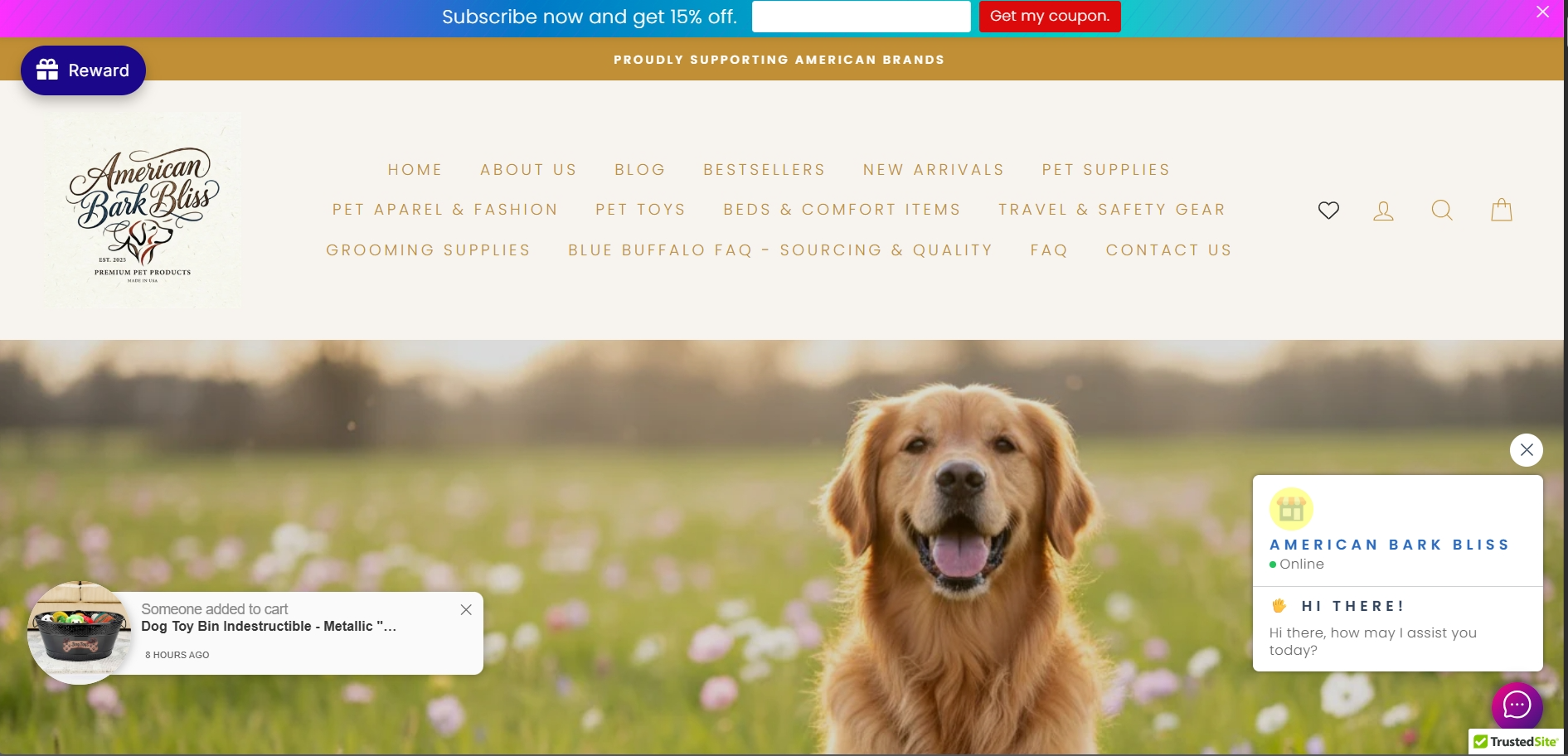
Beyond collars, Americanbarkbliss stocks everything your dog needs to thrive. Reward good behavior with USA-made chicken jerky treats that are made without fillers or artificial ingredients. Pair new gear with a 3-piece grooming kit to keep your dog looking as good as their collar. Every product ships from within the USA, so you know exactly what you are getting and where it comes from.
FAQ
What is the safest collar type for everyday wear?
A flat or rolled collar is the safest option for everyday wear when used only for ID tags. For walking and training, veterinarians recommend switching to a harness or head halter to prevent neck injury.
How do I know if a collar fits correctly?
Use the two-finger test. Slide two fingers under the collar against your dog’s neck. The fit is correct if they slide in snugly without forcing. A collar that is too loose risks escape; one that is too tight risks tracheal damage.
Are martingale collars safe for all dogs?
Martingale collars are safe for supervised walks but should be removed when the dog is unsupervised. They are especially recommended for sighthounds like Greyhounds and Whippets, whose neck anatomy makes standard flat collars a poor fit.
Should small dogs wear collars or harnesses?
Small dogs and brachycephalic breeds like Pugs and French Bulldogs should use harnesses as their primary walking gear. Their tracheas are more fragile, and neck-pressure collars increase the risk of tracheal collapse and breathing problems.
What makes designer dog collars worth the price?
Premium designer collars use higher-grade hardware, stronger stitching, and more durable materials than budget options. They hold up longer under daily wear, which means better value over time and a lower risk of hardware failure during walks.
Leave a comment