

8–12 Inch Placement: Traffic Handle Leash Uses, City Drills & Gear
A traffic handle is the short second grip sewn into a leash near the clip, and its job is simple: it lets you pull your dog tight against your leg in half a second, not three or four. That matters at curbs, in doorways, and anywhere a dog could lunge before you react. The rest of this guide covers how to hold it, when to use it, what to buy, and how to keep the hardware from failing when you need it most.
TL;DR:
- Traffic handles are sewn into leashes about 8 to 12 inches above the clip, providing close control to prevent dogs from lunging into traffic or crowds.
- They are most useful during street crossings, crowded areas, indoor entrances, and when passing fast-moving objects or animals to keep a dog close and controlled.
- Proper grip technique involves looping the handle over the thumb and practicing control and recall drills in low-distraction settings before high-traffic environments.
- Leash materials like Biothane and leather offer durability and water resistance, while hardware quality and reflective stitching enhance safety and longevity.
- Regularly inspecting and cleaning the leash avoids hardware failure, and never wrapping the leash around your wrist reduces the risk of injury during sudden pulls.
Table of Contents
- What a Traffic Handle Actually Is and Why It Works
- When and Where a Traffic Handle Leash Actually Helps
- How to Hold and Train With a Traffic Handle Correctly
- Choosing the Right Material, Width, and Grip
- Inspecting, Cleaning, and Retiring a Traffic Handle Leash
- Why This Tool Earns a Permanent Spot on Your Leash
- Leashes Built for This Kind of Control
- Sources
- FAQ
What a Traffic Handle Actually Is and Why It Works
A traffic handle is a reinforced loop stitched into the leash body, usually somewhere between the primary handle and the clip. Most manufacturers sew it 8 to 12 inches above the clip, which puts your hand roughly 12 to 18 inches from your dog’s collar once you grip it, according to Hound & Field. That distance isn’t arbitrary. It’s short enough to remove most of the slack a dog needs to build speed before hitting the end of the leash.
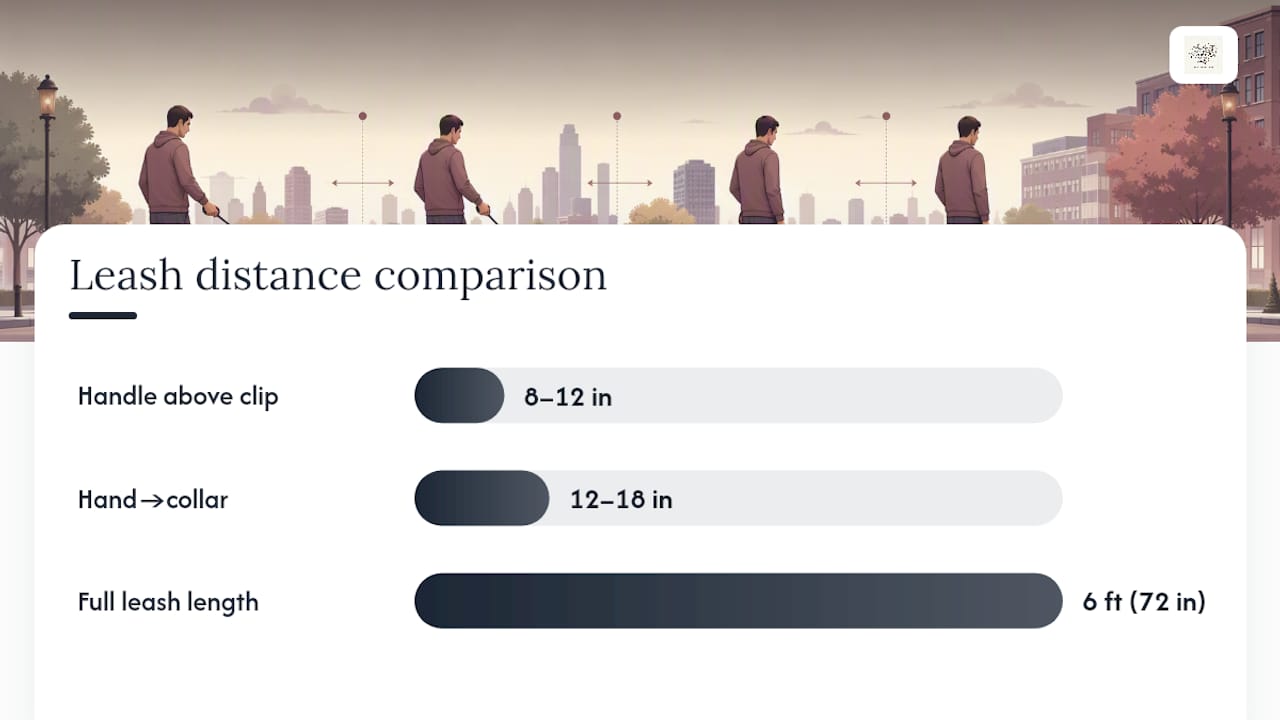
The mechanics are worth understanding because they explain why this tool works even on a dog with zero training. A lunging dog needs room to accelerate. Give it six feet of leash and it can hit the end of that leash with real force. Give it 12 inches and there’s nowhere to build momentum, so the pull you feel is mild instead of jarring. PetTrainingToolkit notes this shortened distance also reduces your own reaction time, since you’re not waiting for a signal to travel down several feet of slack leash before you can respond.
A traffic handle isn’t the same thing as these other setups:
- Double-handle leashes have two full handles, often at opposite ends, meant for two people walking one dog.
- Couplers split one leash into two lines for walking multiple dogs side by side.
- Short standalone leads (sometimes called grab leads) have no long section at all. They’re built entirely for close control and skip the option to give your dog more room.
A traffic handle gives you both in one leash: full length when you want it, instant close control when you need it.
When and Where a Traffic Handle Leash Actually Helps
You’ll reach for the traffic handle far more often than you’d expect once you start walking a dog in any environment with foot traffic, vehicles, or tight spaces — an important point highlighted in boating with dogs safety tips for maintaining secure grips during active outings. Here’s where it earns its place on the leash.
- Street crossings and curbs. This is the single most important use. Grabbing the traffic handle before you step off a curb keeps your dog pinned to your leg instead of drifting toward the street, and it means a sudden car, cyclist, or squirrel doesn’t turn into a dash toward traffic.
- Crowded sidewalks, markets, and festivals. Dense foot traffic means less room for error. A dog held at your side takes up a fraction of the space a dog on a loose six-foot leash does, which matters when you’re weaving through a farmers market or a street fair.
- Apartment lobbies, elevators, and building entrances. Tight indoor spaces with strangers, other pets, and sliding doors are exactly where a dog needs to be close, not exploring the end of its leash.
- Passing other dogs, cyclists, scooters, and strollers. Any fast-moving object triggers prey drive or fear reactions in a lot of dogs. Shortening up before the pass gives you control before the reaction starts, not after.
- Vet visits and doorways. Waiting rooms and narrow doorways put your dog in close quarters with unfamiliar animals and people, and a traffic handle keeps that interaction on your terms.
There’s one scenario where the traffic handle isn’t the fix: a dog with severe fear-based reactivity or aggression needs a broader behavioral plan, not just a shorter grip. And if the hardware or stitching on the leash is worn, close control means nothing if the clip fails under pressure.
How to Hold and Train With a Traffic Handle Correctly
Grip matters more than most owners realize. Slide the top loop over your thumb rather than wrapping it around your wrist. Wrapping any part of a leash around your wrist is one of the more common ways owners get injured when a dog bolts, since the leash can’t release your hand the way it can when it’s just looped over the thumb, a risk Hound & Field flags directly.
Stand with a balanced stance, weight even on both feet, and turn your body slightly rather than leaning forward toward your dog. Leaning forward telegraphs tension down the leash and often makes a dog pull harder, not less.
Training the traffic handle position is straightforward if you keep sessions short. The American Kennel Club recommends starting with brief repetitions and gradually building up distractions rather than throwing a dog into a crowded sidewalk on day one.
- Start with 20 to 60 second repetitions of the close-heel position in a quiet space, rewarding your dog the moment its shoulder lines up with your leg.
- Practice a side-sit cue so your dog automatically sits close to your leg when you stop walking, useful at every curb and crosswalk.
- Add short recalls back into the close position, rewarding generously so the position itself becomes something your dog wants, not something it tolerates.
- Once the behavior is solid in a quiet space, add mild distractions: a person walking past at a distance, a car door closing, another dog on the far side of a parking lot.
- Only after that goes well should you practice in a real high-traffic location, like an actual curb or a building lobby during a slow hour.
Pro Tip: Practice the traffic-handle grip at home before you ever need it on a walk. Fumbling for the right loop while your dog is already lunging at a passing cyclist defeats the purpose of having it.
If your dog is still lunging repeatedly despite consistent, progressive training, that’s a signal to bring in a certified trainer rather than trying to solve it with gear alone. A leash feature can support control but cannot replace behavioral work on its own.
Choosing the Right Material, Width, and Grip
Material changes how a leash feels, how it holds up, and how much upkeep it demands. Nylon is light, affordable, and widely available, but it can fray at the edges over time and holds odor if it gets wet often. Leather ages well and gives a firmer grip the more it’s broken in, though it needs occasional conditioning to stay supple. Biothane, a coated webbing, is waterproof and odor-resistant, so it rinses clean after muddy walks or rain and resists fraying better than plain nylon.
Width and hardware need to match your dog’s size and pull strength, not just its weight on a chart. A determined 40-pound dog can put more force on a leash than a mellow 70-pound one, so choosing dog leashes by strength and pulling habits, not just breed size, keeps you from undersizing the hardware.
- Handle comfort: Padded or neoprene-wrapped grips reduce hand fatigue on long urban walks and cut down on rope burn if your dog pulls hard.
- Hardware quality: Look for swivel snaps, solid metal construction, and reinforced stitching where the handle meets the leash body. Weak stitching is often the first point of failure, not the clip itself.
- Visibility: Reflective stitching along the leash body makes both you and your dog easier to spot during early morning or evening walks near traffic.
- Comparing materials directly helps if you’re torn between two options, and a breakdown like nylon vs leather covers grip, weather resistance, and long-term wear side by side.
Inspecting, Cleaning, and Retiring a Traffic Handle Leash
A leash is only as reliable as its weakest stitch, so a quick check before regular use catches problems before they become emergencies. Run your fingers along the full length looking for fraying, check the clasp for stiffness or rust, and inspect the stitching at both handles for loose threads, a routine PetTrainingToolkit recommends doing weekly if you walk in high-traffic areas often.
- Rinse Biothane leashes with water after muddy or wet walks; they dry fast and don’t hold smell.
- Condition leather periodically to prevent cracking, especially if it gets rained on.
- Wash nylon leashes according to the manufacturer’s care instructions, since some hardware doesn’t hold up well to a washing machine.
- Retire any leash with bent or broken hardware, an exposed inner core, or fraying that’s gone past the surface layer.
- Never wrap the leash around your wrist for extra grip. A harness spreads the force of a hard pull across your dog’s chest instead of concentrating it on one point of your body.
Why This Tool Earns a Permanent Spot on Your Leash
The traffic handle gets treated like an accessory feature, something nice to have if the leash happens to include it. That undersells what it actually does. The real value isn’t convenience. It’s that a traffic handle gives you mechanical control before any training kicks in, since a dog with 12 inches of slack simply cannot generate the momentum it could with six feet.
Some leashes are built around that principle: padded grips that don’t tear up your hand on a 40 minute walk, reinforced stitching at the stress points, and hardware rated for real pulling force, not just casual strolls. The gap between a $12 leash and one with genuine load-rated hardware only shows up the one time your dog lunges hard at a delivery truck, and that’s not the moment to find out which leash you bought.
Try the grip position at home before your first real crowded walk. Get comfortable with the thumb loop, practice the side-sit, and know exactly where your hand needs to land before a passing cyclist forces the question.
— Christopher
Leashes Built for This Kind of Control
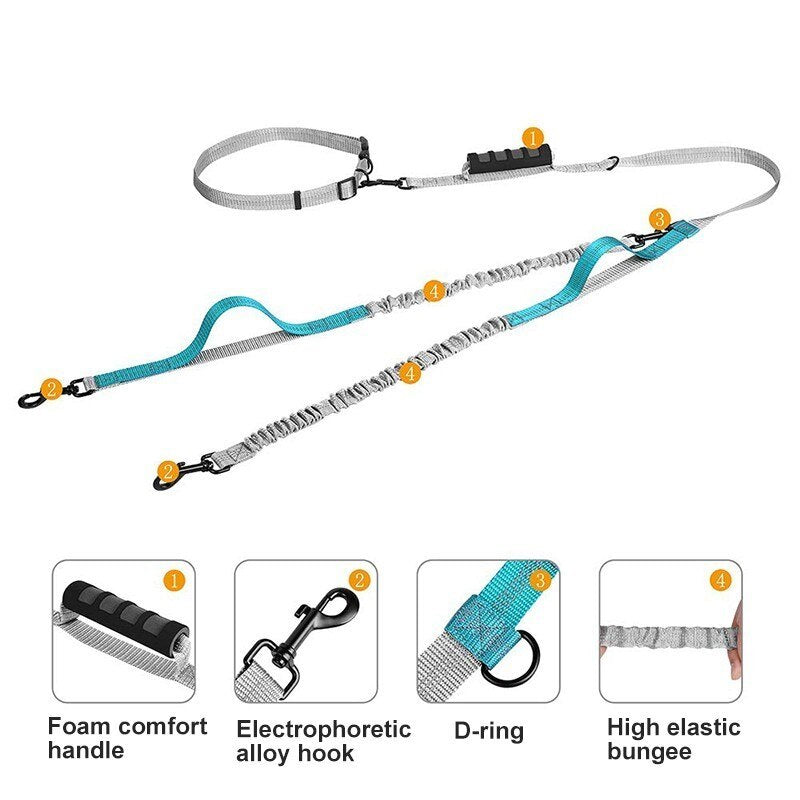
Everything above points to one conclusion: the leash itself needs to support close control, not just tolerate it. Americanbarkbliss’s Multifunctional Handsfree Bungee Dog Leash works for owners who want a traffic-handle-style close grip built into a leash that also converts to hands-free for jogging or carrying groceries.

For a more traditional walking setup, the Kismet Dog Leash pairs a comfortable primary handle with a control point positioned for exactly the curb-and-crosswalk use this guide covers. If your dog’s urban walks double as running or hiking sessions, the Hands-Free Running/Hiking Bungee Leash adds shock absorption on top of a close-control grip, useful for active owners who need both speed and stopping power.
A few buying cues from everything covered above: match leash width to your dog’s actual pull strength, not just its weight class. Pick Biothane construction if you’re walking through rain, mud, or slush regularly. Go padded on the handle if your urban walks run long. All three leashes are American-made, built with the domestic craftsmanship Americanbarkbliss puts into every collar, leash, and harness it carries. Browse leash options and pick the one that matches your dog’s size and your daily walking route.
Sources
The American Kennel Club’s urban dog skills guide covers broader city-walking training beyond just leash mechanics. PetTrainingToolkit’s breakdown goes deeper into the distance math behind close control. Hound & Field’s leash roundup compares construction details across several traffic-handle designs. For dogs with real reactivity issues, a certified trainer’s in-person assessment beats any gear recommendation.
- AKC: Urban dog skills
- Traffic handle leashes for close control — PetTrainingToolkit
- The best dog leashes with traffic handles — Hound & Field
FAQ
What is the best dog leash with a traffic handle?
The best option depends on your dog’s size and your walking routine, but look for reinforced stitching at the handle, a load-rated clip, and a grip placed 8 to 12 inches above the clasp. The Kismet Dog Leash fits standard urban walking needs, while the Multifunctional Handsfree Bungee Dog Leash adds hands-free versatility for owners who also run errands on foot.
What is a good traffic leash for small dogs?
Small dogs need a narrower width and lighter hardware than large breeds, but the traffic handle still needs to sit close enough to the clip to give you the same 12 to 18 inch control range noted by PetTrainingToolkit. A padded grip helps too, since small dogs often require quicker, more frequent hand adjustments in crowds.
Do vets recommend slip leads?
Slip leads have specific uses, mainly quick, temporary control in clinical settings, but they aren’t a substitute for a properly fitted collar or harness paired with a leash that has a traffic handle for daily walks. A harness distributes pulling force more safely across a dog’s body than a slip lead does.
What is a traffic loop on a dog leash?
A traffic loop is another name for the traffic handle, the secondary grip sewn near the clip end of the leash. It’s typically placed 8 to 12 inches above the clasp, which Hound & Field notes removes most of the slack that lets a dog build speed before hitting the leash’s end.
Leave a comment