

Vet Backed 7 Second Pavement Rule for Summer Dog Walks
Walk your dog during the coolest parts of the day, such as early morning or after sunset, and press your palm flat on the sidewalk for about seven seconds first. If it’s too hot for your hand, it’s too hot for paws, so skip the walk and switch to indoor play or a sprinkler pad instead. Above roughly 80 to 85°F, keep outings brief and gentle, or consider skipping them entirely.
TL;DR:
- A pavement tested with the palm test for seven seconds can help determine if surfaces are too hot, especially during peak sunlight hours.
- Temperatures above 70°F increase the risk of heat-related illness in dogs, with significant danger occurring between 80 and 85°F depending on humidity and individual breed traits.
- Hot asphalt can stay dangerous long after sunset, often much hotter than the air, requiring careful surface assessment before walks.
- The safest walking times are early morning before 8:00 a.m. and after sunset, with route shade and lower surface temperature being crucial factors.
- Cooling gear aids comfort but does not replace good judgment, with water, shade, pacing, and surface choice remaining essential for summer dog walk safety.
Table of Contents
- What Temperature Is Too Hot for Summer Heat Dog Walks?
- How Hot Does Pavement Get in Summer?
- When Is the Best Time for Dog Walks in Summer?
- What Should You Bring to Keep a Dog Hydrated and Cool?
- What Are the Signs of Heatstroke in Dogs?
- What Are Good Alternatives to Walking a Dog in Extreme Heat?
- How American Bark Bliss Gear Fits Into a Safe Summer Routine
- What I’ve Learned About Building Safer Summer Habits
- Cooling Gear Worth Packing This Summer
- Where This Guidance Comes From
- Sources
- FAQ
What Temperature Is Too Hot for Summer Heat Dog Walks?
Once the thermometer climbs past 70°F, a dog’s risk of heat-related illness starts rising, and that risk becomes serious territory between 80 and 85°F, according to PetMD. At that point, most veterinarians recommend either a short, low-intensity walk or none at all.
Air temperature alone doesn’t tell the whole story. Humidity changes how effectively a dog can cool down, since panting relies on evaporation, and thick, humid air slows that process dramatically. A humid 80°F afternoon can actually stress a dog’s body harder than a dry 85°F day, which is why the heat index matters more than the number on your weather app.
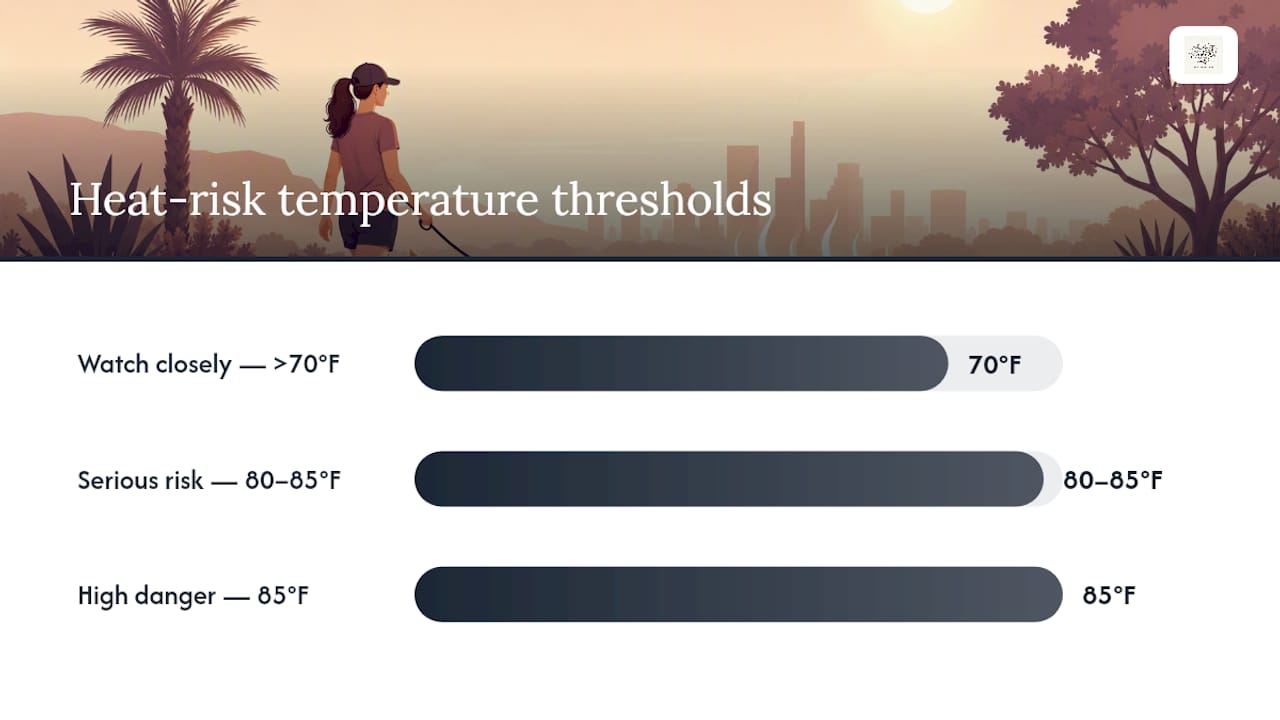
Think of these numbers as prompts to check further, not hard lines carved in stone. There’s no single safe temperature that applies to every dog, since humidity, surface, exercise intensity, and the individual dog’s build all factor in. A short-nosed breed like a bulldog overheats faster than a lean retriever, even at identical temperatures.
Use this as your quick mental checklist before heading out:
- Above 70°F: watch closely, shorten the walk if your dog seems sluggish
- 80 to 85°F: stick to brief, slow outings or stay home
- High humidity at any temperature: treat it as hotter than the thermometer says
- Senior dogs, puppies, flat-faced breeds, and overweight dogs need extra caution at lower thresholds
How Hot Does Pavement Get in Summer?
Air temperature and ground temperature are two different problems. Asphalt absorbs sunlight all day and can sit far hotter than the air above it, staying dangerous for hours after the sun goes down.
The fix is simple and takes seven seconds. Press your palm flat against the exact stretch of pavement your dog will walk on, not a shaded patch nearby, and hold it there for about seven seconds.
- Kneel down and place your open palm flat on the sunniest section of the route.
- Count to seven without lifting your hand.
- If it burns, stings, or feels uncomfortably hot before seven seconds, the surface is too hot for paw pads.
- Test again if you’re walking a longer route, since asphalt, dirt, and grass all heat differently.
Blacktop, dark rubber play surfaces, and metal grates run hottest and stay hot longest, sometimes well into the evening. Grass and dirt trails stay noticeably cooler and are worth the detour.
Pro Tip: If your dog needs booties for a hot-pavement season, start training with them indoors for short stretches days before you actually need them outside, so the first real-world use isn’t also their first time wearing them.
Paw balm can add a thin protective layer for short exposure, but it’s not a substitute for avoiding hot surfaces altogether. Booties protect against burns, though they don’t do anything to lower a dog’s core body temperature.
When Is the Best Time for Dog Walks in Summer?
Timing does more heavy lifting than almost any piece of cooling gear you can buy. Walking early morning, ideally before 8:00 a.m., or waiting until after sunset avoids the window when both air and pavement temperatures peak, roughly 10:00 a.m. to 4:00 p.m.
Route choice matters just as much as the clock. A shaded park loop or a grass median beats a sun-baked sidewalk every time, and skipping high-intensity activities like fetch or sprinting in favor of a relaxed pace keeps your dog’s internal temperature from spiking.
A few habits make hot-season walks easier to manage:
- Pick a short loop close to home so you can turn back quickly if your dog starts struggling
- Set a mental exit point before you leave, not partway through the walk
- Recheck the pavement halfway through longer routes, since surfaces heat up fast as the sun climbs
- Favor tree-lined streets and parks over open, sun-exposed blocks
Evening walks deserve one caution: parking lots and streets can stay hot well after sunset, so don’t assume dusk automatically means safe pavement.
What Should You Bring to Keep a Dog Hydrated and Cool?
Water is the single most important thing in your bag. Offer small, frequent sips rather than waiting until your dog seems desperate, using a collapsible bowl or a spill-proof bottle made for walks.
Cooling accessories can help extend a safe walking window, but they work best as support, not a substitute for good judgment. A cooling harness or cooling bandana, soaked in cool water before you head out, lowers surface temperature against the skin and can buy extra comfort during a short outing.
Here’s what actually belongs in a summer walk kit:
- A collapsible water bowl and a full bottle, even for a 15 minute walk
- A cooling bandana or vest, pre-soaked and ready before you leave
- A small towel for wiping down a hot, panting dog
- A phone with your vet’s number saved, just in case
Pro Tip: Re-wet a cooling bandana every 20 to 30 minutes on a long outing. Once it dries out, it stops pulling heat away and just sits there as fabric.
Gear like this genuinely helps at the margins, but it doesn’t prevent whole-body overheating on its own. Shade, water, pace, and surface choice still do the real work.
What Are the Signs of Heatstroke in Dogs?
Heavy, non-stop panting that doesn’t ease when you stop walking is usually the first red flag. Watch for excessive drooling, bright red or purple gums, stumbling, disorientation, vomiting, or collapse, which are all signs of a genuine emergency and never something to push through.
If you catch symptoms early, act fast:
- Stop walking immediately and move to shade.
- Offer small sips of water, never a large gulp all at once.
- Wet a towel with cool (not ice-cold) water and lay it over your dog’s neck, chest, and belly.
- Avoid ice water or ice packs directly on skin, since shocking the body too fast can cause other problems.
- Call your veterinarian right away to describe symptoms, even if your dog seems to be improving.
If your dog collapses, seizes, or doesn’t perk up within a few minutes of cooling efforts, get to an emergency vet immediately. Heatstroke can escalate from “seems off” to organ damage in a short window, and a phone call to your vet costs nothing compared to waiting it out at home.
What Are Good Alternatives to Walking a Dog in Extreme Heat?
Some days, the smartest move is skipping the walk entirely. Indoor enrichment or supervised water play works just as well for burning energy, and missing one outdoor session beats risking a heat emergency.
Puzzle feeders, short training drills, and scent games tire dogs out mentally without raising body temperature. A backyard sprinkler pad or shallow paddling pool gives dogs a way to play and cool off at once, as long as you supervise closely and never leave a dog unattended near standing water.
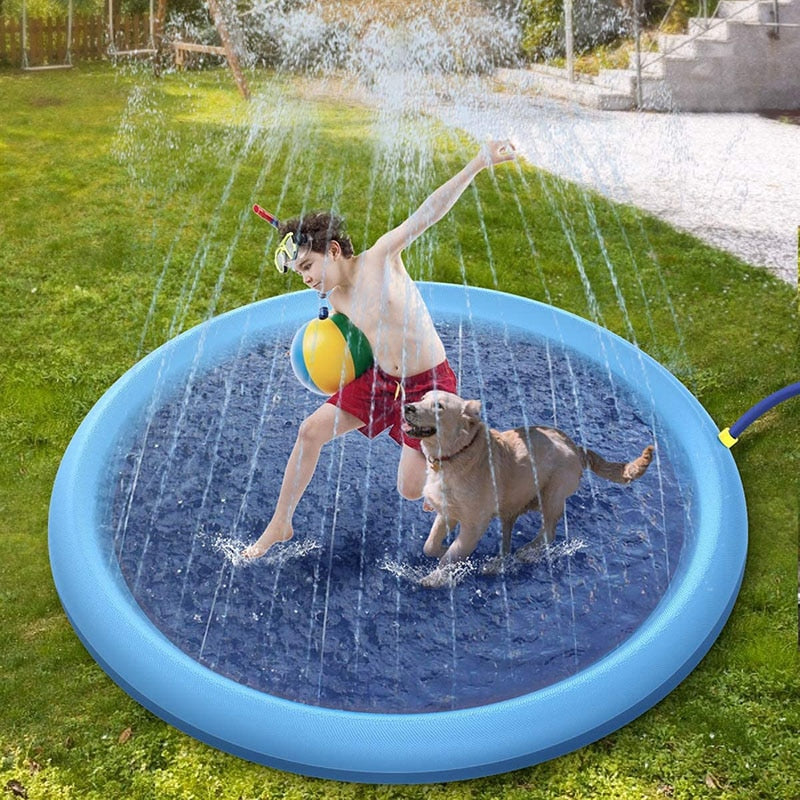
If a real walk feels necessary, split it into two or three short cool-window outings instead of one long midday trip.
How American Bark Bliss Gear Fits Into a Safe Summer Routine
Gear never replaces good judgment about temperature and surface, but the right piece can extend a safe window on a borderline day. Americanbarkbliss’s dog walking safety guide covers more detail on building these habits into a daily routine.
- The Body Glove Cooling Dog Harness works well for early morning or evening walks when air temperature sits in that cautious 75 to 85°F range.
- The Asanoha Cooling Bandana suits quick errands or short breaks, giving a dog a cool point of contact during a rest stop.
- The Pet Dog Sprinkler Pad Play Cooling Mat turns a backyard into a supervised water-play zone on days when pavement rules out a walk altogether.
None of this gear lowers core body temperature the way shade and rest do. Treat it as one more layer of protection, not a green light to walk longer than conditions allow. For more on protecting pads specifically, the guide to dog paw care is worth a read before peak summer hits.
What I’ve Learned About Building Safer Summer Habits
The dog owners who avoid heat emergencies aren’t the ones with the fanciest gear. They’re the ones who check the pavement every single time, without exception, even on a route they’ve walked a hundred times. Build that habit early, then adjust the specifics, timing, distance, gear, to whatever your own dog actually needs.
— Christopher
Cooling Gear Worth Packing This Summer
Even with perfect timing and a clean pavement test, a hot afternoon can still catch you off guard. That’s when a few smart pieces of gear from Americanbarkbliss earn their spot in your walking bag.
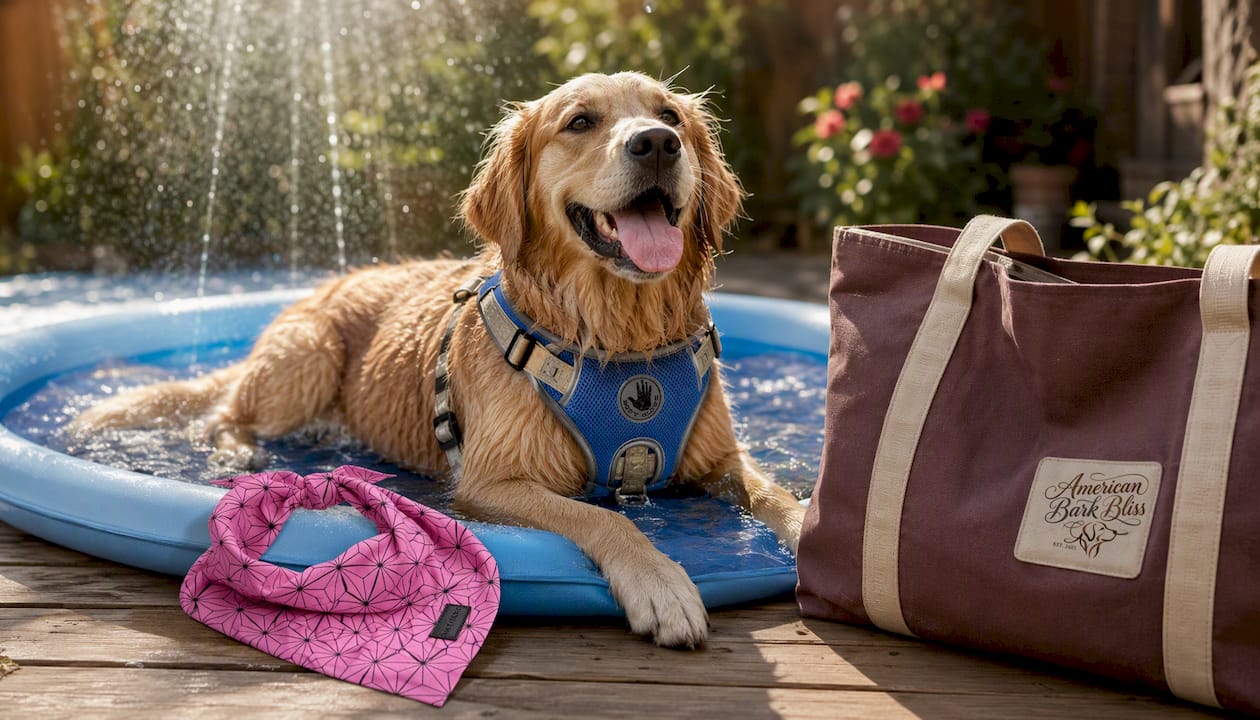
The Body Glove Cooling Dog Harness gives dogs a layer of relief during early morning or evening walks, and it’s built in the USA with real attention to fit rather than a one-size guess. The Asanoha Cooling Bandana works as a lightweight option for shorter outings or quick cooldown breaks on the porch. For days when the pavement test says stay home, the Pet Dog Sprinkler Pad Play Cooling Mat turns the backyard into a safe, splash-friendly alternative. Check the sizing chart on each product page before you order. A cooling harness that fits loose won’t do its job, and a bandana that’s too tight defeats the purpose. Browse the full summer lineup to build a kit that matches your dog’s size and your own walking schedule.
Where This Guidance Comes From
The temperature thresholds, pavement test, and heatstroke signs in this guide draw from veterinary and weather-safety sources built specifically for pet owners. PetMD covers timing and temperature thresholds in depth. Whole Dog Wellness breaks down the pavement test and emergency signs. Rain or Shine Dog explains why no single temperature fits every dog. Weather.com rounds out the picture with practical cooling gear guidance.
Sources
- 10 Summer Dog Walking Tips | PetMD
- When Is It Too Hot to Walk a Dog? The pavement test | Whole Dog Wellness
- Is It Too To Walk My Dog? Heat, Humidity, and Pavement Guide | Rain or Shine Dog
- Weather
FAQ
What Temperature Is Too Hot to Walk a Dog?
Risk starts climbing above 70°F, and most vets recommend short, slow walks or none at all once it hits 80 to 85°F. Humidity pushes that risk higher even when the thermometer reads lower.
What Is the 7 Second Pavement Test for Dogs?
Press your flat palm against the sunniest part of the pavement your dog will walk on and hold it there for seven seconds. If it’s too hot for your hand to comfortably stay put, it’s too hot for paw pads, and the walk should wait or move to grass.
Is 78 Degrees Too Hot to Walk a Dog?
Temperatures around 75°F sit in the caution zone rather than the danger zone for most healthy adult dogs, especially with low humidity and a shaded route. Flat-faced breeds, seniors, puppies, and overweight dogs should still get a shorter, slower walk at these temperatures.
How Hot Is Too Hot for Dogs to Walk on the Sidewalk?
There’s no single number, since asphalt can run far hotter than the surrounding air and stay that way for hours after sunset. The palm test settles the question faster and more accurately than any temperature chart.
Can Cooling Gear Replace a Safe Walking Schedule?
No. Cooling harnesses and bandanas, like Americanbarkbliss’s Body Glove Cooling Dog Harness, help extend comfort during a walk but don’t prevent overheating on their own. Shade, timing, water, and surface choice still come first.
Leave a comment