

How Materials Determine Durability in Dog Accessories
The most durable pet accessories share one trait: the right material for the job. For collars and leashes, that means 1680D ballistic nylon, Biothane or TPU-coated webbing, or full-grain leather paired with stainless steel hardware. For beds, it’s Sunbrella or PU-backed performance fabric over a flat-felled seam frame. For toys, food-grade silicone or natural rubber in the Shore A 60–70 range. For bowls, 304 or 316 stainless steel with no coating to chip. Get the material right and everything else — construction, care, lifespan — follows naturally.
Quick material pairings by product:
- Collar/Leash: 1680D nylon or Biothane webbing + 304/316 stainless steel hardware
- Bed: Sunbrella or 1680D ballistic nylon cover + PU-backed moisture barrier
- Toy: Food-grade silicone (Shore A 60–70) or natural rubber
- Bowl: 304/316 stainless steel, uncoated interior
Key Takeaways
Material selection is the single biggest determinant of how long a dog accessory lasts, and matching specs to your dog’s behavior prevents the most common early failures.
| Point | Details |
|---|---|
| Prioritize denier and hardness | Use 1680D nylon or Biothane for collars/leashes; target Shore A 60–70 for chew toys. |
| Demand stainless hardware | Specify 304 or 316 stainless steel; plated alloy corrodes quickly in wet conditions. |
| PU backing beats DWR sprays | Permanent PU backing provides a true waterproof barrier; DWR wears off after washing. |
| Monthly inspection saves money | Check seams, hardware, and foam integrity monthly; replace when safety is compromised. |
| Americanbarkbliss lists material specs | Browse American-made gear with stated denier, hardware grade, and construction details. |
Table of Contents
- How material properties drive durability and failure modes
- Which materials work best for collars, leashes, beds, toys, and bowls?
- Why stitching and hardware matter as much as fabric
- How to match materials to your dog’s size, behavior, and activities
- How cleaning and maintenance extend product life
- When should you replace a pet accessory?
- A short buying checklist for durable, American-made pet accessories
- Environmental impact and sustainability of pet accessory materials
- Certifications and standards that signal material quality and safety
- Americanbarkbliss carries the durable, American-made gear this guide describes
- Why a materials-first approach beats buying on looks alone
- Sources
- FAQ
How material properties drive durability and failure modes
Material selection for durability is the single biggest lever you have before a product ever reaches your dog. Every common failure mode traces back to a specific material property that was either mismatched or undersized for the use.
Abrasion and seam failure happen when fabric denier is too low. A 300D polyester collar frays at the edges within months on a dog that digs or scratches. A 1680D ballistic nylon collar in the same situation lasts years. The Wyzenbeek double-rub test quantifies this: high-denier fabrics like 1680D ballistic nylon post abrasion counts that budget polyesters can’t approach.
Hydrolytic degradation and mildew strike any fabric that traps moisture. Untreated cotton canvas holds water against foam cores, which then absorb urine and harbor bacteria. Permanent PU backing creates a true waterproof barrier; a DWR spray finish wears off after a few washes and offers no lasting protection.
UV fading and brittleness are the slow killers for outdoor gear. Standard nylon webbing fades and loses tensile strength after prolonged sun exposure. Polypropylene goes brittle. Sunbrella’s solution is solution-dyed acrylic fiber, where color is locked into the fiber at the molecular level rather than applied as a surface dye.
Hardware corrosion is where many otherwise solid products fail. Zinc-alloy or plated steel buckles and D-rings corrode within months in wet or salty environments. Grade 304 stainless steel resists rust in most conditions; grade 316 adds molybdenum for saltwater resistance.
The spec that matters most is often the one not listed. A product page that shows a photo of a buckle but won’t state the alloy grade or cycle rating is telling you something. Demand the spec or move on.
Chew initiation points are a construction issue as much as a material one. Exposed thread ends, raw fabric edges, and loose stitching give a determined chewer a starting point. Even a high-denier fabric fails fast if the seam design hands your dog a loose thread to pull.
Which materials work best for collars, leashes, beds, toys, and bowls?
Collars and leashes
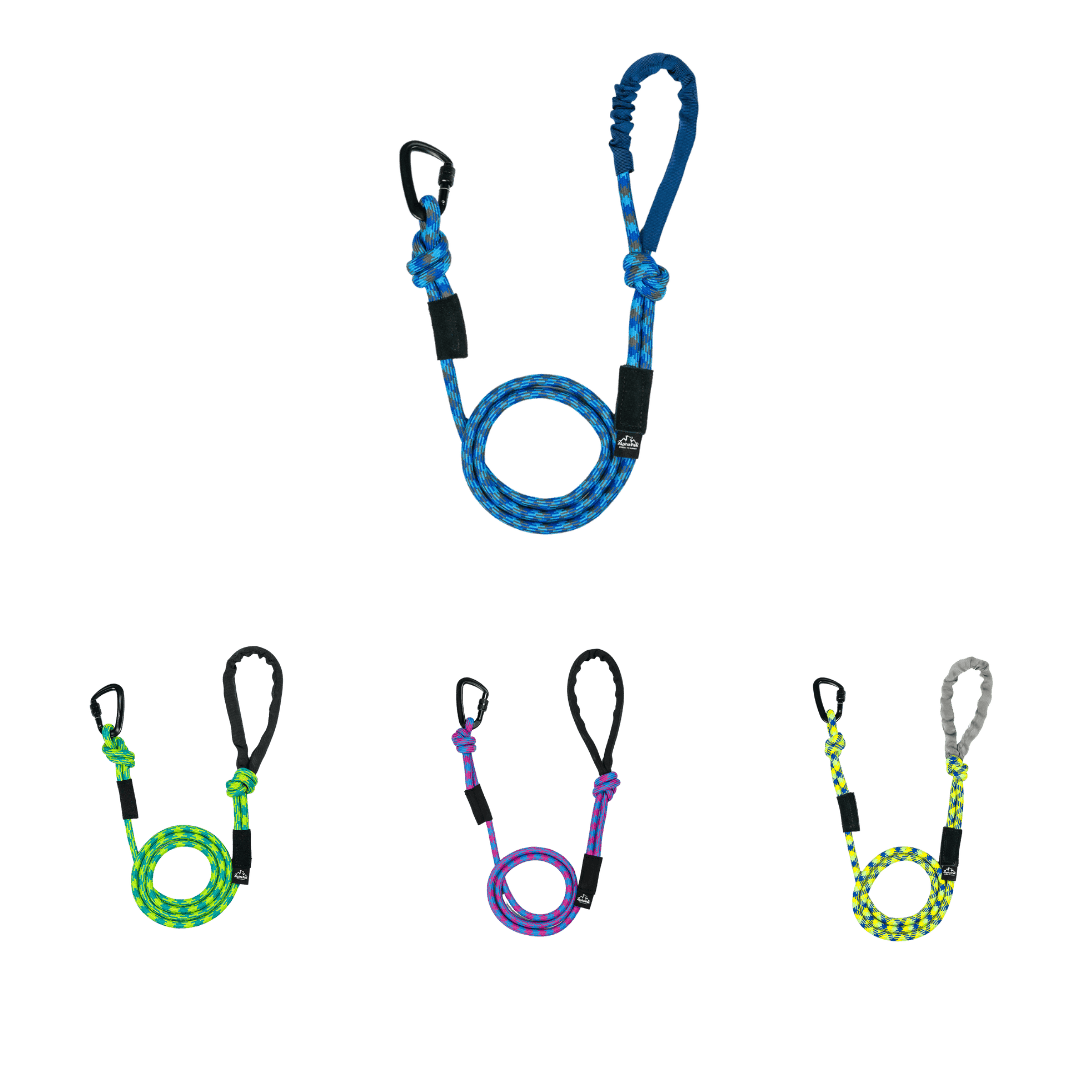
Nylon is the volume choice for good reason: it’s affordable, available in high deniers, and holds dye well. The tradeoff is moisture retention and slower drying, which matters for dogs that swim regularly. Biothane (TPU/PVC-coated webbing) costs a moderate premium over comparable nylon but wipes clean in seconds, never absorbs odor, and pairs naturally with welded D-rings and 10,000-plus cycle buckles. Full-grain leather sits at the premium end: beautiful, strong, and long-lived with conditioning, but it loses strength when wet and needs to dry slowly away from heat.
Beds
| Feature | Sunbrella | 1680D Ballistic Nylon | Cotton Duck Canvas | PU-Coated Fabric |
|---|---|---|---|---|
| Abrasion resistance | High | Very high | Moderate | Moderate–high |
| Water/mildew resistance | High | Moderate (needs backing) | Low | High |
| UV resistance | Excellent | Moderate | Low | Moderate |
| Machine washable | Yes | Yes (cold/gentle) | Yes | Spot-clean preferred |
| Best use | Outdoor/sunlit beds | Heavy chewers | Indoor lounging | Moisture-barrier liner |
Sunbrella performance fabrics are fade-resistant, water- and mildew-resistant, and hold shape through machine washing. That combination makes them the top pick for beds near windows or on covered porches. For aggressive chewers, 1680D ballistic nylon is harder to puncture, though it benefits from a separate PU-backed moisture barrier underneath.
Toys
For chew toys, Shore A hardness is the number that matters. Too soft (below Shore A 40) and the toy tears quickly; too hard (above Shore A 80) and it risks tooth fractures. Many manufacturers target a moderate Shore A range for adult chew toys balancing puncture resistance and safety. Food-grade silicone in that range is non-porous, heat-resistant, and dishwasher-safe, which makes hygiene maintenance straightforward.
For plush toys, the outer fabric GSM and backing layer are what separate a toy that lasts a week from one that lasts months. Laminated or mesh-backed plush fabrics can dramatically increase tensile strength; fabric selection accounts for a substantial portion of product cost and is a primary driver of return rates for toy suppliers.
Bowls
304 stainless steel is the standard for good reason: non-porous, dishwasher-safe, and resistant to bacterial biofilm. Grade 316 adds corrosion resistance for coastal environments. Avoid coated or painted interiors — chips become ingestion hazards.
Why stitching and hardware matter as much as fabric
A strong fabric fails fast with poor construction. The outer material gets the attention, but seam design and hardware are where real-world durability is won or lost.
Construction details worth inspecting:
- Double-stitched or flat-felled seams distribute stress across two stitch lines instead of one
- Bonded nylon thread resists UV degradation and moisture better than standard polyester thread
- Hidden or recessed zippers on bed covers eliminate exposed pulls that dogs can grab
- Reinforced stress points (bar-tack stitching at D-ring attachment, handle junctions) prevent the most common tear locations
- Welded D-rings vs. cast D-rings: welded rings have no seam to crack under lateral load
- Buckle cycle ratings: a 10,000-cycle rating means the buckle has been tested to open and close 10,000 times without failure
Pro Tip: Before buying, grip the hardware and apply lateral pressure. A quality D-ring won’t wobble or rotate freely in its attachment loop. If it does, the stitching holding it is already under stress before your dog ever pulls.
Ask the seller directly about repair options and spare hardware availability. American-made brands often support repair; imported budget gear rarely does.
How to match materials to your dog’s size, behavior, and activities
Pick the material that addresses your dog’s highest-risk behavior first, then optimize for comfort and style.
| Dog Profile | Best Materials | Avoid |
|---|---|---|
| Tough chewer | 1680D nylon, Shore A 60–70 silicone, natural rubber | Low-denier polyester, soft foam toys |
| Swimmer/water dog | Biothane/TPU webbing, 316 stainless hardware, Sunbrella | Untreated leather, cotton canvas, plated hardware |
| Heavy puller | Wide Biothane or 1680D nylon webbing, welded metal hardware | Narrow nylon, cast zinc buckles |
| Senior dog | Medium-density memory foam with PU barrier, soft silicone toys | Hard rubber, thin foam pads |
| Puppy | Moderate-denier nylon (upgradeable), natural rubber toys | Full-grain leather (hard to clean), high-durometer chew toys |
For mixed-behavior dogs, layer solutions: a swimmer who also chews needs TPU-coated webbing on the collar and a Shore A 65 silicone toy rather than a soft latex one. A heavy-pulling senior benefits from wide Biothane webbing (reduces pressure per inch) and a supportive bed with a PU moisture barrier.
How cleaning and maintenance extend product life
Routine care often doubles usable life. The single most common cause of early replacement isn’t wear — it’s mildew, odor buildup, or hardware corrosion that could have been prevented.
- Removable bed covers: Machine wash on cold/gentle, tumble dry low or air dry. Never use bleach on Sunbrella or PU-backed fabrics — it degrades the coating. Washable covers are the single best construction feature for longevity.
- Coated fabrics (PU, Biothane): Wipe with a damp cloth and mild soap. Avoid abrasive scrubbers that scratch the coating surface.
- Silicone toys: Dishwasher-safe on the top rack, or boil for 5 minutes. Inspect for cracks or tears before returning to use.
- Leather collars: Condition every 4–6 weeks with a leather conditioner. After water exposure, dry slowly at room temperature — never near a heat source.
- Plated hardware: Dry thoroughly after every swim or rain. Apply a thin coat of petroleum jelly to exposed metal to slow oxidation.
Monthly inspection checklist: Check stitch integrity at stress points, look for seam gaps or fraying edges, test hardware for wobble or corrosion, feel for surface cracking on rubber or silicone, and smell for mildew in foam cores.
When should you replace a pet accessory?
Expect wide ranges depending on material quality and use intensity: budget polypropylene collars typically last 1–2 years; standard nylon, 3–5 years; Biothane or well-maintained leather, 5–10 years or more. Those ranges assume regular cleaning and inspection.
Replace immediately when safety is at stake — not when the item looks worn. A collar with a deformed D-ring, a toy with a piece coming loose, or a bed with exposed foam that absorbs urine are safety issues, not aesthetic ones.
Clear replacement signs:
- Collar webbing fraying within 1 inch of hardware attachment
- D-ring deformation or visible cracking at the weld point
- Buckle that no longer clicks fully closed or shows fatigue cracks
- Toy pieces separating or chunks missing
- Bed foam exposed through cover tears (absorbs urine, harbors bacteria)
- Persistent mildew smell that survives washing
A short buying checklist for durable, American-made pet accessories
A focused checklist prevents impulse purchases that fail within months.
- Fabric spec listed: denier (300D minimum for everyday use, 1680D for chewers), GSM for plush, or Sunbrella/performance fabric name
- Hardware material stated: 304 or 316 stainless steel, not “metal” or “alloy”
- Seam construction visible: double-stitched, flat-felled, or bar-tacked at stress points
- Waterproofing type specified: permanent PU backing, not DWR spray
- Removable, machine-washable cover for beds and cushions
- Shore A rating for chew toys (aim for 60–70 for adult dogs)
- Made in USA labeling: look for explicit country-of-origin statements, not just “designed in USA” or “assembled in USA”
- Warranty or repair policy: American-made brands often offer repair; ask before buying
- Return policy: at least 30 days for defects
If a seller can’t provide material specs on request, that’s a signal. Reputable American-made brands know their materials and will tell you.
Environmental impact and sustainability of pet accessory materials
Material choice affects more than lifespan. Longer-lasting materials reduce replacement frequency, which directly cuts the volume of pet gear ending up in landfills.
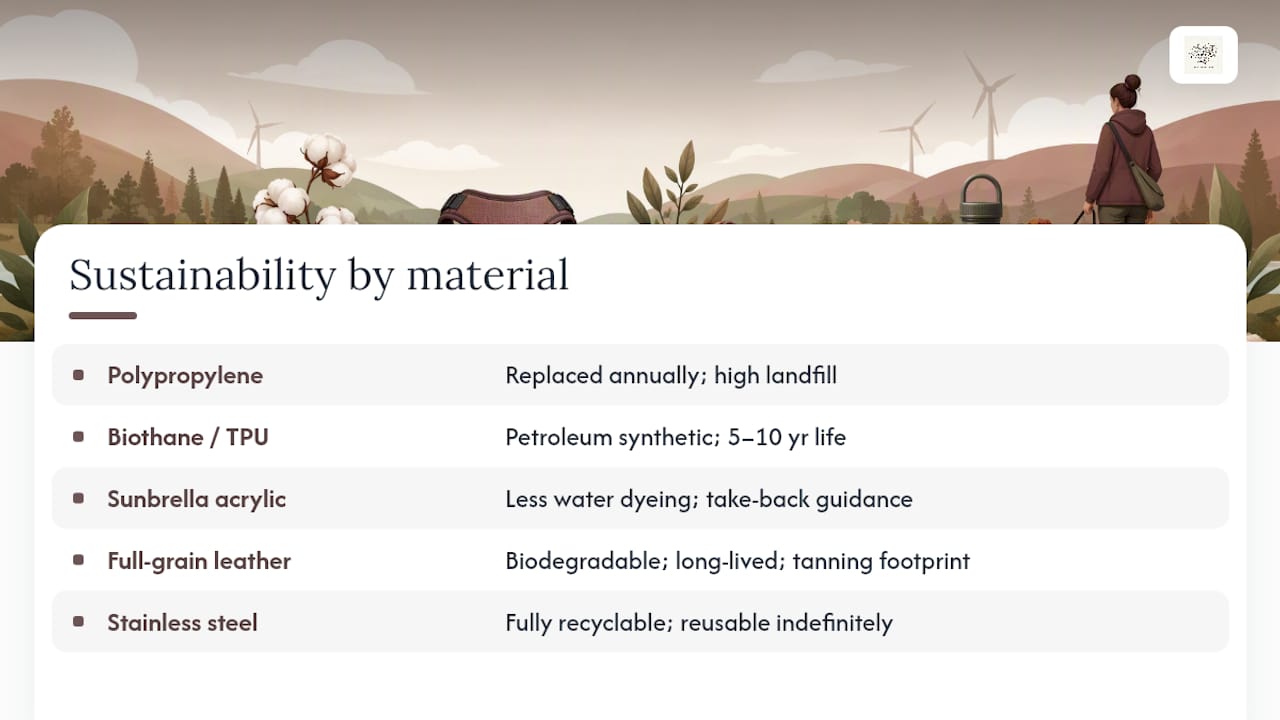
Biothane and TPU-coated webbing are petroleum-derived synthetics, but their 5–10-year service life means fewer units produced per dog over a decade compared to budget polypropylene replaced annually. Natural rubber for toys is a renewable resource; food-grade silicone is inert and non-toxic but not biodegradable. Sunbrella’s solution-dyed acrylic uses significantly less water in dyeing than conventional piece-dyed fabrics, and the brand has published take-back and recycling guidance for end-of-life fabric.
Full-grain leather from traceable tanneries is biodegradable and long-lived, but tanning processes carry a significant environmental footprint. Stainless steel bowls are fully recyclable and indefinitely reusable, making them the lowest-impact bowl option over a product’s lifetime.
The practical sustainability move for most owners: buy once at a higher material spec, maintain it properly, and replace only when safety demands it.
Certifications and standards that signal material quality and safety
No single universal certification covers all pet accessories, but several standards give you a reliable signal.
ASTM F963 (Consumer Product Safety Commission toy standard) is the baseline for children’s toys and is frequently referenced for pet toy safety, particularly for non-toxic colorants and small-part hazards. CPSC compliance is the U.S. regulatory floor for products that could be ingested.
For fabrics, OEKO-TEX Standard 100 certification means the textile has been tested for harmful substances across the entire production chain — relevant for beds and apparel your dog sleeps against. Bluesign certification applies to performance fabrics and covers chemical safety and resource efficiency in manufacturing.
For food-contact items like bowls and silicone toys, FDA food-grade compliance is the standard to look for. It confirms the material won’t leach harmful compounds into food or water.
Made in USA labeling under FTC guidelines requires that “all or virtually all” of the product be made in the U.S. from domestic materials — a stronger claim than “assembled in USA,” which permits foreign components.
Americanbarkbliss carries the durable, American-made gear this guide describes
You’ve just read exactly what to look for: denier ratings, Shore A hardness, stainless hardware grades, PU-backed moisture barriers, and flat-felled seams. Americanbarkbliss curates American-made brands that list those specs, so you’re not guessing at product pages.
The catalog covers collars, leashes, beds, toys, bowls, grooming tools, and apparel — including the Country Living All-in-One 3-Piece Dog Grooming Kit, Pet Dog Jumpsuit for Small Medium Dogs, Pet Silk Duck Pajamas, and I’m with The Human Dog Cat Puppy Pet Shirts. For grooming and coat maintenance, the Micro-Tek Shampoo and Premier Shampoo are stocked alongside the full accessories range. Browse the full collection at Americanbarkbliss and filter by material spec or product category to find gear built to last.
Why a materials-first approach beats buying on looks alone
Most owners replace pet gear too soon because they bought on aesthetics and got surprised by a failure mode that was entirely predictable. A collar that looks great in a product photo but uses plated zinc hardware and 300D polyester webbing will fray and corrode within a year on an active dog. The same budget spent on 1680D nylon with a welded stainless D-ring lasts three to five times longer.
The pattern I keep seeing: owners who start with material specs — even just denier and hardware alloy — stop replacing collars and beds on an annual cycle. That’s not a minor convenience. Over a dog’s lifetime, it’s a meaningful difference in both cost and the number of products that end up in the trash.
Sources
- Sunbrella blog: Durable dog bed
- Best Fabric For Dog Beds: Evaluating Chew-Proof Nylon And Durable Canvas | Canvas ETC
- Plush Dog Toy Material Guide: How to Choose Fabric for Durability & Cost
- Understanding Shore Hardness: Choosing the Right Softness for Pet Toys - Newtop Silicone Manufacturer
FAQ
What materials make dog collars last the longest?
Biothane (TPU-coated webbing) and 1680D nylon paired with 304 or 316 stainless steel hardware consistently outlast budget alternatives.
What Shore A hardness is safest for chew toys?
Most manufacturers recommend Shore A 60–70 for adult chew toys. Below that range, puncture resistance drops; above it, brittleness increases and tooth injury risk rises.
How do I know if a dog bed is truly waterproof?
Look for permanent PU backing, not a DWR spray finish. PU backing creates a true moisture barrier that survives repeated washing; DWR coatings degrade after several wash cycles.
When should I replace a dog collar?
Replace a collar when the webbing frays within 1 inch of the hardware, the D-ring deforms or cracks, or the buckle no longer clicks fully closed. Visible hardware fatigue is a safety issue regardless of how new the collar looks.
Does “Made in USA” on pet gear actually mean anything?
Under FTC guidelines, “Made in USA” requires that all or virtually all of the product be manufactured in the U.S. from domestic materials. It’s a stronger claim than “assembled in USA,” which permits foreign-sourced components.
Leave a comment