

In 10–20 Minutes, Remove Dog Collar Smell: Nylon, Leather, Metal
Soak the collar in warm water with 2 to 3 teaspoons of baking soda (or a squirt of dog shampoo) for 10 to 20 minutes, scrub the crevices with an old toothbrush, rinse well, and let it air-dry completely before your dog wears it again. That last part matters more than people realize: a damp collar left in a knot will smell just as bad in two days. Leather is the exception; for a detailed overview of amber-style and other specialty pet collars, see the Baltic Amber Dog Collar Explained for Pet Owners. Skip the soak, spot-clean with a damp cloth, and condition once it’s dry.
TL;DR:
- Regular soaking in baking soda and water for nylon collars effectively neutralizes odors, especially when scrubbing crevices with an old toothbrush.
- Leather collars should only be spot-cleaned with damp cloths and conditioned afterward to prevent damage and maintain flexibility.
- Hydrogen peroxide, baking soda, and dish soap solutions are effective for removing skunk odor but may discolor darker fabrics if left too long.
- Fully drying collars, especially around buckles and layered sections, is crucial to prevent moisture retention and odor recurrence.
- Using the correct cleaning method for each material extends the lifespan of the collar and reduces frequent odor problems.
Table of Contents
- Cleaning a Collar by Material: Synthetic, Leather, and Metal
- Baking Soda, Vinegar, and Peroxide: Which Recipe Actually Works?
- How Do You Get Skunk Smell Out of a Dog Collar?
- Building a Routine So the Smell Doesn’t Come Back
- Why Does the Smell Come Back After Washing?
- What a Well-Cared-For Collar Says About Your Dog’s Gear
- Skip the Guesswork With a Ready-Made Grooming Kit
- Why Most People Get Collar Cleaning Backward
- Sources
- FAQ
Cleaning a Collar by Material: Synthetic, Leather, and Metal
The wrong cleaning method on the wrong material either fails to kill the smell or wrecks the collar. Here’s how to match the method to what your dog is actually wearing.
Synthetic collars (nylon and polyester) hold up to a real soak, and that’s good news because they’re also the most odor-prone. Fill a bowl or sink with warm water, mix in 2 to 3 teaspoons of baking soda or a small amount of dog shampoo, and submerge the collar for 10 to 20 minutes. Scrub the seams and buckle grooves with an old toothbrush since that’s where grime actually hides, not on the flat surface you’d normally wipe. Rinse under hot water until no soap residue remains, then hang it by the buckle so air moves through the whole length as it dries.
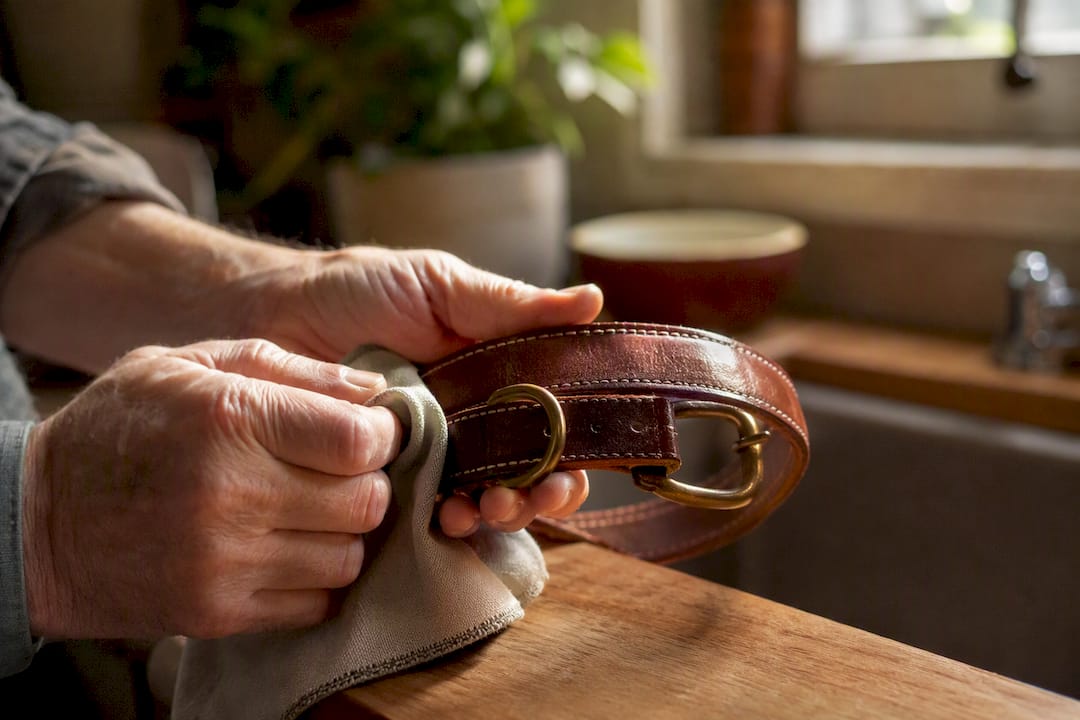
Leather collars don’t tolerate submersion the way nylon does. Soaking strips natural oils, and once that happens the leather stiffens, cracks, and can change color permanently. Instead, wipe down the collar with a damp cloth and a small amount of mild leather cleaner or saddle soap, focusing on the odor spots rather than the entire strap. Blot it dry immediately with a clean towel, and once it’s fully dry, apply a leather conditioner to keep it from drying out. Leather often needs conditioning after any cleaning to avoid the cracking that shows up weeks later.
Metal hardware (buckles, D rings, tags) collects a different kind of grime, usually oils and rust flecks rather than organic smell. Remove the hardware from the collar if it’s designed to come apart. A baking-soda paste, roughly three parts baking soda to one part water, cuts through light rust and buildup with a few minutes of scrubbing. For greasy residue, a small dab of mild degreaser works faster. Dry the metal completely before reattaching it, since trapped moisture against fabric is exactly what restarts the smell cycle.
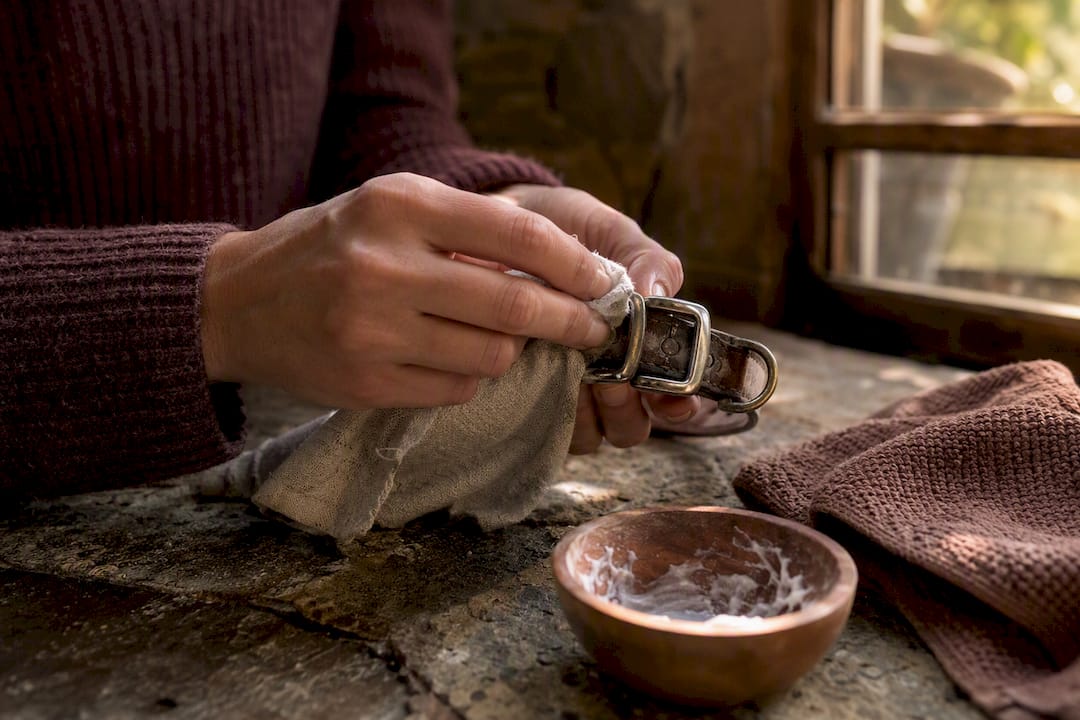
Pro Tip: Keep a dedicated toothbrush in your pet-care supplies just for collar and buckle scrubbing. Using the same one you use on dishes cross-contaminates, and a stiff-bristled brush works the crevices better than a rag ever will.
Baking Soda, Vinegar, and Peroxide: Which Recipe Actually Works?
Spraying a fragrance over a smelly collar doesn’t fix anything. Odor comes from oils and bacteria worked into the fibers, and only removing that buildup through actual washing stops the smell from coming back. Perfumed sprays just cover it for a few hours.
Three recipes handle most situations:
- Baking soda soak. Mix 2 to 3 teaspoons of baking soda into a bowl of warm water, submerge the collar for 10 to 20 minutes, scrub, and rinse. This is the default move for everyday funk.
- Vinegar soak. Combine white or apple cider vinegar with water at a 1:1 ratio and soak for about 10 minutes. Vinegar cuts through odor-causing bacteria well, though it can leave a faint vinegar smell that fades once the collar is rinsed and fully dry.
- Peroxide, baking soda, and dish soap. For grease or heavy oil the first two methods won’t touch, mix a small amount of each. This combination works, but it can bleach or discolor darker fabrics, so test it on a hidden strip of the collar first and never leave it on longer than a few minutes.
If the smell is coming from something biological, like drool buildup or an old skin infection residue, an enzymatic cleaner will often outperform any of the above. Enzymatic formulas break down organic matter that plain soap struggles with, but always patch-test on an inconspicuous area since some formulas aren’t fabric-safe on every material.
How Do You Get Skunk Smell Out of a Dog Collar?
Skunk oil is genuinely different from everyday collar funk. It’s oil-based, which means water alone slides right off it without lifting a thing, and that’s why plain washing rarely works on a skunked collar.
- Mix hydrogen peroxide, a spoonful of baking soda, and a small squeeze of dish soap into a bowl.
- Apply the mixture directly to the affected sections and let it sit for a few minutes, not longer, since peroxide can discolor certain materials the longer it sits.
- Scrub gently, rinse thoroughly, and repeat once if the odor lingers.
- If two treatments don’t clear it, or the material starts to look faded or brittle, replacing the collar is usually more practical than a third aggressive round of scrubbing.
Building a Routine So the Smell Doesn’t Come Back
A collar that gets cleaned only when it’s unbearable will always smell bad by the time you notice. Match your wash schedule to how your dog actually lives.
- Active, outdoor dogs: wash weekly, since dirt, sweat, and water exposure build up fast.
- Low-activity, mostly indoor dogs: once a month is usually enough.
- Between full washes: wipe the collar down with a damp cloth after muddy walks or swims instead of waiting for a full soak.
- Keep a backup collar on hand so your dog isn’t left without ID while the primary one dries. Check that any spare still fits correctly before you swap it in.
Pro Tip: Frequent outdoor time means more frequent washing, so build the wash into whatever routine already exists, like the day you do laundry, rather than treating it as a separate chore you’ll forget.
Why Does the Smell Come Back After Washing?
Almost every case of “I washed it and it still stinks” traces back to one thing: moisture trapped somewhere the air couldn’t reach. A collar can look dry on the outside while the inner layer or the fabric under a buckle stays damp for hours, and that trapped moisture breeds the exact bacteria you just tried to wash away.
- Prop the buckle open while drying so air reaches the fabric underneath it, not just the outer surface.
- For thick or multilayer collars, insert a paper towel between layers or use a fan on a cool setting to speed evaporation without heat.
- Full drying can take several hours, longer than most people expect, so don’t rush a collar back onto your dog just because the surface feels dry.
- If the odor keeps returning despite thorough drying, and your dog also shows skin irritation or a rash under the collar, that’s worth a vet visit rather than another round of scrubbing.
What a Well-Cared-For Collar Says About Your Dog’s Gear
Cleaning routines like these aren’t just about smell. A collar that gets properly washed and dried holds its shape, its stitching, and its hardware longer, which matters more with well-made American-made materials than with anything disposable. Pairing good cleaning habits with durable, well-constructed accessories keeps both the gear and your dog more comfortable over time. Quality materials respond better to spot-cleaning and conditioning than cheaper synthetics that degrade after a few washes.
Skip the Guesswork With a Ready-Made Grooming Kit
If measuring baking soda into bowls isn’t your idea of a productive Saturday, Americanbarkbliss built a shortcut. The Country Living All-in-One 3-Piece Dog Grooming Kit gives you the brushes and tools to handle collar scrubbing alongside regular grooming, so you’re not hunting for a spare toothbrush every time a collar needs attention.
For the actual scrubbing step, grooming gloves with a five-finger design work the crevices around buckles better than bare hands and double as a bathing tool for your dog’s coat afterward. If you’d rather keep one compact set of tools on hand for collars, grooming, and general upkeep, THE TOOL KIT covers that ground in a single package. Browse Americanbarkbliss’s grooming and care essentials to build out a kit that keeps every piece of your dog’s gear fresh, not just the collar.
Why Most People Get Collar Cleaning Backward
Most advice on this topic treats the wash as the hard part and drying as an afterthought. That’s backward. The soak-and-scrub step is nearly foolproof: baking soda, dish soap, and a toothbrush will lift almost any smell out of nylon or polyester in under 20 minutes. Where people actually fail is drying, because a collar that looks dry on the outside can stay damp against the buckle or between stitched layers for hours, and that’s exactly where the smell regrows.
The other mistake is treating every collar like it’s made of the same material. Leather owners who soak their collar the way they’d soak a nylon one usually end up with a stiff, cracked strap within a few months, and by then they think leather just “doesn’t last.” It lasts fine. It just never should have gone underwater in the first place.
If there’s one habit worth building, it’s pairing the wash with quality gear from the start. Cheap synthetic webbing absorbs oils faster and holds onto smell longer than better-made materials do, which means the cleaning cycle you’re stuck in might be less about your technique and more about what the collar is made of.
— Christopher
Sources
The ratios, soak times, and material warnings above come from a few sources worth a direct read if you want more detail. Orvis News covers baking soda ratios and drying technique in depth. PetGuide breaks down the peroxide method for tough oils and skunk residue. Newsbytes covers the mild soap and vinegar approach along with heat-drying cautions.
- How to Clean a Dog Collar - Orvis News
- How To Clean A Stinky Dog Collar in 8 Simple Steps | PetGuide
FAQ
How can I get rid of bad odor from my dog’s collar?
Soak it in warm water with 2 to 3 teaspoons of baking soda or a bit of dog shampoo for 10 to 20 minutes, scrub the seams, rinse, and let it dry completely before putting it back on. Leather collars should be spot-cleaned instead of soaked.
What neutralizes the smell of a dog?
Baking soda is the most reliable household neutralizer because it breaks down odor-causing compounds rather than masking them, and a short vinegar soak works similarly for fabric items like collars and bedding.
How can I deodorize my dog without a bath?
Wipe your dog down with a damp cloth or dog-safe deodorizing wipe between baths, and treat the collar separately since it often holds more odor than your dog’s coat does. A quick baking-soda spot-clean on the collar handles most of the smell without a full wash.
Why do dogs smell their collars when you take them off?
Dogs investigate scent the way people read text, and a collar carries a concentrated record of their own smell along with everything they’ve brushed against that day. It’s normal behavior, not a sign the collar needs immediate cleaning, though a genuinely foul smell is still worth addressing with a proper wash.
Leave a comment