

Dog Owners: 3 Steps to Protect Couch From Dog Hair With PupProtector
The most effective way to protect a couch from dog hair is a three-part routine: a washable cover that catches the hair before it embeds, regular brushing that removes hair at the source, and targeted spot cleaning for seams and cushions. No system makes a couch completely hair-free with a dog living on it, but this combination keeps things manageable instead of overwhelming. A washable cover paired with a rubber grooming tool handles most of the daily battle.
TL;DR:
- Using a washable cover that catches hair and is easy to clean prevents hair from embedding into couch fibers and significantly reduces long-term mess.
- Regular brushing tailored to your dog’s coat type and size minimizes the amount of hair shed onto furniture throughout the week.
- Targeted spot cleaning with a crevice vacuum or rubber glove effectively removes embedded hair from seams, piping, and hard-to-reach areas.
- Waterproof covers with non-slip backing and precise measurements improve fit, staying in place and protecting against spills, drool, and accidents.
- Positioning a nearby dog bed and using barriers under furniture help contain hair and keep your dog off the couch when possible.
Table of Contents
- The Three Core Defenses: Covers, Grooming, and Targeted Cleaning
- Pick the Right Cover and Fabric: What Resists Hair and What to Avoid
- Best Tools and Care Routines: Removing Embedded Hair and Washing Covers
- Tailor the Plan by Dog and Use-Case
- Why This System Maps Directly to PupProtector™ Products
- Give Your Dog a Designated Spot Near the Couch
- Grooming Schedules That Actually Cut Down Shedding
- Training Your Dog to Shed Less on the Couch
- Simple DIY Fixes for Everyday Hair Control
- Keep the Rest of Your Home Hair-Free Too
- Manageable Maintenance Beats Perfect Elimination
- Shop the PupProtector™ Line for Your Couch
- Sources
- FAQ
The Three Core Defenses: Covers, Grooming, and Targeted Cleaning
A washable cover is the single most impactful habit you can adopt, because it changes where the hair actually lands. Instead of working its way into couch fibers, hair sits on a removable layer you can shake out, vacuum, or toss in the wash. One practical routine breakdown found that combining a washable cover with regular brushing and a handheld vacuum controls pet hair better than any single method alone, because the cover catches hair while washing removes it permanently. Skip the cover, and every other step becomes damage control on upholstery that never fully recovers.
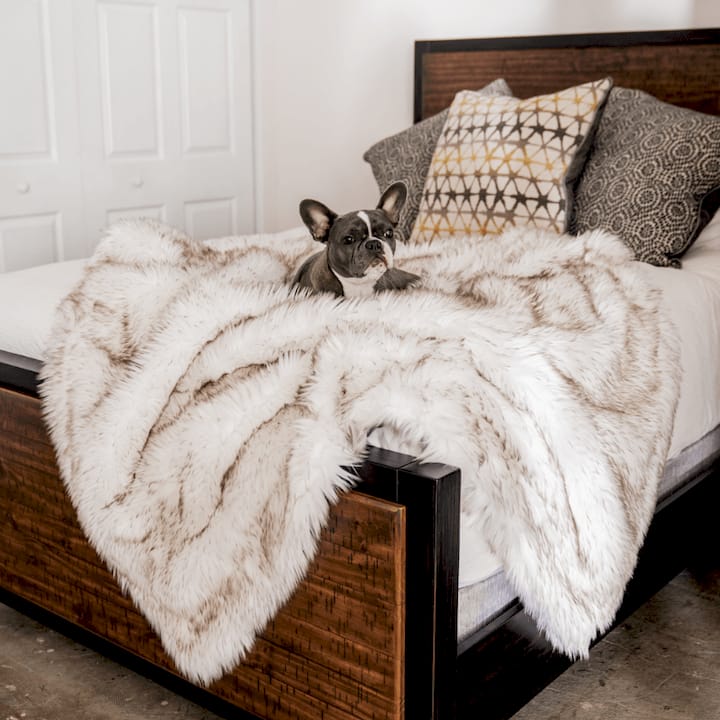
Brushing matters just as much, but for a different reason. Hair on the couch started as hair on your dog, and every strand removed with a brush is one that never makes it to the cushions. Cadence depends heavily on coat type. Double coated breeds like Labradors, Huskies, and German Shepherds shed year round with seasonal surges, and they typically need brushing three to four times a week. Short haired, low shedding dogs like Boxers or Whippets often do fine with one or two sessions weekly. Skip brushing for a week during a seasonal shed and you’ll feel the difference the next time you vacuum.
Targeted cleaning is the third leg, and it’s the one people skip most often. A washable cover handles the seat cushions, but hair still works its way into piping, the crevice between cushion and armrest, and the underside of throw pillows. A handheld vacuum with a narrow crevice attachment reaches those spots in a fraction of the time a full-size vacuum takes, and it’s the difference between a couch that looks clean and one that actually is.
Here’s a simple way to sequence all three without turning your week into a chore list:
- Daily: Give the cover a quick shake-out or a 30 second pass with a rubber roller before guests arrive or after a long lounging session.
- Weekly: Brush your dog on their normal schedule and run a handheld vacuum with a crevice tool along seams and cushion edges.
- Seasonal: During spring and fall shedding spikes, wash the cover every one to two weeks instead of monthly, and add an extra brushing session or two.
Pro Tip: Keep the handheld vacuum charged and sitting in a visible spot near the couch, not tucked in a closet. Tools you can see get used; tools you have to hunt for get skipped.
Pick the Right Cover and Fabric: What Resists Hair and What to Avoid
Fabric choice determines whether your couch fights hair accumulation or invites it. Leather and faux leather are the easiest surfaces to manage because hair sits on top of the material rather than working into it, according to fabric guidance from interior specialists. Tight-weave microfiber and canvas come in close behind. Their smooth, dense weave gives hair fewer places to grab onto.
Velvet, chenille, and other textured or looped fabrics are the ones to avoid if you’re serious about hair control. Those fabrics trap hair the way Velcro does, pulling strands deep into the weave where a vacuum barely reaches. If your couch is already upholstered in one of these fabrics, a full-coverage cover isn’t optional. It’s the only practical fix short of reupholstering.
Waterproof versus water-resistant is a real distinction, not marketing language. Water-resistant fabric slows moisture down. Waterproof fabric, usually built with a TPU or vinyl backing layer, stops it completely. Lifestyle guides on pet-friendly furniture point out that waterproof layers earn their keep even for owners focused mainly on hair, because they double as protection against drooling, muddy paws, and puppy accidents. If you’ve got a puppy still working through house training, a senior dog with less bladder control, or a breed known for drooling, waterproof beats water-resistant every time.
Sizing is where a lot of covers fail before they even get a chance to work. Measure the width and depth of the seat cushions your dog actually uses, not the whole couch, and check the back height if you want a cover that drapes over the top instead of just the seat. A cover with a couple of extra inches on each side tucks into the cushion crevices and stays anchored much better than one cut to the exact measurement.
Anchoring features separate covers that stay put from ones you’re readjusting every hour:
- Silicone grip dots on the underside grip the couch fabric directly, and they tend to outperform straps for keeping a cover in place during normal use.
- Straps that wrap around cushions are common and easy to use, but testing from slipcover reviewers found they’re often less effective than silicone backing once a dog jumps up and shifts the fabric.
- Cushion anchors that tuck between the seat and back cushion add extra security for larger or more active dogs.
Testers have found that shifting covers are one of the most common complaints in pet households, and reviews of slipcover performance point to improper sizing as the root cause more often than a bad anchoring system. Get the measurements right first. The anchors are backup, not the main defense.
Best Tools and Care Routines: Removing Embedded Hair and Washing Covers
Different tools solve different problems, and using the wrong one for the job wastes time. A rubber brush or a dampened rubber glove is the tool for embedded hair, the kind that’s worked its way into fabric fibers over days of lounging. Rubber creates static friction that lifts hair out of the weave, and testing on pet-hair removal methods found rubber-based tools consistently outperform adhesive lint rollers for this kind of deep removal. Lint rollers still earn a place in your routine, but as a finishing touch for surface hair on clothing or a quick pass before company arrives, not as your primary weapon.
Roller-style tools with a reusable adhesive surface, sometimes called ChomChom-style rollers, work well for pulling loose surface hair off larger areas like a throw blanket or cushion top without the sticky residue a disposable lint sheet leaves behind. For the seams, cushion edges, and piping that covers and rollers can’t reach, a handheld vacuum with a narrow crevice tool does the job a full-size upright can’t manage nearly as well.
Technique matters almost as much as the tool. For embedded hair along seams, work the rubber glove or brush at a slight angle rather than straight on, and make several short passes in the same direction instead of one long swipe. The damp glove trick works especially well here: lightly dampen a rubber glove, run it across the cushion in short strokes, and watch the hair roll into small piles you can then vacuum or sweep up. This outperforms dry lint rollers on embedded hair because moisture adds grip that dry adhesive can’t match.
Recent testing and roundups highlight tools like hair-removal gloves, rollers, and wool dryer balls as effective additions to a laundry routine, since dryer balls help pull loose hair from fabric during the drying cycle itself. Toss two or three into the dryer with your cover, and you’ll notice less hair clinging to the fabric when it comes out.
For washing cadence, a monthly baseline works for most daily-use dogs, based on user-tested care routines that converge on that frequency as the practical standard. Wash after any spill, accident, or muddy-paw incident rather than waiting for the scheduled cycle. Use cold or gentle machine settings to protect any waterproof backing layer, since hot water and aggressive tumbling can break down TPU coatings over time. When it’s time to dry, use low heat and consider a dryer sheet to cut down on the static cling that makes stray hair stick to everything else in the load. Full washing and care instructions, including which settings to avoid, are covered in this guide to washing pet bedding, and the same principles apply to couch throws and covers.
Multi-layer covers with a quilted top, waterproof middle layer, and non-slip backing show up repeatedly in product testing of pet-friendly covers as the design that holds up best to frequent laundering without losing its grip on the couch.
- Keep a small rubber brush in a side-table drawer near the couch for 60-second touch-ups.
- Store a cordless handheld vacuum on its charging dock within reach, not in a closet two rooms away.
- Have a spare cover ready to swap in while the primary one is in the wash.
- Pick up a pet hair removal guide matched to your specific fabric type for extra technique tips beyond the couch.
Tailor the Plan by Dog and Use-Case
Not every dog needs the same level of intervention, and matching your routine to your dog’s actual coat and behavior saves you time.
- Light shedders (Boxers, Beagles, short-coated breeds): A smaller throw over the favorite lounging spot usually covers it. Weekly brushing and an occasional pass with a roller for touch-ups keeps things under control without a full-coverage setup.
- Heavy shedders (Huskies, Labs, German Shepherds, Golden Retrievers): This is where a full-coverage waterproof protector earns its cost. Pair it with daily brushing during peak shedding and a handheld vacuum session twice a week. Stronger anchoring, silicone grip dots plus cushion anchors, matters more here because heavier, more active dogs shift covers faster than smaller ones do.
- Puppies and senior dogs: Waterproof coverage should be the default, not the upgrade. Puppies bring accidents; seniors bring incontinence risk and joint stiffness that makes jumping on and off the couch less graceful. Choose covers that strip off and go straight into the wash without wrestling with multiple straps or zippers.
- Seasonal shedding spikes: Spring and fall bring a noticeable jump in loose hair for double-coated breeds. Temporarily bump brushing to daily and washing to every one to two weeks during these windows, then scale back once the spike passes.
A practical routine that reduces embedded hair most effectively looks something like this: brush a heavy shedder three to four times weekly, keep a washable full-coverage protector on at all times, and run the handheld vacuum with a crevice tool twice a week for spot work. That schedule keeps hair from settling into seams and cuts down how often you need to do a full wash.
Why This System Maps Directly to PupProtector™ Products
The three-pillar approach isn’t theoretical. It maps directly onto what a well-designed couch protector needs to do. The PupProtector™ Waterproof Throw Blanket line is built around a washable outer layer, a waterproof inner barrier, and a non-slip backing, which lines up with the three usability factors that pet product reviewers flag most often: washability, water protection, and staying in place once your dog jumps up.
Sizing options matter here too. A cover that’s too small for your dog’s favorite spot defeats the purpose no matter how good the fabric is, which is why matching cover dimensions to actual seat measurements, not the whole couch, remains the first step regardless of which product you choose. The same measuring principle used for selecting the right dog bed size applies directly to couch covers and throws.
Non-slip backing solves the anchoring problem that trips up so many pet owners. Rather than relying on straps that loosen with movement, a silicone-grip backing holds a throw in place through normal jumping, stretching, and shifting, addressing the exact failure point that shows up most often in slipcover testing.
Waterproofing rounds out the system by covering the scenarios brushing and vacuuming can’t touch: a spilled water bowl, a drooly nap, or a puppy accident. A cover that handles hair but folds the moment liquid touches it isn’t solving the whole problem. The step-by-step cleaning approach used for dog beds works just as well for couch throws, since both rely on the same washable, waterproof-layer logic.
Give Your Dog a Designated Spot Near the Couch
One of the simplest ways to cut down on hair spread is giving your dog their own space near the couch instead of letting the whole cushion be fair game. A dog bed placed right next to the couch, at the same height if possible, gives your dog somewhere comfortable that isn’t the upholstery itself. Many dogs will choose the bed over the couch once it’s positioned close enough to still feel like part of the action.
This works especially well during TV time or when guests are over, since your dog gets to stay near the family without shedding directly onto seating you’re trying to protect. Choosing a bed with the right size and support for your dog’s build makes this switch more appealing. A guide to picking a comfort-focused dog bed covers what to look for in terms of size and material.
Pairing a nearby bed with an under-couch blocker closes off another common hair-collection zone: the gap underneath the couch where dogs squeeze in to nap or chase toys. Hair that accumulates under furniture doesn’t just stay under there. It gets tracked back out onto floors and rugs nearby. Blocking that space keeps your dog on their designated spot and keeps hair concentrated where it’s easy to clean.
Grooming Schedules That Actually Cut Down Shedding
Brushing frequency should match coat type, not a generic weekly habit that works for some dogs and does almost nothing for others. Double-coated breeds carry an undercoat that sheds heavily twice a year and steadily the rest of the time, and they typically need brushing three to four times a week to keep loose hair from ending up on furniture instead of in the brush.
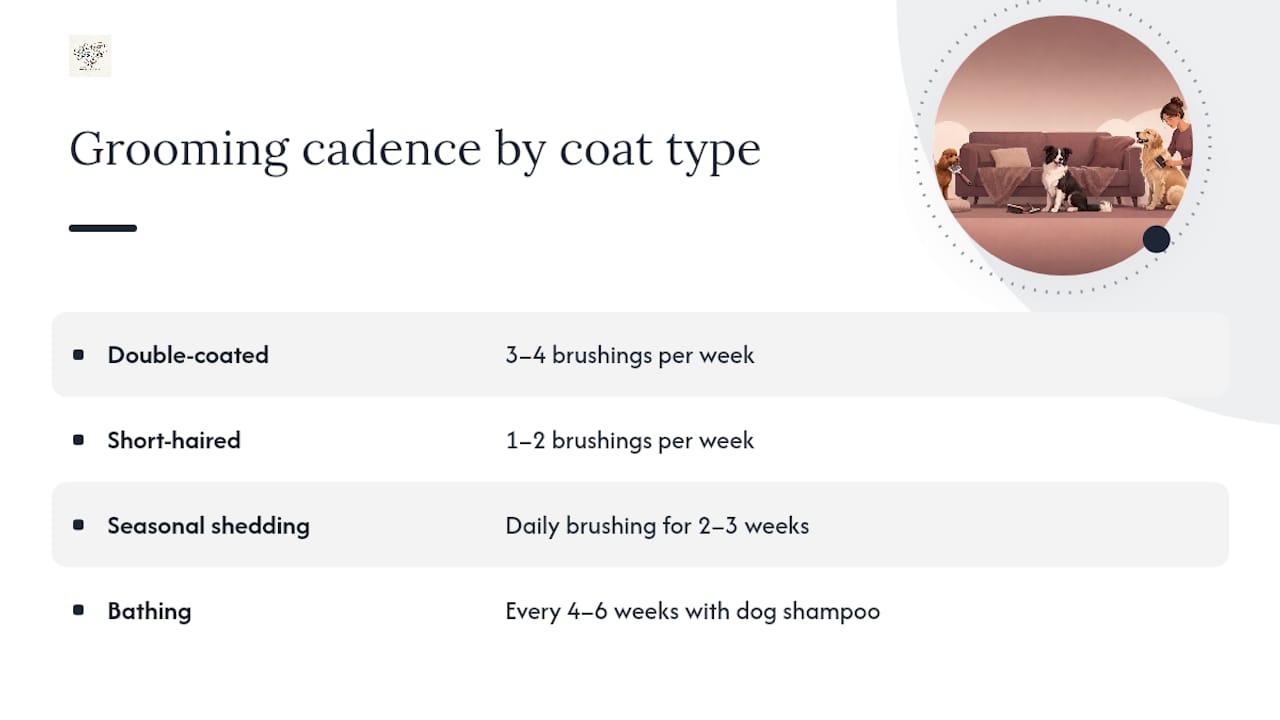
Single-coated and short-haired breeds shed less dramatically and usually do fine with one to two sessions a week. The tool matters as much as the frequency. A slicker brush works well for longer coats, while a rubber curry brush or grooming mitt tends to pull more loose hair from short, dense coats than a standard bristle brush.
Bathing plays a supporting role too. A bath every four to six weeks, using a shampoo formulated for dogs, loosens dead hair before it has a chance to shed naturally around the house. Skipping baths entirely tends to mean more hair ends up on the couch instead of down the drain. During seasonal shedding, whether that’s a spring blowout or a fall coat change, bumping brushing to daily for two or three weeks makes a noticeable dent in what lands on your furniture afterward.
Training Your Dog to Shed Less on the Couch
Training won’t stop shedding, but it can control where the hair actually lands. Teaching a reliable “off” command gives you a way to redirect your dog away from the couch when you need the cushions clean, whether that’s before guests arrive or right after you’ve washed the cover.
Consistency matters more than the specific command you choose. If jumping on the couch is sometimes allowed and sometimes not, dogs get confused about the rule and default to doing what’s comfortable. Pick one standard, either couch access is allowed with a designated blanket down, or it isn’t allowed at all, and stick with it every day.
Positive reinforcement works better here than scolding. Rewarding your dog for using their own bed or a covered section of the couch builds the habit faster than punishing them for jumping onto bare cushions. Treats, praise, and consistent placement of their bed near the seating area all reinforce the behavior you want.
For dogs that are allowed on the couch, which is the reality in most households, training your dog to wait while you place a cover down first turns “protect the couch” into a two-second routine instead of a fight. A few weeks of consistent practice usually gets a dog to associate the cover going down with permission to jump up, which makes the whole system self-enforcing.
Simple DIY Fixes for Everyday Hair Control
You don’t need specialty products for every part of this routine. A rubber dish glove, dampened slightly under a faucet, works almost as well as a purpose-built pet hair tool for pulling embedded hair out of fabric. Run it across the cushion in short strokes, and the hair rolls into small clumps you can pick up by hand or vacuum in seconds.
Dryer sheets do double duty beyond the laundry. Rubbing a used dryer sheet across couch cushions cuts down on the static charge that makes hair cling stubbornly to fabric, making a follow-up vacuum pass noticeably more effective. A balloon, oddly enough, works on the same static principle. Rubbing an inflated balloon over a cushion attracts loose hair almost like a magnet.
For a homemade fabric refresher, a simple mix of water and a splash of fabric softener in a spray bottle, lightly misted and wiped with a microfiber cloth, loosens surface hair and cuts down on odor between full washes. Test any homemade spray on a small hidden section first, especially with waterproof or specialty fabrics, to avoid discoloration.
Old pantyhose stretched over a vacuum crevice attachment can also grab fine hair that regular attachments miss, since the static in the nylon adds extra pulling power beyond what suction alone provides.
Keep the Rest of Your Home Hair-Free Too
A spotless couch surrounded by hair-covered floors and rugs is only half a solution, because hair migrates. Regular vacuuming of nearby carpets and hard floors, ideally two to three times a week in high-traffic dog areas, keeps loose hair from building up and drifting back onto furniture you’ve already cleaned.
Washing pet bedding on the same schedule as your couch cover prevents one clean surface from re-contaminating the other. A dog that naps on an unwashed bed and then hops onto a freshly cleaned couch undoes a chunk of your effort in minutes. Air purifiers with a HEPA filter help with airborne dander and fine hair that settles on surfaces throughout a room, not just the couch itself.
Grooming your dog outside or in a bathroom rather than in the living room keeps loose hair from scattering across the exact furniture you’re trying to protect. A quick once-over with a handheld vacuum on curtains, throw pillows, and pet toys rounds out a home cleaning routine that supports, rather than undercuts, the work you’re doing on the couch.
Manageable Maintenance Beats Perfect Elimination
Every dog owner eventually has to make peace with one fact: there’s no version of this where the couch stays permanently pristine. What separates a stressed household from a calm one isn’t the absence of hair. It’s whether the hair gets handled in small, routine doses instead of piling up into a weekend-consuming deep clean.
Pick one change and commit to it for a month before judging whether the whole system works. Most people who try to overhaul everything at once, new cover, new brushing schedule, new vacuum routine, all in the same week, burn out and abandon it by week two. Add the washable cover first. Once that becomes automatic, layer in the brushing schedule. The spot vacuuming comes last, because by that point you’ll already have far less hair to chase.
Consistency beats intensity here every time. A five-minute brushing session four times a week does more than an hour-long deep clean once a month, because it stops hair from accumulating in the first place rather than reacting to it after the fact. Give the three-part system, cover, brushing, spot cleaning, thirty days before deciding whether it’s working for your dog and your couch.
— Christopher
Shop the PupProtector™ Line for Your Couch
The PupProtector™ line is designed as a washable, waterproof, non-slip throw intended for dogs who actually live on the furniture.
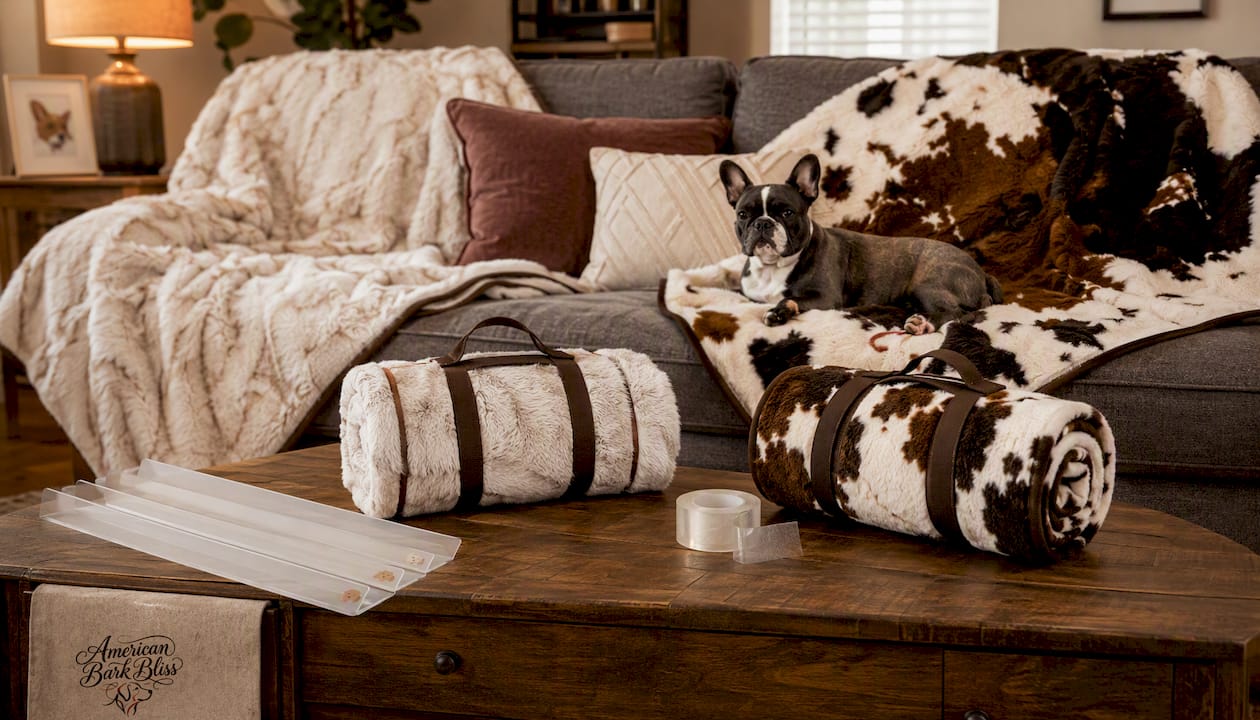
If your dog has a favorite spot with lighter, neutral tones nearby, the PupProtector™ Waterproof Throw Blanket in White with Brown Accents blends into most living rooms while still doing the heavy lifting underneath. For a bolder look that hides hair and everyday wear better, the Brown Faux Cowhide throw gives you the same washable, waterproof construction in a pattern that camouflages light shedding between washes. Measure your dog’s actual lounging spot, not the whole couch, before ordering, so the throw covers the zone that matters instead of leaving gaps at the edges.
Pair either throw with the Under Couch / Bed Blocker to close off the gap underneath your couch where hair and dust collect out of sight. Together, they cover the two spots that cause the most frustration: the cushions your dog naps on and the space underneath that quietly gathers everything else. Head to the product pages to check sizing details and pick the option that fits your couch and your dog’s habits.
Sources
- How to remove pet hair from couch (Real Simple editor picks)
- Best couch covers for dogs (Good Housekeeping)
- Best slipcovers (The Spruce)
- Remove pet hair from couch: 3 tools that work (NexGenPaws)
FAQ
What can I spray on my couch to keep my dog off it?
There’s no reliable spray that keeps a dog off furniture long term, and most homemade citrus or vinegar deterrents fade fast and can stain fabric. A better approach is training with a consistent “off” command combined with a comfortable designated bed near the couch.
What type of fabric will dog hair not stick to?
Leather and faux leather resist hair the most because strands sit on the surface instead of embedding, with tight-weave microfiber and canvas close behind. Textured fabrics like velvet and chenille trap hair the way Velcro does and are the ones to avoid.
What is the best way to get dog hair off a couch?
A rubber brush or dampened rubber glove removes embedded hair more effectively than lint rollers, since rubber creates static friction that lifts hair out of fibers. Follow up with a handheld vacuum and crevice tool for seams and cushion edges.
What is a good guard to prevent a dog from getting on my sofa?
A washable, waterproof throw like the PupProtector™ line doesn’t block access, but it keeps hair contained on a removable layer if your dog is allowed on the couch. If you want to physically limit access to certain areas, an under-couch blocker closes off the space beneath the furniture where dogs often squeeze in.
Leave a comment