

Pet Accessory Industry Terminology: A 2026 Buyer's Guide
TL;DR:
- Pet accessory industry terminology is a structured vocabulary that defines product types, materials, safety standards, and labels. Understanding this lexicon helps sellers ensure compliance, accurately classify products, and avoid costly mistakes.
Pet accessory industry terminology is the standardized set of terms, classifications, and technical language that defines product types, materials, safety standards, and labeling across the pet supply market. Regulatory bodies like the Consumer Product Safety Commission (CPSC) and ASTM International set the testing and safety vocabulary that manufacturers and sellers must follow. Organizations like the Association of American Feed Control Officials (AAFCO) govern labeling language for food-contact products. Knowing this pet accessory lexicon before you source or sell a single product prevents costly compliance mistakes and builds real credibility with suppliers and buyers alike.
What is pet accessory industry terminology and why does it matter?
Pet accessory terminology is not casual shorthand. It is a structured vocabulary that covers product classification, material specifications, quality control standards, and regulatory labeling. When you use the correct terms, suppliers understand your requirements precisely. When you don’t, you risk receiving the wrong product, failing a safety audit, or misleading customers.
The pet industry operates on shared definitions because the stakes are real. A collar that fails a tensile strength test can allow a dog to escape or get injured. A food bowl labeled “BPA-free” without third-party verification is a liability. Mastering the common terms in the pet industry is the first practical step toward sourcing products that are safe, compliant, and marketable.
How are pet accessories categorized and classified?
Pet supplies taxonomy classifies products first by pet type, then by product function, and finally by item type. This three-level hierarchy organizes inventory so buyers, retailers, and AI-powered catalog tools can locate and filter products accurately. The system covers over 220 pre-built categories with more than 90% AI classification accuracy across major pet types.
That accuracy matters because catalog errors cost sales. A “dog guard” and a “pet barrier” sound interchangeable to a casual buyer, but professional catalogs separate them by mounting method to fit specific vehicle models. Misclassifying a product at the item-type level pushes it into the wrong search results and frustrates buyers who need an exact fit.
Attributes like size suitability and life stage add a second layer on top of categorical classification. A large-breed orthopedic bed and a puppy crate pad both fall under “dog beds,” but their attributes separate them for filtering purposes. Getting both the category and the attributes right is what makes a product listing work in a modern e-commerce catalog.
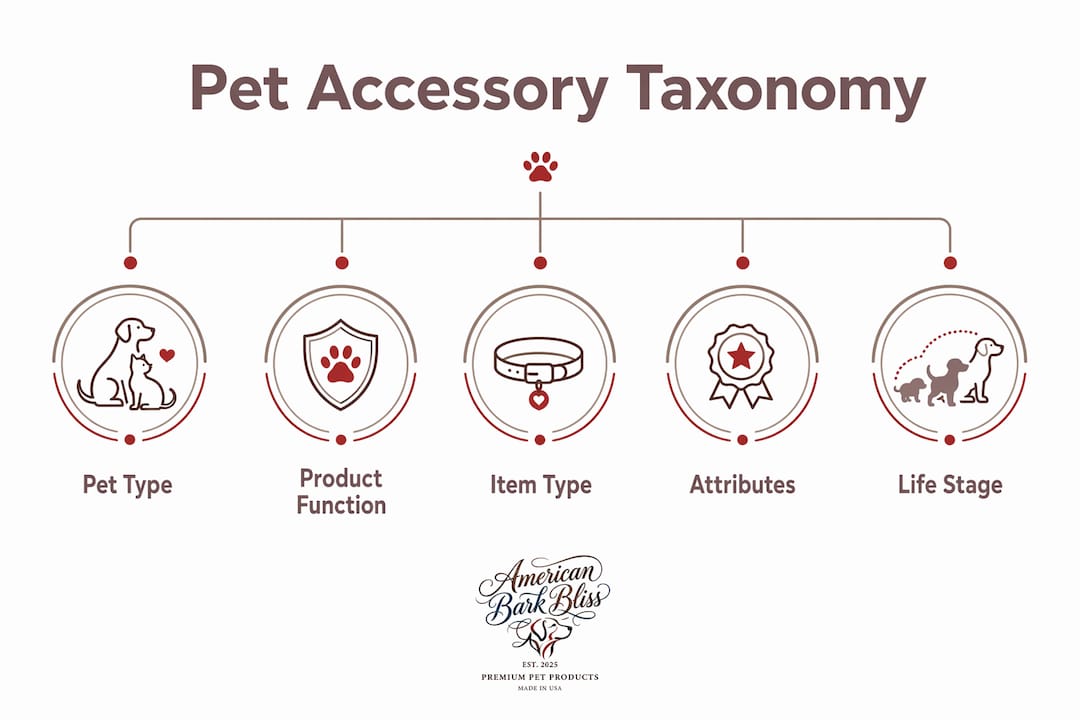
| Taxonomy level | Example: dog wear | Example: cat furniture |
|---|---|---|
| Pet type | Dog | Cat |
| Product function | Apparel and wear | Furniture and habitat |
| Item type | Collar | Cat tree |
| Attribute | Size: large, material: nylon | Height: 48 in, material: sisal |
Pro Tip: When listing a product, always assign both the item type and at least two attributes. Listings with complete attribute data rank higher in filtered searches on most e-commerce platforms.
What materials are used in pet accessories and what do the terms mean?
Material choices directly affect cost, durability, safety, and how a product is positioned in the market. Nylon offers high tensile strength and abrasion resistance, making it the standard for working-dog leashes and harnesses. Polyester webbing is preferred when UV resistance and color retention matter more than raw strength, which is why it shows up in fashion collars and decorative leads. Understanding the nylon vs leather distinction, for example, is one of the first material decisions any new buyer faces.
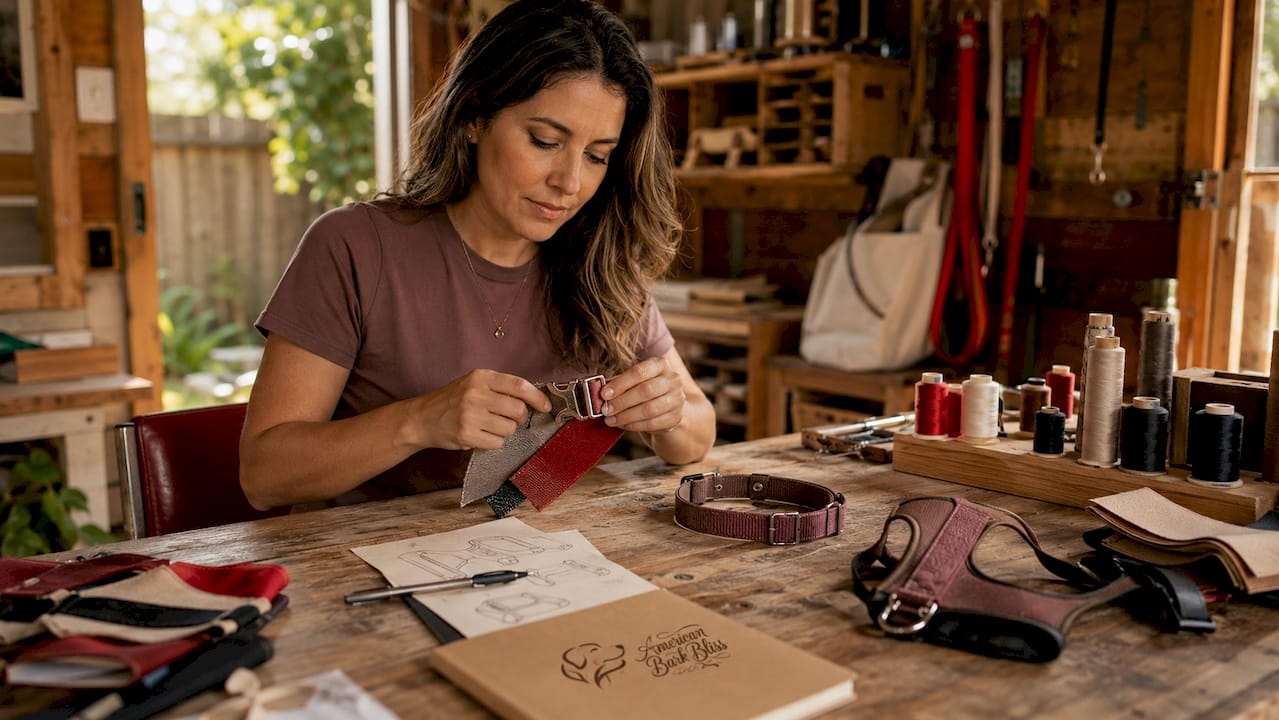
Hardware materials carry their own terminology. Zinc alloy is a low-to-medium cost option priced at approximately $0.50–$1.50 per unit. Stainless steel 316L commands premium pricing at approximately $2.00–$6.00 per unit and comes with nickel-free certification, which matters for dogs with metal sensitivities. That price gap reflects a real difference in corrosion resistance and load-bearing capacity, not just branding.
Safety certifications tied to materials include BPA-free for plastic food and water bowls, lead-free for painted or coated surfaces, and nickel-free for metal hardware. These are verifiable claims backed by third-party lab testing. Terms like “eco-friendly” or “natural” carry no regulatory definition and require no testing to use.
Customization levels also affect how material terms appear in supplier negotiations. Template-based customization (logo stamping) carries a minimum order quantity (MOQ) of 50–100 units. Full custom molds require an MOQ of 500–1,000+ units and cost premiums ranging from 10% to 300%. Knowing these terms prevents sticker shock when you first contact a manufacturer.
| Material | Key property | Typical certification | Cost tier |
|---|---|---|---|
| Nylon | High tensile strength | N/A (mechanical spec) | Budget to mid |
| Polyester webbing | UV and color resistance | N/A (mechanical spec) | Budget to mid |
| Zinc alloy | Lightweight hardware | Lead-free | Low to medium |
| Stainless steel 316L | Corrosion-resistant hardware | Nickel-free | Premium |
| TPR (thermoplastic rubber) | Flexible, chew-resistant | BPA-free | Mid to premium |
Pro Tip: Always ask suppliers for the specific grade of material, not just the material name. “Stainless steel” without a grade number (304 or 316L) tells you nothing about corrosion resistance or safety.
What testing and safety terms do new sellers need to know?
Safety terminology in pet accessory manufacturing centers on three areas: material testing, in-process quality control, and pre-shipment inspection. Each stage has its own vocabulary, and skipping any one of them creates compliance gaps that can result in product recalls or liability claims.
Key terms every new seller must understand:
- Accelerated Aging Tests simulate long-term wear to predict product lifespan, especially for hard toys and food bowls. A product that passes this test has been stress-tested beyond normal use conditions.
- Biocompatibility Testing confirms that materials in direct contact with a pet’s skin or mouth do not cause irritation or toxic reactions.
- AQL (Acceptable Quality Level) is the statistical sampling standard used during pre-shipment inspection. An AQL of 2.5 means the inspector will reject the batch if more than 2.5% of sampled units are defective.
- CE marking confirms a product meets European safety, health, and environmental requirements. It is mandatory for products sold in EU markets.
- RoHS compliance restricts hazardous substances like lead and mercury in electronic or coated components.
- CPSIA (Consumer Product Safety Improvement Act) governs lead and phthalate limits in products that may contact children or animals in the US market.
- FDA approval applies to food-contact items like bowls and treat dispensers, confirming materials are safe for contact with food.
Multi-stage quality control with material inspection and pre-shipment checks is standard practice among reputable manufacturers. Buyers should request certificates of conformity for each stage, not just a final inspection report.
Tensile strength of hardware components like D-rings and buckles is a specification frequently overlooked by new buyers. Proper load distribution matched to the dog’s weight reduces both injury risk and the chance of escape. A buckle rated for a 20-pound dog will fail on a 70-pound dog under stress.
Pro Tip: Request independent lab test reports, not just manufacturer self-declarations. Third-party testing from accredited labs like SGS or Bureau Veritas carries legal weight; a supplier’s own certificate does not.
How do you tell regulated labeling terms from marketing buzzwords?
Labeling language in the pet accessory and pet food space splits into two categories: terms with legal definitions and terms that are pure marketing. Knowing the difference protects you from making claims you cannot defend and from buying products that do not deliver what the label implies.
“Human-Grade” is a regulated term that requires ingredients to meet human food facility standards. “Premium,” “holistic,” and “gourmet” carry no legal definition and require no testing or certification to use. Any manufacturer can print them on a label without consequence.
AAFCO protein content rules create a precise hierarchy for pet food labeling. “Chicken Dog Food” requires 95% chicken in the formula. “Chicken Dinner” requires only 25%. “With Chicken” drops to just 3%. “Chicken Flavor” requires only a detectable amount. That single word change represents a 92-percentage-point difference in actual content. Understanding this hierarchy is critical for anyone sourcing or selling pet nutrition products.
The same logic applies to accessory labeling. “Orthopedic” on a dog bed has no regulatory definition. “Certified orthopedic foam” backed by a density rating (measured in pounds per cubic foot) is a verifiable claim. Always look for the specific standard or test behind a term, not just the term itself. The role of quality in dog accessories comes down to exactly this: verifiable specs beat marketing language every time.
| Label term | Regulatory status | What it actually means |
|---|---|---|
| Human-Grade | Regulated (USDA/FDA) | Meets human food facility standards |
| Premium | Unregulated | No legal definition; marketing only |
| Holistic | Unregulated | No legal definition; marketing only |
| Chicken Dog Food | Regulated (AAFCO) | Minimum 95% chicken by weight |
| With Chicken | Regulated (AAFCO) | Minimum 3% chicken by weight |
| BPA-free | Regulated (FDA for food contact) | Verified absence of bisphenol A |
| Orthopedic | Unregulated | No legal definition without a density spec |
Key Takeaways
Mastering pet accessory industry terminology requires understanding product taxonomy, material grades, safety certifications, and the difference between regulated labels and unverified marketing claims.
| Point | Details |
|---|---|
| Taxonomy drives discoverability | Classify products by pet type, function, and item type to improve catalog accuracy and search performance. |
| Material grade matters | Always request the specific material grade (e.g., 316L stainless steel) to verify safety and durability claims. |
| Certifications over buzzwords | Prioritize CE, RoHS, CPSIA, and FDA certifications over unregulated terms like “premium” or “holistic.” |
| AAFCO rules reveal real content | A single label word like “With Chicken” versus “Chicken Dog Food” signals a 92-percentage-point difference in ingredient content. |
| MOQ and customization are linked | Template customization starts at 50–100 units; full custom molds require 500–1,000+ units with significant cost premiums. |
Why terminology precision changed how I source and sell
The first time I negotiated with a manufacturer using vague terms, I received a collar made from a zinc alloy I had not specified. The hardware looked identical to stainless steel in photos. It failed a basic corrosion test within three months. That experience taught me that “metal hardware” is not a specification. It is a placeholder that costs you money.
The second lesson came from catalog listings. I had products buried in search results because I had classified a harness under “dog apparel” instead of “dog harnesses” at the item-type level. Fixing the taxonomy doubled the organic click-through rate on that listing within 30 days. The product had not changed. The terminology had.
What I find most underestimated by new market entrants is the labeling gap between regulated and unregulated terms. Buyers read “premium” and assume it means something. It means nothing without a supporting specification. When you see that word on a product you are considering sourcing, your next question should always be: “What test or standard backs this claim?” If the supplier cannot answer, the term is decoration.
The American-made vs imported distinction is another area where terminology gets murky. “Made in the USA” has a specific FTC definition requiring that all or virtually all of a product be made domestically. “Assembled in the USA” does not carry the same weight. Knowing the difference protects you legally and helps you communicate honestly with buyers who care about sourcing.
My advice: build a personal glossary as you go. Every time you encounter a new material grade, certification, or labeling term, write down its definition and the standard that governs it. That document becomes your most valuable sourcing tool.
— Christopher
Quality you can read on the label at Americanbarkbliss
Americanbarkbliss applies the terminology covered in this article directly to its product listings. Every product description names the specific material, not just a category. The Wolfdoge Signature Leash lists hardware specifications and material grades so you can evaluate it against the standards discussed here. The leather dog collar carries clear material sourcing details rather than vague “premium leather” claims.
Americanbarkbliss curates American-made pet accessories built to verifiable specifications. If you want products where the label matches the reality, the catalog is a practical place to start.
FAQ
What are pet accessories defined as in the industry?
Pet accessories are defined as non-food products designed to support a pet’s care, comfort, safety, or enrichment, including collars, leashes, beds, toys, grooming tools, and feeding equipment. The industry classifies them by pet type, product function, and item type within a standardized taxonomy.
What does AQL mean in pet product manufacturing?
AQL stands for Acceptable Quality Level, a statistical sampling standard used during pre-shipment inspection to determine the maximum defect rate a buyer will accept in a production batch. An AQL of 2.5 is common in pet accessory manufacturing.
Which labeling terms on pet products are legally regulated?
Terms like “Human-Grade,” AAFCO protein content descriptors (such as “Chicken Dog Food” or “With Chicken”), and certifications like CE, RoHS, and FDA approval carry legal definitions. Terms like “premium,” “holistic,” and “orthopedic” (without a supporting density spec) are unregulated marketing language.
What is the difference between nylon and polyester webbing in pet accessories?
Nylon offers higher tensile strength and abrasion resistance, making it better for working or high-activity dogs. Polyester webbing provides superior UV resistance and color retention, which is why it appears more often in fashion-focused collars and leashes.
What is MOQ and why does it matter when sourcing pet accessories?
MOQ stands for minimum order quantity, the smallest number of units a manufacturer will produce in a single run. Template-based customization typically requires an MOQ of 50–100 units, while full custom molds require 500–1,000+ units with cost premiums up to 300%.
Leave a comment