

30–70 mg/kg Dose: Omega-3 for Dogs, Expect Results in 12–16 Weeks
Yes. EPA and DHA omega-3 supplements can help dogs with conditions like itchy skin and osteoarthritis when given at evidence-based doses under your veterinarian’s guidance. The benefit is real but conditional: it depends on hitting the right dose, sticking with it for months, and picking a quality product with actual EPA+DHA content on the label.
TL;DR:
- Proper dosing depends on knowing the EPA+DHA content per kilogram of the dog’s weight, not just the total fish oil volume.
- A gradual titration over four weeks is recommended to prevent gastrointestinal upset when increasing omega-3 intake.
- Fish oil’s benefits may take 12 to 16 weeks to fully manifest, with improvements in skin, joints, heart, and cognitive function.
- Always verify product EPA+DHA levels and consult a veterinarian before starting supplementation, especially with dogs on blood-thinning medications or with bleeding risks.
Table of Contents
- What the Research Shows About Omega-3 for Dogs
- How Much Fish Oil to Give a Dog: Dosing by Weight
- Liquid, Capsule, or Chew: Which Form Works Best?
- Is Fish Oil Safe for Dogs? Side Effects and Interactions
- How Long Until You See Results?
- Why This Guide Leans on Data, Not Guesswork
- Matching the Right Omega-3 Product to Your Dog
- Sources
- FAQ
What the Research Shows About Omega-3 for Dogs
The clinical evidence on omega-3 for dogs is stronger than most supplement categories, but it’s not uniform across every claimed benefit. A systematic review of EPA/DHA supplementation found therapeutic benefits for allergic dermatitis, haircoat disorders, osteoarthritis, dry eye (keratoconjunctivitis sicca), and valvular heart disease. The catch: the review pooled 23 studies, and study quality varied a lot. Some trials were small, some used different dosing protocols, and that inconsistency matters when you’re deciding how much weight to put on any single claim.
The mechanism behind the benefits is fairly simple. EPA and DHA compete with arachidonic acid in cell membranes, which shifts the body toward producing less inflammatory signaling compounds. Less inflammation shows up clinically as calmer skin, looser joints, and in some cases, better cardiac function. This is also why fish oil beats flaxseed oil for dogs: dogs convert plant-based ALA to EPA/DHA very inefficiently, so a marine or algae source gets you the active compounds directly instead of hoping for a conversion that barely happens.
Here’s where omega-3 supplements for dogs tend to show up clinically:
- Skin and coat: reduced itching and inflammation in allergic dermatitis
- Joints: less pain and stiffness associated with osteoarthritis
- Heart: supportive role in valvular disease management
- Eyes: improvement in dry eye symptoms
- Cognition: DHA supports brain development in puppies and may support older dogs’ cognitive function
One trial worth knowing: a 16-week study on dogs given roughly 70 mg of combined EPA+DHA per kilogram daily saw their Omega-3 Index rise from 1.4% to 3.3%, alongside measurably lower pain scores in small and medium dogs. That’s the kind of number that turns “fish oil helps” into something you can actually plan around.
How Much Fish Oil to Give a Dog: Dosing by Weight
Most of the confusion around omega-3 for dogs comes down to one thing: labels rarely tell you the mg of EPA+DHA per kg of body weight, which is the number that actually matters. Total fish oil volume is meaningless without knowing the EPA+DHA concentration inside it.
Clinical dosing generally falls into two brackets. A maintenance or general wellness dose sits around 30 mg combined EPA+DHA per kg of body weight daily, based on National Research Council guidance. Therapeutic doses, aimed at osteoarthritis or dermatitis, run higher, often near the 70 mg/kg/day mark used in the 16-week trial that showed measurable pain reduction. Your veterinarian should confirm which bracket fits your dog’s condition.
Using a clinic-derived dosing chart as a reference point, here’s roughly how that translates by weight:
| Dog weight | Approximate therapeutic dose range of combined EPA+DHA |
|---|---|
| — | from low to higher hundreds of milligrams |
| 30 lb | roughly around one to nearly two thousand milligrams |
| 60 lb | about two to nearly four thousand milligrams |
To convert this into servings, check the label for milligrams of combined EPA+DHA per capsule or per milliliter, not just “fish oil” or “omega-3 fatty acids” as a lump figure.
Jumping straight to a full dose often triggers loose stool. A gradual titration works better:
- Start at about 25% of the target dose for the first week.
- Increase to 50% in week two if stools stay normal.
- Move to 75% in week three.
- Reach full target dose by week four, watching for GI upset at each step.
Pro Tip: Keep a simple log of stool consistency during titration. If you see loose stool at any step, hold that dose for a few extra days before increasing again instead of pushing forward on schedule.
Liquid, Capsule, or Chew: Which Form Works Best?
The right form depends less on the dog’s condition and more on the dog’s personality and your patience for measuring things.
- Liquid fish oil is easiest for precise, small-increment dosing, which matters for toy and small breeds where a full capsule might overshoot the target. It oxidizes faster once opened, though, so refrigeration after opening is non-negotiable.
- Softgel capsules deliver a fixed, known dose every time, which makes math simple for medium and large dogs. They’re also easier to store since the oil stays sealed away from air until you pierce it.
- Chews win on palatability, since most dogs treat them as a treat rather than medicine, but the EPA+DHA content per chew tends to be lower and less precise than capsules or liquid.
Rancid fish oil smells sharp and sour, almost like old paint. If a product hits that note, throw it out. Fresh fish oil should smell mild and faintly fishy at most.
For picky dogs, piercing a capsule and mixing the oil into a spoonful of wet food usually works better than trying to get them to swallow it whole. A liquid poured directly over kibble also masks the smell for dogs that are suspicious of anything new in their bowl.
Is Fish Oil Safe for Dogs? Side Effects and Interactions
Fish oil is generally well tolerated, but it isn’t risk-free, and a few interactions deserve real attention before you start.
- Common, mild: loose stool and occasional gas, usually resolved by slowing down titration
- Less common, more serious: omega-3s have mild blood-thinning effects, so caution is warranted in dogs on anticoagulant or NSAID medications, dogs with a history of bleeding disorders, or dogs scheduled for surgery
- Pancreatitis history: high-fat supplements, including fish oil, warrant a vet conversation first in dogs prone to pancreatitis
Talk to your vet before starting if your dog is on blood thinners, NSAIDs, has a bleeding disorder, or has an upcoming surgery. A systematic review supporting omega-3’s therapeutic benefits also flagged that study designs varied enough that individualized veterinary guidance matters more than a one-size-fits-all dose.
Watch for persistent vomiting, unexplained bruising or bleeding, or sudden lethargy. Any of those warrants a call to your vet, not a wait-and-see approach.
How Long Until You See Results?
Omega-3 supplements for dogs don’t work overnight, and expecting fast results is the most common reason owners quit too early. The 16-week trial that tracked Omega-3 Index and pain scores found the biggest gains showed up as levels approached steady-state, generally around the 12 to 16-week mark.
To track progress without guessing:
- Take baseline photos of skin and coat condition before starting
- Note mobility, like how easily your dog gets up or handles stairs, before you begin
- Schedule a vet check around week 12 to 16 to evaluate real change, not just how you feel about it
- Keep dosing consistent. Stopping early, even after visible improvement, can reverse the gains before they solidify
Some conditions, especially advanced osteoarthritis, may need a longer trial or a dose adjustment with your vet rather than a flat 16-week cutoff.
Why This Guide Leans on Data, Not Guesswork
This guide draws on peer-reviewed dosing trials and veterinary dosing charts rather than marketing copy, because omega-3 is one of the few supplement categories with actual mg/kg data behind it. Christopher, the author, approaches pet health content the way a good vet tech approaches a chart: check the numbers, cite the source, and flag where the evidence is thin.
The supplement lineup around that same standard includes omega-3 products that carry a clear EPA+DHA count per serving, which is the number this guide keeps coming back to. If a chart says your dog needs roughly 950 mg of combined EPA+DHA daily, the goal is a label you can actually match to that number instead of guessing.
— Christopher
Matching the Right Omega-3 Product to Your Dog
Once you know your dog’s target mg/kg dose, picking a product becomes a math problem instead of a guessing game.
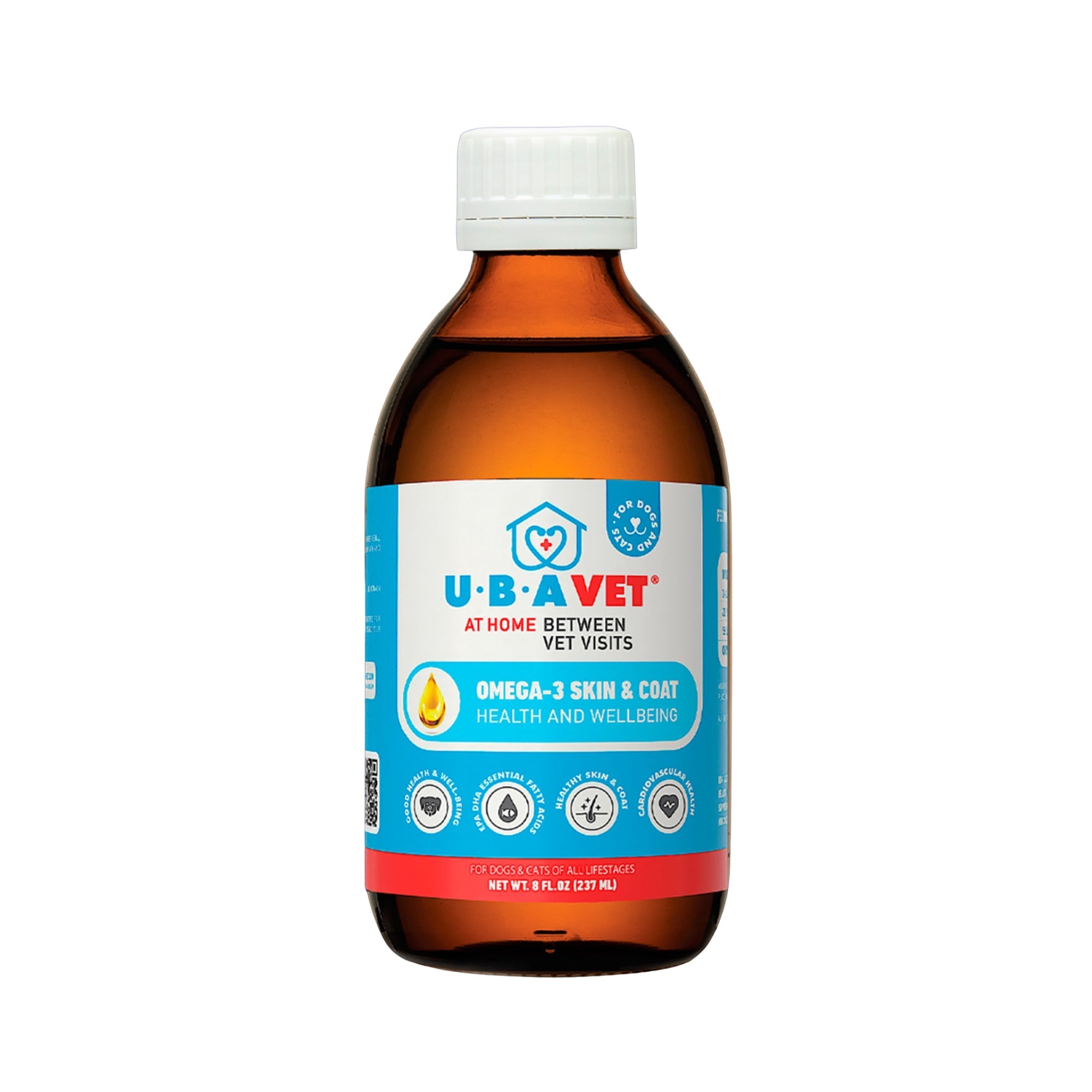
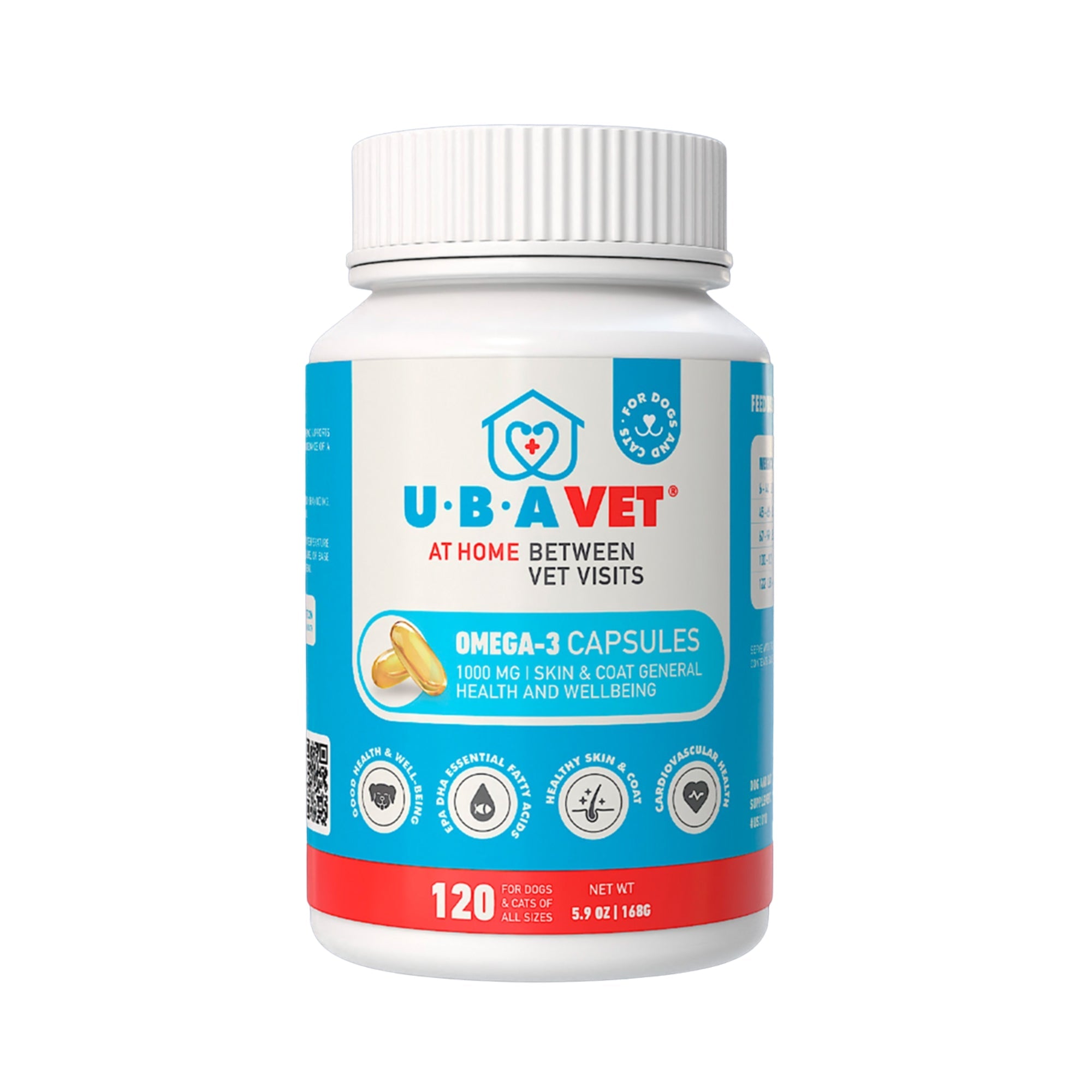
The UBAVET Omega-3 Capsules 1000 mg work well for owners who want a fixed, repeatable dose. At 1,000 mg per capsule, a 30 lb dog needing roughly 950 to 1,900 mg of combined EPA+DHA daily would land close to one capsule a day at the lower end, adjusted after checking the specific EPA+DHA split on the label. For small dogs or picky eaters where precise, incremental dosing matters more than convenience, the UBAVET Omega-3 liquid lets you measure in small amounts and mix it right into food. Owners who prefer a single-ingredient option without added fillers often reach for FreezBone Wild Salmon Oil, a straightforward salmon oil that pairs naturally with the titration schedule outlined above.
If your dog’s osteoarthritis is the main concern, pairing omega-3 with a joint-specific approach can help. Americanbarkbliss’s guide to dog joint supplements walks through how glucosamine and omega-3 work together, and the glucosamine for dogs article breaks down that pairing further. Start with your dog’s target mg/kg dose, pick the product form that fits your routine, and check the product page for exact EPA+DHA content before your first dose.
This article is general information, not a substitute for advice from a qualified doctor. Consult a qualified healthcare professional about your own circumstances before acting on anything here.
Sources

- Therapeutic effect of EPA/DHA supplementation in neoplastic and non-neoplastic companion animal diseases: A systematic review
- Canine fish oil dosing chart – CSU Veterinary Health System
FAQ
What is the best source of omega-3 for dogs?
Marine-based fish oil (like salmon or fish oil blends) is generally preferred over plant-based ALA sources because dogs convert ALA to usable EPA/DHA very inefficiently. Algae-based omega-3 is a solid alternative for dogs that can’t tolerate fish products.
Should you give your dog omega-3?
For dogs with skin allergies, osteoarthritis, dry eye, or certain heart conditions, omega-3 supplementation has documented therapeutic benefit when dosed correctly. Healthy dogs without these conditions can still benefit from general coat and joint support at maintenance doses, but it’s worth confirming with your vet first.
How much omega-3 can I give my dog?
Maintenance doses generally start around 30 mg combined EPA+DHA per kg of body weight daily, while therapeutic doses for conditions like osteoarthritis often run closer to 70 mg/kg/day, based on clinical trial dosing. Always confirm the target dose with your veterinarian based on your dog’s specific condition.
Does omega-3 help dogs with itching?
Yes, EPA and DHA reduce the inflammatory response behind allergic dermatitis, which is one of the best-supported benefits in the veterinary research on omega-3 for dogs. Improvement typically takes several weeks of consistent dosing rather than showing up immediately.
Leave a comment