

Avoid Vitamin D Risk: Multivitamin vs Single Supplement for U.S. Dogs
Most healthy dogs eating a commercial diet labeled “complete and balanced” under AAFCO standards do not need a daily multivitamin. Targeted single supplements, like omega-3s for skin issues or glucosamine for aging joints, make more sense when a veterinarian identifies an actual gap. The main exceptions are dogs on homemade or raw diets, picky eaters who chronically under-eat, dogs recovering from illness, or any dog with a vet-confirmed deficiency. In those cases, supplementing under veterinary guidance is the right move.
TL;DR:
- Most healthy dogs eating a properly balanced commercial diet do not need multivitamins, especially if they eat the recommended amount consistently and are confirmed healthy by a veterinarian.
- Multivitamins are mainly useful for dogs on homemade, raw, or unbalanced diets, or those with diagnosed deficiencies, but poorly regulated labeling can lead to dosing issues and potential toxicity.
- Single-ingredient supplements like omega-3s or glucosamine allow targeted support, offering more precise dosing and monitoring than broad-spectrum multivitamins.
- Combining multiple single supplements requires careful vet oversight to prevent nutrient excess, particularly with fat-soluble vitamins like D.
- The most cost-effective and safe approach for healthy dogs is focusing on a balanced diet and consulting a vet before considering any supplement.
Table of Contents
- Do Dogs Need Multivitamins If They Eat Commercial Food?
- What’s Actually in a Dog Multivitamin?
- The Real Pros and Cons of Multivitamins for Dogs
- When Single Supplements Work Better Than a Multivitamin
- Precision vs Complexity: The Tradeoffs of Single Supplements
- How Do I Decide Between a Multivitamin and a Single Supplement?
- Does Science Actually Back Multivitamins or Single Supplements More?
- Which Life Stages or Conditions Actually Call for a Multivitamin?
- Is a Multivitamin or Single Supplement the Better Value?
- Our Take on Choosing the Right Supplement Approach
- Vet-Approved Supplement Options Worth Considering
- Sources
- FAQ
Do Dogs Need Multivitamins If They Eat Commercial Food?
The AAFCO “complete and balanced” statement on a bag or can means that food, fed as the sole diet at the right amount, meets a dog’s known nutrient requirements for a specific life stage. That’s the whole point of the label. A puppy formula and a senior formula both carry that claim, but they are balanced differently, which is why matching the food to your dog’s actual life stage matters as much as the AAFCO seal itself.
Where things get shakier: homemade diets that skip professional formulation, raw diets assembled from a blog recipe instead of a board-certified nutritionist’s plan, therapeutic prescription diets a dog refuses to eat consistently, and any dog who chronically eats less than the label recommends. PetMD notes most dogs on a certified commercial diet simply don’t need multivitamins layered on top.
Before assuming your dog needs anything extra, check three things:
- Does the bag or can actually say “complete and balanced” for your dog’s current life stage?
- Is your dog eating the recommended amount consistently, not picking at half of it?
- Has your vet confirmed the diet is appropriate at your dog’s last checkup?
What’s Actually in a Dog Multivitamin?
A typical dog multivitamin bundles vitamin A, a B-complex blend, a modest dose of vitamin D, vitamin E, vitamin K, and minerals like zinc and iron into one chew or tablet. The formulation logic is broad coverage rather than a fix for one specific problem.
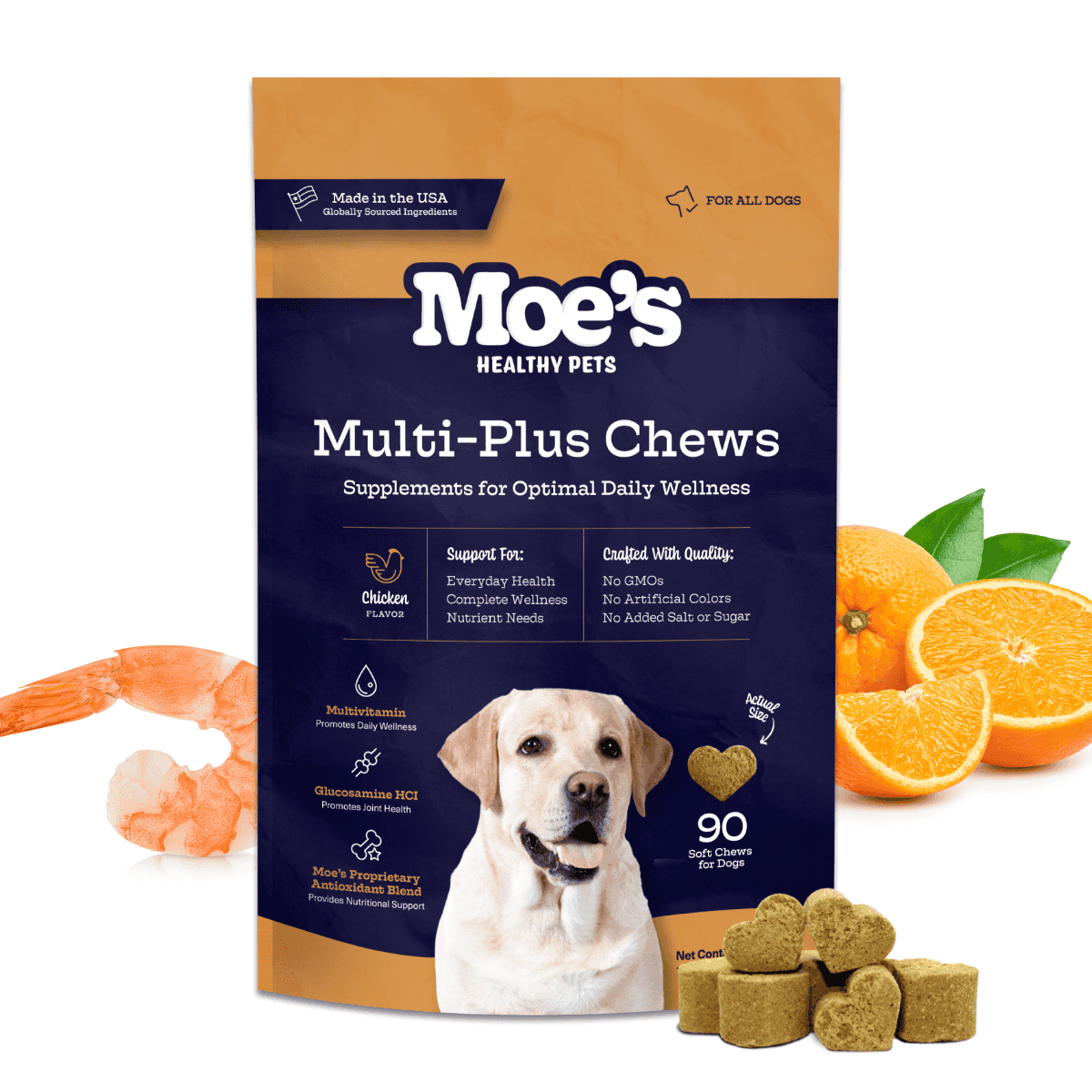
Two issues come up constantly with these products. First, dosing is inconsistent across brands, and a “one size fits all” chew rarely accounts for a 10 pound terrier versus an 80 pound Labrador. Second, human vitamins are not an acceptable substitute. Many contain xylitol as a sweetener, which is toxic to dogs, and human dosing is calibrated for a 150 pound adult, not a dog a fraction of that size.
There’s also a structural problem behind the product itself: the FDA does not regulate pet supplements with the same rigor it applies to pet food or drugs, which means:
- Label accuracy varies widely between brands and manufacturers.
- Potency can drift from what the label claims, sometimes significantly.
- Quality-assurance markers, like NASC membership, are voluntary, not required.
That last point is why label-reading matters more here than with almost any other pet product category.
The Real Pros and Cons of Multivitamins for Dogs
Multivitamins earn their keep in a narrow set of circumstances. Where they fall short, they fall short in a specific, predictable way.
- Pro: bridging gaps in homemade diets. A multivitamin can plug nutritional holes in a home-cooked meal plan, particularly one not formulated by a veterinary nutritionist.
- Pro: broad-spectrum support for under-eaters. Dogs recovering from surgery or illness who aren’t eating enough volume can benefit from a general boost rather than a single targeted nutrient.
- Con: diet unbalancing. Adding a multivitamin on top of an already complete diet risks pushing certain nutrients past safe ranges, especially fat-soluble ones that accumulate in the body instead of flushing out.
- Con: low potency or mismatched ratios. Some formulas are diluted enough to do little, while others carry nutrient ratios that don’t match what your specific dog actually needs.
Vets tend to recommend multivitamins for homemade-diet dogs and skip them entirely for a healthy dog already eating a certified commercial food. That distinction shows up in exam rooms more than any marketing claim does.
When Single Supplements Work Better Than a Multivitamin
Single-ingredient supplements exist to solve one problem well instead of touching everything a little. Because they isolate one nutrient, a vet can calibrate the dose to your dog’s exact weight and condition instead of relying on a generic multivitamin ratio.
The most common evidence-backed options include:
- Omega-3 fatty acids for skin inflammation, dull coats, and general joint comfort.
- Glucosamine and chondroitin for aging joints and early-stage osteoarthritis.
- Probiotics for digestive upset, post-antibiotic gut recovery, or chronic loose stools.
- A single vitamin, such as vitamin B12 or vitamin E, when bloodwork actually confirms a deficiency.
VCA Hospitals points out that single supplements are preferable specifically when a veterinarian has diagnosed a defined need, because that structure allows targeted dosing and straightforward monitoring afterward. These come in chews, liquids, and pills, and which form your dog tolerates often matters more than which brand you pick.
Precision vs Complexity: The Tradeoffs of Single Supplements
Single supplements give you precision. You know exactly what your dog is getting, at what dose, for what reason, and you can track whether it’s working within a few weeks instead of guessing.
The tradeoff is complexity once you’re managing more than one. A senior dog on a joint supplement, a fish oil capsule, and a probiotic is effectively running three separate dosing schedules, and each one needs to be checked against the others.
- Advantage: targeted therapy means fewer unnecessary nutrients entering your dog’s system.
- Advantage: monitoring is simpler because you’re watching for one effect, not several at once.
- Limitation: stacking multiple single supplements can create cumulative dosing issues, particularly with fat-soluble vitamins that build up over time.
- Limitation: more products mean more label-reading and more chances for a missed interaction.
Pro Tip: Before adding a second or third supplement, list every product your dog takes, including treats with added vitamins, and hand that list to your vet. Cumulative vitamin D from three different sources is how otherwise careful owners end up with a toxicity problem.
How Do I Decide Between a Multivitamin and a Single Supplement?
Work through this in order rather than picking a product first and justifying it after.
- Check the food label. Confirm it says “complete and balanced” for your dog’s current life stage, not a generic adult formula fed to a growing puppy or a senior dog with different needs.
- Identify actual risk factors. A home-cooked diet, chronic poor appetite, a diagnosed joint condition, or a documented skin issue are legitimate reasons to look further. A healthy dog eating well on a certified diet is not.
- Talk to your vet before buying anything. Ask for bloodwork if you suspect a real deficiency instead of guessing based on symptoms alone.
- If you do supplement, read the label like it matters. Look for a quality-assurance marker, dose by your dog’s actual weight, and watch for vomiting, lethargy, or appetite changes in the first few weeks.
Unsupervised over-supplementation is not a theoretical risk. The FDA has documented vitamin D toxicity cases in dogs severe enough to cause kidney failure and death, usually from stacking multiple products containing the same fat-soluble vitamin without realizing it.
That single fact should reframe how you think about “extra” supplements. More is not automatically safer, and with fat-soluble vitamins specifically, more can be dangerous.
Does Science Actually Back Multivitamins or Single Supplements More?
The evidence base looks very different depending on which category you’re evaluating. Single-nutrient supplements have a clearer track record because they’re easier to study. Omega-3 fatty acids show a consistent, well-documented benefit for inflammatory skin conditions and coat quality, which is why PetMD lists them alongside glucosamine and probiotics as the supplements with the strongest clinical rationale. Glucosamine and chondroitin have a long history of veterinary use for joint support, particularly in larger breeds prone to early osteoarthritis.
Multivitamins are harder to study as a category because “multivitamin” isn’t one product. It’s dozens of different formulations with different ratios, different potencies, and different target claims, which makes it nearly impossible to run a clean trial that says “multivitamins work” or “multivitamins don’t.” What research and veterinary guidance do agree on is narrower and more useful: dogs already eating an AAFCO-complete commercial diet show no measurable benefit from adding a multivitamin on top, and the main documented risk from unnecessary use is nutrient excess rather than nutrient gain.
This is the practical takeaway. If you’re choosing a supplement based on evidence rather than marketing, single-ingredient products aimed at a specific, diagnosed issue have far more research behind them than a general multivitamin fed to an already healthy dog. The multivitamin case gets stronger only when the diet itself is the problem, not the dog’s general health status.
Which Life Stages or Conditions Actually Call for a Multivitamin?
Life stage and diet type do more to answer this question than age alone. Puppies on a certified puppy formula don’t need a multivitamin. Puppies on an improvised homemade diet often do, because growth stages are unusually sensitive to nutrient ratios and mistakes compound fast.
Senior dogs are a more nuanced case. Many senior dogs benefit less from a broad multivitamin and more from targeted single supplements addressing what actually changes with age, primarily joint health and sometimes cognitive support. A vet-approved supplement guide for senior dogs generally points toward glucosamine, omega-3s, and antioxidant support rather than a general multivitamin, because aging tends to create specific problems rather than a uniform vitamin shortfall.
Dogs recovering from illness or surgery sometimes need a temporary multivitamin if appetite is suppressed and they’re not eating enough volume to get normal nutrient intake, but this is usually short-term and vet-directed, not a permanent addition. Pregnant and nursing dogs have elevated nutrient needs that a vet may address with targeted supplementation rather than a generic multivitamin, since the specific increases (calcium, certain fatty acids) don’t map cleanly onto a standard formula.
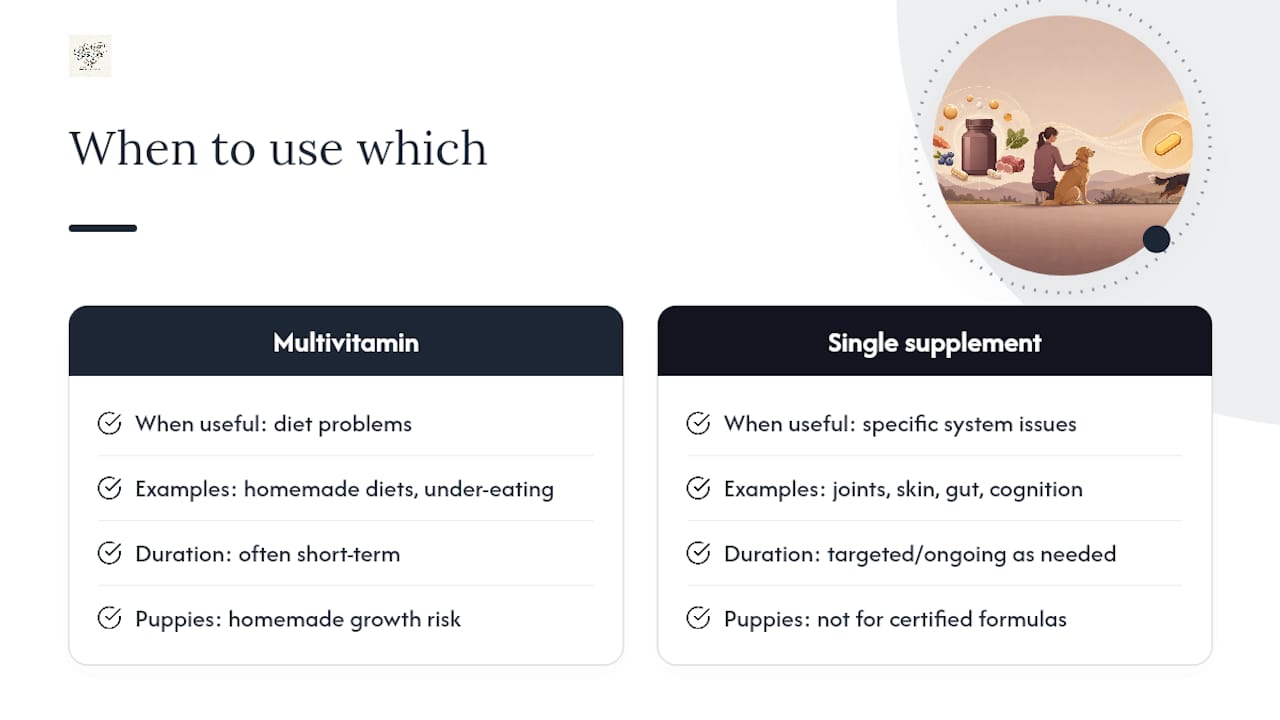
The pattern across all of these cases: multivitamins fit best when the underlying diet is the actual problem (homemade feeding, temporary under-eating). Single supplements fit best when a specific system, joints, skin, gut, is the problem and the rest of the diet is fine.
Is a Multivitamin or Single Supplement the Better Value?
A multivitamin looks like the cheaper option on the surface, one product covering many nutrients instead of buying three or four separate items. That math only holds up if your dog actually needs broad-spectrum support in the first place. If your dog is healthy and eating a certified diet, a multivitamin isn’t a bargain: it’s an unnecessary expense with an added toxicity risk attached, which makes the “savings” illusory.
Single supplements cost more upfront when you need more than one, but you’re only paying for what solves an actual problem. A dog with joint stiffness on a glucosamine supplement isn’t also paying for a B-complex blend and a mineral mix it doesn’t need. Over months, that precision often ends up cheaper than a multivitamin habit that never addressed anything specific to begin with.
The real cost comparison isn’t multivitamin price versus single-supplement price. It’s the cost of an unnecessary product (multivitamin, healthy dog) versus the cost of a targeted product solving a real issue (single supplement, diagnosed condition), and the value only exists in the second scenario.
Our Take on Choosing the Right Supplement Approach
The pet supplement aisle sells convenience, one chew that supposedly covers everything your dog might be missing. That convenience is exactly what makes multivitamins overused. Most dogs walking into a vet clinic already eating a certified commercial diet don’t have a nutrient gap to fill, and adding a multivitamin anyway treats a healthy dog like a deficient one.
The article recommends choosing products with transparent labeling and ingredients that have real backing, not just a long list of vitamins on the front of the package. Our guide to choosing dog supplements and our breakdown of whether dog vitamins are necessary both walk through that reasoning in more detail. Talk to your vet before you buy anything, every time. That single habit prevents more problems than any product on a shelf.
— Christopher
Vet-Approved Supplement Options Worth Considering
If your vet has confirmed your dog would actually benefit from supplementation, the next step is picking a product with a clean label and a dose you can trust. Some American-made options are built around that standard rather than a long ingredient list designed to look impressive on a shelf.
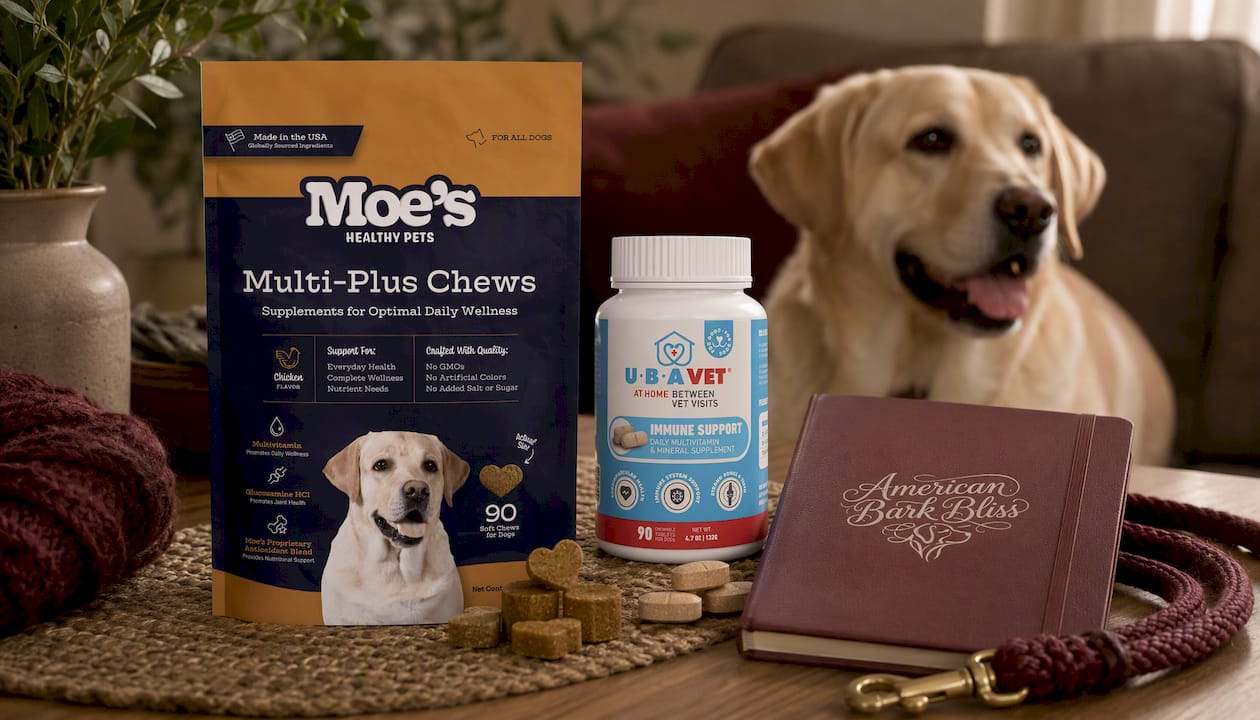
Multi-Plus Chews work as a general multivitamin option for dogs whose vet has recommended broad-spectrum support, particularly those on home-prepared diets. The UBAVET Immune Support Daily Multi-Vitamin for Dogs, 90 Tablets offers a tablet format for owners who prefer a fixed dosing routine over a chew, with 90 count giving you roughly three months of supply depending on your dog’s weight.
Before starting either one, run through a quick checklist: confirm the intended use matches your dog’s actual situation, dose according to your dog’s weight rather than eyeballing it, note whether the product is appropriate for your dog’s life stage, and get vet approval before the first dose, not after. Browse the full supplement lineup to compare options, and if you’re rounding out your dog’s routine, our dog treats collection is worth a look too.
Sources
- Vitamin D toxicity in dogs | U.S. FDA
- The importance of nutrition for pets | VCA Hospitals
- Dog vitamins: How do they work, and does your dog need them? | PetMD
FAQ
Are Multivitamins Better Than Single Supplements for Dogs?
Neither is universally better. Multivitamins suit dogs with broad dietary gaps, like those on homemade diets, while single supplements suit dogs with a specific, vet-diagnosed need such as joint pain or skin inflammation.
Do Vets Recommend Multivitamins for Dogs?
Most vets don’t recommend routine multivitamins for healthy dogs already eating an AAFCO-complete commercial diet, reserving them mainly for homemade-diet dogs or short-term recovery support.
Should I Give My Dog a Multivitamin or a Probiotic?
That depends entirely on the problem. A probiotic targets digestive issues specifically, while a multivitamin addresses broader nutritional gaps, so match the product to the symptom rather than defaulting to one or the other.
What Is the Healthiest Multivitamin Option for Dogs?
Look for a product with transparent, weight-based dosing and a quality-assurance marker rather than the longest ingredient list. Options like Multi-Plus Chews or the UBAVET Immune Support tablets work well for dogs whose vet has confirmed a genuine need.
Leave a comment