

How to Upsell Pet Accessories and Boost Sales
TL;DR:
- Effective pet accessory upselling relies on relevant offers, precise timing, and data-driven product suggestions.
- Using data like breed and purchase history enhances relevance, increasing the likelihood of successful upsells.
Upselling pet accessories is the practice of offering customers a higher-value or complementary product at the moment they are most ready to buy. Done right, it increases average order value without adding friction to the purchase experience. Targeted complementary product recommendations can increase average order value by 18–30%. That number is not a ceiling. It is a baseline for stores that execute upselling with precision and timing. Pet store owners who treat upselling as a system, not a tactic, see the biggest gains.
How to upsell pet accessories: the tools you need first
Upselling without data is guesswork. The foundation of any effective upsell program is a point-of-sale or ecommerce system that captures customer information and surfaces relevant offers automatically.
Start by collecting the basics: pet breed, size, age, and past purchase history. That data lets you match a customer buying a harness with a matching leash, or pair a grooming session with a premium shampoo. Without it, your recommendations feel random, and random recommendations get ignored.
- Slide-out cart drawers surface upsell offers before checkout without redirecting the customer away from their cart.
- Post-purchase thank-you pages present complementary bundles after payment, when the customer is relaxed and receptive.
- Email marketing delivers upsell offers with high ROI, with targeted campaigns generating $36 for every $1 spent.
- Pop-ups with subscribe-and-save offers work best when triggered by exit intent or time-on-page signals.
- Real-time analytics dashboards show which upsell placements convert and which ones customers skip.
Pro Tip: Segment your email list by pet type before sending upsell campaigns. A dog owner buying a collar does not need a cat toy recommendation. Relevance is the single biggest driver of upsell conversion.
The goal is a system where the right offer appears at the right moment without your team having to think about it. Automation handles the timing. Your job is to load it with relevant, high-quality products.
Which pet accessories make the best upsell candidates?
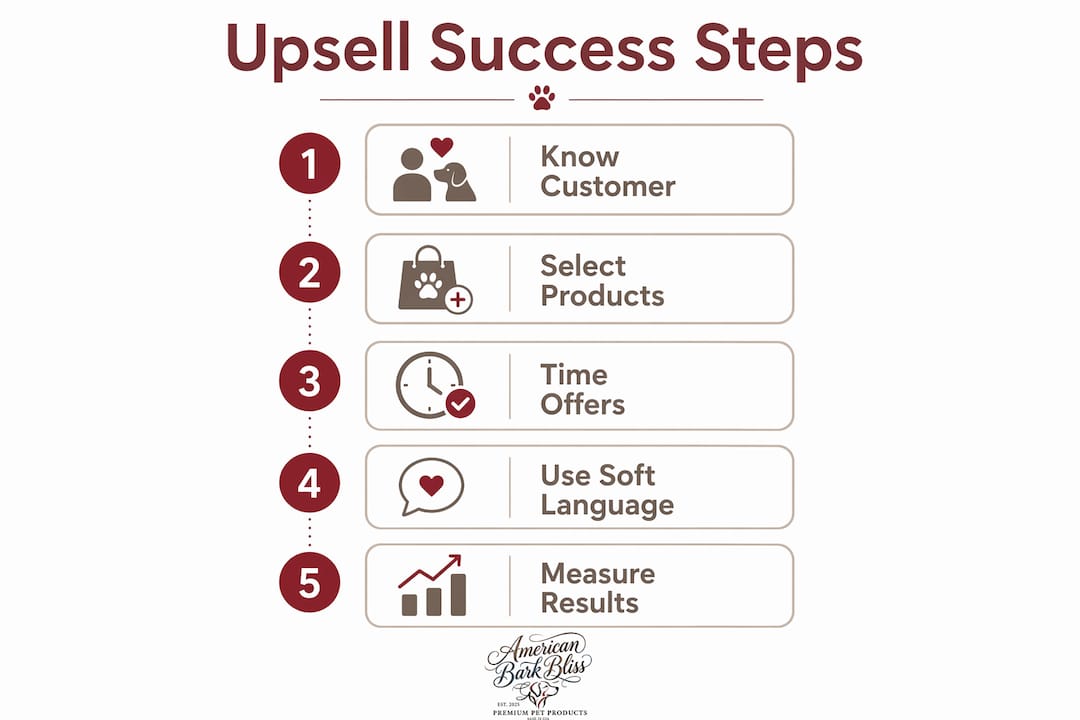
The best upsell products share two traits: they solve an immediate problem the customer already has, and they are easy to add without dramatically raising the total order cost.
High-value, low-weight accessories like smart tags, designer collars, and grooming tools maintain better profit margins because shipping costs stay low relative to the sale price. A $45 designer collar costs nearly the same to ship as a $12 basic one. The margin difference is significant.
Complementary product pairings are the most reliable upsell structure in pet retail:
- Collar and matching leash sets convert at high rates because customers already want visual consistency.
- Treats paired with food purchases feel natural and solve a real need the customer is already thinking about.
- Grooming tools bundled with shampoo create a complete care routine in one transaction.
- Carrier bags paired with travel accessories appeal to customers who are already in a “travel prep” mindset.
Niche and tech-integrated accessories command higher margins and deeper customer trust than generic inventory. A breed-specific collar or a GPS-enabled smart tag carries perceived value that a generic product cannot match. That perceived value makes the upsell feel like a recommendation, not a sales push.
Product bundles with a 10–20% discount can expand sales by 15–25% and increase transaction value by 10–20%. Bundles also reduce decision fatigue. The customer does not have to think about what goes together. You have already done that work for them.
For a deeper look at how to price these bundles for maximum return, the guide on pricing premium dog goods covers margin strategy in detail.
How should you time upsell offers in the customer journey?
Timing is the variable most pet store owners get wrong. An upsell offer placed at the wrong moment feels like an interruption. Placed at the right moment, it feels like helpful advice.
Upsells perform best when they appear precisely when the customer is ready to purchase, not before they have committed to the primary item and not after they have already left the checkout page.
Here is the sequence that converts:
- Pre-cart pop-up: Trigger a subscribe-and-save offer when a customer views a consumable product like shampoo or treats for the third time. This targets high-intent browsers before they add anything to their cart.
- Slide-out cart drawer: When the customer adds a primary item, the cart drawer opens and displays one or two complementary products. Keep it to two options maximum. More than that causes hesitation.
- Checkout page add-on: A single low-cost item, priced under $15, placed just above the “complete purchase” button. This is the impulse-buy zone. Use it for items like a chew toy or a travel water bottle.
- Post-purchase thank-you page: After payment is confirmed, present a bundle offer at a discount. The customer has already committed to spending. A 15% discount on a related bundle feels like a reward, not a pitch.
- Follow-up email at day 3: Send a personalized recommendation based on what they just bought. If they purchased a carrier bag, suggest a travel-ready accessory that pairs with it.
Pro Tip: Use soft-selling language in every upsell touchpoint. “Customers who bought this also loved…” outperforms “Add this to your order!” because it frames the recommendation as social proof, not a sales prompt.
Effective upsells solve immediate, functional problems and avoid interrupting checkout flow. The slide-out cart and post-purchase page are the two placements that consistently deliver results without hurting conversion on the primary item.
What mistakes kill upsell conversion in pet stores?
Most failed upsell programs share the same errors. Recognizing them early saves you months of lost revenue.
Raising the total cart value by more than 25% through upsell offers reliably triggers cart abandonment. The customer came in with a budget in mind. Blowing past it, even with a great product, breaks the trust you built during the shopping experience.
- Irrelevant recommendations are the fastest way to train customers to ignore your upsells. A customer buying a dog bed does not need a bird feeder. Every recommendation must connect logically to the primary purchase.
- Too many offers at once create decision paralysis. Limit upsell offers to two items per touchpoint. One is often better.
- Generic inventory undercuts your credibility. If your upsell products look like they came from a bulk catalog, customers will not see them as upgrades. Focus on niche, authentic products that reflect real expertise in pet care.
- Ignoring mobile behavior is a critical error. Most pet accessory purchases happen on mobile devices. An upsell pop-up that covers the entire screen on a phone will get dismissed immediately.
The fix for most of these errors is the same: know your customer before you make an offer. Breed, size, and purchase history tell you more than any algorithm can guess. Use that data, and your upsell acceptance rate will climb.
How do you measure whether your upsell strategy is working?
Three metrics tell you everything you need to know about upsell performance: average order value, upsell conversion rate, and repeat purchase frequency.
| Metric | What it measures | Why it matters |
|---|---|---|
| Average order value (AOV) | Total revenue divided by number of orders | Shows whether upsells are adding real dollars per transaction |
| Upsell conversion rate | Percentage of customers who accept an upsell offer | Reveals whether your offers are relevant and well-timed |
| Repeat purchase frequency | How often a customer returns within 90 days | Indicates whether upsells built loyalty or created buyer’s remorse |
Brands integrating cart-drawer upsells reported a 16.47% AOV increase within 30 days of implementation. That result requires consistent A/B testing of offer placement, product selection, and discount depth.
Run one test at a time. Change the placement of an offer and measure for two weeks before changing the product. Changing both at once makes it impossible to know which variable drove the result.
Subscription and loyalty tactics increase recurring revenue and give you a steady stream of behavioral data. A customer on a monthly shampoo subscription tells you exactly when they will need a grooming tool upsell. Use that timing.
Pro Tip: Track upsell acceptance by product category, not just by individual SKU. If grooming bundles consistently outperform toy add-ons, that tells you where to invest in inventory and where to pull back.
For a practical walkthrough of the ordering and bundling process, the pet supply ordering guide covers the full workflow from product selection to fulfillment.
Key Takeaways
Upselling pet accessories works when offers are relevant, well-timed, and limited to products that solve a real problem the customer already has.
| Point | Details |
|---|---|
| Data drives relevance | Collect breed, size, and purchase history before building any upsell offer. |
| Timing beats volume | Place offers at the cart, post-purchase, and day-3 email stages for best conversion. |
| Bundle with a discount | A 10–20% bundle discount increases transaction value by 10–25% without hurting margin. |
| Limit offers per touchpoint | Show a maximum of two upsell items at once to prevent decision paralysis. |
| Measure three metrics | Track AOV, upsell conversion rate, and repeat purchase frequency to guide improvements. |
What I have learned about upselling pet accessories after years in retail
The biggest mistake I see pet store owners make is treating upselling as a revenue tactic instead of a customer service tool. When you lead with “how do I get more money from this transaction,” your offers feel pushy. When you lead with “what does this customer actually need next,” your offers feel helpful. That shift in framing changes everything.
The stores I have watched grow fastest are the ones that invested in niche products first. Breed-specific and tech-integrated accessories build a level of trust that generic inventory never can. When a customer sees that you carry a collar designed specifically for their dog’s breed, they trust your other recommendations. That trust is what makes an upsell feel like advice rather than a sales move.
User-generated content is the underrated accelerator here. A photo of a real dog wearing your collar, posted by a real customer, does more for upsell conversion than any product description. It shows the product in context. It answers the question “will this work for my dog?” before the customer even asks it.
My honest advice: start with one upsell placement, measure it for 30 days, and then expand. Stores that try to implement five upsell touchpoints at once end up with messy data and frustrated customers. Build the system one layer at a time, and let the numbers tell you where to go next.
— Christopher
Premium products from Americanbarkbliss worth adding to your upsell mix
Americanbarkbliss carries American-made pet accessories built for the kind of quality-conscious customers who respond best to upsell offers.
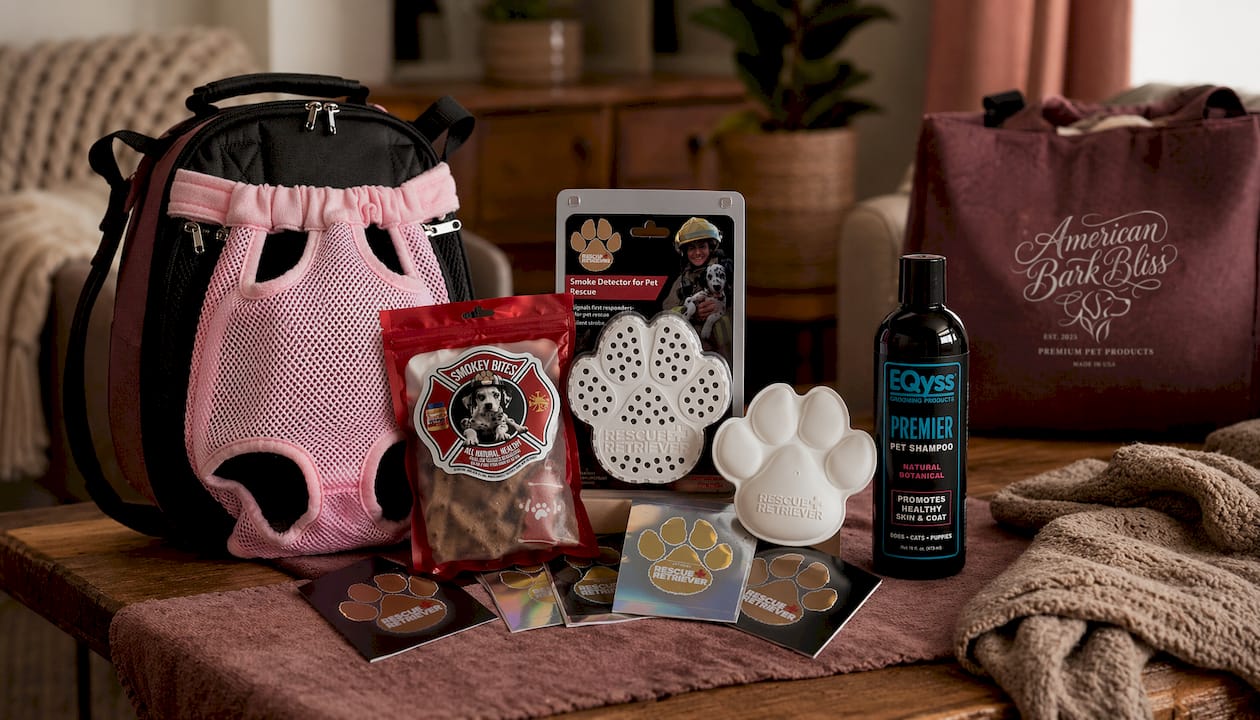
The Pawtection Essential Bundle is a ready-made upsell offer. It combines multiple care essentials into one package, which removes the guesswork for customers and increases your average order value in a single click. For customers already buying grooming products, the Premier Shampoo fits naturally into a subscription or repeat-purchase upsell sequence. Pair it with a grooming tool and you have a bundle that sells itself. Every product on Americanbarkbliss reflects American craftsmanship and the kind of niche quality that builds the customer trust your upsell strategy depends on.
FAQ
What is the best placement for a pet accessory upsell?
The slide-out cart drawer and the post-purchase thank-you page are the two highest-converting placements. Both appear when the customer has already committed to buying, which reduces friction.
How many upsell offers should I show at once?
Show a maximum of two upsell offers per touchpoint. More than two creates decision paralysis and lowers acceptance rates across all offers shown.
Does discounting hurt upsell profitability?
A 10–20% bundle discount typically increases transaction value by 10–25%, which more than offsets the discount. The key is pairing products with complementary margins so the bundle still delivers net profit.
How do I know if my upsell products are relevant enough?
Track your upsell conversion rate by product category. If a category consistently converts below 5%, the product is either priced too high, placed at the wrong moment, or not relevant to the primary purchase.
What role does customer data play in upselling pet accessories?
Customer data, specifically pet breed, size, and purchase history, is the foundation of relevant upsell offers. Without it, recommendations are generic and conversion rates stay low.
Leave a comment