

Organize Pet Supplies: A Simple Pet-Hub Plan
TL;DR:
- Creating a centralized pet supply hub with labeled zones and airtight storage ensures long-term organization and ease of access. Implementing quick setup routines and proper container choices simplifies maintaining supplies in their designated areas. Habitual checks linked to regular routines help keep the system functional with minimal effort.
The fastest way to get pet supplies under control is to build one centralized hub, divide it into clear zones, and label everything so it goes back where it belongs. That’s the whole system. Here’s how to start right now:
- Declutter first. Pull every pet item into one pile and toss anything expired, broken, or unused.
- Centralize. Pick one spot — a closet shelf, a cabinet, even a corner of the pantry — and make it the official pet zone.
- Label and store. Use airtight containers for food and treats, labeled bins for toys, and a hook or caddy for walk gear. Zone-based storage, where each category lives in a fixed spot, is what keeps the system from collapsing after week one.
Table of Contents
- Can you set up a pet station in 30 minutes?
- How to organize pet supplies into a hub that actually lasts
- Where should you keep pet supplies room by room?
- Which containers actually work for pet supplies?
- How do you store pet food, meds, and cleaning supplies safely?
- What does a realistic maintenance routine look like?
- Expert tips, common mistakes, and what actually works
- Key Takeaways
- The case for building the hub before buying anything new
- Ready-to-use storage picks from Americanbarkbliss
- Useful sources and further reading
- FAQ
Can you set up a pet station in 30 minutes?
Yes, and here’s the checklist to prove it.
First 5 minutes — gather everything:
- Walk every room and collect all pet items: food bags, treats, leashes, toys, meds, grooming tools, and waste bags.
- Drop them in one temporary pile on the floor or a table.
Next 10 minutes — sort and toss:
- Separate into four groups: food/treats, walk gear, toys, and health/meds.
- Discard expired food, broken toys, and old medications (check the FDA’s disposal guidelines for safe med disposal).
- Set aside anything to donate.
Final 10–15 minutes — place and label:
- Hang a hook near the main exit for leashes and harnesses.
- Move food into the best airtight container you own right now, even temporarily.
- Put toys in one basket or bin in the living room.
- Stash meds and records in a single labeled box or folder.
What “done” looks like: a clear spot near the door for walk gear, one labeled bin for food, and a toy basket in the room where your dog actually plays. That’s a working pet station, even if it’s not perfect yet.
How to organize pet supplies into a hub that actually lasts
A pet hub works because it removes the daily decision of where things go. Build it once, and the system runs on its own.
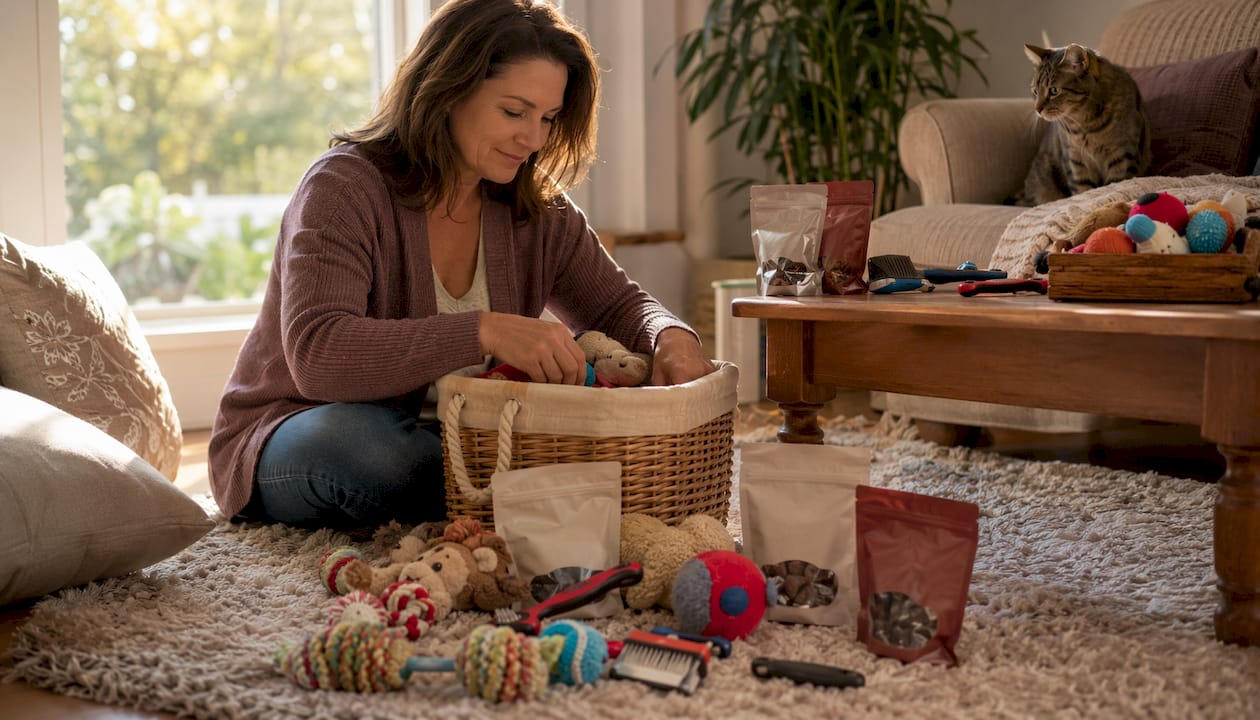
Step 1: Do a full inventory
Pull everything out. Every bag of kibble, every half-used shampoo, every leash you forgot you owned. This is the only way to see what you actually have versus what you think you have.
Step 2: Sort into zones
Assign each category a zone inside the hub. Five zones cover most households:
- Daily/feeding — food, treats, scoops, food mats
- Grooming — brushes, shampoo, nail clippers, wipes
- Walk/outdoor — leashes, harnesses, waste bags, booties
- Travel/emergency — carrier, first-aid kit, vet records, medications
- Toys — rotating selection; rest stored out of reach
Step 3: Match containers to zones
- Airtight canister or bin for dry food and treats
- Small portable caddy for grooming supplies (easy to carry to the bathroom)
- Hook or wall-mounted rack for leashes and harnesses
- Fabric bin or basket for toys
- Locked or latched box for medications and supplements
Step 4: Build a label template
Every container gets a label with three things: item name, pet name (if you have more than one), and a review date (monthly for meds, quarterly for gear). A simple masking-tape-and-marker label works fine. The goal is that anyone in the household can find and return items without asking.
Pro Tip: Place the most-used items at eye level and arm’s reach, not in the most aesthetically pleasing spot. Accessibility beats aesthetics every time — if your dog’s leash requires opening two doors to reach, it will end up on the kitchen counter within a week.
Where should you keep pet supplies room by room?
The best location for any supply is wherever you actually use it. That principle, not a floor plan, should drive your decisions.
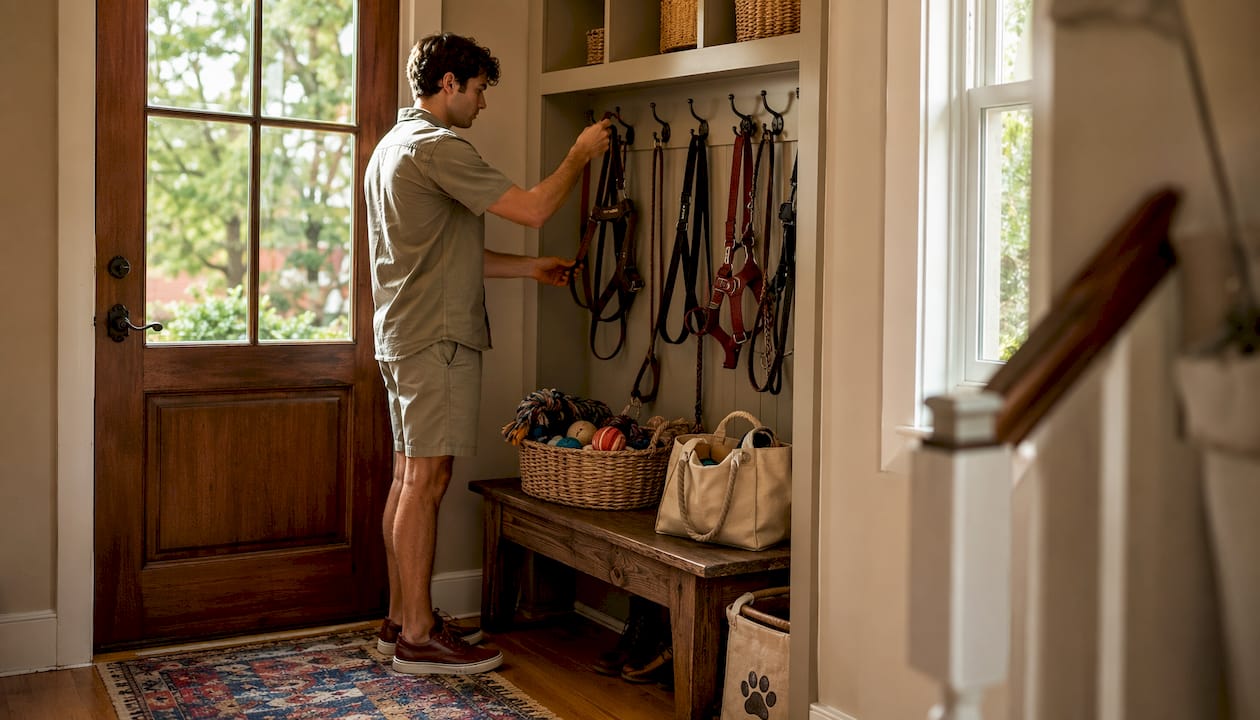
Entry and mudroom
This is your walk station. Hooks near the main exit hold leashes and harnesses; a small tote or basket on a low shelf catches waste bags, a spare treat pouch, and a poop-bag dispenser. Mount hooks at a convenient height so they’re easy to grab on the way out. If you have a coat closet, dedicate the lowest section to pet walk gear — it stays hidden and stays organized.
Kitchen and pantry
Dry food and treats belong here, close to where you prepare meals. Transfer kibble out of the original bag and into a food-safe, airtight container on a low pantry shelf or inside a pull-out cabinet. A designated kitchen drawer — one drawer, nothing else — works well for daily-use items: the feeding scoop, dental chews, supplements, and small treat bags. Keep this drawer near the feeding station, not across the kitchen.
Living room
Toys live here because that’s where play happens. A fabric bin or basket in the corner keeps them contained without making the room look like a pet store. Multifunctional furniture helps too: a storage ottoman can hold a full toy rotation while doubling as a coffee table or extra seating.
Bathroom
Grooming supplies belong in the room where grooming happens. A small caddy on a shelf or under the sink keeps brushes, shampoo, nail clippers, and ear wipes together. If you bathe your dog in the tub, keep the caddy within arm’s reach of the tub, not in a cabinet across the room.
Car
A small zip pouch or collapsible bag in the back seat or trunk covers car-specific needs: a travel water bottle, a foldable bowl, a spare leash, and waste bags. Restock it on grocery day so it never runs empty.
Small-space alternatives
No mudroom? No pantry? A few workarounds:
- Over-the-door organizers on the back of a closet or bathroom door hold walk gear and grooming tools without taking up floor space.
- Tuck-under-bed bins work for seasonal gear and backup supplies you don’t need daily.
- Narrow floating shelves above a feeding station hold food canisters and a small treat jar without eating into floor area.
- Under-stair nooks, if you have them, can hold an entire pet hub behind cabinet doors, completely out of sight.
Which containers actually work for pet supplies?
Not all storage is equal. The wrong container for the job creates more friction than having no container at all.
| Container type | Best for | Size guidance | Notes |
|---|---|---|---|
| Airtight canister/bin | Dry food, treats | Large (15–50 lb capacity) for food; small for treats | Must be food-safe, BPA-free; keeps pests out |
| Clear plastic bin | Toys, accessories | Medium to large | Visibility helps you grab the right item fast |
| Fabric storage bin | Toys, blankets, soft gear | Medium to large | Foldable options save space when not in use |
| Portable caddy | Grooming supplies | Small to medium | Easy to carry room to room |
| Over-the-door organizer | Leashes, bags, small items | N/A (door-mounted) | Best behind closet or bathroom doors |
| Hooks/wall rack | Leashes, harnesses, collars | N/A (wall-mounted) | Mount at a height you can reach without bending |
| Multifunctional furniture | Toys, blankets, backup supplies | Varies | Ottomans, storage benches, crates with cushions |
| Labeled binder/box | Vet records, medications | Small | Keep latched or locked; store at adult height |
A few buying rules worth keeping:
- Choose food-grade, BPA-free plastic or stainless steel for anything that touches food or treats.
- Clear containers reduce the “what’s in here?” problem, especially for multi-pet households where treat separation matters.
- Size up. Pet supply quantities are almost always larger than you think before you start organizing. A container that fits perfectly today has no room for the next delivery.
- For chew-prone dogs, avoid fabric bins for anything edible. Stick to hard-sided, latching containers for food and treats.
How do you store pet food, meds, and cleaning supplies safely?
Storage safety is where organization crosses into pet health. A few rules here are non-negotiable.
Food and treats:
- Always transfer dry kibble from the original bag into a food-safe, airtight container. Open bags invite pests and speed up staleness.
- Label every container with the purchase date and the “use by” date from the original packaging.
- Store pet food away from human food prep areas to prevent cross-contamination, especially in multi-pet homes where different diets are in play.
Medications and records:
- Keep all medications, supplements, and vet records in one clearly labeled box or binder. A single folder cuts delays during emergencies and keeps dosing consistent.
- Store the box at adult height, latched or locked, away from curious paws and noses.
- Tape your vet’s number and the ASPCA Animal Poison Control Center number (888-426-4435) to the inside lid.
Cleaning supplies and toxic items:
- Store all cleaning products in a separate, latched cabinet — never in the same space as food or pet accessories.
- Common household items toxic to pets include xylitol (found in sugar-free gum and some peanut butters), grapes and raisins, certain essential oils, and many standard cleaning sprays.
Dispose of expired medications properly. The FDA recommends specific disposal methods depending on the medication — check the FDA’s guidance rather than flushing anything down the drain.
What does a realistic maintenance routine look like?
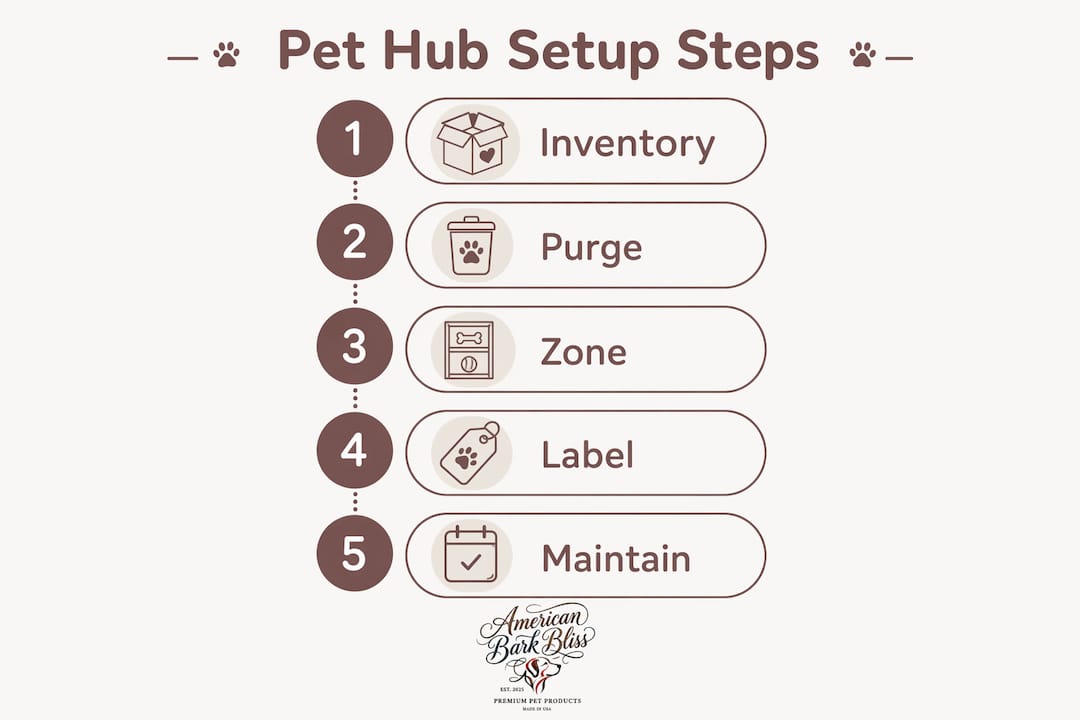
The system only works if you maintain it. The good news: maintenance takes minutes, not hours, when it’s built into habits you already have.
| Cadence | Task |
|---|---|
| Daily | Tidy the feeding area; return stray toys to the bin; hang leash after walks |
| Weekly | Check treat and food levels; wipe down food containers; restock car bag if needed |
| Monthly | Full inventory check; discard expired meds or food; review labels and update dates |
| Seasonal | Rotate gear (swap booties and coats in/out); audit toys and donate unused ones; check carrier condition |
Habit stacking is the fastest way to make this stick. Link your monthly inventory check to grocery day — when you restock the fridge, you restock the pet hub. Link the weekly treat check to laundry day. Professional organizers consistently recommend tying maintenance to existing routines rather than scheduling it as a standalone task.
Pro Tip: Keep a running list on your phone or a sticky note inside the hub cabinet. When something runs low, add it immediately. This replaces the mental load of remembering what’s needed and makes restocking a five-minute errand instead of a forgotten chore.
Expert tips, common mistakes, and what actually works
High-value tips from organizational pros:
- Accessibility over aesthetics. The hub must align with where daily habits already happen. Organizational experts consistently flag this as the biggest mistake: building a beautiful system in the wrong location.
- Label everything, including the inside of containers. A closed cabinet full of unlabeled bins is organized concealment, not organized storage.
- Centralize medications and records. Keeping them together reduces stress during emergencies and keeps dosing consistent across caregivers.
- For multiple pets: use separate, clearly labeled containers for each pet’s food and treats. Store allergen-specific diets away from shared food prep areas.
- Seasonal and travel gear: store off-season items in under-bed bins or high shelves, and keep a dedicated travel bag pre-packed with a spare leash, travel bowl, and a copy of vaccination records.
Common mistakes to avoid:
- Storing food in the original opened bag instead of an airtight container.
- Placing frequently used items in hard-to-reach spots because they look better there.
- Creating one giant central bin for everything — it becomes unusable fast.
- Forgetting to tell other household members where things moved to after a reorganization.
- Organizing supplies you no longer need. Purge before you store.
Americanbarkbliss carries grooming supplies and accessories that fit neatly into a caddy-based grooming zone, which helps if you’re building that section of the hub from scratch.
Key Takeaways
A centralized pet hub with labeled zones and airtight food storage is the single most effective way to keep pet supplies organized, accessible, and safe long-term.
| Point | Details |
|---|---|
| Centralize first | Pick one spot and make it the official pet zone before buying any new storage. |
| Zone-based storage | Divide the hub into daily, grooming, walk, travel, and toy zones so everything has a fixed home. |
| Airtight for food and treats | Transfer kibble and treats out of original bags into food-safe, airtight containers to prevent pests and staleness. |
| Secure medications and records | Store meds and vet records in a latched box at adult height, with emergency numbers taped inside. |
| Americanbarkbliss storage picks | The Country Living toy bin and treat canisters from Americanbarkbliss are ready-to-use solutions for the toy and treat zones. |
The case for building the hub before buying anything new
Here’s the thing most organizing content gets wrong: it leads with products. Buy this bin, this hook, this canister. But the system fails when the storage doesn’t match where life actually happens in your home.
The pet-hub approach works because it starts with behavior, not aesthetics. Where does your dog eat? That’s where food storage goes. Where do you grab the leash? That’s where the hook goes. The containers are secondary. Once the zones are right, almost any container will do the job — including what you already own.
The other underrated move is the purge. Most pet owners are storing things their pet no longer uses: the toy that was never touched, the prescription from two years ago, the treats that were rejected after one sniff. Hidden storage for unused supplies is just wasted space. Clear it out first, then organize what remains. The system gets simpler every time you do.
Ready-to-use storage picks from Americanbarkbliss
Getting the zones right is the strategy. Having the right containers makes it effortless to maintain.
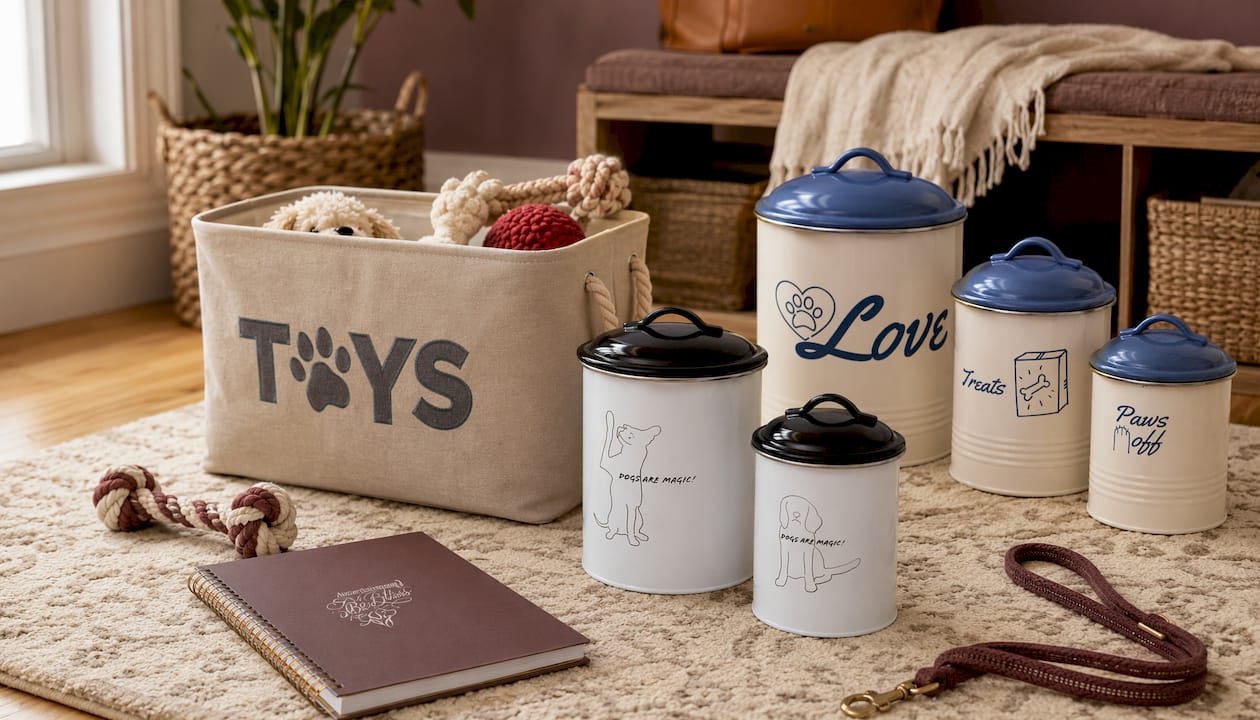
Americanbarkbliss carries three Country Living pieces that slot directly into the system described here, all made with the quality and style that dog owners who care about their home actually want.
The Country Living Foldable Fabric Dog Toy Storage Bin is built for the living room toy zone. It folds flat when not in use, holds a full rotation of toys without looking cluttered, and fits in any corner.
For the treat zone, you have two options depending on your kitchen’s style. The Country Living Set of 3 Pet Treat Storage Canisters in Black & White gives you a classic, clean look that works in most kitchens. Prefer something with a little more color? The Country Living Set of 3 Pet Treat Canisters with French Blue Lid brings a warm, farmhouse feel to the pantry shelf. Both sets are sized for easy stacking, clearly labeled use, and keeping treats fresh between restocks.
Browse the full range at Americanbarkbliss to find pieces that fit your hub and your home.
Useful sources and further reading
- Order and More — How to Organize Pet Supplies: Practical step-by-step guidance on building a pet station, labeling systems, and airtight food storage.
- Better Homes & Gardens — Smart Storage Solutions for Pet Supplies: Room-by-room ideas including walk stations, multifunctional furniture, and hook placement.
- PetFriendlyHouse — Creating a Dedicated Pet Supply Closet: Closet-based hub systems and expert insight on accessibility-first organization.
- PetGuide — Tips and Products for Keeping Your Pet’s Things Organized: Treat storage, multi-pet separation, and clear-container recommendations.
- NEPA Pet Sitting — Organizing Pet Supplies: Maintenance routines, habit stacking, and periodic purge schedules from professional pet sitters.
- Extra Space Storage — Creative Pet Storage Ideas: Small-space solutions including tuck-under-bed bins and multifunctional furniture.
- FDA — Where and How to Dispose of Unused Medicines: Official guidance on safe medication disposal to protect pets and the environment.
FAQ
How do you organize pet stuff at home?
Start by gathering all pet items into one pile, sorting them into categories (food, walk gear, toys, health), and assigning each category a fixed zone in a centralized hub. Use labeled, airtight containers for food and treats, hooks for leashes, and a basket for toys.
What pet supplies do you actually need?
The core list covers food and treats, a leash and collar or harness, food and water bowls, a bed or crate, basic grooming tools, waste bags, and any medications or supplements your vet has prescribed. Everything else is supplemental.
How do you start a pet pantry?
Designate one shelf or cabinet section near the feeding area, transfer dry food into a food-safe airtight container, and add labeled canisters for treats. Keep the feeding scoop and supplements in the same spot so the pantry covers everything needed at mealtime.
How do you keep pet supplies organized with multiple pets?
Use separate, clearly labeled containers for each pet’s food and treats, especially when diets or allergens differ. Color-coding by pet (one color per animal) makes it easy for every household member to grab the right item without reading every label.
What’s the easiest way to maintain a pet organization system?
Link maintenance tasks to routines you already do: check food and treat levels on grocery day, do a full inventory on the first of each month, and return stray items to their zones during your daily tidy. Habit-linked maintenance keeps the system running without requiring a dedicated organizing session.
Leave a comment