

How to fit a dog harness for safety and comfort
A poorly fitted harness is one of the most common sources of discomfort for dogs on daily walks, yet most owners never realize the problem. If your dog pulls back, paws at their chest, or develops red patches under their legs, the harness fit is almost certainly the culprit. Learning how to fit a dog harness correctly takes less than ten minutes, but the payoff is enormous: a dog that walks freely, a harness that stays in place, and zero guilt about what your gear is doing to your pet’s body.
Table of Contents
- Gathering your tools and measuring your dog accurately
- Step-by-step harness fitting and adjustment process
- Common fit mistakes and how to troubleshoot them
- Breed and size considerations for fitting harnesses
- Testing and verifying the fit: ensuring comfort and safety
- Why many owners get harness fitting wrong — and what truly matters
- Explore quality dog harnesses and accessories at American Bark Bliss
- Frequently asked questions
Key Takeaways
| Point | Details |
|---|---|
| Two-finger fit | A safe harness fit allows sliding two fingers under straps to balance snugness with comfort. |
| Accurate measurement | Use a flexible tape to measure chest girth and neck circumference with your dog standing naturally. |
| Proper strap placement | Harness straps should avoid the throat and armpits, resting low on the sternum and over ribs. |
| Regular checks | Verify harness fit and skin condition before and after walks to prevent discomfort and injury. |
| Body-type adjustment | Select harness styles and sizes based on your dog’s unique breed and body shape, not just generic labels. |
Gathering your tools and measuring your dog accurately
Before you touch a single buckle, you need two numbers: your dog’s chest girth and neck circumference. Everything else in this dog harness fitting guide depends on getting these right.
What you need:
- A flexible fabric measuring tape (a flexible fabric tape is essential for accuracy; metal tape or string introduces errors)
- Treats to keep your dog standing still and relaxed
- A notepad or your phone to record measurements
- The size chart from the specific brand you are buying from
How to measure correctly:
- Ask your dog to stand naturally on a flat surface. Sitting or lying down changes the shape of the torso and produces inaccurate numbers.
- Wrap the tape around the widest part of the chest, which sits just behind the front legs. This is the chest girth measurement and it is the most important number you will record.
- Measure the neck circumference at the base of the collar, where the neck meets the shoulders. This controls the neck opening of the harness.
- Write both measurements in inches and centimeters. Some brands use one unit, some use the other.
- Add one to two inches to each measurement before consulting the size chart. This buffer accounts for coat thickness and the breathing room your dog needs.
| Measurement | Where to measure | Why it matters |
|---|---|---|
| Chest girth | Widest point behind front legs | Determines primary strap fit |
| Neck circumference | Base of collar, where neck meets shoulders | Controls neck opening size |
| Back length | Base of neck to base of tail | Useful for long-backed breeds |
One critical point: generic size labels are unreliable across brands. A medium from one manufacturer can be two inches narrower than a medium from another. Always size by measurement, not by the label on the bag.
Pro Tip: Measure your dog twice on different days. Dogs that are anxious or tense hold their bodies differently, and a second measurement confirms accuracy before you commit to a size.
Now that you understand the importance of accurate measuring, let’s move on to selecting and fitting the harness based on these measurements.
Step-by-step harness fitting and adjustment process
Knowing how to put on a dog harness properly is where most owners skip steps and create problems. Rushing this process is what leads to chafing, harness rotation, and dogs that hate wearing their gear.
Putting the harness on:
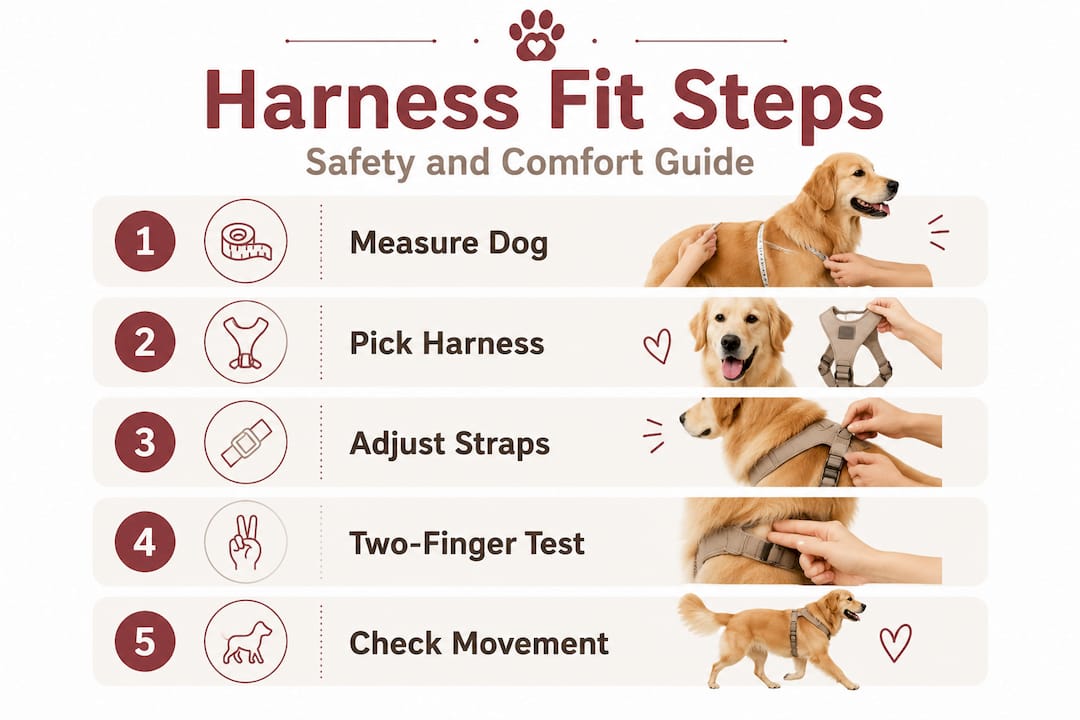
- Lay the harness flat and identify its three main components: the chest panel (the front piece that sits on the sternum), the neck opening, and the girth strap (the band that wraps behind the front legs).
- Slip the neck opening over your dog’s head. Do not force it. If it feels tight at this stage, the neck opening needs adjusting before you go further.
- Guide each front leg through the appropriate openings, keeping the chest panel centered on the breastbone.
- Buckle the girth strap under the belly. At this point, all straps should be loose.
- Begin tightening straps gradually and evenly, alternating sides so the harness does not pull to one direction.
- Apply the two-finger rule at every strap: slide two fingers vertically between the strap and your dog’s body. Snug enough that the fingers fit with light resistance is correct. If your fingers slide through easily, tighten. If you cannot fit them at all, loosen immediately.
Key placement checks:
- The chest strap must rest on the sternum, the hard breastbone you can feel in the center of the chest. If it sits higher, toward the throat, it will restrict breathing and cause head tossing.
- The girth strap belongs behind the ribcage, not tucked into the armpits. Armpit placement is the number one cause of harness chafing in dogs.
- Check that the D-ring for leash attachment sits centered on the back or chest, not tilted to one side.
Pro Tip: After fitting, clip on your padded grip dog leash and walk your dog around the room for two minutes before heading outside. Any rotation or slipping will show up immediately in a controlled space where you can fix it quickly.
With your harness now fitted carefully, it’s important to understand and troubleshoot common fit issues and mistakes.
Common fit mistakes and how to troubleshoot them
Even owners who follow instructions make predictable errors. Knowing what to look for makes the difference between a harness that works and one that quietly causes harm.
The most common mistakes:
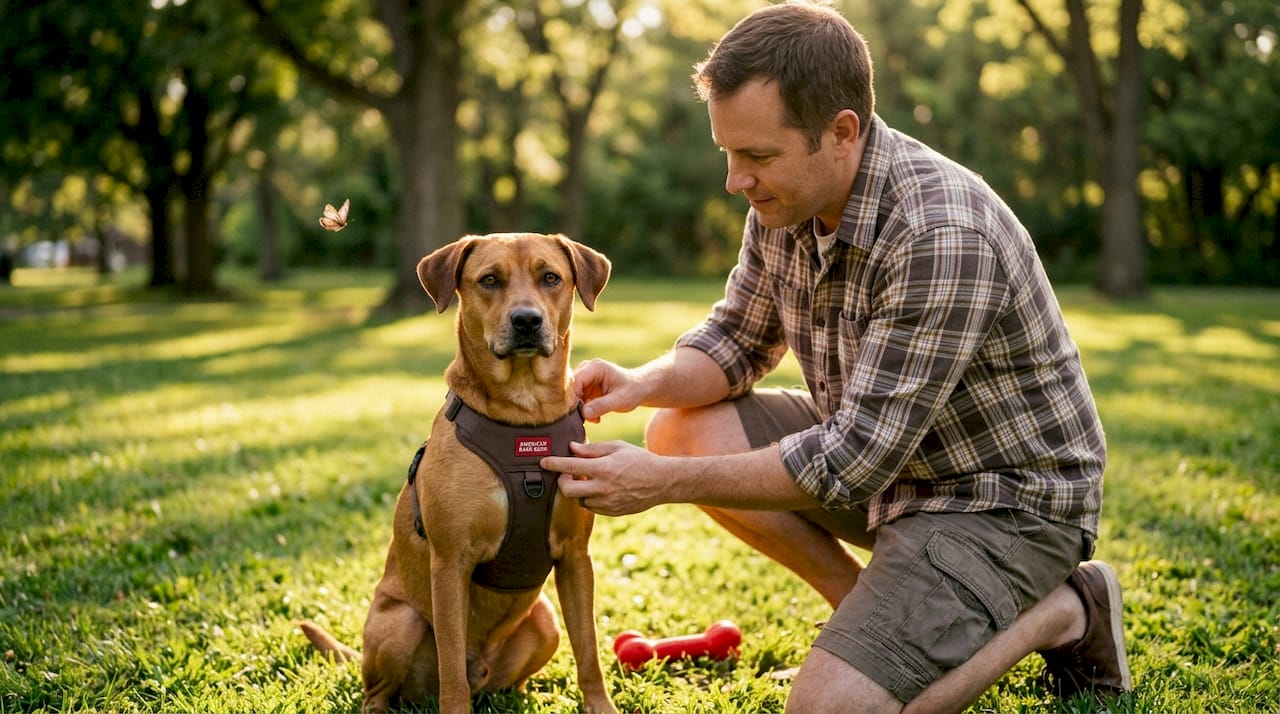
- Chest panel placed too high. When the front piece rides up toward the throat, it puts pressure on the trachea. Your dog will cough, toss their head, or resist walking. A chest panel riding up into the throat causes real discomfort and can impact breathing. Fix it by loosening all straps, repositioning the panel low on the sternum, and re-tightening.
- Girth strap too loose. A loose girth strap lets the harness shift forward, pushing the chest panel upward. Tighten until the two-finger rule is satisfied.
- Uneven strap adjustment. Tightening one side more than the other causes the harness to tilt. Your dog will compensate with an asymmetric gait. Always adjust both sides equally.
- Straps crossing the shoulder blades. Straps that cut across the shoulder blades restrict the natural forward reach of the front legs, shortening your dog’s stride. Reposition so straps run along the sides of the shoulders, not over the top.
Symptoms to watch for:
- Pawing at the chest or neck area
- Shortened or stiff front leg stride
- Harness rotating to one side during walks
- Red skin or hair loss at strap contact points
- Reluctance to move forward or sit down in the harness
| Harness type | Fit control | Best for | Watch out for |
|---|---|---|---|
| Overhead (slip-over-head) | Moderate | Calm, cooperative dogs | Difficult to fit on head-shy dogs |
| Step-in | Lower | Calm dogs with standard builds | Easier to escape; less chest control |
| Y-front | High | Active dogs, pullers | Requires precise chest positioning |
| H-style | High | Most breeds | More adjustment points to manage |
Pro Tip: If your dog’s harness keeps rotating to one side during walks, the girth strap is almost always the problem. Tighten it by one notch and recheck. A correctly fitting patented magnetic dog leash connection also reduces the sideways torque that causes rotation.
Understanding these problems helps you maintain an ideal fit and ensure your dog’s comfort and safety during every walk.
Breed and size considerations for fitting harnesses
Body shape matters as much as body weight when correctly fitting a harness. Two dogs that weigh the same can need completely different harness styles, and ignoring this leads to fits that look right but function poorly.
Breed-specific guidance:
- Barrel-chested breeds (Bulldogs, Pugs, French Bulldogs) have wide, deep chests and short necks. They need harnesses with multiple adjustment points and a wide chest panel that can spread across the full width of the sternum without pinching the sides.
- Sighthounds (Greyhounds, Whippets, Salukis) have necks wider than their heads and narrow, deep chests. Standard harnesses slide off them. Look for escape-proof designs with a martingale-style girth strap or an additional belly strap for security.
- Long-backed breeds (Dachshunds, Basset Hounds, Corgis) benefit from padded belly panels that distribute pressure across a broader surface area, reducing stress on the spine during walks.
- Deep-chested breeds (Dobermans, Weimaraners, Standard Poodles) often fall between sizes on standard charts. Measure carefully and size up if in doubt, then adjust the straps down to fit.
- Puppies and growing dogs need re-measurement every four to six weeks. A harness that fits perfectly at twelve weeks can be dangerously tight at sixteen.
The lesson here is straightforward: best dog harness sizes are determined by your dog’s specific measurements, not by breed reputation or the weight range printed on the box. A Labrador and a Boxer can both weigh 65 pounds and need completely different harness configurations.
Finally, once fitted properly, you need to verify the fit for safety and comfort during real use.
Testing and verifying the fit: ensuring comfort and safety
Fitting a harness at home on a stationary dog is only half the job. The real test happens in motion, under the conditions your dog actually experiences on walks.
What to observe during the first walk:
- Watch the front legs for any shortening of stride or hesitation. A correctly fitted harness should be invisible to your dog’s movement.
- Check that the harness does not shift forward or rotate as your dog pulls, turns, or sniffs the ground.
- Note any signs of discomfort like head tossing, stiff gait, pawing, or redness after walks as clear indicators that the fit needs adjustment.
- If your dog stops walking and refuses to move, check the chest panel placement first. This is almost always the cause.
Post-walk fit checks:
- Run the two-finger test at every strap point after returning home. Straps can loosen during a walk, especially on dogs that pull.
- Part the fur and check the skin under the armpits, across the chest, and along the belly for redness, warmth, or any sign of hair being rubbed away.
- Look at the D-ring position. If it has migrated to one side, the girth strap needs tightening.
Pro Tip: Take a quick photo of your dog in the harness from the front and back after the first successful fit. Use it as a reference point when you re-check fit after grooming, weight changes, or a new coat season. Visual comparison catches gradual drift that your hands might miss.
You should also monitor your dog’s comfort and behavior over the first several walks and treat any behavioral change as a fit signal worth investigating.
Why many owners get harness fitting wrong — and what truly matters
Here is something most harness guides will not tell you: the instinct to tighten is the enemy of a good fit. When a harness slips or rotates, the natural response is to pull every strap tighter. But tighter harnesses cause discomfort, restricted breathing, and stiff movement. The actual fix is almost always repositioning, not tightening.
The goal of a well-fitted harness is even pressure distribution across the chest and ribcage, not a grip. A harness that distributes load correctly feels stable without feeling constricting. Think of it like a well-fitted backpack: it stays in place because the weight is balanced, not because the straps are cutting into your shoulders.
The other thing most guides overlook is that your dog’s body changes. Seasonal coat growth can add a full inch to effective girth measurements. A dog that gains muscle through regular exercise will need strap adjustments within weeks. Dogs coming off illness or a restricted diet lose body mass quickly. Treating harness fit as a one-time task rather than an ongoing practice is how owners end up with a dog wearing gear that no longer fits.
Your dog will also tell you when something is wrong, if you listen. A dog that was previously happy to walk and now hesitates at the door, or one that shakes their body repeatedly after you buckle up, is communicating a fit problem. Behavioral feedback is more reliable than any visual check. Prioritize what your dog shows you over what the harness looks like from the outside. Explore proper harness fit essentials to find gear designed with these realities in mind.
Explore quality dog harnesses and accessories at American Bark Bliss
Now that you know how to fit a harness properly, the next step is making sure the gear itself is worth the effort. A well-made harness holds its adjustments, keeps its shape walk after walk, and feels good against your dog’s skin from day one.
At American Bark Bliss, you will find a curated selection of premium, American-made dog harnesses and walking accessories built for real dogs with real body shapes. The magnetic dog harness is a standout for owners who want a secure, adjustable fit without fumbling with traditional buckles. Pair it with the padded grip dog leash for a complete walking setup that prioritizes your dog’s comfort and your control. Every product is selected with safety, durability, and style in mind.
Frequently asked questions
What is the two-finger rule when fitting a dog harness?
The two-finger rule means you should be able to slide two fingers vertically between the harness strap and your dog’s body, ensuring a snug but not tight fit that prevents both chafing and slipping. If you cannot fit two fingers, loosen the strap; if your fingers slide through without resistance, tighten it.
How do I measure my dog for a harness?
Measure your dog’s chest girth at the widest part behind the front legs and the neck circumference at the collar base using a flexible tape measure, with your dog standing naturally for accuracy. Record both measurements and add one to two inches before consulting the brand’s size chart.
What are signs that my dog’s harness is too tight?
Signs of a tight harness include redness or hair loss at strap contact points, coughing, reluctance to walk, shortened strides, and behaviors like head tossing or pawing at the chest. Any of these signals means you should stop, loosen the harness, and recheck the fit before continuing.
How often should I check my dog’s harness fit?
Check the fit before every walk, and re-measure every six to twelve months for adult dogs or every four to six weeks for growing puppies. Seasonal coat changes, weight fluctuations, and muscle gain all affect how a harness sits on your dog’s body.
Are generic harness sizes reliable?
No. Generic S/M/L labels vary widely between brands, and two harnesses labeled the same size can differ by several inches. Always measure your dog and use the specific manufacturer’s size chart rather than relying on the label alone.
Leave a comment