

How to Enrich Your Dog's Playtime: 2026 Guide
TL;DR:
- Dog enrichment involves activities that meet a dog’s physical, mental, and instinctual needs beyond basic exercise.
- Proper playtime enhances engagement, prevents boredom behaviors, and develops impulse control through structured sequences.
Dog enrichment is defined as any activity that satisfies a dog’s physical, mental, and instinctual needs beyond basic exercise. Knowing how to enrich your dog’s playtime is the single most effective way to prevent boredom-driven behaviors like destructive chewing and excessive barking. Mental stimulation is equally as important as physical exercise for reducing behavior problems. The strategies in this guide cover play style identification, instinct-driven game sequences, toy rotation, and social enrichment so you can build a plan that actually works for your dog.
How to enrich your dog’s playtime by knowing their play style
Every dog has a dominant play personality, and matching your activities to that personality is the fastest way to enhance dog playtime. Veterinarian Dr. Rebecca Macmillan identifies three core categories: Masterminds, Olympians, and Wild Cards. Knowing which type your dog is prevents wasted effort and keeps sessions genuinely engaging.
Masterminds
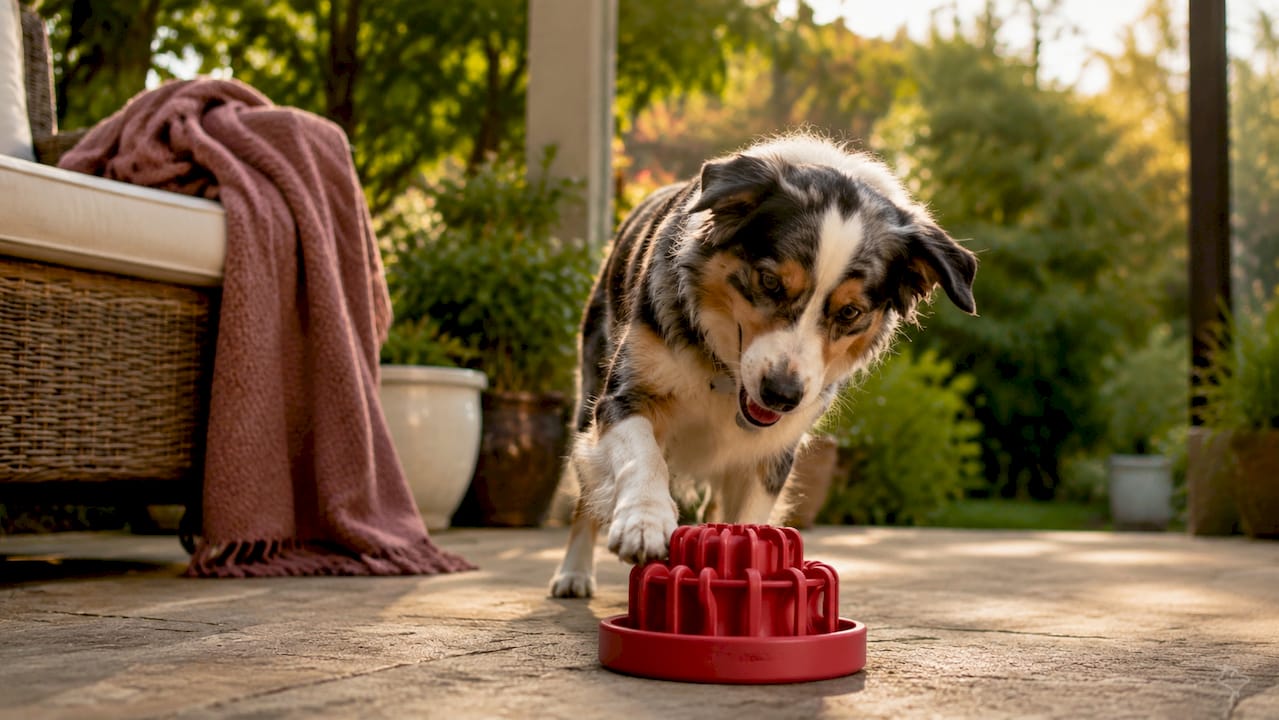
Masterminds are problem solvers. They get bored with repetitive physical games and light up when challenged mentally. Puzzle feeders, sniff mats, and training-based games are the best fit. A simple “find it” game where you hide kibble around the room gives a Mastermind 10 minutes of focused, satisfying work.
Olympians
Olympians are high-energy dogs who need speed and movement. Fetch, flirt poles, and tug toys are their preferred activities. For Olympians, the best dog toys for boredom are durable, fast-moving, and built to handle repeated impact. Short, intense bursts of play followed by a rest period work better than one long session.
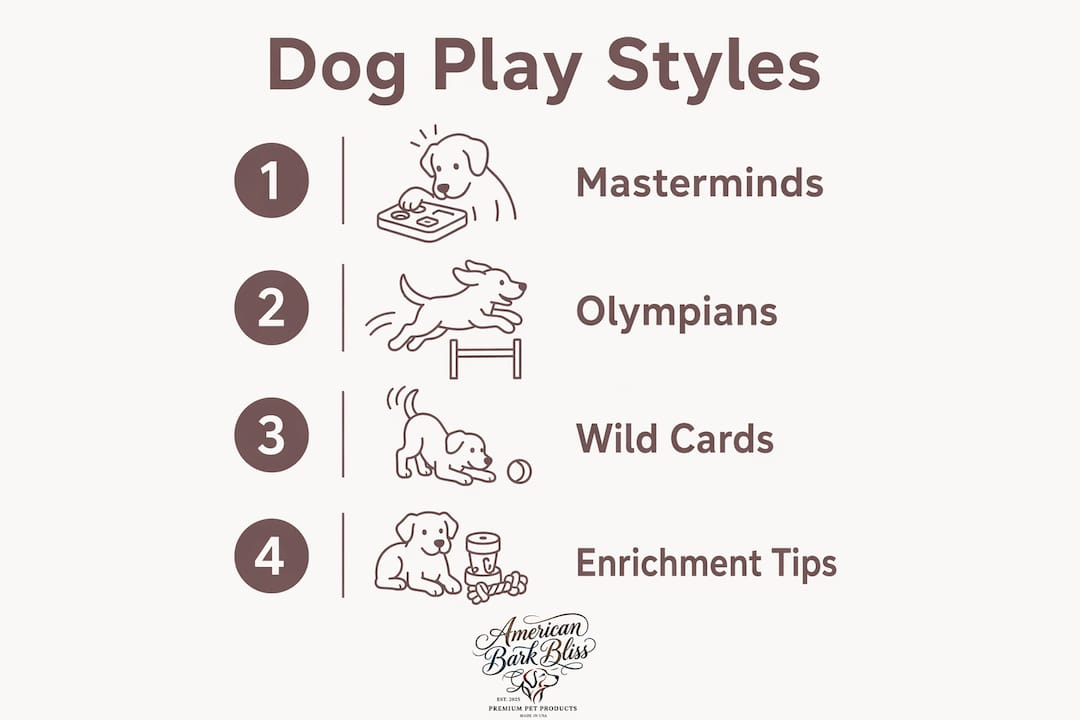
Wild Cards
Wild Cards crave novelty. They lose interest quickly in the same toy or game. Rotating new textures, sounds, and shapes into their play keeps them engaged. Novelty toys, crinkle items, and unpredictable movement patterns hold their attention far longer than any single “favorite” toy.
- Masterminds: puzzle feeders, sniff mats, training games, hide-and-seek with objects
- Olympians: fetch, flirt poles, tug ropes, durable interactive toys
- Wild Cards: rotating novelty toys, crinkle toys, varied textures, unpredictable movement
Pro Tip: Avoid encouraging rough play that involves jumping on you or nipping. Establish a clear “game on” cue before play starts and a “game over” cue when it ends. This boundary teaches your dog that play is a structured reward, not a free-for-all.
What is the instinct-driven play sequence dogs need?
Dogs are wired for a specific working sequence, and most owners skip two of its most important stages. The complete sequence runs: search, stalk, chase, bite or tug, and dissect or calm. Skipping the search and calm phases leaves dogs psychologically unsatisfied, which often shows up as excessive arousal or frustration after play ends.
Here is how to build a full sequence into a single session:
- Search. Hide a scent-infused toy or treat before the session begins. Let your dog use their nose to locate it. Scent-based search games for 15–20 minutes maximize mental engagement and satisfy natural hunting drives.
- Stalk and chase. Once the dog finds the toy, animate it. Drag it along the ground, move it unpredictably, and let the dog pursue it. This mirrors prey behavior and builds excitement in a controlled way.
- Bite or tug. Allow 10–20 seconds of tug as the reward for a successful find. Tug is not aggressive play. It is a natural and satisfying conclusion to the chase phase.
- Dissect. Give your dog a chew toy, a stuffed Kong, or a lick mat at this stage. This mirrors the “dissect and consume” phase and gives the dog something to do with their arousal.
- Calm. End every session with a quiet activity. A lick mat with peanut butter or a frozen treat works well. This signals the session is over and helps the dog settle without frustration.
Sessions structured this way take 15–20 minutes and leave dogs genuinely tired rather than wound up. That is the difference between a dog who naps after play and one who immediately starts looking for trouble.
Pro Tip: Use consistent verbal cues like “find it,” “tug,” and “all done” at each stage. Start and stop cues build impulse control and transform every play session into a low-key training opportunity.
How should you rotate and select toys to keep dogs entertained?
Leaving all toys out at once is one of the most common mistakes dog owners make. Rotating toys every 7–14 days increases interest and prevents desensitization. When a toy reappears after two weeks, it feels new again. That novelty effect is free enrichment that requires zero extra effort.
Selecting the right toy types matters as much as rotation. The types of enrichment toys available in 2026 fall into four practical categories:
| Toy category | Primary benefit | Best for |
|---|---|---|
| Puzzle feeders | Mental stimulation | Masterminds, slow eaters |
| Scent and sniff toys | Nose work, calm focus | All play styles |
| Chew toys | Jaw exercise, stress relief | High-arousal dogs post-play |
| Food-dispensing toys | Mental engagement during meals | Olympians, Wild Cards |
Food-dispensing toys deserve special attention. Replacing a standard food bowl with a food-dispensing toy adds mental work to every meal without adding time to your day. That is one of the highest-value enrichment swaps available to any dog owner.
When selecting toys, prioritize safety and durability above all else. Check for toys that are size-appropriate, free of small detachable parts, and made from non-toxic materials. American-made options tend to meet stricter safety standards. Americanbarkbliss carries a curated selection of American-made dog toys built with both durability and safety in mind.
- Rotate toys every 7–14 days rather than leaving all toys accessible at once
- Keep 3–5 toys in active rotation and store the rest out of sight
- Match toy type to play style: puzzles for Masterminds, tug and fetch for Olympians
- Replace the food bowl with a food-dispensing toy at least once per day
- Inspect toys weekly for damage and remove any with loose pieces or tears
How does social and environmental enrichment improve dog behavior?
Social play and environmental variety address a dimension of enrichment that toys alone cannot cover. Supervised playgroups and natural obstacle courses improve coordination, build confidence, and reduce problem behaviors. A dog who gets regular social exposure is less reactive and easier to manage in public.
Environmental enrichment does not require a backyard or expensive equipment. Varied textures underfoot, new smells on a walk, and simple DIY obstacle courses using household items all count. A row of cardboard boxes to weave through, a low plank to balance on, or a sandbox for digging gives your dog novel physical and mental challenges. For rainy days, indoor dog enrichment ideas provide structured options that work in any space.
Introducing social play requires care. Short, controlled encounters work better than long, unsupervised sessions. Watch for body language signals like stiff posture, whale eye, or excessive mounting, and separate dogs before tension escalates. Not every dog enjoys group play, and forcing it creates stress rather than enrichment.
- Start social play with one calm, familiar dog before introducing groups
- Keep initial sessions under 10 minutes and watch body language throughout
- Use varied outdoor surfaces: grass, gravel, sand, and pavement each provide different sensory input
- Build a simple obstacle course with cushions, boxes, and low planks indoors
- Respect your dog’s preferences. A dog who consistently disengages from group play may prefer solo enrichment activities
Key Takeaways
Enriching your dog’s playtime requires matching activities to their play style, completing the full instinct-driven sequence, and rotating toys consistently to prevent boredom.
| Point | Details |
|---|---|
| Know your dog’s play style | Identify Mastermind, Olympian, or Wild Card tendencies to select the right toys and games. |
| Use the full play sequence | Include search, chase, tug, and calm phases to satisfy instincts and reduce post-play frustration. |
| Rotate toys every 7–14 days | Storing toys and reintroducing them prevents desensitization and keeps interest high. |
| Add food-dispensing toys | Replacing the food bowl with an enrichment feeder adds mental work to every meal. |
| Include social and environmental play | Varied environments and supervised social encounters build confidence and reduce problem behaviors. |
What I’ve learned from years of watching dogs play
Most dog owners focus almost entirely on physical exercise and wonder why their dog is still restless after a long walk. The answer is almost always mental stimulation. A 15-minute scent game tires a dog out more thoroughly than a 45-minute run, because it engages the brain at full capacity. That is not intuitive, but once you see it, you cannot unsee it.
The biggest shift I made was treating play as a structured activity rather than a free-for-all. Using consistent start and stop cues changed everything. My dog learned that “game on” meant full engagement and “all done” meant settle. That clarity reduced his anxiety around play ending, because he knew exactly what to expect. Consistently structured play builds impulse control in a way that no amount of basic obedience training replicates.
The other thing I’d push back on is the idea that enrichment has to be elaborate. Hide-and-seek with a toy takes two minutes to set up. A lick mat at the end of a session costs almost nothing. Enrichment teaches self-regulation and strengthens the bond between you and your dog, and most of the best methods are dead simple. Start with one new element per session and build from there. Your dog will tell you what works.
— Christopher
Quality enrichment tools from Americanbarkbliss
Dog owners who want to put these strategies into practice immediately need tools that hold up to real use.
Americanbarkbliss offers the Calm & Enrichment Bundle for owners who want to cover both the active and calm phases of a play session in one purchase. The bundle supports the dissect and calm stages that most sessions miss entirely. For Olympians and high-energy dogs, the FreezFootball toy is a durable, interactive option built to handle aggressive chewers and fast-paced play. Both products are made with the quality and safety standards Americanbarkbliss is known for. Browse the full selection at americanbarkbliss.com to find the right fit for your dog’s play style.
FAQ
What does dog enrichment actually mean?
Dog enrichment means providing activities that satisfy a dog’s physical, mental, and instinctual needs. It goes beyond basic exercise to include scent work, problem-solving, social interaction, and structured play sequences.
How long should a dog enrichment play session last?
Sessions of 15–20 minutes that include a search phase, active play, and a calm-down period are most effective. Shorter, structured sessions tire dogs out more thoroughly than long, unstructured ones.
What are the best fun activities for dogs at home?
Hide-and-seek with toys or treats, puzzle feeders, lick mats, and DIY obstacle courses are among the most effective and accessible options. These activities engage a dog’s nose, problem-solving skills, and physical coordination without requiring outdoor space.
How often should I rotate my dog’s toys?
Rotating toys every 7–14 days prevents desensitization and keeps interest high. Store unused toys out of sight and reintroduce them on a schedule.
Can play sessions help with my dog’s behavior problems?
Yes. Consistent enrichment teaches self-regulation and reduces boredom-driven behaviors like chewing, barking, and destructive activity. Structured play with clear start and stop cues also builds impulse control over time.
Leave a comment