

High Performance Pet Gear: What Every Dog Owner Must Know
TL;DR:
- High-performance pet gear is built with industrial-grade materials like 1000D nylon and forged metal hardware for durability and safety. It lasts longer and reduces the risk of gear failure, which can lead to pet escapes and costly emergencies. Proper fit and customization enhance safety, comfort, and behavioral response during active use.
High-performance pet gear is defined as pet equipment engineered with industrial-grade or military-spec materials and construction standards to deliver superior durability, safety, and comfort under demanding use conditions. This is the industry term for what many pet owners casually call “heavy-duty” or “tactical” gear. The distinction matters because standard pet gear is built to a consumer price point, not a safety standard. 1000D nylon webbing and forged metal hardware are the two most common markers of true high-performance pet equipment. Understanding what separates these products from mass-market alternatives is the first step toward making a purchase that actually protects your dog.
What is high performance pet gear made of?
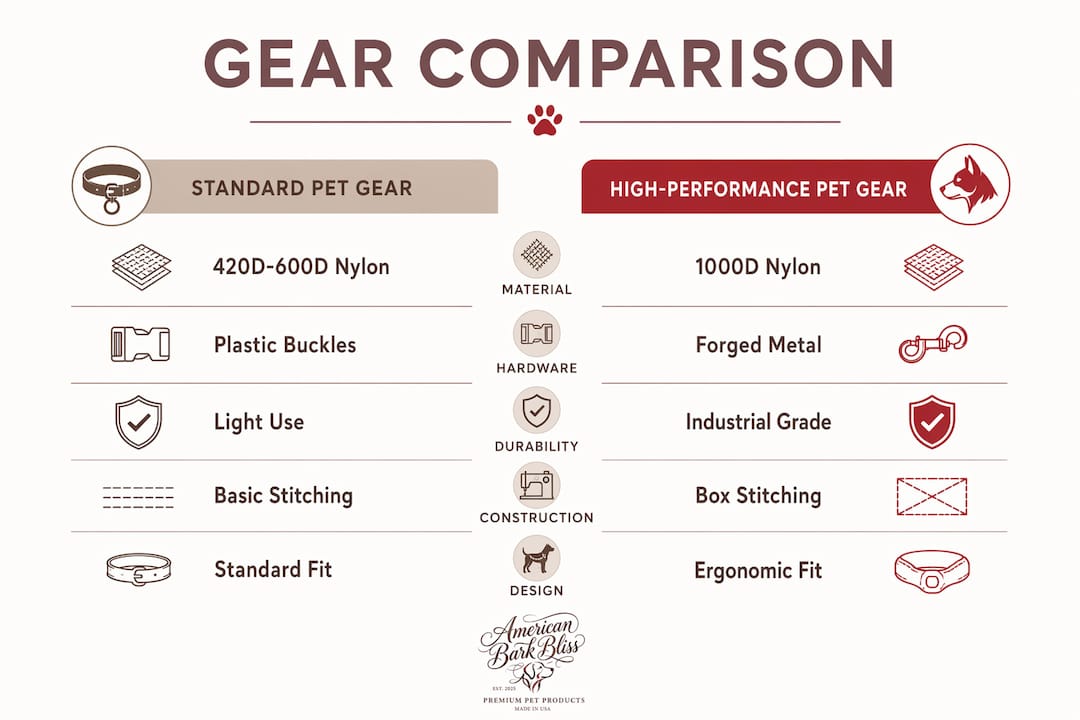
The materials in a piece of pet gear determine everything: how long it lasts, how safe it is, and how well it fits your dog’s body under stress. Standard gear typically uses 420D or 600D nylon, plastic buckles, and single-pass stitching. High-performance gear uses 1000D nylon webbing, forged metal D-rings, and box-stitching at every anchor point.
The load difference is significant. Standard buckles fail under 50–75 lbs of force, while performance-grade metal hardware handles forces far beyond that threshold. For a 70-pound dog that lunges at a squirrel, that gap is the difference between control and a broken buckle on a busy street.
Construction details matter just as much as raw materials. Industrial-grade durability depends on box-stitching at stress points, forged metal D-rings, and replaceable parts that extend gear life without requiring a full replacement. A harness with replaceable hardware can serve a dog for years. One with sewn-in plastic clips typically fails within months of heavy use.
| Feature | Standard gear | High-performance gear |
|---|---|---|
| Webbing material | 420D–600D nylon | 1000D nylon |
| Hardware | Plastic buckles | Forged metal D-rings |
| Stitching | Single-pass | Box-stitch at anchor points |
| Repairability | Replace the whole item | Replace individual parts |
| Load rating | 50–75 lbs | Rated for much higher loads |
Design geometry also separates the two categories. Y-shaped harness patterns clear the shoulder joint entirely, preventing movement restriction and reducing repetitive stress injuries in dogs that run, jump, or work at high intensity. A straight-chest harness compresses the shoulder with every stride.
Pro Tip: Check the denier rating on any harness or leash before buying. A rating below 800D signals consumer-grade construction. Anything at 1000D or above is built for real-world stress.
How does high-performance gear improve pet safety and long-term value?
Gear failure is not a minor inconvenience. Approximately 10 million pets go missing in the US every year, and a broken collar or snapped leash is one of the most preventable causes. Emergency vet visits triggered by gear-related incidents cost between $500 and $2,000. A $60 performance harness looks very different when measured against a $1,500 emergency bill.
Durability compounds the value argument over time. Premium pet gear often lasts up to 10 years, while cheaper alternatives degrade within 6 months to 1 year. That means a single quality purchase can replace five to twenty budget purchases over a decade. The math favors quality, and so does your dog’s safety record.
Personalization adds another layer of protection. Durable engraved ID tags and embroidered name patches on high-performance collars and harnesses give first responders and neighbors immediate identification information. That detail accelerates recovery when a dog does get loose. You can learn more about collar durability standards to understand which materials hold up to daily wear without fading or cracking.
Safety features worth prioritizing in any high-performance purchase:
- Corrosion-resistant hardware that holds up in rain, mud, and saltwater environments
- Reflective stitching or panels for visibility during early morning or evening walks
- Padded ergonomic handles on leashes for control without hand fatigue
- Clear weight ratings printed or stamped on hardware
- Lockable metal clasps that do not release under lateral pressure
What role does customization and fit play in high-performance pet gear?
A harness that fits poorly is almost as dangerous as one that breaks. Ill-fitting gear creates pressure points, restricts breathing, and gives dogs a way to back out and escape. Custom-fitted gear reduces friction and chafing, which helps anxious pets feel more secure and improves training engagement. That is not a minor comfort benefit. It directly affects how a dog responds to commands and handles new environments.
The behavioral impact of a proper fit is underappreciated. Custom-fitted gear alleviates anxiety by improving physical comfort, which mainstream pet equipment choices consistently overlook. A dog that is not fighting discomfort is a dog that can focus on its handler. For owners working on leash manners or recall training, this is a practical advantage, not just a luxury.
Customization in high-performance gear goes beyond fit. Options include:
- Adjustable sternum and girth straps for dogs between standard size ranges
- Modular attachment points (MOLLE webbing) for adding pouches or lights
- Shape-specific orthopedic beds that match a dog’s sleeping posture and body weight
- Activity-rated padding that varies by intensity, from light walking to trail running
Pro Tip: Measure your dog’s girth (the widest point of the chest, just behind the front legs) and neck circumference before ordering any harness or collar. Most sizing errors come from using weight alone, which does not account for body shape.
The adjustable harness guide at Americanbarkbliss walks through exactly how to take these measurements and match them to the right fit category.
Which types of gear work best for different pet activities?
Not every dog needs the same gear, and over-engineering a setup for a casual pet creates its own problems. Heavy-duty tactical gear can be cumbersome and restrictive for low-activity pets. Matching gear to actual use is the defining principle of smart gear selection.
Professional handlers describe high-performance or “tactical” gear as optimized for controlled handling and joint support during high-energy activities, not for appearance. That distinction matters when you are choosing between a standard nylon harness for neighborhood walks and a load-bearing vest for trail hiking or water retrieval.
| Activity | Key gear features | Recommended gear type |
|---|---|---|
| Casual walking | Lightweight, comfortable fit | Standard adjustable harness |
| Trail hiking | Load-bearing, reflective, hydration-compatible | Performance harness with MOLLE points |
| Agility training | Y-shaped shoulder clearance, minimal bulk | Competition-grade agility harness |
| Water activities | Corrosion-resistant hardware, quick-dry webbing | Marine-grade nylon harness |
| Travel and transport | Crash-tested, ventilated, hands-free option | Rugged pet travel backpack |
For outdoor and sun-heavy environments, protective apparel like the Body Glove Pet Sun Shirt adds UV protection without restricting movement. For active dogs that need mental engagement during downtime, a durable treat holder built from reinforced rubber keeps them occupied between activity sessions. Gear selection is a system, not a single purchase.
Key Takeaways
High-performance pet gear is defined by industrial-grade materials, load-rated hardware, and construction details that standard consumer gear cannot match, making it the most reliable choice for active, working, or safety-conscious pet owners.
| Point | Details |
|---|---|
| Material grade determines safety | 1000D nylon and forged metal hardware far outlast standard 420D nylon and plastic buckles. |
| Gear failure has real costs | Broken gear contributes to pet escapes; 10 million pets go missing in the US annually. |
| Premium gear lasts longer | High-performance gear can last up to 10 years versus 6–12 months for budget alternatives. |
| Fit affects behavior | Custom-fitted gear reduces anxiety and improves training focus in dogs of all activity levels. |
| Match gear to activity | Heavy-duty tactical gear restricts low-activity pets; always match gear weight and function to actual use. |
Why I think most pet owners buy the wrong gear for the wrong reasons
Most people buy pet gear based on color, price, or what looks good in a product photo. I understand the impulse. The gear market is full of attractive products at low price points, and it is easy to assume that a harness is a harness. That assumption costs pet owners money and, in some cases, costs pets their safety.
The mistake I see most often is buying gear for the dog’s current size without accounting for growth, activity changes, or seasonal use. A puppy harness that fits perfectly at 20 pounds becomes a liability at 45 pounds if the hardware was never rated for that load. Gear should be selected with a 12-month horizon in mind, not just for today’s walk.
Hardware inspection is the skill most owners skip entirely. Before any purchase, I look at the D-ring where the leash attaches. If it is stamped sheet metal, I put the product back. Forged metal D-rings have a visible seam from the casting process and feel substantially heavier. That weight difference is the difference between a ring that holds and one that bends open under pressure.
The best gear investment I have seen owners make is in products with repairable parts. A harness where you can replace the buckle or the webbing strip independently costs more upfront but eliminates the cycle of full replacements every year. Assess your dog’s gear every six months. Look for fraying at the stitching, corrosion on the hardware, and any deformation in the buckles. Gear that passes that inspection is gear you can trust.
— Christopher
Premium pet gear worth considering at Americanbarkbliss
Americanbarkbliss carries a selection of American-made pet gear built to the material and construction standards covered in this article.
The rugged pet backpack features an Armorsole base, hands-free convertibility, and multi-compartment storage for pets up to 25 lbs. The Body Glove Sun Shirt delivers UV protection for outdoor-active dogs without restricting movement. For dogs that need durable enrichment between activity sessions, the Gear eDispenser combines a reinforced rubber chew holder with a treat pocket, made in the USA. Each product reflects the durability and safety standards that define genuine high-performance pet equipment.
FAQ
What is the difference between standard and high-performance pet gear?
Standard pet gear uses plastic hardware and low-denier nylon rated for light use. High-performance gear uses forged metal hardware and 1000D nylon webbing rated for significantly higher load forces.
How long does high-performance pet gear last compared to budget gear?
Premium pet gear can last up to 10 years with proper care, while budget alternatives typically degrade within 6 to 12 months of regular use.
Is tactical pet gear suitable for all dogs?
No. Heavy-duty tactical gear can restrict movement and cause discomfort in low-activity or small dogs. Gear should match the pet’s actual activity level and body size.
How do I know if a harness fits my dog correctly?
You should be able to fit two fingers under any strap without the harness shifting or rotating. Measure your dog’s girth and neck circumference rather than relying on weight-based sizing charts alone.
What safety features should I look for in high-performance pet gear?
Prioritize corrosion-resistant hardware, box-stitching at anchor points, clear weight ratings, reflective panels, and lockable metal clasps that resist lateral pressure during sudden movements.
Leave a comment