

Glucosamine for Dogs: Vet-Backed Trial Plan
Glucosamine is worth a supervised trial for most dogs with mild to moderate osteoarthritis. The evidence is genuinely mixed, but the risk profile is low enough that most vets consider it a reasonable first step before or alongside other therapies. As a starting point, common dosing guidance runs roughly 20 mg of glucosamine per pound of body weight daily, typically with a higher loading dose for the first 4–6 weeks before dropping to a maintenance level. Expect to wait at least several weeks before judging whether it’s working.
Quick orientation before you read further:
- Glucosamine is a nutraceutical, not a drug. It is not FDA-approved for veterinary use, and quality varies widely between products.
- It works best as part of a multimodal plan that includes weight management, appropriate exercise, and veterinary oversight.
- It is not appropriate for inflammatory, immune-mediated, or septic arthritis. Get a diagnosis first.
- Most dogs tolerate it well. Mild GI upset is the most common complaint.
Key Takeaways
Glucosamine is a low-risk, reasonable adjunct for dogs with mild to moderate osteoarthritis, but it requires an adequate trial period, a quality product, and integration with veterinary care to be worth the effort.
| Point | Details |
|---|---|
| Evidence is mixed but risk is low | Clinical trials show inconsistent results; most vets still recommend a supervised trial for mild to moderate OA. |
| Dose and trial length matter | Start at roughly 20 mg per pound daily with a 4–6 week loading phase; allow 8–12 weeks before judging effectiveness. |
| Quality varies widely | Choose products with GMP certification, third-party testing, and a clearly labeled glucosamine salt form and milligram amount. |
| Supplements are adjuncts, not replacements | Combine with weight management, appropriate exercise, and veterinary-prescribed pain relief when indicated. |
| Americanbarkbliss | Carries clearly labeled joint-support liquids, tablets, and powders; confirm dosing with your vet before starting. |
Table of Contents
- What glucosamine for dogs actually does and when vets recommend it
- What the research actually shows
- How to dose glucosamine safely
- Side effects and safety considerations
- How to choose a quality glucosamine supplement
- How glucosamine fits into a complete arthritis plan
- A practical step-by-step trial protocol
- An honest editorial perspective on supplements and evidence
- Quality joint support from Americanbarkbliss
- Sources
- FAQ
What glucosamine for dogs actually does and when vets recommend it
Glucosamine is a naturally occurring compound your dog’s body uses to build and repair cartilage. Specifically, it serves as a precursor to glycosaminoglycans, the structural molecules that give cartilage its cushioning properties. When a joint is damaged or degenerating, the theory is that supplemental glucosamine provides raw material to slow that breakdown. There’s also evidence suggesting a mild anti-inflammatory effect, though the mechanism is less well established than the structural one.
Two salt forms appear in most products: glucosamine hydrochloride (HCl) and glucosamine sulfate. Glucosamine HCl has higher glucosamine content by weight and is more commonly used in veterinary products. Glucosamine sulfate, the form studied more extensively in human trials, contains a lower percentage of active glucosamine and sometimes includes sodium as a stabilizer. Whether one form outperforms the other in dogs is genuinely unclear because most canine trials don’t compare them head-to-head.
Vets typically recommend glucosamine for mild to moderate osteoarthritis (OA), for high-risk breeds as a preventive measure (large and giant breeds, dogs with hip dysplasia), and as an adjunct to other therapies like NSAIDs or physical rehabilitation. What it is not suited for: inflammatory arthritis, immune-mediated joint disease, or septic arthritis. Those conditions require targeted medical or surgical care, and delaying that care in favor of supplements can cause real harm.
Most joint supplement formulas combine glucosamine with one or more complementary ingredients because the combination is thought to target multiple pathways simultaneously. The most common pairings:
- Chondroitin sulfate: Inhibits cartilage-degrading enzymes and draws fluid into cartilage tissue. Nearly always paired with glucosamine.
- MSM (methylsulfonylmethane): A sulfur-containing compound with anti-inflammatory properties. The glucosamine chondroitin vs MSM debate is mostly moot in practice because many products include all three.
- Omega-3 fatty acids (fish oil): Well-supported anti-inflammatory effect. Considered one of the stronger adjuncts in the evidence base.
- Green-lipped mussel: Contains omega-3s plus glycosaminoglycans; some vets consider it among the more evidence-backed single ingredients.
- UC-II (undenatured type II collagen): Works through a different mechanism (oral tolerance) and may perform differently from glucosamine/chondroitin combinations. Some clinicians dose it separately from other supplements for best effect.
Pro Tip: If your dog is already on an omega-3 supplement, check whether your joint formula also contains fish oil before adding more. Too much of a good thing can affect clotting, especially in dogs scheduled for surgery.
What the research actually shows
The honest summary: clinical trial results are mixed, and the evidence base has real limitations. A comprehensive veterinary review found that while glucosamine HCl and chondroitin are among the most commonly recommended nutraceuticals in canine practice, high-quality trials confirming consistent clinical benefit are still lacking. The review called for better-designed studies with larger sample sizes, standardized formulations, and longer follow-up periods.
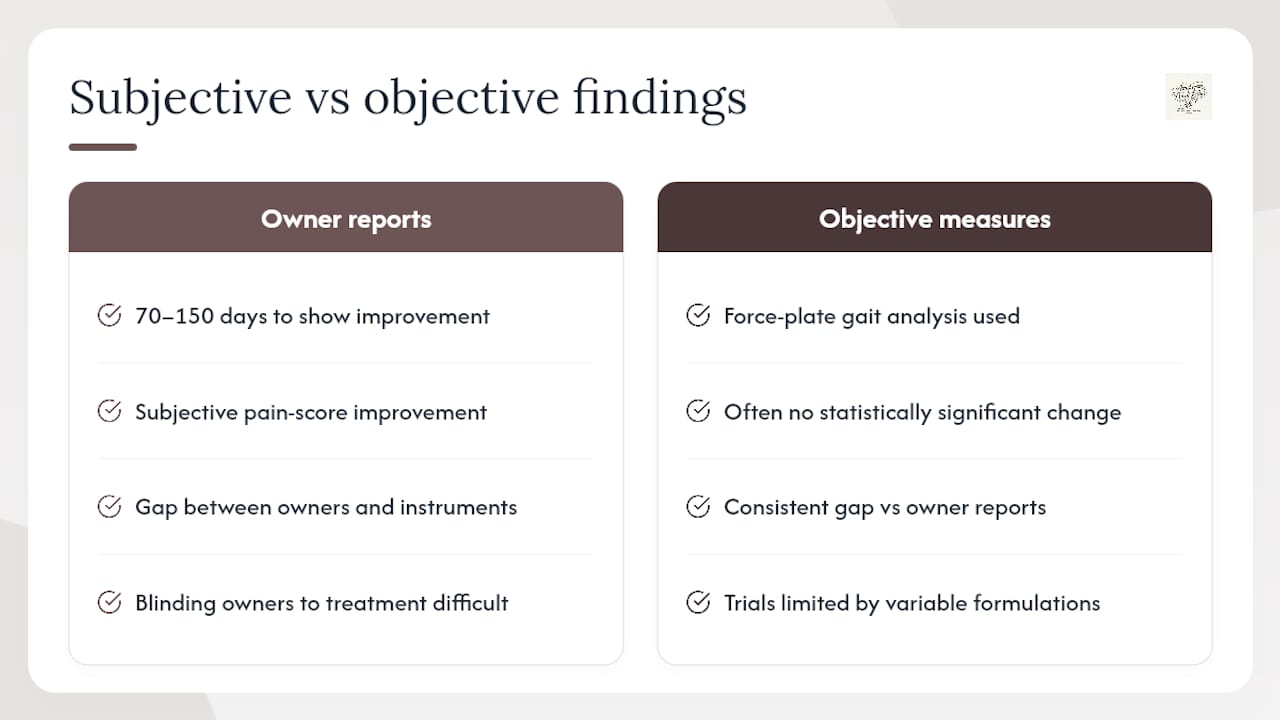
Representative randomized controlled trials illustrate the pattern. Some trials found subjective pain score improvements after 70–150 days of treatment, while objective force-plate gait analysis often showed no statistically significant change by the end of the study period. That gap between what owners report and what instruments measure is one of the most consistent findings in the literature.
The reasons the literature stays mixed are structural, not just a matter of needing more studies. Variable formulations (HCl vs sulfate, different chondroitin sources), inconsistent dosing regimens, small sample sizes, short follow-up windows, and the difficulty of blinding owners to treatment all make it hard to compare trials or draw firm conclusions.
What does “mixed evidence” mean for your dog specifically? It means glucosamine is not a proven treatment in the pharmaceutical sense, but it is also not a waste of money for every dog. A monitored trial in a dog with confirmed mild to moderate OA, low risk of adverse effects, and no contraindications is a reasonable clinical decision. The key word is “monitored.” You need a baseline and a plan for evaluating whether it’s actually helping.
How to dose glucosamine safely
The most widely cited rule of thumb is approximately 20 mg of glucosamine per pound of body weight per day, with a loading phase at or above that level for the first 4–6 weeks, followed by a lower maintenance dose. These are example figures, not prescriptions. Always confirm the dose with your veterinarian, especially for dogs with liver disease, kidney issues, or concurrent medications.

These ranges reflect commonly cited clinical practice guidance and are examples only. Your vet’s recommendation for your dog’s specific condition takes priority.
Glucosamine comes in several forms, each with practical trade-offs:
- Chews: Most palatable; easiest to give. Dosing precision can vary because chews are often flavored and may have slight batch-to-batch variation in active ingredient content.
- Tablets: More precise dosing. Some dogs resist them; hiding in food or a pill pocket usually works.
- Powders: Easy to mix into food. Powder formats can be useful for dogs who won’t take chews or tablets, and they allow flexible dose adjustment.
- Liquids: Flexible dosing, but measure carefully. A syringe or measuring spoon is more accurate than eyeballing. Active ingredient concentrations differ significantly between brands.
If your dog develops soft stools or vomiting, give the supplement with food rather than on an empty stomach. Don’t double up on a missed dose. When switching brands, recheck the label because the amount of glucosamine per serving varies considerably.
Pro Tip: Run the trial for at least 8–12 weeks before deciding it isn’t working. Many owners quit at 3–4 weeks, which is often before the loading phase has had time to build up. Keep a simple log of your dog’s gait, stair use, and morning stiffness so you have something objective to show your vet.
Side effects and safety considerations
Glucosamine is generally well tolerated. The most common side effects are mild and GI-related: soft stools, gas, and occasional vomiting. These usually resolve when the supplement is given with food or the dose is temporarily reduced. Rare reports include increased thirst and urination at high doses, and liver complications have been noted with significant overdose.
Key safety points to know before you start:
- Shellfish allergy: Most commercial glucosamine is derived from shellfish shells (shrimp, crab, lobster). If your dog has a known shellfish sensitivity, discuss this with your vet before starting. Corn-derived or synthetic glucosamine alternatives exist but are less common.
- FDA regulation: In the U.S., supplements are regulated as food, not drugs. This means pre-market efficacy and safety testing is not required. Quality control is entirely the manufacturer’s responsibility, which is why third-party testing matters.
- Liver disease: Dogs with pre-existing liver conditions warrant extra caution. Discuss with your vet before starting any supplement.
- Surgical timing: Some veterinarians recommend pausing glucosamine before elective surgery because of theoretical effects on blood glucose regulation, though evidence for this concern in dogs is limited. Ask your surgeon.
- Drug interactions: No major interactions are firmly established, but always tell your vet about every supplement your dog takes, particularly if NSAIDs or other medications are involved.
Stop the supplement and call your vet if you see: vomiting that persists more than 24 hours, jaundice (yellowing of skin or eyes), sudden lethargy, loss of appetite, or any signs of an allergic reaction (facial swelling, hives, difficulty breathing). If your dog ingests a very large quantity at once, contact your vet or the ASPCA Animal Poison Control Center (888-426-4435).
How to choose a quality glucosamine supplement
The supplement market is unregulated enough that two products with identical labels can contain meaningfully different amounts of active ingredient. Here’s what actually matters when you’re reading a label or researching a brand:
- GMP certification: Good Manufacturing Practice certification means the facility follows standardized production protocols. Look for it on the label or the manufacturer’s website.
- Third-party testing / Certificate of Analysis (COA): A COA from an independent lab confirms that what’s on the label is actually in the product, at the stated amount. Ask the manufacturer for one if it’s not posted publicly.
- Salt form and amount clearly stated: The label should say “glucosamine HCl” or “glucosamine sulfate,” not just “glucosamine,” and it should list milligrams per serving. Vague labeling is a red flag.
- Chondroitin dose: If chondroitin is included, the amount should be listed. A product that lists chondroitin in a “proprietary blend” without a milligram amount is not giving you enough information to evaluate it.
- No improbable claims: Phrases like “reverses arthritis in days” or “clinically proven to eliminate joint pain” are marketing language, not science. Legitimate products make modest, supportable claims.
- Manufacturer contact information: A reputable company lists a physical address, phone number, and customer service contact. No contact info is a warning sign.
Pro Tip: Prefer products formulated specifically for dogs over human glucosamine supplements. Human products may contain xylitol (toxic to dogs) or doses calibrated for a 150-pound adult, making accurate canine dosing difficult. Check American-made supplement options for products that meet domestic manufacturing standards.
Human glucosamine products are not automatically unsafe, but the formulation and dosing math create unnecessary risk. Veterinary-formulated products are the safer default. When in doubt, ask your vet to recommend a specific brand they trust, or look for products that have been reviewed by a veterinary nutritionist.
How glucosamine fits into a complete arthritis plan
Glucosamine is an adjunct, not a standalone treatment. Dogs with osteoarthritis do best with a multimodal approach, and supplements are one piece of that plan, not the centerpiece.
A complete arthritis management plan typically includes:
- Weight management: Excess body weight is one of the most modifiable risk factors for OA progression. Even modest weight loss can meaningfully reduce joint load.
- NSAIDs or other analgesics: For dogs with moderate to severe pain, veterinary-prescribed anti-inflammatories (carprofen, meloxicam, grapiprant) provide faster and more reliable pain relief than supplements alone.
- Physical rehabilitation: Controlled exercise, hydrotherapy, and targeted strengthening exercises can improve muscle support around affected joints.
- Environmental modifications: Orthopedic beds, ramps instead of stairs, non-slip flooring, and raised food bowls reduce daily joint stress.
- Joint supplements: Glucosamine, chondroitin, omega-3s, and green-lipped mussel as adjuncts to the above.
Seek veterinary assessment promptly if your dog shows: new or sudden limping, reluctance to bear weight, swollen joints, fever alongside joint pain, or a rapid decline in mobility over days rather than weeks. These signs may indicate conditions that need diagnosis and targeted treatment before any supplement trial begins.
During a glucosamine trial, plan a recheck with your vet at 8–12 weeks. If there’s no objective improvement by 12 weeks on an adequate dose, continuing the supplement is unlikely to produce a different result. That’s the point to discuss escalating to NSAIDs, imaging, or a specialist referral.
A practical step-by-step trial protocol
Running a glucosamine trial without a plan produces unreliable results. Here’s a structured approach that gives you and your vet real information to work with.
- Get a baseline assessment. Before starting, take a short video of your dog walking, going up stairs, and rising from a lying position. Note how long it takes to stand, whether they favor a limb, and how active they are on a typical day.
- Start the loading phase. Use the weight-based dosing table above as a starting point, confirmed by your vet. Maintain the loading dose for 4–6 weeks.
- Log objective measures weekly. Track: time to stand from lying, number of stairs climbed without hesitation, activity duration on walks, sleep quality, and appetite. A simple spreadsheet or notes app works fine.
- Transition to maintenance dosing at week 5–6. Drop to the maintenance dose range and continue logging.
- Recheck at week 8. Compare your log to the baseline video and notes. Share both with your vet.
- Final evaluation at week 12. If objective measures have improved, continue the supplement. If there’s no change, discuss stopping or adding a different therapy.
- Don’t change other variables during the trial. If your dog starts a new food, a new exercise routine, or a new medication at the same time, you won’t know what’s driving any change you see.
Pro Tip: Score your dog’s mobility on a simple 1–5 scale each week (1 = severe difficulty, 5 = normal). It takes 30 seconds and gives you a trend line that’s far more useful in a vet conversation than “I think he’s a little better.”
An honest editorial perspective on supplements and evidence
The supplement industry’s biggest problem isn’t bad ingredients. It’s the gap between what owners hope for and what the evidence actually supports. Glucosamine is a reasonable thing to try. It is not a reasonable thing to rely on when a dog is in significant pain and needs an NSAID, or when a dog has a condition that requires a diagnosis before treatment begins.
The mixed evidence on glucosamine doesn’t mean it doesn’t work for any dog. It means we can’t predict which dogs will respond, and we can’t tell you by how much. What we can say is that the risk of trying it is low, the cost is manageable, and the upside for a dog that does respond is real. That’s a defensible clinical position, and it’s why most vets still recommend it despite the imperfect evidence base.
What I’d push back on is the tendency to treat supplements as a way to avoid a harder conversation about weight, exercise, or prescription pain management. Supplements work best when they’re the last layer of a solid plan, not the first and only one.
Quality joint support from Americanbarkbliss

Americanbarkbliss carries a curated selection of joint-support supplements made to the quality standards this article describes, including products with clearly labeled active ingredients and transparent manufacturing. The Ubavet Joint Power Meg liquid offers a flexible liquid format that makes dose adjustment straightforward, particularly useful during the loading-to-maintenance transition. For dogs who prefer something solid, Ubavet Ubasport advanced joint care tablets provide precise per-tablet dosing. Pair either with Americana Chicken Chips as a USA-made treat reward to make the daily supplement routine something your dog actually looks forward to. Confirm the dose with your vet before starting, and browse the full joint supplement range at Americanbarkbliss.
Sources
- Glucosamine and chondroitin use in canines for osteoarthritis: A review - PMC
- Glucosamine for Dogs: Uses, Side Effects, and Alternatives
- Glucosamine for Dogs: Does It Help Dogs With Arthritis? | PetMD
- Glucosamine for Dogs: Our Vet Explains the Usage, Dosage, Side Effects & FAQ — Dogster
- VCA Hospitals — Glucosamine
This article is general information, not a substitute for advice from a qualified doctor. Consult a qualified healthcare professional about your own circumstances before acting on anything here.
FAQ
Does glucosamine actually work for dogs?
The evidence is mixed. Some randomized trials show modest subjective improvements after 70–150 days, while objective gait measures often show no significant change. Most vets still recommend a supervised trial for mild to moderate osteoarthritis because the risk is low and some dogs do respond.
Can I give my dog glucosamine every day?
Yes. Glucosamine is intended for daily use, typically with a higher loading dose for the first 4–6 weeks followed by a lower maintenance dose. Give it with food if your dog experiences any GI upset.
What are the side effects of glucosamine in dogs?
Side effects are uncommon and usually mild: soft stools, gas, or occasional vomiting. Rare cases of increased thirst or urination have been reported at high doses. Serious adverse effects are uncommon but contact your vet if you notice persistent vomiting, lethargy, or jaundice.
What is the best glucosamine for dogs?
There is no single best product, but the most trustworthy ones carry GMP certification, list the glucosamine salt form and milligram amount clearly on the label, and have third-party testing or a Certificate of Analysis available. Veterinary-formulated products are preferable to human supplements. Ask your vet for a specific brand recommendation based on your dog’s weight and condition.
Leave a comment