

110% Increased Bloat Risk for Deep Chested Dogs: Elevated Dog Bowls?
Floor-level bowls are the safe default for nearly every healthy dog. Elevated bowls belong in a narrower lane: dogs with arthritis, megaesophagus, or specific post-surgical needs, and only after a vet weighs in, because large and giant deep-chested breeds fed from raised bowls showed roughly a 110% higher risk of bloat in the research that changed this conversation. If elevation or slower eating is genuinely the goal, look at a deep stainless bowl, a purpose-built slow feeder, or a modest raised stand designed for stability rather than height.
TL;DR:
- Elevated bowls increase the risk of gastric dilatation-volvulus (bloat) in large, deep-chested dogs by roughly 110 percent, especially if they eat quickly.
- They benefit primarily senior dogs with arthritis or post-surgical needs, and dogs with megaesophagus who require gravity-assisted feeding, not healthy adults.
- Proper height and stability are crucial; the elbow should be level with the bowl rim, and stands should have non-slip bases to prevent tipping.
- Stainless steel bowls are recommended for ease of cleaning and bacteria resistance, while plastic or ceramic may trap bacteria in grooves or scratches.
- For most dogs, especially large breeds prone to bloat, feeding at ground level remains safer unless directed otherwise by a veterinarian.
Table of Contents
- What Are Elevated Dog Bowls, and How Do They Differ from Floor Bowls?
- Who Actually Benefits from a Raised Feeding Station?
- What Does the Research Say About Bloat and Other Risks?
- Which Dogs Should Use an Elevated Bowl, and Which Should Avoid One?
- How Do You Choose and Use an Elevated Feeder Safely?
- What Publisher Resources and Expertise Back This Up?
- Is Elevation Worth the Risk for Your Dog?
- Practical Bowl Options from Americanbarkbliss
- Sources
- FAQ
What Are Elevated Dog Bowls, and How Do They Differ from Floor Bowls?
An elevated dog bowl sits on a stand or platform that raises the feeding surface off the ground, usually somewhere between 4 and 12 inches depending on the dog’s shoulder height. That’s different from a Bailey chair or near-vertical feeding device, which is a medical tool built for dogs with megaesophagus, not a stylish stand from a pet aisle. Stands come in stainless steel, ceramic, and wood, each with its own weight, grip, and cleaning profile.
Owners gravitate toward elevated feeding stations for a few recurring reasons:
- Less bending for people with back problems or multiple dogs to feed
- A belief, now largely debunked, that raising the bowl prevents bloat
- A tidier feeding area, since raised bowls tend to splash less water outward
- A cleaner look that matches kitchen or mudroom decor
That last group of reasons is cosmetic. The medical ones are where the real debate about elevated dog bowls pros and cons actually lives.
Who Actually Benefits from a Raised Feeding Station?
The benefits are real, but they’re narrower than most marketing suggests. Are raised bowls good for dogs? For certain dogs, yes, clearly. For the average healthy adult dog, the evidence just doesn’t back it up.
Dogs that tend to gain something measurable from elevation include:
- Senior dogs with cervical or forelimb arthritis, who strain their neck and shoulders reaching down to a floor bowl
- Dogs recovering from spinal or orthopedic surgery under a vet’s specific feeding instructions
- Dogs with megaesophagus, where gravity helps move food into the stomach, though these cases usually need a specialized upright device rather than a standard stand
- Owners managing multiple large dogs, who benefit from less repetitive bending, even when the dog itself sees no medical gain
A stable, well-designed elevated dog feeding station also cuts down on bowl-sliding across tile or hardwood, which matters for older dogs with unsteady footing.
Pro Tip: If your dog is aging but not yet diagnosed with arthritis, ask your vet about a trial period with a low stand, just a few inches, rather than jumping straight to full elevation.
What Does the Research Say About Bloat and Other Risks?
This is the section that should change how you shop. Gastric dilatation-volvulus, known as bloat or GDV, is a life-threatening emergency where the stomach fills with gas and twists on itself. The disadvantages of raised dog feeders start here.
The Number That Matters: Large and giant breed dogs with deep chests who ate from elevated bowls showed an approximately 110% increased risk of GDV compared with dogs fed at floor level, according to Glickman and colleagues in the Journal of the American Veterinary Medical Association.
That study was observational, meaning it tracked real dogs in real households rather than running a controlled experiment, which is worth knowing before you treat the number as absolute. Still, it’s the strongest single piece of evidence on this question, and it flipped decades of conventional advice that told owners to raise the bowl specifically to prevent bloat. The American Kennel Club now advises owners to weigh breed and health history before choosing an elevated feeder, rather than assuming it’s always the safer pick.
Researchers propose a few mechanisms behind the association:
- Faster eating at a raised bowl, which increases air swallowing (aerophagia)
- Altered neck and stomach posture during swallowing
- Eating speed itself acting as an independent risk factor, separate from bowl height
Beyond bloat, there are everyday practical risks: unstable stands that tip mid-meal, stands with grooves and joints that trap food residue, and the wrong height forcing an unnatural neck angle instead of a comfortable one. None of these are dramatic on their own, but they add up if the stand was chosen for looks rather than function.
Which Dogs Should Use an Elevated Bowl, and Which Should Avoid One?
Should I use an elevated bowl? The honest answer depends entirely on your dog’s profile, not on trends or what looks nice in your kitchen.
Here’s how it typically breaks down:
- Senior or arthritic dogs: Often benefit from elevation, particularly with cervical or forelimb pain, once confirmed by a vet exam.
- Dogs with megaesophagus: Need medically directed feeding, sometimes a Bailey chair or near-vertical device rather than a standard raised bowl.
- Deep-chested large and giant breeds (Great Danes, Weimaraners, Standard Poodles, German Shepherds): Should generally stay on floor-level bowls unless a vet specifically directs otherwise.
- Healthy small and medium dogs: Show no meaningful benefit from elevation and can stay at floor level without losing anything.
A few triggers should push you straight to a vet conversation before you buy anything: a prior GDV episode, a first-degree relative (parent or sibling) who had GDV, explicit post-op feeding instructions, or a mobility limitation significant enough to affect how your dog stands or bends. For fast eaters who gulp their food regardless of bowl height, a slow-feeder bowl or splitting meals into smaller, more frequent portions addresses the eating-speed mechanism directly, which several veterinary sources point to as more useful than elevation for bloat mitigation.
How Do You Choose and Use an Elevated Feeder Safely?
If you and your vet decide elevation makes sense, the execution matters almost as much as the decision itself.
- Measure for the lowest effective height. Your dog’s elbow should be roughly level with the top of the bowl rim; more height than that offers no added benefit and adds risk.
- Pick a stable, non-slip base. A stand that shifts or tips during eating defeats the purpose and can spook a dog off food entirely.
- Choose stainless steel bowls over textured ceramic or plastic inserts. Stainless resists bacteria buildup and goes straight into the dishwasher, which matters since food residue in grooves and joints attracts bacteria and pests over time.
- Pair elevation with a slow-feeder insert or smaller, more frequent meals, especially for dogs that eat quickly.
- Supervise the first week of any switch, and avoid vigorous exercise for at least an hour before and after meals.
Pro Tip: Watch for restlessness, a distended abdomen, unproductive retching, or drooling after meals. Those are classic GDV warning signs, and they require an emergency vet visit, not a wait-and-see approach.
What Publisher Resources and Expertise Back This Up?
Americanbarkbliss’s blog covers this exact question in more depth, including a full comparison of elevated versus floor feeding and a breakdown of stand and bowl selection. Author Christopher draws on veterinary literature and hands-on product research to write these guides. For breed or condition-specific decisions, always talk with your veterinarian before switching your dog’s feeding setup.

Is Elevation Worth the Risk for Your Dog?
The instinct to buy the nicer-looking feeding station is understandable, but it’s backwards. Elevation is a tool for a specific job, not an upgrade every dog needs. Test small changes, watch how your dog actually eats, and let your vet settle any doubt.
— Christopher
Practical Bowl Options from Americanbarkbliss
If your vet has cleared elevation, or you simply want a safer floor-level setup, a few specific products cover most situations well.
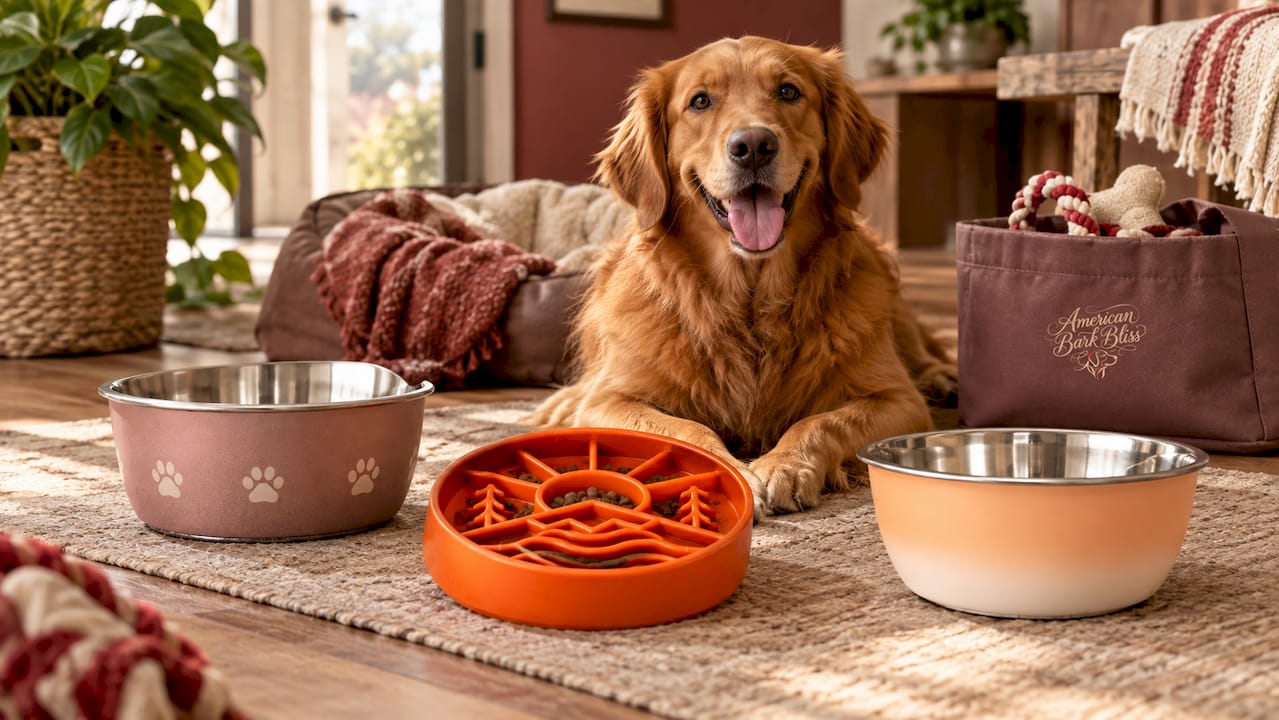
For fast eaters, regardless of bowl height, the Great Outdoors eBowl Slow Feeder tackles the eating-speed mechanism that research ties to bloat risk, and it’s made in the USA rather than imported. For general floor-level use, the Deep Dog Bowl with Paw Print Design in Rose Gold gives small, medium, and large dogs a stable, easy-clean stainless option that also works as an insert if you do move to a low stand. The Deep Dog Bowl in Peach Coral covers the same ground for owners who want a different color to match their setup. These pieces are built in the USA with an eye toward durability over trend, which matters for something your dog uses twice a day for years. Browse the full bowls and feeders lineup or check out dog treats to round out mealtime, and for dogs that need extra water safety gear on the go, Atticus Goods has a solid guide to dog life jackets worth a look. Pick the bowl that matches your dog’s actual needs, not the one that photographs best on a shelf.
Sources
- Glickman et al., Journal of the American Veterinary Medical Association (JAVMA)
- WebVet — Are elevated dog bowls good or bad?
- AKC — Choosing the right dog bowl for your dog
This article is general information, not a substitute for advice from a qualified doctor. Consult a qualified healthcare professional about your own circumstances before acting on anything here.
FAQ
What Do Vets Say About Elevated Dog Bowls?
Veterinarians generally recommend a case-by-case approach: elevated bowls make sense for dogs with arthritis, megaesophagus, or specific post-surgical needs, but they advise against routine use for healthy dogs, especially deep-chested large breeds.
Are Raised Dog Bowls a Good Idea?
They’re a good idea for a specific subset of dogs, mainly seniors with joint pain or dogs under direct veterinary instruction. For most healthy dogs, and especially large or giant deep-chested breeds, floor-level feeding remains the safer default given the documented bloat association.
What Are the Healthiest Bowls for Dogs?
Stainless steel bowls are generally the healthiest choice because they resist bacteria buildup and clean easily, unlike textured ceramic or scratch-prone plastic. Pairing a stainless bowl with a stable, appropriately sized base, or a slow-feeder design for fast eaters, covers most everyday feeding needs.
Should Dog Bowls Be on the Ground or Elevated?
For most dogs, ground-level feeding is the safer choice, particularly for large and giant breeds prone to bloat. Elevation only makes sense when a vet identifies a specific medical or mobility reason for it.
Is an Elevated Dog Feeding Station Worth the Cost?
It’s worth it if your dog has a diagnosed need, like arthritis or megaesophagus, but not as a general upgrade for a healthy dog. A simple, stable, floor-level stainless bowl covers most households just as well without the added risk profile.
Leave a comment