

3 Core Dog Paw Balm Ingredients for U.S. Owners: Safe Picks, DIY
Most dog paw balms come down to three building blocks: a wax that hardens the mix and forms a barrier, a butter or oil that softens and conditions cracked pads, and a small dose of antioxidants or botanicals for shelf life and skin support. The base ingredients (beeswax, shea butter, coconut oil) are lick-safe in the small amounts a dog absorbs from its paws, but a handful of essential oils and additives cross into toxic territory. Before you buy or mix anything, scan the full ingredient list for red-flag botanicals, and warm a small amount between your fingers until soft before working it into the pad. That single habit determines whether the balm actually absorbs or just sits there attracting dirt.
TL;DR:
- Waxes like beeswax and plant-based alternatives create a protective barrier that varies in firmness and melting points, influencing application and longevity.
- Carrier oils such as sunflower, jojoba, and coconut differ in absorption rates and potential to cause sensitivities, affecting daily use and weight management.
- Ingredient labels use standardized names, making it essential to scrutinize for undisclosed or concentrated essential oils like tea tree or wintergreen, which are toxic to dogs.
- Water-free formulas tend to be more stable and shelf-safe, simplifying selection but requiring careful ingredient review to avoid harmful botanicals.
- Making a DIY paw balm with a 1:1:2 ratio of wax, butter, and oil provides a safe, customizable option, but patch testing and vet consultation remain important.
Table of Contents
- Common Dog Paw Balm Ingredients and What They Actually Do
- Which Paw Balm Ingredients Are Safe, and Which Should You Avoid?
- How to Make a Simple, Safe DIY Paw Balm at Home
- How to Read a Paw Balm Label Before You Buy
- Why This Ingredient Approach Comes From American-Made, Paw-Focused Products
- What Actually Matters Most in a Paw Balm
- Give Your Dog’s Paws the Same American-Made Standard
- Sources
- FAQ
Common Dog Paw Balm Ingredients and What They Actually Do
Read five different paw balm labels and you’ll notice the same handful of ingredient categories showing up in different ratios. Understanding what each one contributes helps you judge whether a $20 tin is doing something a $6 jar of coconut oil can’t.
Waxes hold the whole formula together and create the barrier that keeps snow, salt, and hot pavement from reaching the skin directly. Beeswax is the default choice because it melts around 145°F, low enough to soften from body heat but high enough to stay solid in a warm car. Candelilla and carnauba wax are the plant-based alternatives, and they run firmer, with carnauba melting closer to 180°F. That higher melt point is why carnauba shows up more in lip-balm-style sticks than in scoopable tins. Plant-based waxes like candelilla and carnauba also make a formula vegan, which matters to some owners even though beeswax itself carries little safety concern for dogs.
Butters do the conditioning work. Shea butter is the workhorse: rich in fatty acids, gentle, and widely tolerated. Cocoa butter shows up less often in dog products specifically because it’s a known sensitizer for some skin types and carries a faint chocolate scent that some owners prefer to avoid near a dog’s mouth. Mango butter sits between the two, softer than shea, and it’s increasingly common in newer formulations aimed at very dry or cracked pads.
Carrier oils are where the biggest practical differences show up. Coconut oil is popular and marketed heavily for its antibacterial reputation, but it’s also more comedogenic than other options, meaning it can clog pores more readily on skin that’s already irritated. High-oleic sunflower oil and jojoba oil absorb faster and leave less residue, which is why groomers who apply balm daily tend to prefer them over straight coconut oil. Olive oil rounds out the common list, prized mostly for shelf stability rather than superior absorption. AKC’s own tested paw balm recipe leans on olive, sunflower, or sweet almond oil paired with coconut oil and shea, which tells you a lot about what actually works at the kitchen counter level.
Then there’s the smaller supporting cast:
- Vitamin E acts as both a skin nutrient and a mild natural preservative, slowing oxidation in oil-heavy formulas.
- Squalane is a lightweight, non-greasy emollient increasingly borrowed from skincare formulations for dogs with sensitive pads.
- Botanical extracts like calendula and rosemary contribute anti-inflammatory or antioxidant properties, though concentration matters more than the ingredient name on the label.
- Rosemary extract specifically doubles as a natural preservative, extending shelf life without synthetic additives.
One detail that surprises a lot of first-time buyers: water rarely appears in these formulas at all. That’s not an oversight. Oil-only formulas skip preservatives entirely because water introduces the risk of bacterial or mold growth, which then requires chemical preservatives to control. A balm made purely of wax, butter, and oil is inherently more shelf-stable and, in most cases, simpler to trust.
Which Paw Balm Ingredients Are Safe, and Which Should You Avoid?
Knowing an ingredient’s name is only half the job. What matters more is how it behaves on a dog’s paw, in the amounts a balm actually uses, and what happens if your dog licks it off within the first five minutes (because most dogs will).
Beeswax carries close to zero risk. It’s inert, non-toxic if ingested in small amounts, and the main reason paw balms hold their shape in a warm pocket or glove box. The rare exception is a dog with a documented sensitivity to bee products or a lanolin-like reaction, which shows up as localized redness rather than anything systemic.
Candelilla and carnauba wax behave similarly to beeswax from a safety standpoint but run firmer, which is worth knowing if your dog has thick, calloused pads that need a balm to sit on the surface longer before melting in.
Shea, cocoa, and mango butter each condition differently. Shea is the safest default for most dogs. Cocoa butter’s sensitizing potential means it’s worth patch-testing before regular use, especially on a dog that already has allergy-prone skin. Mango butter has the shortest track record of the three simply because it’s newer to the pet-product space, not because anything specific disqualifies it.
Coconut oil moisturizes well and carries genuine antibacterial properties, but two tradeoffs are worth knowing. It leaves a greasier residue than sunflower or jojoba oil, which means more tracked mess on your floors. And if a dog licks a meaningful amount off daily, the added fat calories can add up over weeks, which matters more for a dog already managing weight.
High-oleic sunflower oil and jojoba oil are the closest thing to a universal safe choice. They absorb faster, cause fewer sensitivities, and are the oils groomers reach for when a dog needs balm applied every single day rather than occasionally.
Lanolin and petroleum deserve a separate mention because they still show up in some drugstore-style balms. Petroleum jelly forms a strong barrier and is generally considered non-toxic in small ingested amounts, but it does nothing to actually nourish the skin. It just sits on top. Lanolin conditions well but is a genuine allergen for a subset of dogs, showing up as contact dermatitis around the paw margins.
Essential oils and botanicals are where the real safety line sits. Calendula, chamomile, and rosemary extract are broadly well tolerated in the small percentages used in finished balms. Certain essential oils, though, carry documented toxicity risk for dogs when used undiluted or in concentrated form, and tea tree oil, pennyroyal, wintergreen, and concentrated citrus oils sit at the top of that avoid list. Cajeput oil is sometimes included in commercial blends at very low, diluted percentages, but it’s not one to introduce into a homemade batch without professional guidance.
Pro Tip: Warm a small amount of balm between your fingers for 20 to 30 seconds before applying it. This softens the wax enough for it to absorb into the pad rather than sitting on the surface, and it cuts down on the greasy residue that tracks dirt across your floors.
Vitamin E and rosemary extract deserve one more mention here because they’re doing double duty. Beyond feeding the skin, they’re functioning as the product’s shelf-life insurance, which matters when you’re evaluating whether an oil-based balm without synthetic preservatives is going to hold up over months in your cabinet.
One last practical note on labels: ingredient decks use INCI names, the standardized international naming system, so “Cera Alba” is beeswax and “Butyrospermum Parkii” is shea butter. That system exists so formulas can be compared across brands and countries, but it also means the word “fragrance” on a label can legally hide a mix of dozens of undisclosed compounds. That single word is worth treating as a caution flag rather than background noise.
How to Make a Simple, Safe DIY Paw Balm at Home
A basic paw balm needs only three components in the right proportions, and the ratio you pick determines how firm or soft the final product feels in your hand.
Standard ratio: 1 part wax, 1 part butter, 2 parts oil. This produces a balm soft enough to scoop with a fingertip and apply directly.
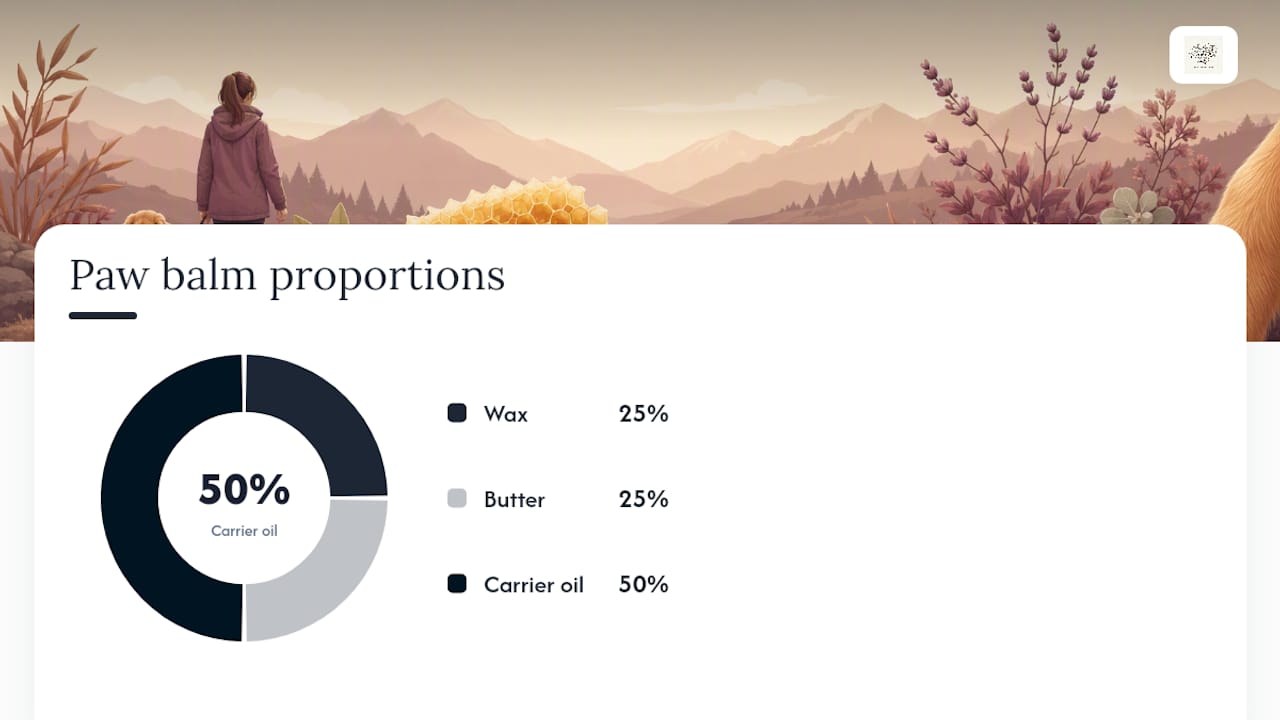
Firmer ratio: 2 parts wax, 1 part butter, 2 parts oil. Better suited to a push-up tube or stick format, or for dogs with thick pads that need the balm to sit on the surface a bit longer before melting in.
A small pilot batch using the 1:1:2 ratio is the right way to test firmness before committing to a full batch. Adjust in small wax increments of 5 to 10 percent rather than changing the oil volume, since wax has an outsized effect on the final melt point compared to everything else in the mix.
- Set up a double boiler (a heatproof bowl over a pot of simmering water works fine).
- Melt the wax first since it has the highest melt point, then add the butter once the wax is fully liquid.
- Stir in the carrier oil once the butter has melted and the mixture is smooth.
- Remove from heat and stir in any antioxidants or botanical extracts last, since heat can degrade vitamin E and delicate plant extracts.
- Pour into a clean, dry tin or jar and let it cool undisturbed at room temperature until fully solid.
- Label the container with the ingredient list, the date you made it, and a short allergen note.
That labeling step isn’t just tidy housekeeping. A clear label with ingredients, batch date, and an allergen note helps a veterinarian quickly rule out topical exposure if your dog ever develops unexplained paw irritation weeks later.
Before applying a new batch across all four paws, patch-test a small amount on one pad and watch for redness or licking over the next few hours. Skip any of the essential oils flagged earlier entirely, and if your dog has a documented allergy or an existing paw condition like an autoimmune skin issue, run the ingredient list past your vet before mixing anything. Stored in a cool, dry spot away from direct sunlight, a wax-and-oil balm with no water content typically holds for several months; a rancid, sour smell replacing the usual mild scent is your sign it’s time to toss it and mix a new batch.
How to Read a Paw Balm Label Before You Buy
Ingredient order on any label follows concentration, highest to lowest. If a “natural” balm lists a synthetic preservative or mineral oil in the first three ingredients, the marketing on the front of the tin isn’t matching what’s actually inside.
A few checks take less than a minute once you know what to look for:
- Translate the INCI names. “Cera Alba” is beeswax, “Butyrospermum Parkii” is shea butter, and “Cocos Nucifera Oil” is coconut oil. A quick search on any unfamiliar name takes seconds and tells you exactly what you’re applying.
- Treat vague terms as a caution flag. “Fragrance,” “proprietary blend,” or “natural flavoring” can legally conceal dozens of undisclosed compounds, some of which may be exactly the essential oils you’re trying to avoid.
- Be wary of long preservative lists on water-based balms. A short ingredient deck built from oils and waxes rarely needs more than one stabilizer; a long list of chemical names is often a sign water was added somewhere in the formula.
- Look for full disclosure and simple decks. A plant-based ingredient list with clear names and a company willing to explain sourcing is a stronger signal than any front-label marketing claim.
If you’re still unsure about a specific product, two questions are worth asking directly: what percentage of essential oil (if any) is in the finished formula, and has this product been reviewed by a veterinarian for topical use on dogs? A manufacturer that answers both clearly is one worth trusting more than one that deflects.
Why This Ingredient Approach Comes From American-Made, Paw-Focused Products
Some pet goods brands build their product education around a simple principle: pet products should be as transparent on the label as they are durable in use. That’s the same standard this guide applies to paw balm, whether you’re reading a commercial tin or mixing your own batch at the counter.
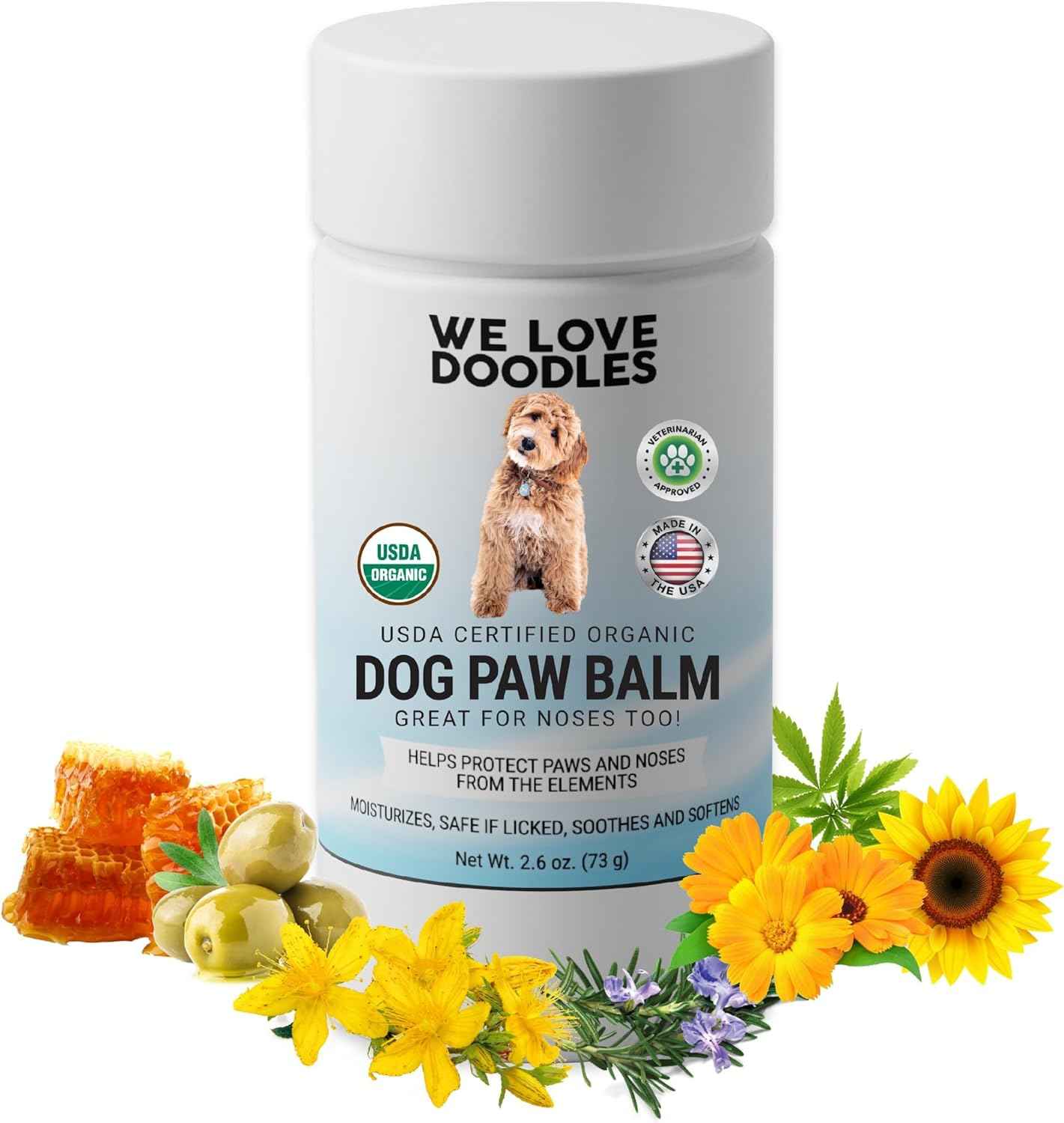
If you want to see that principle applied to an actual finished product rather than a DIY project, the Body Glove pet soothing nose and paw balm shows how a wax, oil, and butter system comes together in a ready-to-use format. For the broader picture of seasonal paw care, from hot pavement to rock salt exposure, the guide to dog paw care covers the situations that make a good balm worth having on hand in the first place. And if ingredient transparency is a main concern across pet products, the piece on non-toxic pet products discusses why that standard matters beyond just topical care.
What Actually Matters Most in a Paw Balm
The conventional advice on paw balm treats every “natural” ingredient as automatically safe, and that’s the part I’d push back on hardest. Natural doesn’t mean harmless. Tea tree oil is natural. So is pennyroyal. Both belong nowhere near a dog’s paw in undiluted form, and yet they still show up in balms marketed with the same soft, wholesome language as the beeswax and shea butter sitting right next to them on the shelf.
What actually separates a good balm from a risky one isn’t the presence of exotic botanicals. It’s restraint. The simplest formulas, wax, butter, one or two carrier oils, and maybe a stabilizer like vitamin E, consistently outperform the ones stacked with six different plant extracts chasing a marketing story. If you’re evaluating a product or mixing your own, prioritize the boring ingredients first. Save the essential oils for a conversation with your vet, not a Pinterest recipe.
— Christopher
Give Your Dog’s Paws the Same American-Made Standard
This guide exists for the same reason: dog owners deserve products where the ingredient list matches the claim on the front of the tin. A catalog sourced with transparency in mind helps avoid guessing whether “natural” actually means what it says.
Winter paw protection doesn’t stop at balm, either. If your dog’s pads struggle with salted sidewalks or icy pavement even with regular balm applications, the Dog Australia waterproof fleece-lined warm dog snow boots give you a physical barrier to pair with whatever balm you’re using. Both approaches work better together than either does alone; the boots handle the exposure, the balm handles the recovery. Browse the full paw and nose care lineup to find the combination that fits your dog’s specific pad condition, whether that’s cracking, dryness, or seasonal sensitivity.
Sources
- How to Make Your Own Dog Paw Balm
- Protect your dog’s paws naturally with homemade paw balm
- Paw Balm for Dogs | Petal & Pine Restorative Botanicals
FAQ
Do Vets Recommend Paw Balm?
Veterinarians generally support paw balm as part of routine paw care, particularly for dogs exposed to hot pavement, ice, or road salt, but they consistently recommend checking the full ingredient list first and avoiding formulas with concentrated essential oils.
How Can I Make My Own Paw Balm for My Dog?
Melt a wax like beeswax first in a double boiler, add a butter such as shea, then stir in a carrier oil like sunflower or coconut using a base ratio of 1 part wax, 1 part butter, and 2 parts oil, following the AKC’s tested method for step-by-step guidance.
Is Dog Paw Balm Safe for Dogs?
Most paw balms made from beeswax, shea butter, and common carrier oils are safe for dogs in the small amounts absorbed or licked from a paw, but balms containing tea tree oil, pennyroyal, wintergreen, or concentrated citrus oils should be avoided entirely.
What Is a Natural Balm for Dogs’ Paws?
A natural paw balm is typically a wax-and-oil formula, often beeswax or candelilla wax combined with shea butter and a carrier oil like sunflower or jojoba, built without synthetic preservatives, mineral oil, or petroleum derivatives.
What Ingredients Should I Avoid in a Commercial Paw Balm?
Avoid any balm listing undiluted tea tree oil, pennyroyal, wintergreen, or concentrated citrus oils, and treat vague label terms like “fragrance” or “proprietary blend” as a signal to look for a more transparent product instead.
Leave a comment