

5 Vet Backed Categories for Dog First Aid Kit Contents
A reliable dog first aid kit contains five core categories: bandaging and wound care, safety and diagnostic tools, cleaning agents and basic medications, emergency contacts and records, and transport aids. The AKC and AAHA back this structure, and some vendors build ready-made kits around it. One rule overrides everything else: never give your dog a human painkiller. Call your vet or a poison control line before administering anything you’re unsure about.
TL;DR:
- A dog first aid kit should include gauze pads, vet wrap, and non-stick dressings to stabilize wounds until professional help is available.
- Essential safety tools are a digital thermometer, disposable gloves, a flashlight, and tick-removal tweezers to accurately assess and protect during emergencies.
- Wound cleaning requires sterile saline or water, with antiseptic solutions used carefully, avoiding hydrogen peroxide and human painkillers like ibuprofen or acetaminophen.
- Personalizing your kit based on your dog’s lifestyle, age, and risks improves preparedness, and regular practice of key first aid skills is crucial.
- A waterproof, labeled container and updated emergency contact information, including vet and poison control numbers, ensure quick access during critical moments.
Table of Contents
- Dog First Aid Kit Contents: The Core Wound-Care Supplies
- Safety and Diagnostic Tools Every Kit Needs
- Wound Cleaning and Medication Rules You Can’t Skip
- Customizing Your Kit by Lifestyle and Storage Needs
- How to Use the Key Items When It Actually Happens
- Who’s Behind This Guide
- Why Most First Aid Kit Advice Misses the Point
- Get a Vet-Approved Kit Without Building One From Scratch
- Where to Go for Deeper Guidance
- Sources
- FAQ
Dog First Aid Kit Contents: The Core Wound-Care Supplies
Wounds are the most common reason a first aid kit gets opened, so this is where you spend most of your budget and most of your kit space. The goal isn’t to treat the injury completely at home. It’s to stabilize your dog long enough to get safe transport to a vet, or to manage something minor enough that a trip isn’t needed at all.
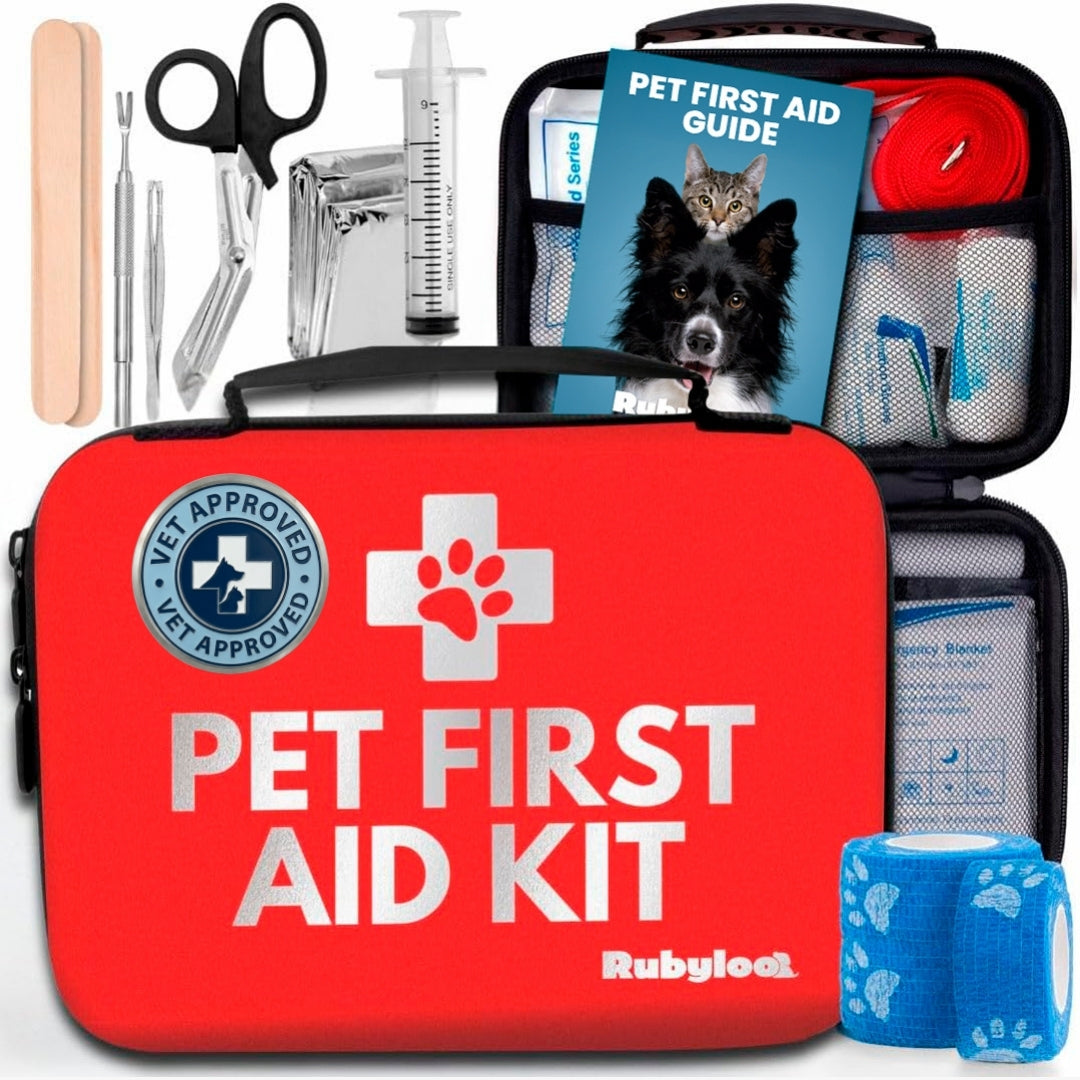
Here’s what belongs in that section of the kit, with sizing notes that actually matter:
- Gauze pads (4x4 inch and larger) for direct pressure on bleeding wounds and covering abrasions.
- Non-stick pads (like Telfa) placed directly against open wounds so the dressing doesn’t stick to raw tissue when you remove it.
- Gauze roll for wrapping and securing pads in place, especially on paws and legs.
- Vet wrap (self-adhering bandage) that sticks to itself but not to fur, which makes it far easier to remove than adhesive tape.
- Medical tape for securing bandage ends and holding non-stick pads before wrapping.
- Blunt-ended bandage scissors, ideally curved, for cutting bandages and trimming fur near a wound without risking a nick to the skin.
- Tweezers for splinters, thorns, and debris.
- Antiseptic wipes and either povidone-iodine or chlorhexidine solution for cleaning wounds before bandaging.
- Antibiotic ointment for minor scrapes once they’re cleaned.
- Styptic powder specifically for nail bleeds, which bleed disproportionately for how minor they usually are.
These items work together, not in isolation. The AKC’s guidance on dog first aid confirms that gauze, self-adhering wrap, medical tape, and blunt scissors form the foundation of temporary stabilization for cuts, scrapes, and abrasions until a vet can take over. Skip one and the rest lose some of their function. Vet wrap without gauze underneath just sticks to the wound. Scissors without vet wrap mean you’re improvising with tape that pulls fur.
Pro Tip: Buy two of your most-used items. Wound care rarely happens once in a pet’s life, and a half-used roll of vet wrap sitting in the kit for eight months is a roll you’ll reach for and find dried out or contaminated. Keep a backup, and swap in fresh stock every time you dip into the original.
Wound cleansers deserve a word of caution too. Not every antiseptic sold for people is safe on dogs, and concentration matters. Diluted chlorhexidine or povidone-iodine solutions are standard picks in veterinary settings; straight hydrogen peroxide as a wound flush is generally discouraged because it can damage healthy tissue along with bacteria.
Safety and Diagnostic Tools Every Kit Needs
Before you can treat anything, you need to know what you’re dealing with. That’s what this category does: it lets you assess the situation and protect yourself while you work.
- Digital thermometer. A normal dog’s temperature runs 99.5 to 102.5°F. Anything meaningfully outside that range, especially above 104°F or below 98°F, is a signal to call your vet immediately, not a wait-and-see situation.
- Disposable gloves. Wounds, vomit, and diarrhea all carry infection risk in both directions. Gloves protect your hands and keep the wound cleaner.
- Small flashlight or headlamp. Emergencies rarely happen in good lighting. A flashlight lets you check pupils, look down a throat, or examine a paw in the dark.
- Fine tweezers or a dedicated tick-removal tool. Standard tweezers work, but a tick tool grips closer to the skin and reduces the odds of leaving mouthparts behind.
- Spare leash or slip lead. An injured dog can bolt from pain and fear even if they’re normally calm. A backup leash means you’re never scrambling for control.
- Towel or blanket. Useful for warmth, for improvised restraint, and for carrying a small dog like a stretcher if they can’t walk.
- A properly fitting muzzle. Even the gentlest dog can bite when they’re in pain. A muzzle protects both of you, but it should only go on a conscious, breathing dog and should come off the second you’re not actively handling the injury.
The AKC lists thermometers, tweezers or tick tools, flashlights, and gloves as standard inclusions across most authoritative checklists, and for good reason: they cost little, take up almost no space, and cover the assessment step that comes before every treatment decision.
Don’t skip the paper. A laminated or written emergency contact card should list your regular vet, the nearest 24-hour emergency animal hospital, and the Pet Poison Helpline number. Phones die, apps crash, and cell signal disappears in the exact rural areas where dogs tend to get hurt hiking. Keeping this information readily accessible in physical form is a small habit that has saved real time in real emergencies.
Wound Cleaning and Medication Rules You Can’t Skip
Cleaning a wound correctly follows a simple order: flush, dry, cover, secure. Flush the area with sterile saline or clean water to remove debris and bacteria. Pat it dry with a clean gauze pad rather than rubbing, which reirritates the tissue. Apply a non-stick pad directly over the wound, then wrap with gauze roll and finish with vet wrap to hold everything in place.
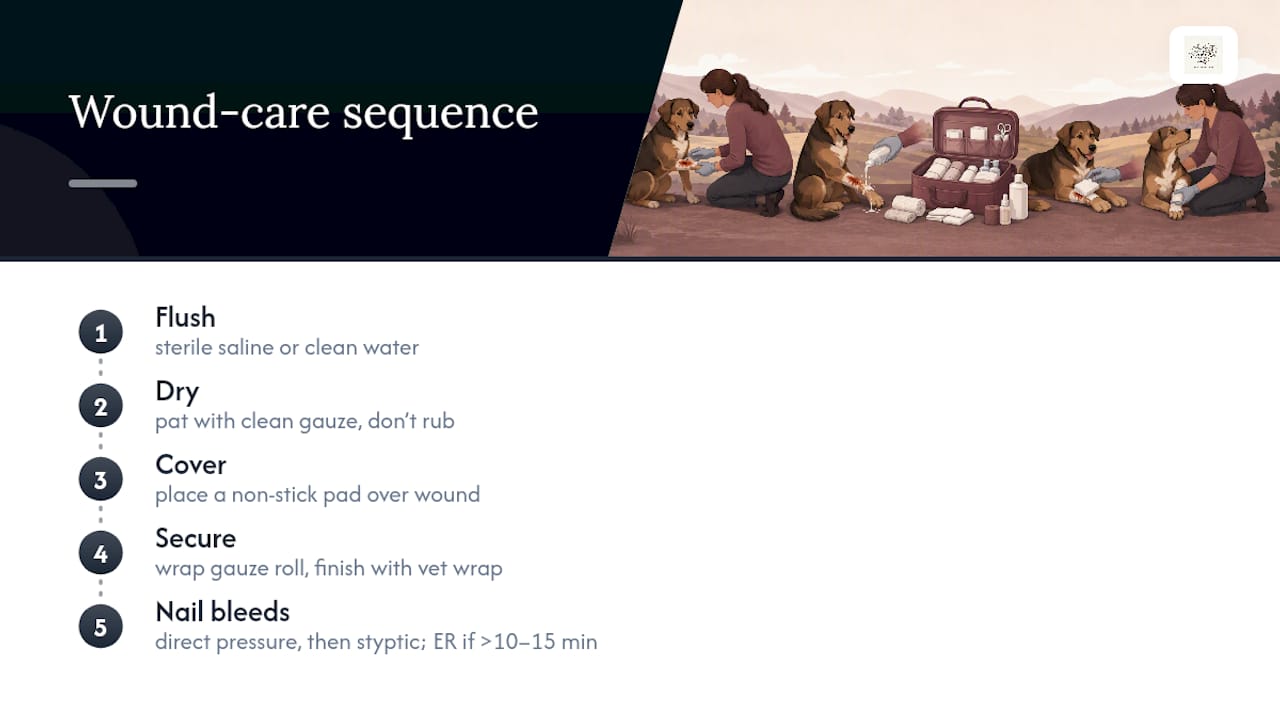
For nail bleeds specifically, apply direct pressure with gauze first. If that alone doesn’t slow things down, press styptic powder into the nail tip. Bleeding that soaks through your bandage or doesn’t stop within 10 to 15 minutes calls for emergency care, not more powder and more waiting.
Hydrogen peroxide has one legitimate emergency use: inducing vomiting after certain poison exposures, and only at a vet-directed dose. Don’t use it as a general wound cleanser, and don’t use it to induce vomiting without calling the Pet Poison Helpline or your vet first, since some ingested substances make vomiting more dangerous, not less. The same goes for activated charcoal. It has real uses in poisoning cases, but the decision to use it should come from a professional on the phone, not a guess at 11 p.m.
Here’s the line that matters most in this entire article: never give a dog ibuprofen, naproxen, aspirin, or acetaminophen without direct veterinary instruction. These common human painkillers are toxic to dogs even in small doses and are responsible for a steady stream of emergency vet visits every year. The same caution applies to antihistamines like Benadryl. Many vets do approve them for allergic reactions, but the dose depends entirely on your dog’s weight, and guessing is how a helpful remedy turns into a second emergency.
Customizing Your Kit by Lifestyle and Storage Needs
A generic kit checklist is a starting point, not a finished product. Veterinary guidance from AAHA points to personalizing contents based on your dog’s actual risks rather than a one-size list.
- Hiking or high-activity dogs: add paw balm, extra vet wrap for pad injuries, booties, and dedicated tick-removal supplies.
- City dogs: prioritize the poison control card, a spare leash for crowded sidewalks, and a compact kit that fits in a bag you already carry.
- Dogs with chronic conditions: pack a laminated dosing card, a 3 to 5 day medication supply for trips, and a note of dosing schedules in case someone else needs to step in.
- Travel: swap bulky items for compact versions. A small saline bottle, travel-size ointment, and a collapsible bowl take up a fraction of the space a home kit needs. The Country Living 50-piece travel kit is built around exactly this trade-off.
Storage matters as much as contents. A clear, waterproof container with labeled compartments keeps you from digging through loose supplies when your hands are shaking. AAHA and PreventiveVet both recommend checking expiration dates and restocking every 6 to 12 months, since antiseptic wipes dry out and ointments expire quietly on a shelf.
Pro Tip: Set a restock reminder on your phone tied to a date you’ll actually remember, like a birthday or the start of daylight saving time. “Someday” restocking never happens; calendar restocking does.
How to Use the Key Items When It Actually Happens
Knowing what’s in the kit means nothing if you freeze the first time you need it. These are the core moves worth practicing before an emergency, not during one.
- Temporary bandage in three steps: clean the wound with saline, place a non-stick pad over it, then secure with gauze roll and vet wrap. Wrap snugly, not tight.
- Check circulation after wrapping. Look at toe color and feel for warmth below the bandage. If toes turn pale, swell, or feel cool to the touch, loosen the wrap immediately.
- Take a rectal temperature with a digital thermometer and a bit of lubricant. Above 104°F or below 98°F is an emergency, not a wait-and-watch situation.
- Muzzle only a conscious, breathing dog, and remove it the moment active handling stops. If your dog is struggling to breathe, skip the muzzle and use a towel wrapped around the head and body instead to control movement without restricting airflow.
- Use a towel as an improvised stretcher for a dog who can’t walk, and secure them flat in the back seat or cargo area for the drive in.
Know when home care stops being enough: heavy bleeding that won’t slow, labored breathing, collapse, suspected poisoning, or a temperature outside the safe range mean you go to an emergency vet now, not after trying one more thing at home. Practicing these skills on a calm day, on a calm dog, is the difference between fumbling and functioning when it counts.
Who’s Behind This Guide
This guide was written by Christopher for Americanbarkbliss, drawing on veterinary-backed sources including AAHA, AKC, and PetMD rather than guesswork. For related reading, check our guides on dog walking accessories for safe, happy walks and everyday pet care essentials. Some vendors build American-made pet first aid kits stocked to this same checklist, but the checklist itself always comes first. Before giving any medication or attempting a procedure you haven’t done before, confirm the dose and method with your primary-care vet, and call the Pet Poison Helpline the moment you suspect poisoning rather than waiting to see if symptoms appear.
Why Most First Aid Kit Advice Misses the Point
Most articles on this topic hand you a shopping list and call it done. That’s backwards. The list of items barely changes from one guide to the next, gauze, vet wrap, a thermometer, tweezers, because the physics of a wound doesn’t change. What actually separates a kit that works from one that sits in a closet gathering dust is whether it matches the dog it’s for.
A senior dog with arthritis needs a different kit than a young Border Collie who hikes every weekend. A city apartment dog rarely needs booties but always needs a poison control card within reach, because household chemicals and dropped medications are the real risk in that environment. The AAHA’s emphasis on personalizing to medical history and avoiding allergens over generic packing gets buried under generic listicles, and that’s a mistake.
The other overlooked piece is practice. Owning styptic powder means nothing if your hands shake the first time you use it on a bleeding nail. Buy the kit, then spend twenty minutes learning to use what’s in it before you ever need to.
— Christopher
Get a Vet-Approved Kit Without Building One From Scratch
Assembling every item on this checklist yourself takes an afternoon of shopping across pharmacy aisles, pet stores, and hardware shelves. Americanbarkbliss skips that entirely: the Pet First Aid Kit for Dogs & Cats with Vet-Approved Essentials arrives already stocked with the bandaging, wound care, and diagnostic tools covered above, in one American-made package.
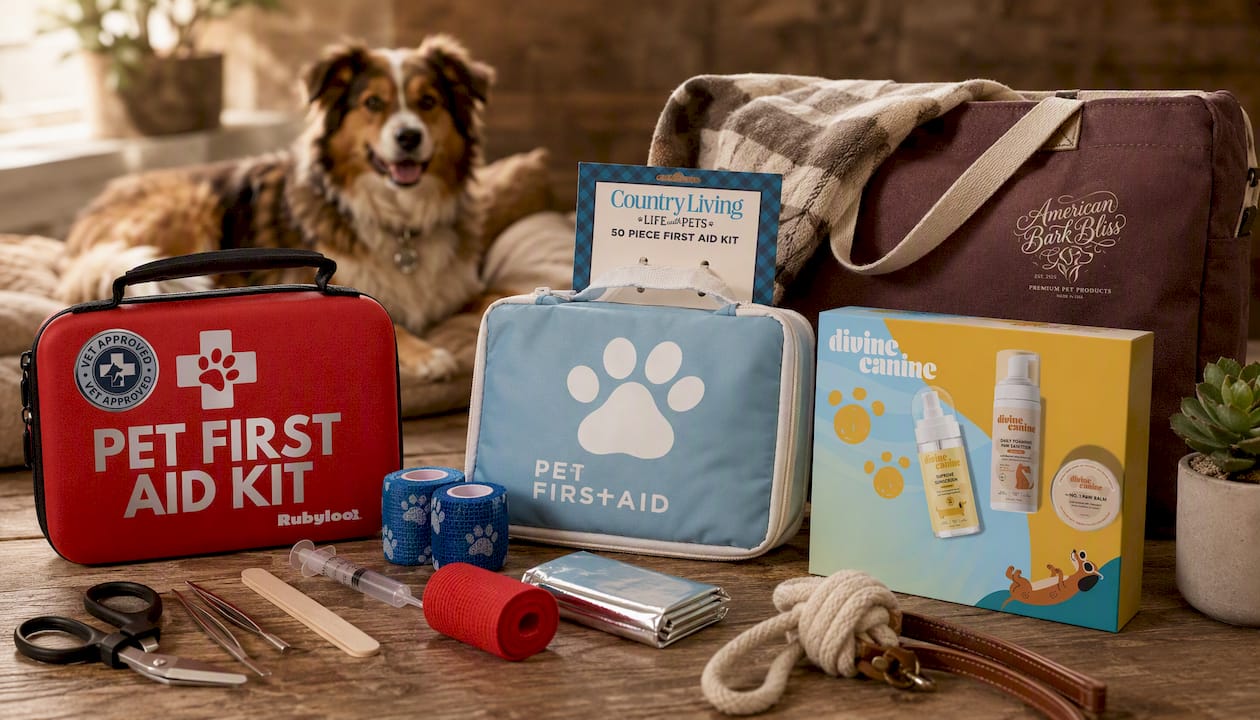
If your dog spends weekends on trails or in the car, the Country Living 50-Piece Pet Travel First Aid Kit covers the compact, on-the-go version of the same checklist. And for hot-weather risks like heatstroke and paw burns on pavement, the Summer Essentials Kit rounds out seasonal coverage the standard kit doesn’t fully address. Whichever kit you pick, drop in your dog’s specific medications, dosing notes, and your vet’s contact card before you need any of it. Browse the current lineup and pick the kit that matches how your dog actually lives.
Where to Go for Deeper Guidance
- AAHA: Veterinary-accredited guidance on assembling and actually using a pet first aid kit.
- AKC: A breed-focused first aid overview with practical stabilization advice.
- PetMD: A rundown of the ten items veterinary writers consider non-negotiable.
- PreventiveVet: Detailed storage and restocking advice for keeping a kit usable long-term.
- Red Cross: Hands-on pet first aid classes that build the muscle memory a kit alone can’t give you.
Save the ASPCA’s poison control contact and take a class when you can. A kit is only as good as the person using it.
Sources
- First Aid for Dogs: Everything You Need to Know (AKC)
- How to make a pet first aid kit (AAHA)
- 10 Must-Have Items for Your Pet First-Aid Kit (PetMD)
- How to make a pet first-aid kit (PreventiveVet)
FAQ
What should I include in a DIY dog first aid kit?
Cover the five core categories: gauze and vet wrap for wounds, a thermometer and gloves for assessment, saline and antiseptic wipes for cleaning, an emergency contact card, and a spare leash or towel for transport.
What are the basic contents of a first aid box for dogs?
The essentials are gauze pads, vet wrap, medical tape, blunt scissors, antiseptic wipes, a digital thermometer, tweezers, disposable gloves, styptic powder, and a written emergency contact list.
What does a K9 first aid kit typically contain?
Working and K9 first aid kits generally mirror pet owner kits but add heavier-duty bandaging, a muzzle, and tick-removal supplies for dogs that spend extended time outdoors.
What are the top things every dog owner needs for emergencies?
Beyond the kit itself, every owner needs their vet’s number, the nearest 24-hour emergency hospital’s address, and the Pet Poison Helpline saved somewhere that doesn’t depend on a working phone.
Can I use human bandages and antiseptics on my dog?
Some overlap exists, gauze and vet wrap work the same way, but concentration matters for antiseptics, and human medications like ibuprofen or acetaminophen are never safe substitutes for dog-specific care.
Leave a comment