

Dog Collar Fitting Guide: Get the Right Fit Fast
TL;DR:
- A properly fitted dog collar should allow two fingers to slide comfortably underneath without slipping or causing discomfort.
- Regular re-measurement and the two-finger rule ensure a safe, secure, and comfortable fit as your dog grows and changes.
A properly fitted dog collar is defined by one simple test: you can slide two fingers between the collar and your dog’s neck without forcing them, and without the collar slipping over the head. This standard, known as the two-finger rule, is the foundation of every reliable dog collar fitting guide. Get it right and your dog stays safe, comfortable, and secure. Get it wrong and you risk chafing, escape, or worse. Breed size matters too. Small dogs under 10 lbs, brachycephalic breeds like Pugs and French Bulldogs, and fast-growing puppies all need special consideration beyond the basic rule.
How to measure your dog’s neck for the right collar size
Accurate measurement is the first step in any dog collar size guide. A collar bought by guesswork almost always fits poorly, either cutting into the neck or sliding off entirely.
Step-by-step neck measurement
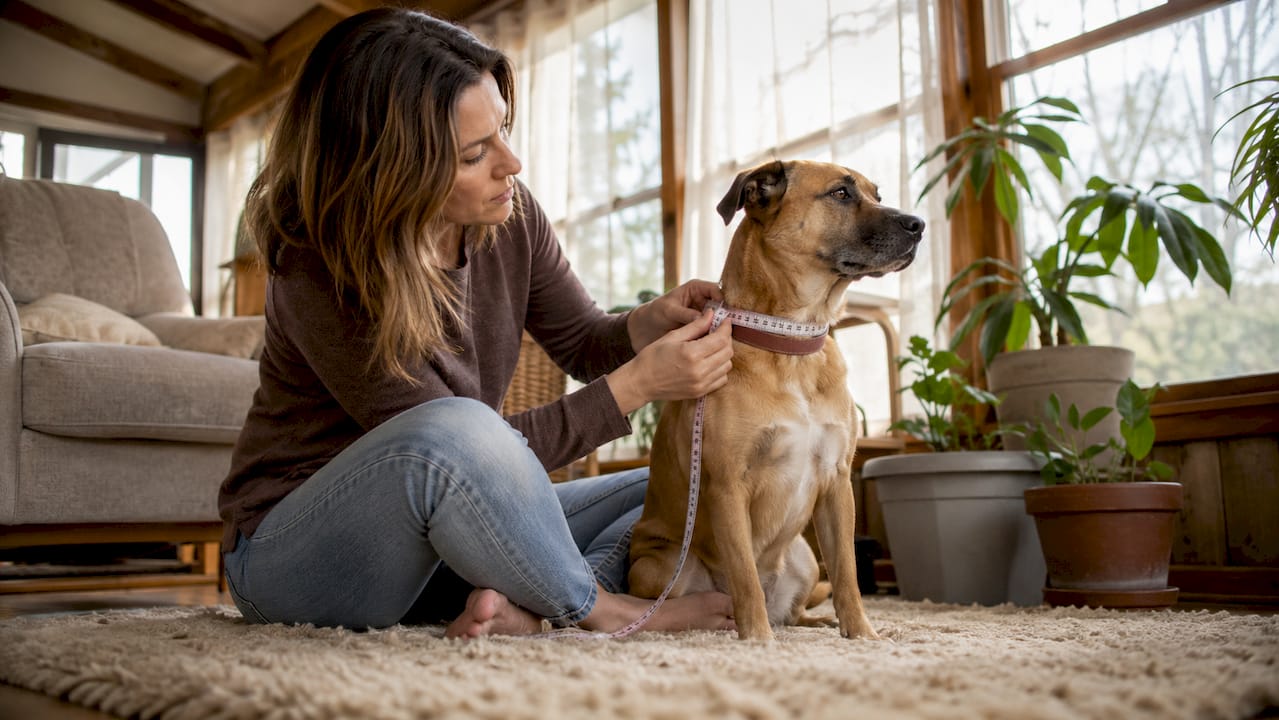
- Gather your tools. Use a soft fabric tape measure. If you do not have one, wrap a piece of string around your dog’s neck and measure the string against a ruler.
- Find the right position. Place the tape at the base of the neck, halfway between ears and shoulders. This is where the collar will actually sit during daily wear.
- Keep it snug, not tight. The tape should lie flat against the skin without compressing it. You want the measurement of the neck itself, not a loose estimate.
- Account for fur. Long-haired breeds like Golden Retrievers or Bernese Mountain Dogs carry extra bulk in their coats. Measure over the fur, not against bare skin, so the collar fits correctly at full coat.
- Add your allowance. For most dogs, add 2 inches to the neck measurement to get your collar size. For small breeds under 20 lbs, add 1 inch instead.
- Record and compare. Write down the measurement and check it against the manufacturer’s size chart before ordering.
Common measurement mistakes include measuring too high on the neck near the jaw, pulling the tape too tight, and forgetting to re-measure after a haircut or weight change. Each of these errors shifts the collar size by a full size or more.
Pro Tip: For puppies, measure every two weeks during growth spurts. A collar that fit perfectly on Monday can become dangerously tight by the following week.
Collar width also matters beyond length. A collar that is too narrow creates pressure points on small or sensitive necks, while an overly wide collar can restrict movement in toy breeds. Match the width to the dog’s size and activity level.
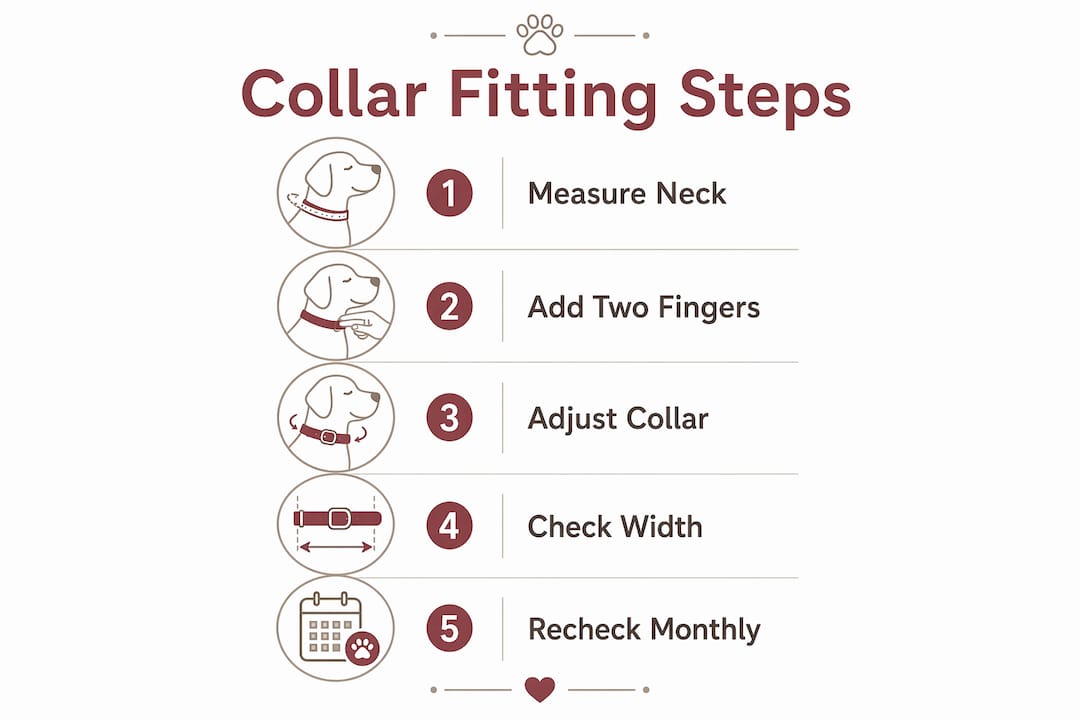
How do you test collar fit using the two-finger rule?
Once the collar is buckled, testing the fit takes less than 30 seconds. The two-finger rule is the industry standard for checking proper collar fit for dogs of most sizes.
Applying the test correctly
- Buckle the collar at the intended notch. Do not guess. Set it where you plan to leave it daily.
- Slide two fingers under the collar. Use your index and middle finger. They should slide in easily but feel snug, with no room to add a third finger.
- Check for small dogs separately. For dogs under 10 lbs, use one finger only. Their necks are delicate and the standard two-finger gap is too loose.
- Verify collar position. The collar should sit at mid-neck height, just below the ears. A collar riding too low near the shoulders or too high under the jaw is incorrectly positioned.
- Watch your dog move. Walk your dog around the room. A well-fitted collar stays flat and does not shift position. A collar that rotates or slides toward the jaw during movement is too loose.
Signs the collar is too tight:
- You cannot fit even one finger underneath
- Your dog scratches at the collar constantly
- You see redness, hair loss, or skin irritation at the contact points
- The collar leaves an indentation in the fur after removal
Signs the collar is too loose:
- The collar slides forward over the ears when your dog pulls back
- It rotates more than a quarter turn during normal movement
- ID tags hang off to one side rather than sitting centered at the throat
Pro Tip: Always test fit over the fur, not against bare skin. For long-haired dogs, the coat adds real bulk, and a collar that passes the test against skin will feel tight once the full coat is present.
Regular monitoring during walks is as important as the initial stationary test. Pressure points and slipping often only appear when the dog is pulling, turning, or playing.
Which collar type fits your dog’s breed and behavior?
Collar selection is not just about size. The style and material you choose directly affect how well the collar fits and how safely it performs. A dog collar selection guide that ignores breed and behavior misses half the picture.
Collar types compared
| Collar Type | Best For | Key Consideration |
|---|---|---|
| Flat collar | Most dogs, everyday wear | Requires precise sizing; standard fit rules apply |
| Martingale | Sighthounds, escape artists | Tightens slightly on pull; must be sized carefully |
| Slip collar | Training use only | Not for unsupervised wear; risk of choking |
| Harness | Brachycephalic breeds, pullers | Distributes pressure across chest, not neck |
Brachycephalic breeds, including Pugs, Bulldogs, and French Bulldogs, should primarily wear a harness for walking. Their compressed airways make any neck pressure a genuine health risk. A flat collar on these dogs is appropriate only for holding ID tags.
Material and buckle choices matter more than most owners realize:
- Nylon is affordable, lightweight, and easy to clean. It works well for most dogs in dry climates.
- Leather is durable and softens over time, but requires regular conditioning to prevent cracking.
- Biothane is the top choice for water-prone or highly active dogs. It resists moisture, odor, and abrasion. The Body Glove Biothane Dog Collar from Americanbarkbliss is built exactly for this use case.
- Quick-release buckles offer fast removal in emergencies but can fail under stress. Tongue-style buckles hold more securely for strong or active dogs.
Most dogs should wear a collar around the clock with ID tags attached. A separate harness for leash walking minimizes neck injury risk while keeping identification on the dog at all times. This approach balances safety, control, and identification in one practical system.
Collar choice should prioritize function over fashion, with size, age, breed, and behavior driving the decision. Aesthetics are a bonus, not the starting point.
What are the most common dog collar fitting mistakes?
Even experienced dog owners repeat the same fitting errors. Knowing what to watch for keeps your dog safe between scheduled check-ins.
Mistakes that put dogs at risk:
- Measuring only once. A dog’s neck size changes with weight gain, weight loss, seasonal coat growth, and age. A collar sized in spring may be dangerously tight by winter.
- Skipping puppy re-checks. Puppies need re-measurement every 2 weeks during growth spurts. Missing a check-in can turn a comfortable collar into a choking hazard within days.
- Ignoring collar rotation. A collar that spins freely around the neck is too loose. This is one of the clearest signs of a fit problem, yet many owners mistake it for normal behavior.
- Wrong collar position. Placing the collar too low on the neck near the shoulders reduces control and increases slip risk. Too high under the jaw creates pressure on the airway.
- Using the wrong collar type for the breed. Putting a slip collar on a Greyhound or a standard flat collar on a Pug without a harness backup creates real safety risks.
- Choosing the wrong width. A narrow collar on a large, powerful breed concentrates pressure on a small area. A wide collar on a Chihuahua is bulky and uncomfortable.
Pro Tip: Set a monthly calendar reminder to check collar fit. Run the two-finger test, check for skin irritation under the collar, and inspect the buckle and D-ring for wear. Five minutes once a month prevents most collar-related injuries.
For natural and alternative material options, resources like Baltic Secret’s collar alternatives guide cover eco-friendly choices worth considering for dogs with skin sensitivities.
Key takeaways
A correctly fitted dog collar, tested with the two-finger rule and re-checked monthly, is the single most effective way to protect your dog’s neck and prevent escape.
| Point | Details |
|---|---|
| Use the two-finger rule | Slide two fingers under the buckled collar; snug but not forced is the correct fit. |
| Measure at mid-neck | Place the tape halfway between ears and shoulders, then add 2 inches for most dogs. |
| Re-check fit regularly | Puppies need re-measurement every 2 weeks; adult dogs need a monthly check. |
| Match collar type to breed | Brachycephalic breeds need a harness for walking; flat collars hold ID tags only. |
| Watch fit during movement | A collar that rotates or slides during normal activity is too loose and needs adjustment. |
What i’ve learned watching dogs wear the wrong collar
I have seen a lot of collars on a lot of dogs, and the most consistent mistake is not buying the wrong size. It is buying the right size and then never checking it again. A Labrador I worked with had worn the same collar for two years. His owner assumed it still fit because he never complained. When we checked, we could barely fit one finger underneath. The fur had grown in, the dog had put on a few pounds, and the collar had quietly become a problem.
The second thing I have noticed is that owners underestimate how much collar type matters for behavior. A flat collar on a dog that pulls hard does not just hurt the dog. It teaches the dog nothing and makes walks miserable for both of you. Switching to a properly fitted martingale or a harness changes the dynamic immediately.
My practical advice goes beyond the standard tips. Watch your dog during the first ten minutes of a walk, not just in the house. That is when pulling, turning, and excitement reveal whether the collar is actually staying in place. If it rides up toward the jaw on the first corner, it needs adjustment before you go further. Fit is not a one-time task. It is an ongoing habit that keeps your dog safe every single day.
— Christopher
Find collars that fit right at Americanbarkbliss
Getting the fit right starts with having a collar worth fitting. Americanbarkbliss carries American-made collars and accessories built for real dogs, with adjustable sizing, durable buckles, and materials that hold up to daily wear. The quick-release nylon collar is a strong everyday option with easy adjustment for growing dogs.
While you are setting your dog up for comfort and safety, reward them for their patience. The Americana Chicken Chips from Americanbarkbliss are USA-made, single-ingredient treats that make collar fitting sessions a lot more cooperative. Pair a well-fitted collar with a treat your dog actually loves, and you have a routine worth repeating.
FAQ
What is the two-finger rule for dog collars?
The two-finger rule means you should be able to slide two fingers under a buckled collar with light pressure, but not a third. For dogs under 10 lbs, one finger is the correct standard.
How do i measure my dog’s neck for a collar?
Wrap a soft tape measure around the base of the neck, halfway between the ears and shoulders, keeping it snug but flat. Add 2 inches to that measurement to get your collar size.
How often should i check my dog’s collar fit?
Adult dogs need a fit check at least once a month. Puppies should be re-measured every two weeks during growth periods to prevent the collar from becoming too tight.
Can i use a collar on a pug or bulldog for walking?
Brachycephalic breeds like Pugs and Bulldogs should use a harness for leash walking to avoid airway pressure. A flat collar is appropriate on these breeds only for holding ID tags.
What does it mean if my dog’s collar keeps rotating?
A collar that spins or rotates freely around the neck is too loose. Proper fit means the collar stays flat and does not shift position even when the dog moves, turns, or pulls.
Leave a comment