

5 Step Restraint Training for Safer Dog Car Travel, Made in USA Crates
The safest way to travel with a dog is a crash-tested crate secured in the cargo area or back seat, or a crash-tested harness tethered to a seat belt anchor. Never let a dog ride in the front seat, on your lap, or unattended in a parked car with windows down. None of that works without training your dog to accept it calmly first.
TL;DR:
- Crates should be sized to allow dogs to stand, turn around, and lie down comfortably, with secure anchoring in the cargo area or back seat.
- Proper training involves acclimating dogs to restraints through gradual steps, treats, and short, calm drives before longer trips.
- Crash-tested crates must be sturdy and appropriately fitted, with tight, secure attachment points, especially for larger dogs that generate more momentum.
- Never let a dog ride in the front seat, on your lap, or unattended in a parked car, and always manage cabin temperature and in-car behavior to prevent heatstroke or accidents.
- In case of an accident, approach the dog calmly, avoid unhooking restraints immediately, and seek veterinary care promptly, keeping records and emergency contacts accessible.
Table of Contents
- Dog Car Safety Tips: Choosing the Right Restraint
- How Do You Train a Dog to Accept a Crate or Harness?
- What Makes a Harness or Crate Actually Crash-Tested?
- What Should Be in a Dog Travel Prep Checklist?
- What Are the Safe In-Car Habits Every Trip?
- How Fast Can Heatstroke or Car Sickness Set In?
- Which Crate Actually Fits Your Dog and Your Car?
- What Do You Do If You’re in an Accident With a Restrained Dog?
- Ready to Upgrade Your Dog’s Ride?
- A Straight Answer on What Actually Keeps Dogs Safe
- Sources
- FAQ
Dog Car Safety Tips: Choosing the Right Restraint
Not every restraint protects your dog the same way, and picking the wrong one gives you false confidence. A hard-sided or wire crate anchored so it can’t shift is generally the safest option because it contains the dog completely during a sudden stop or rollover, according to guidance from the FDA on travel training with pets. Center rear placement or a secured cargo area works best. A crash-tested harness clipped to a seat belt is the next-best option, particularly for dogs who panic in enclosed spaces or for vehicles too small for a crate.
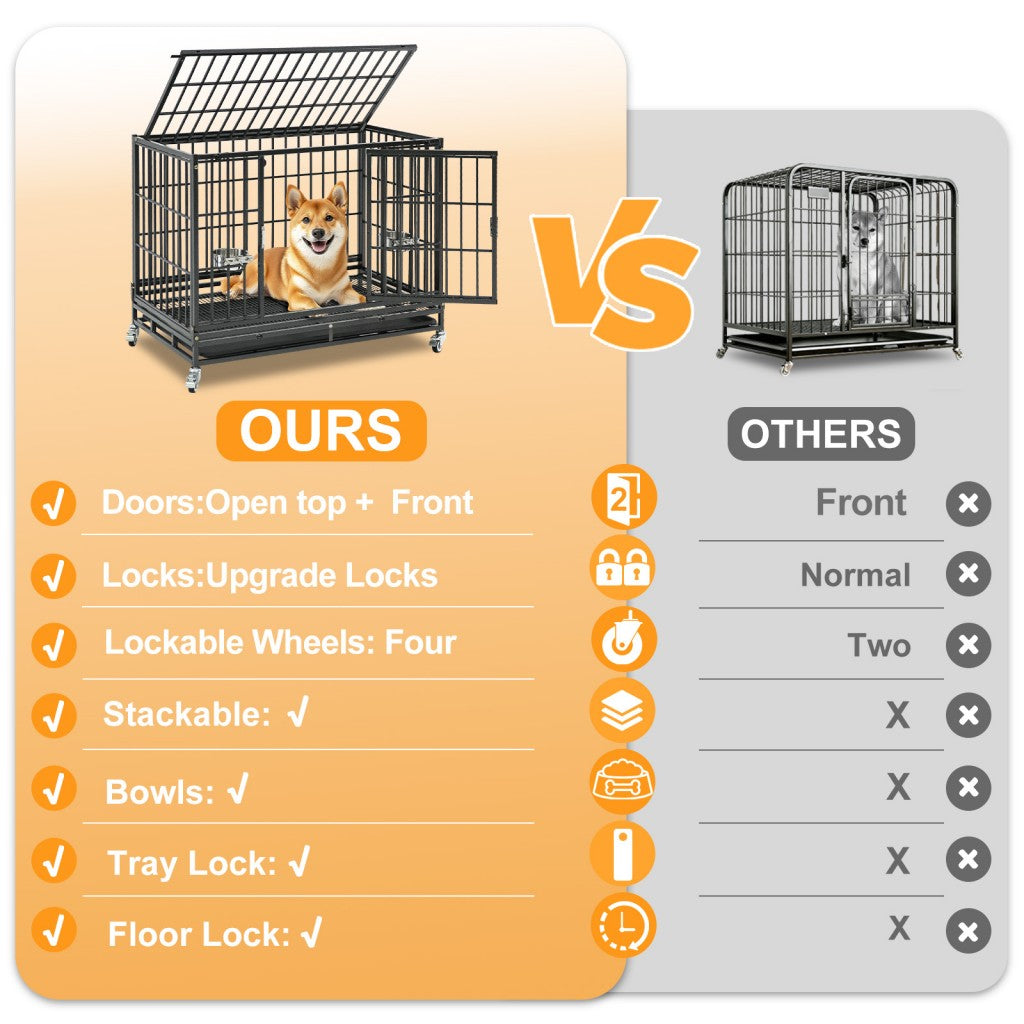
Barriers and booster seats have a real role, but don’t confuse them with crash protection. They keep a dog out of the front seat and reduce jumping around, which cuts driver distraction, but most haven’t been crash tested the way harnesses and crates have.
Here’s a quick way to match restraint to dog and vehicle:
- Small dogs: A compact crate secured on the back seat floor, or a crash-tested harness with a short tether.
- Medium dogs: A mid-size crate in the cargo area, or a harness anchored to the rear seat belt system.
- Large dogs: A large stackable crate built to prevent sliding, since harnesses alone often can’t manage the momentum of a big dog in a hard stop.
How Do You Train a Dog to Accept a Crate or Harness?
Restraint gear only works if your dog isn’t fighting it the whole ride. Unrestrained dogs become projectiles in a crash and are a documented source of driver distraction, according to Cornell University’s veterinary program. Training closes the gap between owning the right gear and actually using it correctly on every trip.
A workable progression looks like this:
- Set the crate or harness up at home first. Feed meals inside the crate or with the harness on, so the dog links it to something good.
- Move to a parked car. Let your dog sit in the restrained position for a few minutes with treats and praise, engine off.
- Take a one to five minute drive around the block. Keep it short and calm, then reward.
- Gradually stretch trip length over several sessions, always ending before your dog gets anxious.
- Practice exits: leash on before you open the door, ask for a sit or wait, then release with a calm cue.
Pro Tip: If you’re considering an anti-nausea medication or calming aid, run a trial dose on a short drive at home well before your actual trip. You want to know how your dog reacts before you’re two hours from home.
What Makes a Harness or Crate Actually Crash-Tested?
A restraint that fits loosely or attaches only at the neck can injure a dog worse than no restraint at all. Crate sizing follows a simple rule: your dog should be able to stand, turn around, and lie flat without ducking. Anything smaller cramps them; anything much bigger lets them slide into the walls on a hard brake. The crate itself needs to be strapped or wedged so it can’t tip or slide across the cargo area.
Harness fit matters just as much. Look for chest and girth straps rather than a simple collar or neck-only clip, since neck attachments can cause spinal injury on impact. Center for Pet Safety independently crash tests pet restraints and publishes certification results, which is worth checking before you trust a manufacturer’s own safety claims. Consumer Reports has flagged that plenty of popular harnesses on the market simply haven’t been tested to the same standard.
Installation checklist:
- Anchor the tether to a fixed seat belt point, not a loose loop or handle.
- Route the tether path away from footwells and seat crevices where it can snag.
- Keep the tether short enough to limit how far your dog travels forward, but not so tight it restricts normal sitting or lying down.
- Check the crate or harness buckles before every trip, not just the first time you install them.
What Should Be in a Dog Travel Prep Checklist?
A little prep the night before beats scrambling at a rest stop. Confirm your dog’s microchip contact details are current and that the collar tag is legible. If you’re crossing state lines, bring a current vaccination record, since some states and boarding facilities ask for it, and the CDC recommends keeping this documentation accessible during travel.
Pack a travel kit that covers the basics:
- Water and a spill-proof bowl
- Leash, harness or crate, and a backup collar
- Any medications, plus a basic pet first-aid kit
- Familiar bedding or a worn t-shirt with your scent
- Waste bags and a portable water source for breaks
Feed your dog three to four hours before departure rather than right before, which cuts down on nausea, and offer water regularly rather than a big bowl all at once. Map your route with rest stops and note the nearest emergency vet clinics along the way, a habit the American Animal Hospital Association recommends for any trip longer than a couple of hours.
What Are the Safe In-Car Habits Every Trip?
Where your dog rides and how you manage the cabin matters as much as the restraint itself. Keep your dog in the back seat or cargo area for the entire drive, restrained the whole time, not just at the start.
- Never let a dog ride with its head out an open window. Debris, insects, and sudden stops can cause serious injury, according to the American Veterinary Medical Association.
- Lock power windows and engage child locks near your dog’s seating area so a paw or nose can’t trigger them.
- Stop every couple of hours on longer drives to let your dog stretch, drink water, and relieve itself.
- Never leave your dog alone in the car, even for a quick errand.
- Don’t allow a dog to climb onto your lap or jump between seats while the vehicle is moving.
How Fast Can Heatstroke or Car Sickness Set In?
Heat and cold both turn a parked car into a hazard faster than most owners expect. Interior temperatures can climb to dangerous levels within minutes, even on a mild day, and readings above roughly 70°F inside the cabin or below 35°F both carry real risk for a dog left alone. If you see heavy panting, drooling, or wobbliness, get your dog into shade or air conditioning immediately and contact a vet.
Car sickness usually responds well to the same acclimation steps used for restraint training, paired with lighter pre-trip meals. Any medication for anxiety or nausea needs a trial run at home first, since sedatives can affect breathing and body temperature regulation. Keep your regular vet’s number and the nearest 24-hour emergency clinic on your printed or phone checklist before you leave.
Which Crate Actually Fits Your Dog and Your Car?
Getting the size right is where most owners guess wrong, and a crate that’s too small or too flimsy defeats the purpose of using one at all. Americanbarkbliss builds crates in the USA specifically with that stand-turn-lie-down rule in mind, so sizing is straightforward rather than a guessing game.
The 37" Stackable Heavy Duty Dog Crate 371D07 suits medium to large dogs who need a crate sturdy enough to stay put in the cargo area without shifting during hard braking. For smaller dogs or owners working with tighter cargo space, the 31" Two-Tier Dog Crate 46A offers a compact footprint without cramping the dog inside.
| Consideration | 37" Stackable Heavy Duty Crate 371D07 | 31" Two-Tier Crate 46A |
|---|---|---|
| Best for | Medium to large dogs | Small to medium dogs |
| Space | Full stand, turn, lie down room | Compact but roomy for smaller frames |
| Fit in vehicle | Larger cargo areas, SUVs | Smaller trunks, hatchbacks, back seats |
Before buying, measure your dog’s height and length and check the guide to dog car seats for step-by-step fitting advice, or browse the full travel safety gear checklist for tethers and accessories that pair with either crate.
What Do You Do If You’re in an Accident With a Restrained Dog?
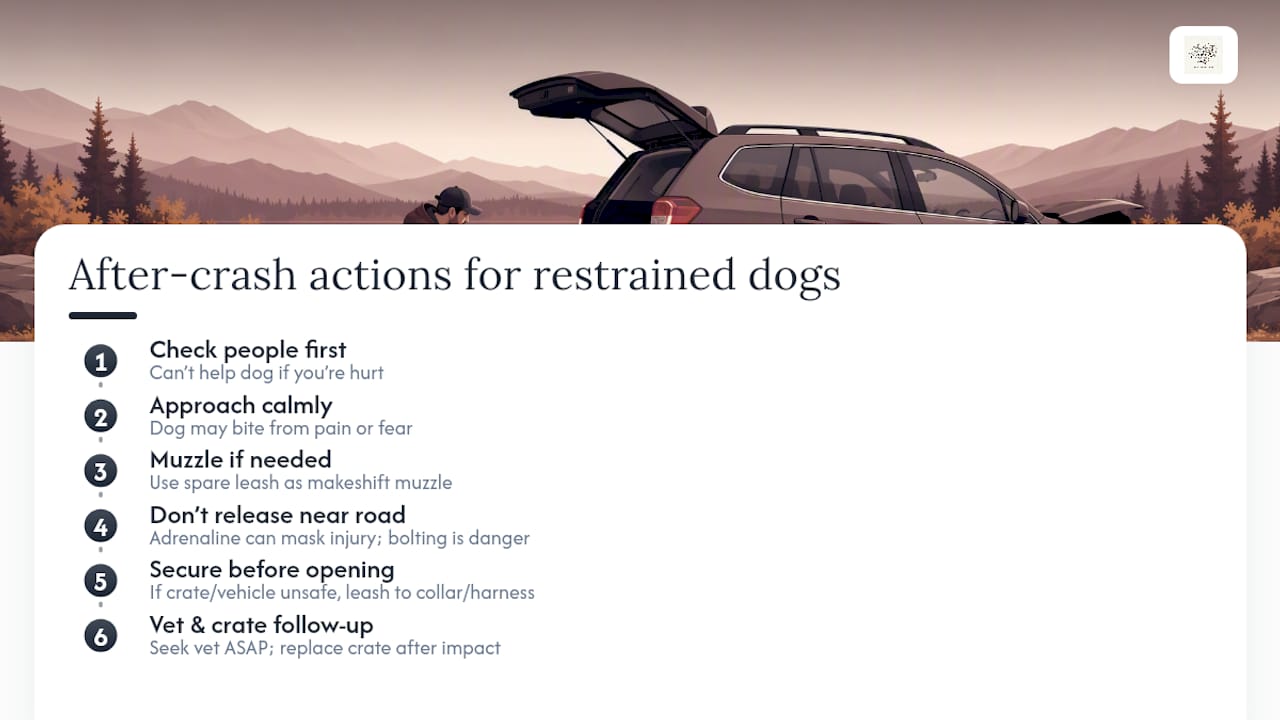
A restrained dog still needs a clear-headed response from you immediately after a collision. Check yourself and any human passengers first, since you can’t help your dog if you’re seriously hurt. Then approach your dog calmly. Even a well-trained dog can bite out of pain or fear after a crash, so consider using a spare leash as a makeshift muzzle wrap if your dog seems disoriented or aggressive before you try to move it.
Do not unclip the crate or harness and let your dog loose near a roadway, even if it seems fine. Adrenaline masks pain and shock, and a frightened dog bolting into traffic is one of the most common secondary injuries after a car accident. If the crate itself is damaged or the vehicle is unsafe to stay in, use a leash attached to a secure collar or harness before opening any door.
Get your dog to a vet as soon as possible, even without visible injury. Internal injuries and shock don’t always show symptoms right away. This is exactly why keeping vaccination records and a nearby emergency vet’s number in your glovebox matters. It saves critical minutes when you’re not thinking clearly. If your dog was in a crate that took a direct impact, replace it. Crates aren’t designed to be reused after absorbing crash force, even when the damage looks minor.
Ready to Upgrade Your Dog’s Ride?
Some manufacturers make crates sized around the stand-turn-lie-down rule, so you can better determine whether your dog will actually fit or shift around on the road. That’s the gap a lot of imported, one-size-fits-most crates leave open.
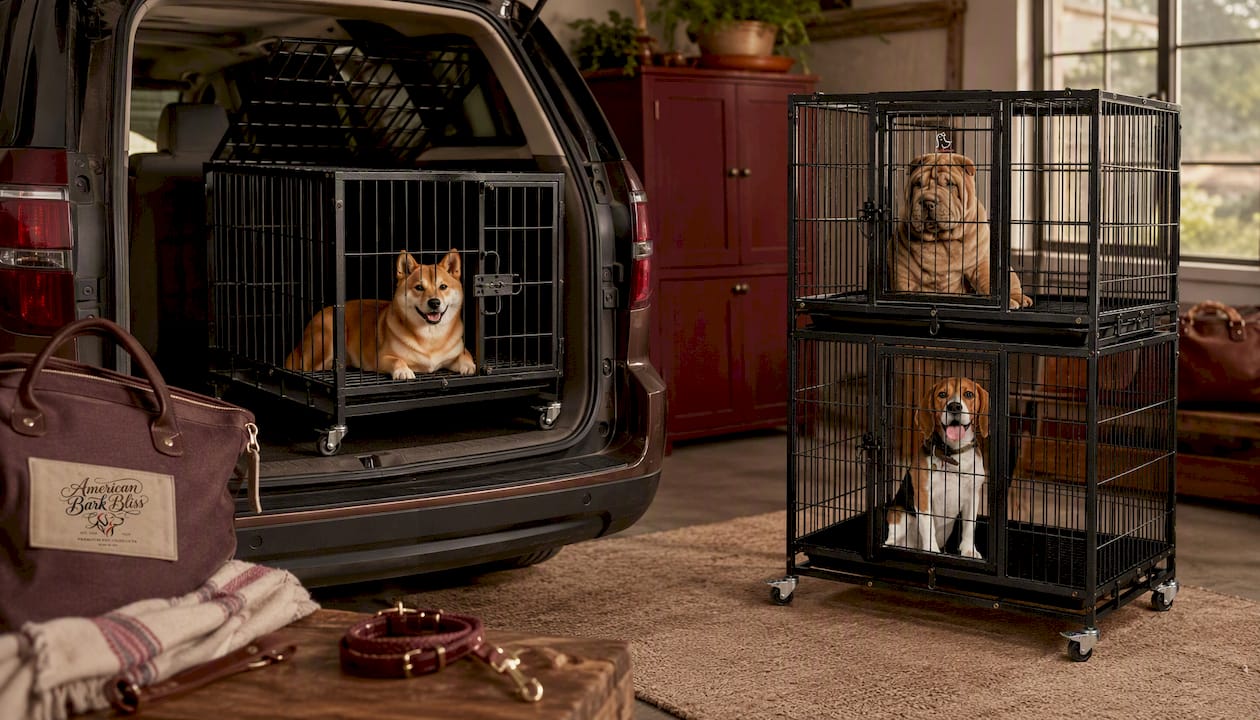
If you need a crash-tested tether instead of a crate, the direct-to-seatbelt tether clips to your existing seat belt anchor with steel hardware built for a secure backseat setup. Not sure which crate fits your car and your dog’s frame? Check the best dog travel accessories guide for sizing tips, then head to the 37" Stackable Heavy Duty Dog Crate or 31" Two-Tier Dog Crate product page to compare dimensions against your trunk or back seat before you order.
A Straight Answer on What Actually Keeps Dogs Safe
If you take one thing from this article, make it this: restraint, training, and prep, in that order. The gear only works if your dog has practiced using it, and the practice only matters if you’ve prepped the trip itself, from ID tags to rest stops. Skip any one of the three and you’re relying on luck instead of a system.
Got questions about sizing a crate to your specific dog or vehicle? Use the fitting guidance linked above or reach out through the product pages. It’s worth the five extra minutes before you hit the road.
— Christopher
Sources
- Travel training: you and your pets | FDA
- Traveling your dog or cat | AVMA
- The ultimate guide to traveling safely with your pet | AAHA
- Pet Travel Safety | Healthy Pets, Healthy People | CDC
- CPS-certified Sleepypod Clickit Sport | Center for Pet Safety
FAQ
What Is the 3-3-3 Rule for Dogs?
The 3-3-3 rule usually refers to adjustment timelines for a newly adopted dog. Three days to decompress, three weeks to learn a routine, three months to feel fully at home. It’s not a car safety framework, though the same patience applies to acclimating a dog to car restraints.
What Is the Safest Way for a Dog to Be in a Car?
A crash-tested crate secured in the back seat or cargo area, or a crash-tested harness tethered to a seat belt anchor, according to FDA travel training guidance. Both keep a dog out of the front seat, away from airbags, and contained during a sudden stop.
What Is the 7-7-7 Rule for Dogs?
Definitions vary depending on the source, and it’s typically used for puppy socialization schedules rather than car travel. It’s not part of established dog car safety guidance, so treat any specific claim about it with caution.
What Is the Best Way to Secure Your Dog in a Car?
Match the restraint to your dog’s size and your vehicle: a properly sized crate for dogs who do well contained, or a crash-tested harness with a short tether for dogs in smaller vehicles. Some crates are built around the stand-turn-lie-down sizing rule to help make that choice easier.
Leave a comment