

Match Dog Bowl to Muzzle: 1–2, 2–6, 6–10 Cups + American Bark Bliss
Pick a bowl capacity that matches your dog’s daily meal: small dogs need 1 to 2 cups, medium dogs typically need 2 to 6 cups, and large dogs often need 6 to 10 or more cups. Weight tells you the starting range, but muzzle shape decides the actual fit. A short chart and a two-minute measurement will get you the rest of the way.
TL;DR:
- Choosing a bowl capacity that matches your dog’s weight ensures appropriate portioning, with small dogs needing 1-2 cups and large dogs requiring 6-10 cups or more.
- Measuring your dog’s muzzle at its widest point and adding 0.25 to 0.40 inches ensures a proper internal diameter for comfortable eating.
- Breed-specific muzzle shape influences the ideal bowl style, with flat-faced dogs benefiting from wide, shallow bowls and long-snouted dogs needing narrower, deeper options.
- Material choice impacts durability and cleanliness, with stainless steel being the most recommended for hygiene and longevity, while ceramic and plastic have specific care considerations.
- Proper bowl sizing and shape help prevent eating discomfort, head tilting, or food spillage, especially when considering raised feeders or slow feed options for health or joint issues.
Table of Contents
- Dog Bowl Sizing Chart: Capacity, Diameter, and Depth by Weight
- How to Measure Muzzle Width and Shoulder Height
- Matching Bowl Shape and Depth to Your Dog’s Breed
- Stainless Steel, Ceramic, or Plastic: What Actually Holds Up
- When Raised Feeders and Slow Feeders Actually Help
- Sizing Water Bowls for Your Dog’s Routine
- Why Muzzle Fit Beats Bowl Aesthetics Every Time
- American Bark Bliss Deep Dog Bowls: Built for Real Measurements
- Sources
- FAQ
Dog Bowl Sizing Chart: Capacity, Diameter, and Depth by Weight
Weight is the fastest way to narrow down a bowl, but it’s a starting point, not the finish line. The American Kennel Club breaks recommended capacity into three broad bands: toy and small breeds under roughly 20 pounds generally need 1 to 2 cup bowls, medium breeds from 20 to 60 pounds typically need 2 to 6 cups, and large or giant breeds over 60 pounds often require 6 to 10 cups or more per meal.
Diameter and depth follow a similar pattern, though manufacturers vary. A useful baseline, cross-referenced against dimension charts and factory sizing standards, looks like this:
| Weight class | Capacity (cups) | Diameter (in / cm) | Depth (in / cm) |
|---|---|---|---|
| Small (up to 20 lbs) | 1–2 cups | 4.5–6 in / 11–15 cm | 1.5–2.5 in / 4–6 cm |
| Medium (20–60 lbs) | 2–6 cups | 6–8 in / 15–20 cm | 2–3 in / 5–8 cm |
| Large (60+ lbs) | 6–10 cups | 8–10 in / 20–25 cm | 2.5–3 in / 6–8 cm |
| Giant (90+ lbs) | 10+ cups | 10–12 in / 25–30 cm | 3–4 in / 8–10 cm |
Kibble density throws a wrench into all of this. A cup of dense, high-fat kibble weighs and packs differently than a cup of light, air-puffed food, so two dogs of the same weight can need noticeably different bowl volumes for the exact same calorie target. Weigh out an actual meal portion before you buy, rather than trusting the weight range alone.
How to Measure Muzzle Width and Shoulder Height
Grabbing a tape measure takes less time than reading a dozen product reviews, and it’s far more reliable. Here’s the actual process:
- Measure your dog’s muzzle at its widest point, right where it meets the cheeks.
- Add 0.25 to 0.40 inches of clearance to that number. That’s your minimum internal diameter.
- Measure from the floor to the top of the shoulders (withers) if you’re considering an elevated feeder.
- Subtract roughly 2 to 3 inches (5 to 8 cm) from that shoulder height. That’s your target feeder height, so the bowl sits just below chest level.
- Check the bowl’s internal diameter, not the outer diameter printed on the box. Manufacturers often size by the outer rim, which can overstate how much usable space your dog actually gets.
Pro Tip: Measure the muzzle with your dog’s mouth relaxed, not open. An open-mouth measurement runs wide and will leave you sizing up a bowl your dog doesn’t need.
Matching Bowl Shape and Depth to Your Dog’s Breed
A Bulldog and a Dachshund have almost nothing in common at the food bowl, and buying the same shape for both is a common mistake. Muzzle shape, not just size, decides whether a bowl works.
- Brachycephalic breeds (Pugs, Bulldogs, Boxers) do best with wide, shallow bowls that do not force the nose down into a narrow well. Whisker-relief designs, which flare outward at the rim, reduce the pressure that makes some flat-faced dogs hesitate to eat.
- Long-snouted breeds (Greyhounds, Collies, Dachshunds) need narrower, deeper bowls, typically 2.5 to 4 inches deep, so the muzzle can reach the bottom without the dog straining its neck sideways.
- Eared breeds (Basset Hounds, Cocker Spaniels, Beagles) benefit from narrow-mouthed bowls that keep long ears out of the food. The AKC notes this design reduces ear dipping, which cuts down on both mess and the risk of ear infections from food and moisture trapped in fur.
Stainless Steel, Ceramic, or Plastic: What Actually Holds Up
Material matters more than most owners realize, mostly because of what happens after the meal is over, not during it.
- Stainless steel is the material the AKC recommends most consistently for sanitation and durability. It resists bacterial buildup, doesn’t retain odors, and is dishwasher safe, which matters if you’re not hand washing bowls daily.
- Ceramic bowls sit heavier on the floor, which helps with stability, but glazed finishes can chip over time. A chipped glaze creates tiny crevices where bacteria can collect, so inspect ceramic bowls periodically and retire any that are cracked.
- Plastic scratches easily, and those scratches become permanent bacteria traps. If you use plastic at all, stick to BPA-free, scratch-resistant options and replace them more often than you would steel or ceramic.
- Stability features matter regardless of material. Weighted rims and anti-slip rubber bases stop a bowl from sliding across tile or hardwood, which is one of the most common complaints owners report about food bowls in general.
Pro Tip: Flip a bowl over before buying and check the base. A slightly recessed rubber ring will outperform a flat metal bottom on almost any hard floor.
When Raised Feeders and Slow Feeders Actually Help
Not every dog needs a raised feeder, and not every deep bowl needs a puzzle insert. Both solve specific problems.
- Raised feeders work best when the bowl top sits roughly 2 to 3 inches (5 to 8 cm) below chest level, which reduces neck strain for older dogs or those with joint issues. Owners of deep-chested breeds like Great Danes or Weimaraners should talk to a vet first, since some research has linked raised feeding to increased bloat risk in that specific body type.
- Slow feeders and puzzle bowls only work if their capacity matches a full meal. A slow feeder sized for half a portion just means your dog finishes fast, then keeps nudging an empty bowl.
- Stands and puzzle feeders need the same stability check as standard bowls. A footprint slightly wider than the bowl itself, with rubberized feet, keeps things from tipping mid-meal and makes cleanup easier.
Sizing Water Bowls for Your Dog’s Routine
Water bowl capacity depends on your schedule as much as your dog’s size. A small dog left alone for ten hours needs a bigger water bowl than the weight chart would suggest.
- If you can’t refill water often during the day, size up regardless of your dog’s weight class. Running out of water matters more than an oversized bowl ever will.
- High-activity days, hot weather, and multiple dogs sharing one bowl all push capacity needs higher than a single number can capture.
- Stability counts double for water bowls, since a tipped water bowl means a wet floor and a thirsty dog. A heavier base or a wider stand footprint solves most of that problem.
Why Muzzle Fit Beats Bowl Aesthetics Every Time
Most sizing charts stop at weight, and that’s where a lot of buying decisions go wrong. A bowl that’s technically the right capacity can still be the wrong shape if nobody checked internal diameter against muzzle width, or depth against snout length. Color and design matter for how a bowl looks in your kitchen, but they matter zero to how comfortably your dog eats.
Measure first. Pick the color after. A proper muzzle-to-bowl match prevents the kind of slow, food-avoidant eating that owners often blame on picky appetite when it’s really an awkward bowl.
— Christopher
American Bark Bliss Deep Dog Bowls: Built for Real Measurements
Americanbarkbliss makes this sizing math easy to act on, because every Deep Dog Bowl in the lineup is built around real internal diameter and depth, not just marketing labels. Each stainless steel bowl fits small, medium, and large dogs, so you shop by your dog’s measurements rather than guessing from a generic “medium” tag on a shelf.
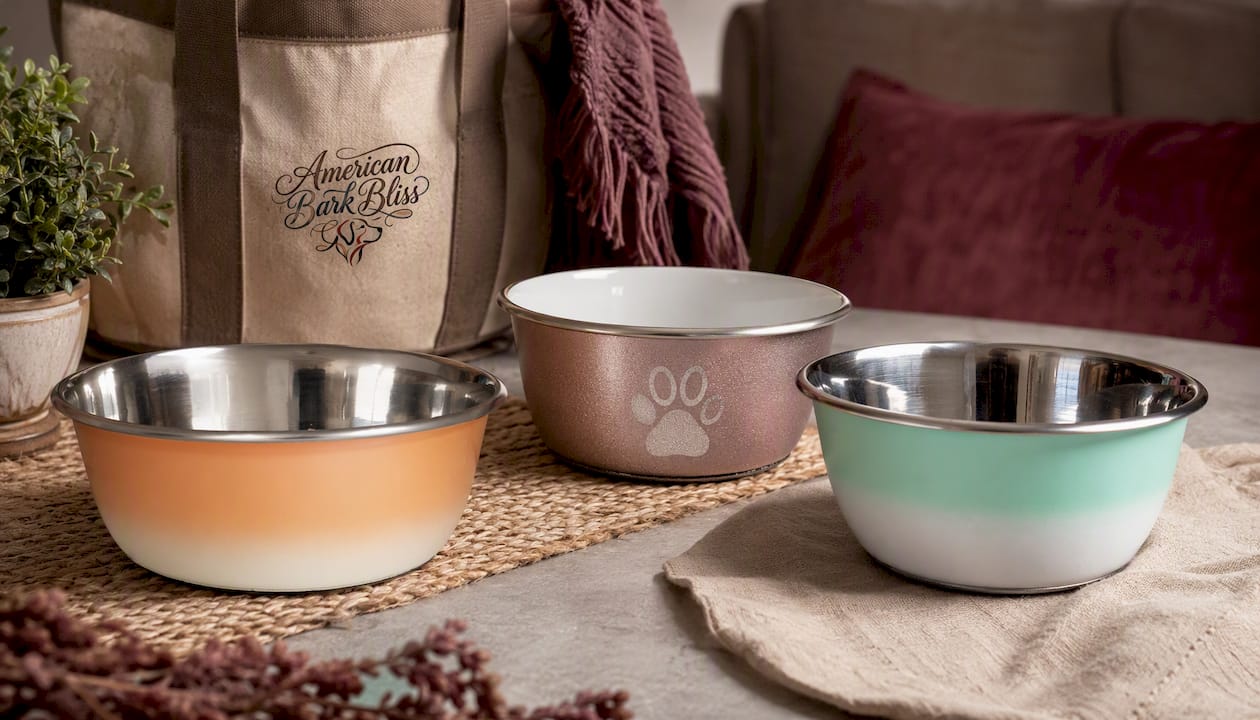
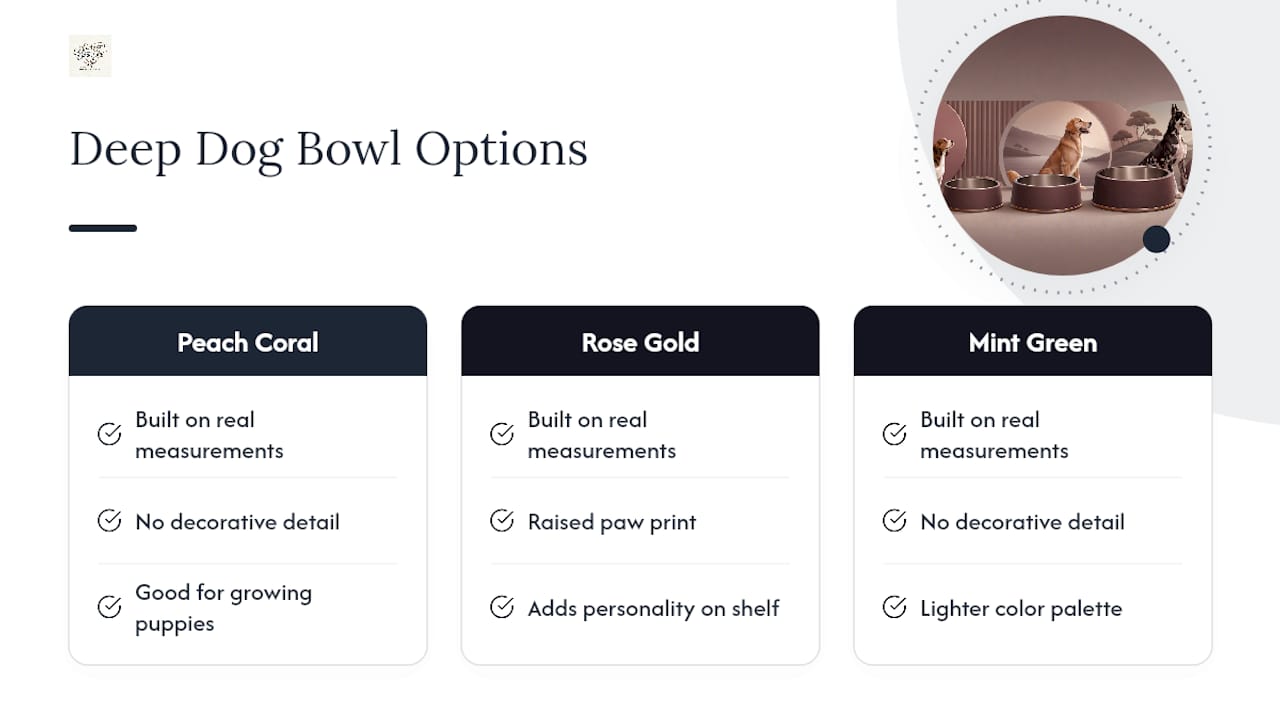
The Peach Coral Deep Dog Bowl suits owners who want one durable bowl that scales across a growing puppy or a household with dogs of different sizes. The Rose Gold Paw Print Deep Dog Bowl adds a raised paw print detail for owners who still want the same stainless steel sanitation benefits with a bit more personality on the shelf. The Mint Green Deep Dog Bowl rounds out the set for owners who want a lighter color palette without giving up depth or capacity.
All three share the same deep profile that works well for long-snouted breeds and dogs that eat fast enough to push a shallow bowl across the floor. Measure your dog’s muzzle and daily meal volume first, then pick whichever color fits your kitchen. Browse the full Deep Dog Bowl lineup and check the sizing details on each product page before you order.
Sources
This guide draws on AKC bowl sizing guidance, OKEYPETS’ manufacturer sizing approach, and DogChart’s breed dimension charts, along with portion guidance from Dr. Clauders Norway.
- Choosing the Right Dog Bowl for Your Dog — AKC
- How to Choose the Right Dog Bowl Size — OKEYPETS
- Dog bowl size chart — DogChart
FAQ
What Size Bowl Does My Dog Need?
Match capacity to weight class first: 1 to 2 cups for small dogs, 2 to 6 cups for medium dogs, and 6 to 10 or more cups for large dogs, then adjust diameter and depth to your dog’s muzzle shape.
What Size Dog Bowl for a 100 Pound Dog?
A dog over 90 pounds falls into the giant weight class and typically needs a bowl holding 10 or more cups, with an internal diameter around 10 to 12 inches and depth of 3 to 4 inches.
How Many Ounces Is a Normal Dog Bowl?
A standard dog food bowl runs anywhere from 8 ounces (1 cup, for toy breeds) up to 10 cups (for large and giant breeds), depending on the dog’s weight class and meal portion.
What Taste Do Dogs Love the Most?
Most dogs gravitate toward meaty, savory flavors like chicken, beef, and fish, though individual preference varies by breed and history. Bowl shape and depth still affect how eagerly a dog approaches even a favorite flavor, since an awkward fit can make eating uncomfortable regardless of taste.
How Do I Know if a Bowl Is Too Deep or Too Shallow?
If your dog tilts its head sideways, paws at the bowl, or leaves food pushed to the edges, the depth or diameter doesn’t match its muzzle. A shallow, wide bowl usually fixes head tilting, while a deeper, narrower bowl helps dogs that struggle to reach food at the bottom.
Leave a comment