

Dog Bandana Sizes: 14–26in Chart to Fit Any Breed
Pick a cloth square around 14 inches for small dogs, 18 inches for medium, 22 inches for large, and 26 inches for giant breeds. That’s the fast rule of thumb, and most how-to guides recommend the same. But weight is a rough guess at best. Measuring your dog’s neck with a soft tape gets you a far more reliable fit, and the exact style you choose (tie-on, slip-on, or snap) will change how much extra fabric you actually need.
TL;DR:
- Measuring your dog’s neck with a soft tape provides a more accurate fit than relying on weight alone, especially for breeds with different neck shapes.
- When in doubt, size up if your measurement falls between two chart sizes, as a looser bandana is more comfortable and looks better than one that is too tight.
- Folding style affects fit significantly, with triangle, dapper, and bow-tie folds offering options to tighten or showcase fabric based on your dog’s size and comfort needs.
- Cotton or cotton-poly blends are recommended for fabric durability and shape retention through wash cycles, with air-drying preferred to prevent shrinkage.
- Puppies and certain breeds with unique neck shapes require frequent re-measurement during growth and age-related changes for optimal fit and safety.
Table of Contents
- Dog Bandana Sizes Chart: Neck, Cloth, and Weight
- How to Measure Your Dog’s Neck for a Bandana
- Sizing Up vs. Sizing Down: Getting the Fit Right
- How Folding Style Changes the Actual Fit
- Fabric Choices That Keep Bandana Sizing Consistent
- Measuring Head Width and Length for Different Bandana Styles
- DIY Fixes for a Bandana That Doesn’t Quite Fit
- Do Breed and Age Change Sizing Recommendations?
- A Note on Getting Bandana Sizing Right the First Time
- Shop Sized-Right Bandanas and Accessories from Americanbarkbliss
- Sources
- FAQ
Dog Bandana Sizes Chart: Neck, Cloth, and Weight
Neck circumference is the number that actually predicts fit. Weight is useful only as a sanity check, since a stocky 25-pound Corgi and a lean 25-pound Whippet need different bandana sizes entirely, despite an identical scale reading.
The chart below lines up common size labels with neck range, the cloth diagonal or square size you’d cut or buy, and rough weight bands drawn from retail dog bandana size charts.
A quick note on terminology: the “diagonal” is the corner-to-corner measurement of a square bandana, while “finished width” is what actually shows once it’s folded and tied. A square’s diagonal is always longer than its side. If you want the math behind that relationship, the square diagonal calculator shows exactly how side length and diagonal scale together, which matters if you’re cutting fabric from scratch rather than buying pre-made.
If your dog’s neck lands right on a border between two rows, size up. A slightly loose bandana ties down easily or folds thinner; a tight one is a genuine daily annoyance for your dog and, in rare cases, a safety issue.
How to Measure Your Dog’s Neck for a Bandana
Getting the neck number right matters more than any other step in this whole process. Here’s the routine that actually works:
- Use a soft cloth or sewing tape measure, not a metal one, and wrap it around the base of your dog’s neck where a collar would normally sit.
- Slide two fingers between the tape and your dog’s neck before you read the number. That gap is your comfort allowance.
- Note the number in inches, then check it against the size chart above.
- Round up if you’re between two sizes.
No tape on hand? Wrap a piece of string or ribbon around the same spot, mark where it overlaps, then lay it flat against a ruler.
Three mistakes trip up almost everyone the first time. Measuring over a thick collar adds bulk you don’t actually have. Pulling the tape snug (instead of leaving that two-finger gap) gives you a number that’s too small. And measuring through a heavy winter coat can throw you off by a full inch or more, especially on double-coated breeds.
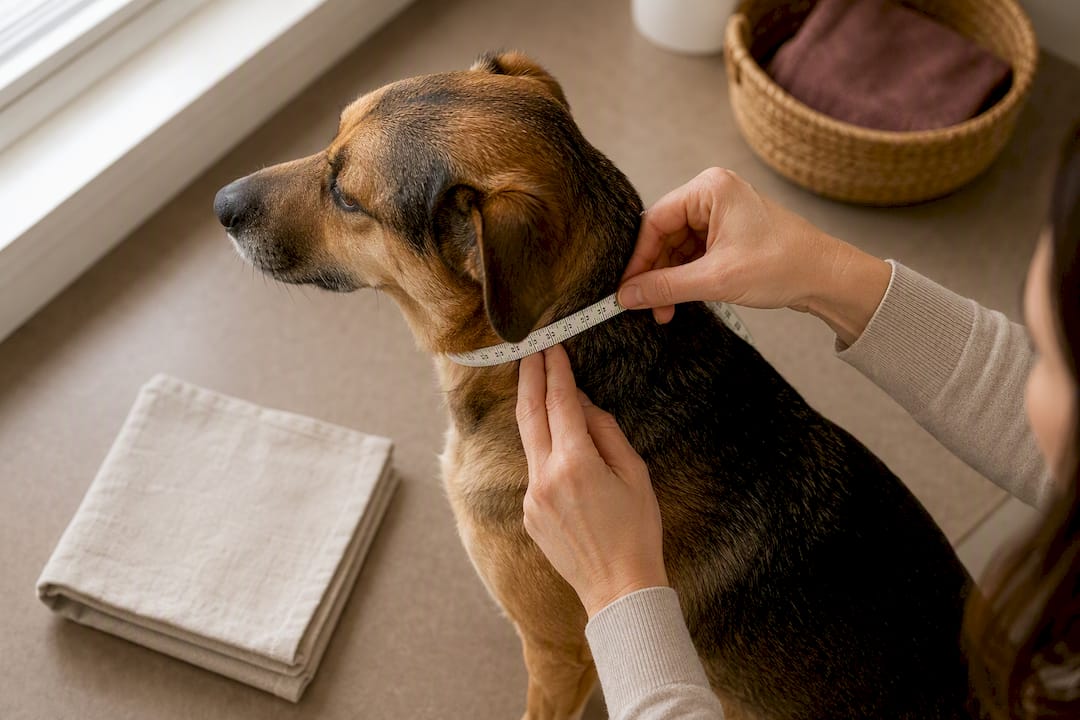
Pro Tip: Measure your dog standing up and relaxed, not sitting, since the neck shape shifts slightly between positions and a standing measurement mirrors how the bandana will actually sit.
Sizing Up vs. Sizing Down: Getting the Fit Right
When your dog’s measurement falls between two rows on the chart, size up every time. A bandana that’s a touch loose still looks sharp once tied or folded, but one that’s too tight can restrict panting on a hot walk or dig into the skin during play. Erring big costs you nothing; erring small costs comfort.
Once you’ve got the right size in hand, a few adjustments fine-tune the fit further:
- Fold the fabric an extra time before tying to reduce bulk on smaller necks.
- Switch from a tie-on style to a slip-on or snap closure if your dog fusses with knots or if you want a more consistent daily fit.
- Check that the tied knot sits at the side or top of the neck, never directly over the windpipe.
Before your dog wears it out the door, run a quick safety check. The bandana should never sit tight enough to restrict breathing or panting, and the tails shouldn’t hang low enough to drag on the ground or snag on furniture, fencing, or crate doors. A safety-focused review of dog accessories covers the same tug-and-catch hazards worth watching for with collars and leashes, and the same logic applies to anything tied around the neck.
How Folding Style Changes the Actual Fit
The same 18-inch square looks completely different depending on how you fold it. A triangle fold, where you fold the square once diagonally and tie the two corners behind the neck, keeps the most visible fabric on display and works best for dogs with room to spare in their size.
A dapper fold rolls the triangle’s point under itself before tying, which tucks the tip out of sight and narrows the visible band considerably. This is the fold to reach for if your dog’s bandana looks a size too big; it visually shrinks the fabric without needing a smaller cloth. A bow-tie fold cinches the center with a small strip of fabric or elastic, creating a bunched, formal look that reads smaller still, even on a full-sized square.
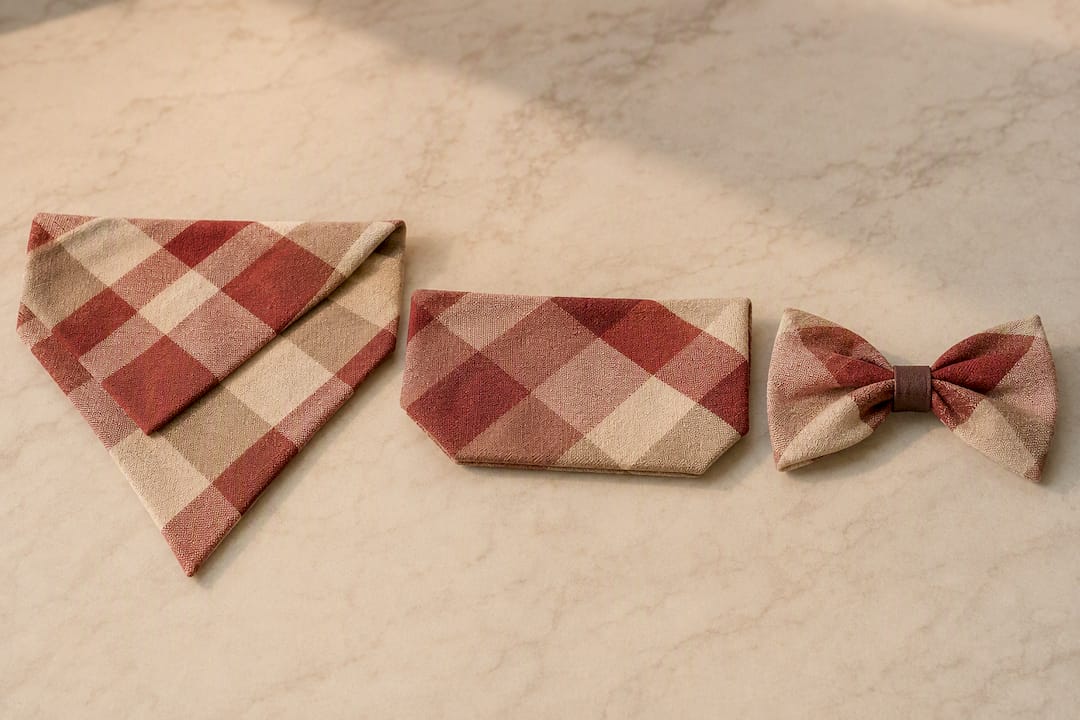
If you’re going tie-on rather than slip-on, add at least 2 to 3 extra inches to your cloth diagonal beyond the chart minimum. Knots eat up fabric fast, and a bandana measured exactly to the chart can come up short once tied.
Fabric Choices That Keep Bandana Sizing Consistent
Fit only stays reliable if the fabric holds its shape wash after wash. Cotton and cotton-poly blends are the standard choice for exactly that reason. They’re breathable, machine-washable, and resist the kind of stretching that lightweight synthetics develop after a few months of daily wear.
- Wash cool, not hot, and skip the dryer’s high heat setting when possible, since heat is the main driver of shrinkage in cotton fabric.
- Air-dry flat to preserve the original cloth dimensions instead of letting a hot dryer cycle shrink it unevenly.
- Retire a bandana once you notice fraying edges, a stretched or warped shape, or a snap closure that no longer clicks shut.
Measuring Head Width and Length for Different Bandana Styles
Neck circumference gets you most of the way to the right size, but head measurements matter for a couple of specific styles. Over-the-head bandanas, the kind that slip on like a small poncho rather than tying around the neck, need the width measured ear to ear across the top of the skull, plus the length from between the eyes back to the base of the skull.
Take both with the same soft tape you used for the neck. For width, measure straight across the widest point, right where the ears sit. For length, run the tape from the stop (the slight dip between the eyes) back along the top of the head to where it meets the neck. Add half an inch to each number for a slip-on style, since fabric needs a little room to clear the ears and eyes without pulling.
Dogs with flatter faces, like Bulldogs or Pugs, often need a shorter length measurement relative to their neck size, while long-nosed breeds like Greyhounds or Collies need extra length to keep the fabric from riding up toward the eyes. If you’re buying rather than sewing, a general sizing guide for dog apparel covers the same head-and-neck logic that applies to hoodies, harnesses, and bandana-style collars alike, since the measuring principles carry over across categories.
Skip the head measurements entirely if you’re going with a standard tie-on or slip-on neck bandana. Those only need the neck number from the chart above.
DIY Fixes for a Bandana That Doesn’t Quite Fit
A bandana that’s slightly too big or small doesn’t have to go back in the drawer. A few small sewing fixes fix most fit problems without buying a new one.
For a bandana that runs too big, hem the two tie-ends shorter by folding the raw edge under about half an inch and running a straight stitch along it. This shortens the tails without touching the main body of the fabric, so the overall look stays the same, just with less excess dangling.
For a snap-style or slip-on bandana that’s too loose, sew on an additional snap set or a small elastic loop about an inch closer to center than the factory placement. This gives you a second, tighter closure point without altering the fabric itself. The reverse works too: if a slip-on is too tight, adding a snap extension panel (even a small strip of matching fabric) buys you the extra half inch or inch you need.
If you’re not confident with a needle and thread, iron-on hemming tape handles the tie-end shortening in minutes with no stitching required. It’s a solid stopgap for the transition period, though it holds up better through fewer wash cycles than an actual seam.
Do Breed and Age Change Sizing Recommendations?
Neck shape varies enough between breeds that the chart’s weight column should always take a back seat to an actual measurement. Brachycephalic breeds like Bulldogs and Pugs often carry thick, muscular necks relative to their overall weight, which pushes them toward a size or two larger than their weight band alone would suggest. Sighthounds like Greyhounds and Whippets run the opposite direction: long, narrow necks that fit a smaller size than their weight implies.
Puppies present their own challenge, since a growing dog can move up a full size class in a matter of weeks. Re-measure every month during the first year of a medium or large breed puppy’s life, and expect to size up more than once before the growth plates close. Buying a slightly larger bandana with a tie-on closure is usually the most economical route for a puppy, since the extra fabric can be tied down snugly now and let out gradually as the neck fills in.
Senior dogs tend to be more stable in size, but weight loss or gain tied to age related conditions can shift a neck measurement enough to matter. A recheck every few months keeps the fit honest, especially for dogs managing weight changes from arthritis, thyroid issues, or reduced activity.
A Note on Getting Bandana Sizing Right the First Time
Most sizing complaints trace back to one habit: guessing from weight instead of measuring the neck. A stocky, muscular breed and a lean one at the identical weight can need two different bandana sizes, and no chart column fixes that gap for you.
Check the fit again after the first wear, not just at the moment you tie it on. Fabric settles, dogs move around, and a bandana that looked right standing still in the store can sit differently once your dog is walking, scratching, or shaking it off. Puppies especially deserve a re-measure on a regular schedule, since a size that fit last month may already be snug.
— Christopher
Shop Sized-Right Bandanas and Accessories from Americanbarkbliss
Once you know your dog’s number, matching it to the right product shouldn’t take another round of guesswork. Americanbarkbliss carries tie-on bandanas with an adjustable string closure built specifically to handle that extra 2 to 3 inches tie-on styles need beyond the chart minimum, so you’re not stuck cutting corners on fit.
A neat bandana fit also depends on managing the fur underneath it. The Country Living All-in-One 3-Piece Dog Grooming Kit keeps neck fur trimmed and tangle-free before you tie anything on, and a set of pet grooming gloves cuts down on the loose fur that throws off a snug measurement in the first place.
For the rest of the walk, pair that bandana with the Wolfdoge Signature Leash or, for winter outings, the Here Comes Santa Paws Nylon Dog Collar and Leash set. Reward the good behavior with Americana Chicken Chips, all made in the USA like the rest of the catalog. Browse the full American Bark Bliss lineup to find the exact size and style that matches your measurements today.
Sources
- How to Tie a Bandana on a Dog: 9 Steps (with Pictures) - wikiHow
- The very complete guide to dog bandana sizes - BySporting
- Square diagonal calculator - Omni Calculator
FAQ
What size should I cut fabric for a dog bandana?
Cut a 14-inch square for small dogs, 18 inches for medium, 22 inches for large, and 26 inches for giant breeds, then add 2 to 3 extra inches if you’re making a tie-on style rather than a slip-on.
What is the standard size for a dog bandana?
There’s no single universal standard, but an 18-inch square is the most common default size, since it fits the broad medium-dog range that covers breeds from Beagles to Cocker Spaniels.
Is a fat quarter enough fabric for a dog bandana?
A standard fat quarter (18 by 22 inches) works for small to medium dog bandanas up to about an 18-inch square, but it won’t have enough width to cut a full 22 or 26-inch square for large or giant breeds.
What is a medium dog’s neck size for a bandana?
A medium dog typically measures 15 to 18 inches around the neck, which corresponds to an 18-inch cloth square on most size charts, covering breeds in the 20 to 40 pound range.
Should I measure my dog’s neck or use its weight for bandana sizing?
Neck circumference, measured with a soft tape and a two-finger allowance, gives a far more accurate fit than weight, since dogs of the same weight can have very different neck shapes.
Leave a comment