

Avoid Choking: Dog Ball Size Guide With 3 Step Fit Test
If a dog can close his jaw all the way around a ball, it’s too small. That’s the entire rule. When a dog sits between two size categories, always pick the bigger one, since choking risk carries far more weight than a slightly awkward carry. Start with manufacturer diameter charts, then confirm the fit with a quick three step test at home before you ever toss it across the yard.
TL;DR:
- Size every shared ball for the largest dog in the household to prevent choking hazards, regardless of their smaller size or breed.
- Confirm the ball’s fit visually with a quick carry test before outdoor play, ensuring it sits comfortably without slipping toward the throat.
- Use larger, denser rubber or thermoplastic toys for power chewers and vented designs for retrievers to reduce suffocation risks during play.
- When in doubt, size up on the diameter because a ball too small increases choking risk, especially for broad-jawed or aggressive chewers.
- Regularly inspect and clean the balls, especially squeakers and seams, to prevent damage or small parts that pose swallowing hazards.
Table of Contents
- Dog Ball Size Chart: Diameters by Weight and Breed
- How Do You Measure Your Dog’s Mouth for a Ball?
- Choosing the Right Ball for Your Dog’s Play Style and Chew Strength
- Sizing for Multiple Dogs, Puppies, and Special Breeds
- Which American Bark Bliss Toys Fit Each Size Band?
- How Do You Introduce a New Ball Size Safely?
- How Should You Clean Dog Balls Based on Size and Material?
- What I’d Tell a Friend Buying Their First Dog Ball
- Shop Smarter: Curated Ball Picks by Size and Play Style
- Where This Guide’s Sizing Rules Come From
- Sources
- FAQ
Dog Ball Size Chart: Diameters by Weight and Breed
Weight-based charts are a starting point, not a final answer, but they get you into the right ballpark fast. Manufacturer sizing guides generally break down into four bands, and most dog owners can match their pet to one of these without much guesswork.
- Small: dogs typically weighing less than medium-sized breeds, including Chihuahuas and toy poodles.
- Medium: many terriers, spaniels, and smaller herding mixes; approximately tennis ball size.
- Large: breeds similar in build to Labradors and Golden Retrievers.
- XL to XXL: very large or giant breeds such as Mastiffs, Great Danes, and Saint Bernards.
These bands work well as a first filter, but a stocky 45 pound Bulldog with a wide jaw needs a bigger ball than a lean 45 pound Greyhound. Weight tells you the dog’s general size; it doesn’t tell you jaw width, and jaw width is what actually determines whether a ball is safe. Treat this chart as step one of a two-step decision, not the whole decision.
How Do You Measure Your Dog’s Mouth for a Ball?
Skip the ruler and the awkward mouth-prying. The safest fit test is visual and takes less than a minute.
- Hold the ball near your dog’s closed mouth. It should look clearly wider than the gap between his front and back teeth. If it looks like it could slide in and disappear, it’s too small.
- Watch for the “no gator grip” sign. When your dog picks it up naturally, the ball should sit visibly in front of the back molars, never able to travel past them. If you can’t tell from a glance, size up rather than guess.
- Run a short supervised carry test. Let your dog hold and carry the ball for a minute or two the first time you introduce it. Watch for gagging, excessive drooling, straining to reposition it in the mouth, or any sign it’s slipping toward the throat.
Never force a dog’s mouth open to measure directly. If your dog resists handling, rely on the observation method instead. Field-tested reviews consistently back this size-up approach for any dog sitting near a size boundary, since a slightly loose fit costs nothing but a slightly bigger toy in the basket.
Pro Tip: Do the carry test before the first fetch session, not during one. A dog running full speed with a ball that’s borderline too small has no time to self-correct if it slips wrong.

Choosing the Right Ball for Your Dog’s Play Style and Chew Strength
A gentle carrier, a power chewer, and a dedicated retriever all need different balls, even at the same weight. Play style changes what “safe” actually means for your dog.
- Gentle carriers who mostly mouth and cuddle a toy can usually stay at standard chart size, since low bite force means less wear and less risk of chunks breaking off.
- Power chewers need dense rubber or thermoplastic rubber (TPR) construction and often benefit from sizing up one notch, since a slightly larger diameter is harder to wedge fully into the back of the mouth during aggressive chewing.
- Retrievers who sprint and skid do better with vented or holed designs, since PDSA notes that airflow through a lodged ball reduces suffocation risk compared to a solid sphere.
Watch for damaged squeakers, cracked shells, or any loose part small enough to swallow. A toy that’s falling apart is a hazard regardless of its original size rating.
There’s a real trade-off with sizing up for chewers: a ball too large for a dog’s mouth becomes awkward to carry and can actually get abandoned rather than chewed, which isn’t a bad outcome from a safety standpoint. PDSA and other veterinary sources treat jaw width and the inability to fit a ball past the molars as the primary safety metric, ranking it above weight charts, material quality, or brand reputation. When those factors conflict, safety wins every time.
Sizing for Multiple Dogs, Puppies, and Special Breeds
A household with more than one dog needs one rule above all others: size every shared ball for the largest dog who might play with it, not the smallest. A toy safe for your 15 pound terrier can become a choking hazard the moment your 70 pound Lab decides he wants a turn.
- Multi-dog homes: buy separate, clearly different-looking balls sized for each dog, and supervise play to prevent resource guarding or accidental swapping.
- Puppies: size up as they grow rather than sticking with the toy they came home with, and supervise closely during teething, when they’re most likely to gnaw off small pieces.
- Brachycephalic breeds like Bulldogs, Pugs, and Boston Terriers have shorter muzzles and different jaw mechanics, so softer, textured, or ventilated balls tend to sit and grip better than a smooth hard sphere.
- Giant breeds often need specialty oversized toys that standard 4.0 inch balls don’t cover; check dimensions carefully since even XXL sizing sometimes falls short for a Great Dane or Mastiff.
Which American Bark Bliss Toys Fit Each Size Band?
Matching the chart above to an actual shopping cart is where most of this guide becomes useful. Americanbarkbliss stocks several toys built around the same size and safety logic.
The TPR-coated agility tennis ball sits comfortably in the medium band and suits dogs who chew with moderate force. For large and power-chewing dogs, the Kong SqueakAir XL tennis balls size up a notch while keeping a removable squeaker for easy replacement. If you’re outfitting a household with more than one dog, a tennis ball variety pack lets you test several sizes and styles at once.
Before buying anything from any catalog, run through this checklist:
- Confirm the listed diameter, not just the size name, since “large” varies between brands.
- Check for venting or holes if your dog is an aggressive retriever.
- Look for a removable squeaker so a worn one doesn’t become a swallow hazard.
- Prioritize dense TPR or rubber construction for dogs with strong jaws, like those featured in durable toys built for tough chewers.
How Do You Introduce a New Ball Size Safely?
Never hand over a new, larger, or smaller ball and walk away. The first ten minutes with any new toy are when problems show up, and they’re also the easiest window to catch them.
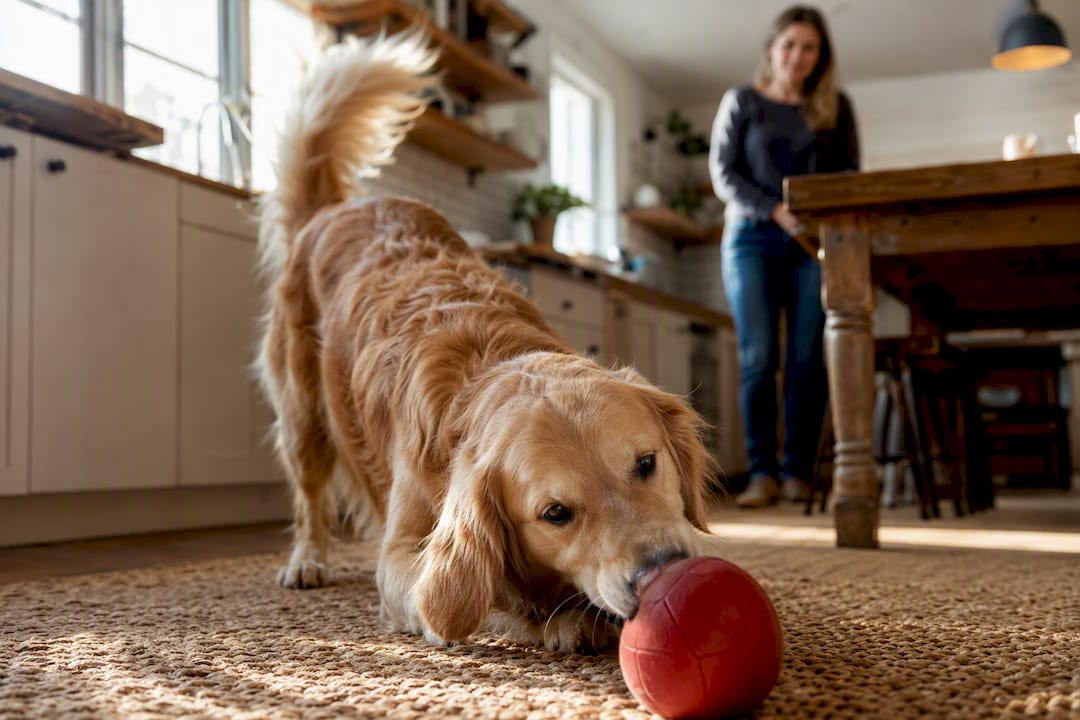
Start indoors, in a calm room without other dogs competing for attention. Let your dog sniff and mouth the ball on his own terms before you throw anything. Watch how he picks it up: does he grip it easily, or does it look like a struggle to hold? A ball that’s constantly slipping out of a dog’s mouth during a calm sniff session usually needs to go down a size, while one that disappears too far back needs to go up.
Keep the first few sessions short, five to ten minutes, and stay in the room the entire time. This matters even more if you’re moving a dog up from a smaller size he’s used for months. Dogs build muscle memory around a familiar ball’s weight and diameter, and a size jump changes how they naturally carry and chew, at least for the first few sessions.
If your dog is a puppy transitioning through growth stages, expect to repeat this introduction process every few months as his jaw and body change. What fit at four months rarely fits at ten. Once you’re confident the new size passes the carry test consistently across a few sessions, it’s fine to fold it into normal outdoor fetch or unsupervised chew time, with the usual periodic wear checks.
How Should You Clean Dog Balls Based on Size and Material?
Cleaning schedules and methods depend heavily on both the ball’s size and what it’s made from, since a solid rubber sphere and a felt-covered tennis ball behave completely differently in water.
Solid rubber and TPR balls, common in medium through XL sizes, handle warm water and mild dish soap without issue. Scrub with a soft brush to get into any textured grooves, rinse thoroughly, and air dry completely before the next use, since trapped moisture inside vented designs can breed bacteria.
Felt-covered tennis style balls are trickier. Submerging them repeatedly breaks down the felt and the internal rubber core faster, so a quick wipe with a damp cloth between uses, followed by a full wash every week or two, extends their life more than daily dunking would. Once the felt starts fraying or the rubber core shows through, it’s time to replace it entirely, not patch it up.
Larger balls with removable squeakers need extra attention at the seam where the squeaker inserts, since that is where grime and saliva collect fastest. Pull the squeaker out if the design allows, clean both pieces separately, and make sure everything is bone dry before reassembly. Regardless of size, inspect every ball weekly for cracks, tears, or chunks missing, since a damaged toy is a choking risk no matter how clean it is.
What I’d Tell a Friend Buying Their First Dog Ball
If you take nothing else from this guide, take this: buy a ball your dog physically cannot swallow, and when in doubt, size up. For chewers, spend the extra dollar on real rubber or TPR instead of cheap felt that shreds in a week. My shortcut for busy owners is simple. Grab a variety pack in medium or large, run the carry test the first time your dog touches it, and adjust from there.
— Christopher
Shop Smarter: Curated Ball Picks by Size and Play Style
Americanbarkbliss builds its toy lineup around the exact rule this guide just walked through: safety first, size confirmed, materials matched to how your dog actually plays. That’s the real advantage over grabbing whatever bin is closest at a big box store, where diameter and material specs are often buried or missing entirely.
For puppies and small breeds, the Tennis Ball Dog Toy Variety Pack gives you several sizes and styles to test fit without committing to one guess. Power chewers do best with the TPR Boomerang Dog Chew Toy, which pairs a removable squeaker with tougher material built for aggressive gnawing. And for dogs who need something interactive between fetch sessions, the TPR Interactive Dog Chew Toy with detachable squeaker and treat fill covers both chew strength and mental engagement.
Once you’ve confirmed the diameter on the product page and picked a material suited to your dog’s chew intensity, add it to your cart and run the carry test at home during the first supervised session.
Pro Tip: If a size doesn’t work out after your first fit test, check the return or exchange policy before tossing the toy. Most sizing mismatches are easy to fix with an exchange rather than a wasted purchase.
Round out the toy box with a foldable fabric storage bin to keep everything organized once you’ve built out a few sizes for growing or multi-dog households.
Where This Guide’s Sizing Rules Come From
- PDSA’s ball safety guidance covers vented designs, material durability, and the core “can’t fit past the molars” rule.
- The Chuckit! manufacturer sizing chart provides the diameter-to-weight bands used throughout this guide.
- Vet Explains Pets details airway obstruction risks tied to worn or undersized balls.
- For confirming your dog’s expected adult weight range, a breed weight chart helps cross-check size band selection.
Consult your veterinarian directly for dogs with unusual jaw structure, dental issues, or a history of swallowing foreign objects.
Sources
- How to choose a safe ball for your dog - PDSA
- The Official Chuckit! Ball Sizing Guide for Dogs
- The 25 Best Dog Balls My In-Depth Guide — Exqeo
- What Size Ball Toy Is Safe For My Dog - Vet Explains Pets
FAQ
What size ball should I get for my dog?
Match your dog’s weight to a diameter band, starting with small for lighter dogs, medium around tennis ball size for many breeds, large for breeds like Labradors, and XL to XXL for very large or giant breeds, then confirm with a carry test since jaw width matters as much as weight.
What is the 7-7-7 rule for dogs?
The 7-7-7 rule refers to introducing puppies to seven types of surfaces, seven types of people, and seven new experiences by seven weeks old; it’s a socialization guideline, not directly related to toy sizing, though gradual, supervised exposure to new toys follows the same gentle-introduction principle.
What do dogs hear when we talk?
Dogs pick up on tone, pitch, and familiar sound patterns far more than specific words, which is why a calm, consistent voice during a new toy introduction or fit test helps keep your dog relaxed rather than anxious.
What color is most pleasing to dogs?
Dogs see a limited color range dominated by blues and yellows, so toys in those shades tend to stand out most against grass and pavement, which is worth considering alongside size when picking a ball for fetch.
When should I size up instead of sticking with the weight chart?
Size up any time your dog sits near a weight boundary, has a wide or strong jaw for his size, or is a heavy chewer, since eliminating choking risk always outweighs a slightly larger, easier-to-carry toy.
Leave a comment